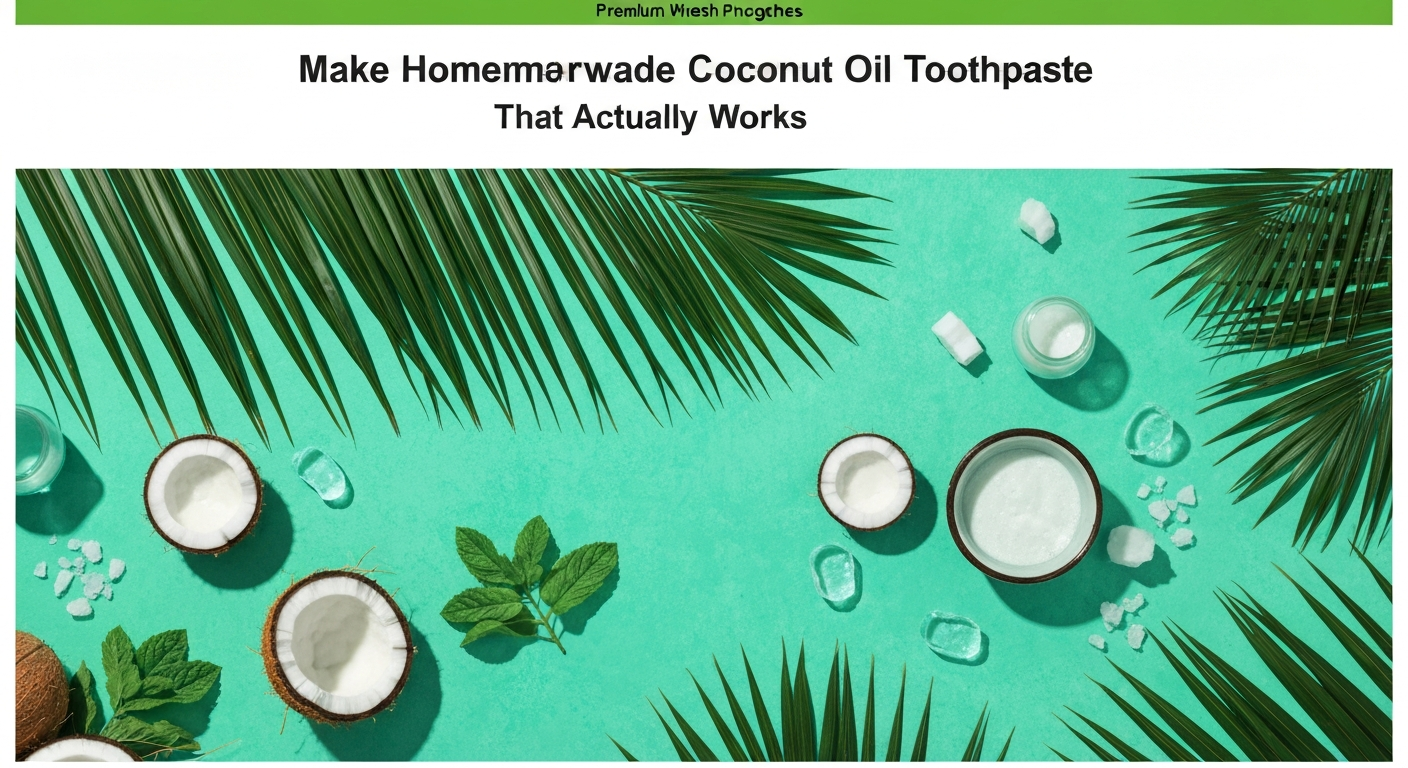
How to Make Homemade Coconut Oil Toothpaste That Actually Works
Ready to ditch the commercial tubes and create your own natural dental care routine? Making homemade coconut oil toothpaste is easier than you might think — and you probably already have most of the ingredients in your kitchen. This simple DIY coconut oil toothpaste recipe combines the natural properties of coconut oil with other gentle ingredients to create a paste that many people find effective for their daily oral care routine.
Before we dive in, it's important to note that while many people report positive experiences with natural toothpaste alternatives, you should always consult with your dentist about your oral care routine, especially if you have specific dental concerns.
Why Choose Coconut Oil for Homemade Toothpaste?
Coconut oil has been traditionally used in oral care practices for centuries. Some research suggests that coconut oil may help support oral hygiene due to its natural properties. The practice of coconut oil pulling has roots in ancient Ayurvedic traditions, where it was used as part of daily wellness routines.
When used as a base for DIY coconut oil toothpaste, coconut oil provides several benefits:
- Natural consistency: Coconut oil's semi-solid texture at room temperature makes it an ideal base for homemade toothpaste
- Pleasant taste: Unlike some natural alternatives, coconut oil has a mild, pleasant flavor
- Stability: Coconut oil doesn't spoil quickly, giving your homemade toothpaste a reasonable shelf life
- Gentle nature: Many people find coconut oil less abrasive than some commercial toothpaste ingredients
Essential Ingredients for Your Natural Toothpaste Recipe
The beauty of making homemade toothpaste lies in its simplicity. Here's what you'll need for this basic natural toothpaste recipe:
Required Ingredients:
- ¼ cup coconut oil (organic, virgin preferred)
- 2-3 tablespoons baking soda (aluminum-free recommended)
- 10-15 drops essential oil (peppermint, spearmint, or tea tree)
- 1 teaspoon sea salt (finely ground, optional)
Optional Enhancement Ingredients:
- 1 tablespoon bentonite clay (for additional cleansing properties)
- ½ teaspoon stevia powder (for natural sweetness)
- 1 teaspoon calcium carbonate (for extra mineral content)
Equipment You'll Need
Gather these simple tools before you begin:
- Medium mixing bowl
- Fork or small whisk for mixing
- Small glass jar with tight-fitting lid (4-6 oz capacity)
- Measuring cups and spoons
- Small spatula or spoon for transferring
Step-by-Step Instructions for DIY Coconut Oil Toothpaste
Follow these detailed steps to create your homemade coconut oil toothpaste:
Step 1: Prepare Your Coconut Oil
Start with your coconut oil at room temperature. If it's too solid, place the jar in warm (not hot) water for a few minutes to soften it slightly. You want it pliable but not completely liquid. Measure out ¼ cup and place it in your mixing bowl.
Step 2: Add the Baking Soda
Gradually add 2 tablespoons of baking soda to the coconut oil. Start mixing with a fork, breaking up any clumps. The mixture will look crumbly at first — this is normal. If you prefer a less gritty texture, start with 1½ tablespoons and add more as needed.
Step 3: Incorporate Essential Oils
Add 10-15 drops of your chosen essential oil. Peppermint is popular for its fresh taste, while tea tree oil is traditionally used in oral care routines. Safety note: Essential oils are highly concentrated. Never exceed 20 drops per batch, and always choose food-grade essential oils for oral use.
Step 4: Add Optional Ingredients
If using sea salt, add 1 teaspoon now and mix thoroughly. For those adding bentonite clay or calcium carbonate, incorporate these one ingredient at a time, mixing well between additions.
Step 5: Achieve the Right Consistency
Continue mixing until you achieve a paste-like consistency. If the mixture is too dry, add coconut oil one teaspoon at a time. If it's too wet, add more baking soda gradually. The final texture should hold together but not be overly sticky.
Step 6: Transfer and Store
Using a small spatula, transfer your homemade toothpaste to a clean glass jar. Press down lightly to eliminate air pockets, but don't pack too tightly. Label your jar with the date and ingredients used.
How to Use Your Natural Toothpaste Recipe
Using your DIY coconut oil toothpaste is slightly different from commercial varieties:
- Use a small amount: Start with a pea-sized portion on your toothbrush
- Let it warm up: The coconut oil will soften from the warmth of your mouth
- Brush gently: Use circular motions for 2 minutes, just as you would with regular toothpaste
- Spit, don't swallow: While the ingredients are food-grade, it's best to spit out the mixture after brushing
- Rinse thoroughly: Follow up with water to remove any residue
Many people find that incorporating other coconut oil oral care practices, such as coconut oil teeth whitening routines, complements their homemade toothpaste regimen.
Storage and Shelf Life
Proper storage ensures your homemade coconut oil toothpaste stays fresh and effective:
- Container: Always use glass jars rather than plastic to prevent contamination
- Location: Store in a cool, dry place away from direct sunlight
- Temperature: Keep at room temperature; extreme heat will melt the coconut oil
- Hygiene: Use a clean, dry utensil each time to scoop out toothpaste
- Shelf life: Use within 3-4 months for best quality
Common Mistakes to Avoid
Learn from these frequent DIY toothpaste mishaps:
Using Too Much Essential Oil
More isn't better with essential oils. Exceeding recommended amounts can cause mouth irritation or an overpowering taste. Always start with fewer drops and add more if needed in future batches.
Wrong Coconut Oil Temperature
If your coconut oil is too liquid, your toothpaste won't hold together. If it's too solid, mixing becomes difficult. Room temperature coconut oil should be soft but not melted.
Ignoring Texture Preferences
Some people love the slight grittiness of baking soda, while others prefer a smoother paste. Adjust the baking soda ratio to match your preference — there's no single "correct" texture.
Cross-Contamination
Using wet or dirty utensils can introduce bacteria into your homemade toothpaste. Always use clean, dry tools when scooping out your mixture.
Customization Options and Variations
Once you've mastered the basic natural toothpaste recipe, try these variations:
For Sensitive Teeth
Reduce baking soda to 1 tablespoon and add 1 tablespoon of calcium carbonate for a gentler formula that some people with sensitive teeth prefer.
For Extra Freshness
Combine peppermint and spearmint essential oils (5-7 drops each) for a complex, refreshing flavor profile.
For Additional Cleansing
Add 1 tablespoon of food-grade activated charcoal for those interested in exploring charcoal's traditional use in oral care.
What to Expect When Using Homemade Toothpaste
Switching to DIY coconut oil toothpaste involves an adjustment period. Here's what many users report:
Initial Adaptation
The texture and taste differ significantly from commercial toothpastes. Most people adapt within a week of consistent use.
Seasonal Changes
Your toothpaste consistency may vary with temperature. In summer, it might be softer; in winter, firmer. This is normal and doesn't affect its cleansing properties.
Individual Results
People report varying experiences with homemade toothpaste. Some notice improvements in their coconut oil oral health routine within weeks, while others prefer it primarily for its natural ingredient profile.
Safety Considerations and When to Consult a Professional
While many people successfully use homemade toothpaste, keep these safety points in mind:
- Patch test: Test a small amount on your inner lip before full use to check for sensitivity
- Dental consultation: Discuss any oral care changes with your dentist, especially if you have existing dental issues
- Fluoride considerations: This recipe doesn't contain fluoride. Consult your dental professional about your fluoride needs
- Children's use: Supervise children and ensure they don't swallow the mixture
- Allergic reactions: Discontinue use if you experience any irritation or allergic symptoms
Making the Switch: Tips for Success
Transitioning to homemade coconut oil toothpaste works best with realistic expectations and gradual implementation:
- Start gradually: Use your DIY toothpaste once daily initially, gradually increasing frequency
- Keep commercial backup: Have conventional toothpaste available during your transition period
- Track your experience: Note any changes in how your mouth feels to discuss with your dentist
- Stay consistent: Give your new routine at least 2-3 weeks for a fair evaluation
Creating your own homemade coconut oil toothpaste puts you in control of your oral care ingredients while potentially reducing packaging waste. Remember that everyone's oral health needs are different, so what works wonderfully for one person may not suit another. The key is finding the right balance for your individual needs while maintaining regular dental check-ups and professional cleanings.
Whether you're exploring natural alternatives for environmental reasons, ingredient sensitivity, or simple curiosity, this DIY coconut oil toothpaste recipe provides a starting point for your natural oral care journey. Start with small batches, adjust to your preferences, and always prioritize your oral health by staying in communication with your dental care provider.