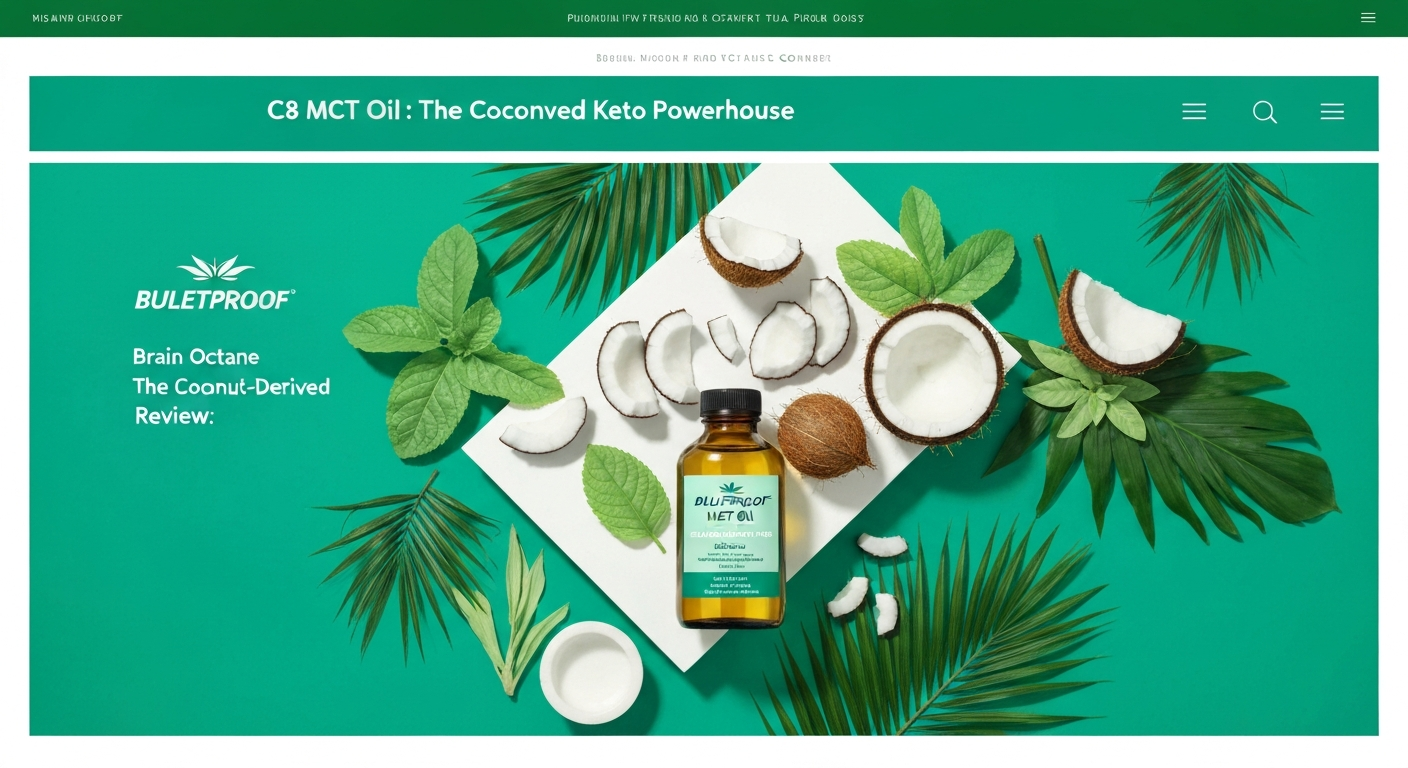
Bulletproof Brain Octane C8 MCT Oil Review: The Coconut-Derived Keto Powerhouse
When it comes to premium MCT oils, Bulletproof's Brain Octane C8 has built quite the reputation in the keto and biohacking communities. This coconut-derived oil promises to deliver pure C8 caprylic acid, but does it live up to the hype? After extensive testing, we're breaking down everything you need to know about this popular MCT oil.
Product Overview: What Makes Brain Octane Different
Bulletproof Brain Octane C8 MCT Oil stands out from other MCT oils versus regular coconut oil by focusing exclusively on C8 caprylic acid. While many MCT oils contain a blend of medium-chain triglycerides (C6, C8, C10, C12), Brain Octane isolates just the C8 component, which some research suggests may be more efficiently converted to ketones.
Key Product Specifications
| Specification | Details |
|---|---|
| MCT Composition | 100% C8 Caprylic Acid |
| Source | Sustainably sourced coconuts |
| Processing Method | Triple-distilled |
| Available Sizes | 16 fl oz (473ml), 32 fl oz (946ml) |
| Certifications | Keto Certified, Non-GMO, Gluten-Free |
| Shelf Life | 2+ years unopened |
First Impressions: Unboxing and Initial Assessment
The Brain Octane C8 arrives in Bulletproof's signature sleek packaging. The dark glass bottle immediately signals quality—this isn't your typical clear plastic MCT oil container. The label is clean and informative, clearly stating the 100% C8 composition and coconut source.
Opening the bottle reveals a completely clear, odorless liquid. Unlike some MCT oils that have a slight coconut scent or chemical odor, Brain Octane is remarkably neutral. The consistency is lighter than regular coconut oil but slightly thicker than fractionated coconut oil.
Performance Deep Dive
Taste and Texture Analysis
One of Brain Octane's strongest selling points is its neutral profile. When taken straight (which we tested in small amounts), it has virtually no taste—just a slight oily texture. This makes it incredibly versatile for mixing into beverages without altering flavor profiles.
The texture is smooth and pours easily at room temperature, unlike regular coconut oil which solidifies below 76°F. This liquid consistency makes it convenient for quick additions to morning coffee or smoothies.
Mixability and Solubility
Brain Octane blends remarkably well in hot beverages. When added to coffee, it integrates smoothly with minimal stirring—though using a blender or frother creates an even more uniform mixture. In cold beverages, it requires more vigorous mixing but still incorporates better than many competitor MCT oils.
Quality Indicators
Several factors suggest high-quality processing:
- Crystal clarity: No cloudiness or particles visible
- Neutral odor: No off-putting chemical smells
- Stable consistency: No separation or settling over time
- Clean source: Sustainably sourced coconuts with transparent supply chain
Sourcing and Manufacturing Standards
Bulletproof sources their coconuts from sustainable farms and uses a proprietary triple-distillation process. This level of processing refinement may contribute to the oil's purity and neutral characteristics. The company provides relatively good transparency about their sourcing, though specific farm locations aren't disclosed.
The manufacturing takes place in facilities that meet strict quality standards, and the oil undergoes third-party testing for purity and potency. This attention to quality control is reflected in the premium pricing.
Practical Usage: Real-World Testing
In Bulletproof Coffee
This is where Brain Octane truly shines. Following the classic bulletproof coffee recipe (coffee + grass-fed butter + MCT oil), the Brain Octane creates a smooth, creamy texture without any separation. The neutral taste allows the coffee's natural flavors to dominate.
In Smoothies and Shakes
Brain Octane disappears completely in smoothie blends, adding richness without coconut flavor. This makes it ideal for those following a coconut oil keto diet but wanting flavor flexibility.
Cooking Applications
While not recommended for high-heat cooking due to its low smoke point, Brain Octane works well in salad dressings, protein balls, and no-bake recipes where you want MCT benefits without coconut taste.
Comprehensive Pros and Cons
Pros
- Pure C8 composition: 100% caprylic acid, no filler oils
- Exceptional neutrality: Truly tasteless and odorless
- Premium quality: Triple-distilled, sustainably sourced
- Versatile usage: Works in hot and cold applications
- Quality packaging: Dark glass protects from light degradation
- Consistent performance: Reliable mixability and texture
- Third-party tested: Verified purity and potency
- Keto-friendly certifications: Meets strict dietary requirements
Cons
- Premium pricing: Significantly more expensive than mixed MCT oils
- Limited size options: Only two bottle sizes available
- Potential digestive adjustment: Some users report initial stomach sensitivity
- Single MCT type: Doesn't include other potentially beneficial MCTs
- Marketing hype: Some claims may be overstated
- Availability: Not always in stock due to popularity
Value Analysis: Is It Worth the Investment?
Brain Octane commands a significant premium—often 2-3x the cost of standard MCT oil blends. The question becomes whether the pure C8 formulation and quality standards justify this price difference.
Cost Breakdown
At typical retail prices:
- 16 oz bottle: $23-27 ($1.44-1.69 per oz)
- 32 oz bottle: $39-45 ($1.22-1.41 per oz)
- Cost per serving (1 tbsp): Approximately $0.72-0.84
Compared to standard MCT oils at $0.30-0.50 per serving, Brain Octane is definitely a luxury purchase.
When the Premium Makes Sense
The higher cost may be justified if you:
- Are sensitive to the taste of regular MCT oils
- Want maximum purity and quality assurance
- Follow strict keto protocols where C8 is preferred
- Use MCT oil daily and can taste the difference
- Value sustainable sourcing and ethical production
Who Should Consider Brain Octane C8?
Ideal Candidates
Serious Keto Practitioners: Those following strict ketogenic protocols who want the potentially faster ketone conversion that some research suggests C8 may provide.
Taste-Sensitive Users: People who've been put off by the coconut taste or chemical odors in other MCT oils will appreciate Brain Octane's neutral profile.
Premium Quality Seekers: Consumers who prioritize quality, purity, and ethical sourcing over cost considerations.
Daily MCT Users: Regular users who consume MCT oil daily and can appreciate subtle quality differences.
Who Might Skip It
Budget-Conscious Buyers: If cost is a primary concern, standard MCT oil blends offer similar basic functionality at much lower prices.
Occasional Users: Those who only occasionally use MCT oil may not notice enough difference to justify the premium.
MCT Oil Newcomers: Beginners might want to start with more affordable options to see if they tolerate and benefit from MCT oils generally.
Comparison to Alternatives
vs. Standard MCT Oil Blends
Standard MCT oils typically contain a mix of C8 and C10 (and sometimes C6 and C12). While less expensive, they may have more coconut flavor and could potentially be less efficiently converted to ketones according to some research observations.
vs. Regular Coconut Oil
Regular coconut oil contains longer-chain fatty acids along with MCTs, has a strong coconut flavor, and solidifies at room temperature. Brain Octane offers more concentrated MCT content in a neutral, liquid form.
vs. Other Premium C8 Oils
Several other brands now offer pure C8 MCT oils. Brain Octane's main advantages are brand reputation, quality consistency, and availability, though some competitors offer similar purity at lower prices.
Storage and Shelf Life
Brain Octane stores well at room temperature and doesn't require refrigeration. The dark glass bottle protects against light degradation, and the oil remains stable for 2+ years unopened. Once opened, it's best used within 12-18 months for optimal freshness, though it doesn't spoil quickly due to MCTs' stable nature.
Safety Considerations and Usage Tips
As with any MCT oil, starting slowly is important. Begin with 1/2 to 1 teaspoon daily and gradually increase to avoid potential digestive discomfort. Most users can work up to 1-2 tablespoons daily without issues, but individual tolerance varies.
Always consult with a qualified healthcare provider before making significant dietary changes or if you have underlying health conditions. MCT oils should complement, not replace, a balanced diet.
Final Verdict: Is Brain Octane Worth It?
Bulletproof Brain Octane C8 MCT Oil delivers on its promises of purity, quality, and neutrality. The 100% C8 formulation, triple-distillation process, and sustainable sourcing create a premium product that justifies its reputation among serious keto practitioners and quality-focused consumers.
However, the significant price premium means it's not for everyone. If you're new to MCT oils or primarily concerned with cost-effectiveness, starting with a standard MCT blend makes more sense. But if you want the highest quality C8 MCT oil available and can appreciate the difference in taste and purity, Brain Octane is difficult to beat.
The neutral taste alone makes it worth considering for those who've struggled with other MCT oils' flavors. Combined with consistent quality and ethical sourcing, Brain Octane earns its place as a premium option in the crowded MCT oil market.
Overall Rating: 4.2/5 stars—excellent quality with premium pricing that limits broader appeal.