MCT Oil vs Coconut Oil: How Are They Different?
MCT oil starts life as coconut oil, so it is natural to wonder whether the two are the same thing in different bottles. They are relatives, not twins. Coconut oil is about half lauric acid, while MCT oil is made almost entirely of two shorter fatty acids, and that single difference changes how each one pours, behaves and gets used.
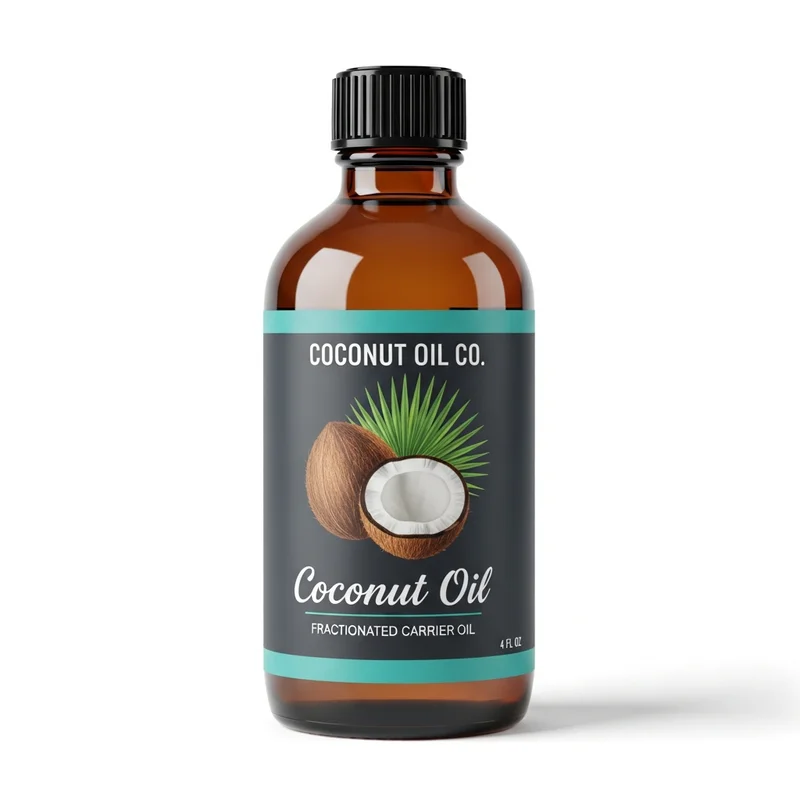
Fractionated Coconut Oil
Our own Fractionated Coconut Oil, in sizes from 0.5 oz to bulk.
From $9.99
Shop Now →One raw material, two very different oils
Coconut oil is a mix of fatty acids. In the profile Lin, Zhong and Santiago (2018) report, about 49% is lauric acid (C12) and 18% myristic (C14), with only 8% caprylic (C8) and 7% capric (C10). MCT oil flips that picture. The US Pharmacopeia monograph describes medium-chain triglycerides as made from coconut or palm kernel oil, with at least 95% of the fatty acids being C8 and C10 and lauric acid held to 3% or less (USP 35, 2012).
Published coconut profiles vary a little from paper to paper, but none comes anywhere near that 95% line. So coconut oil is the raw material, and MCT oil is what you get after the oil has been refined and sorted down to its two lightest fractions.
Why that sorting matters on the shelf
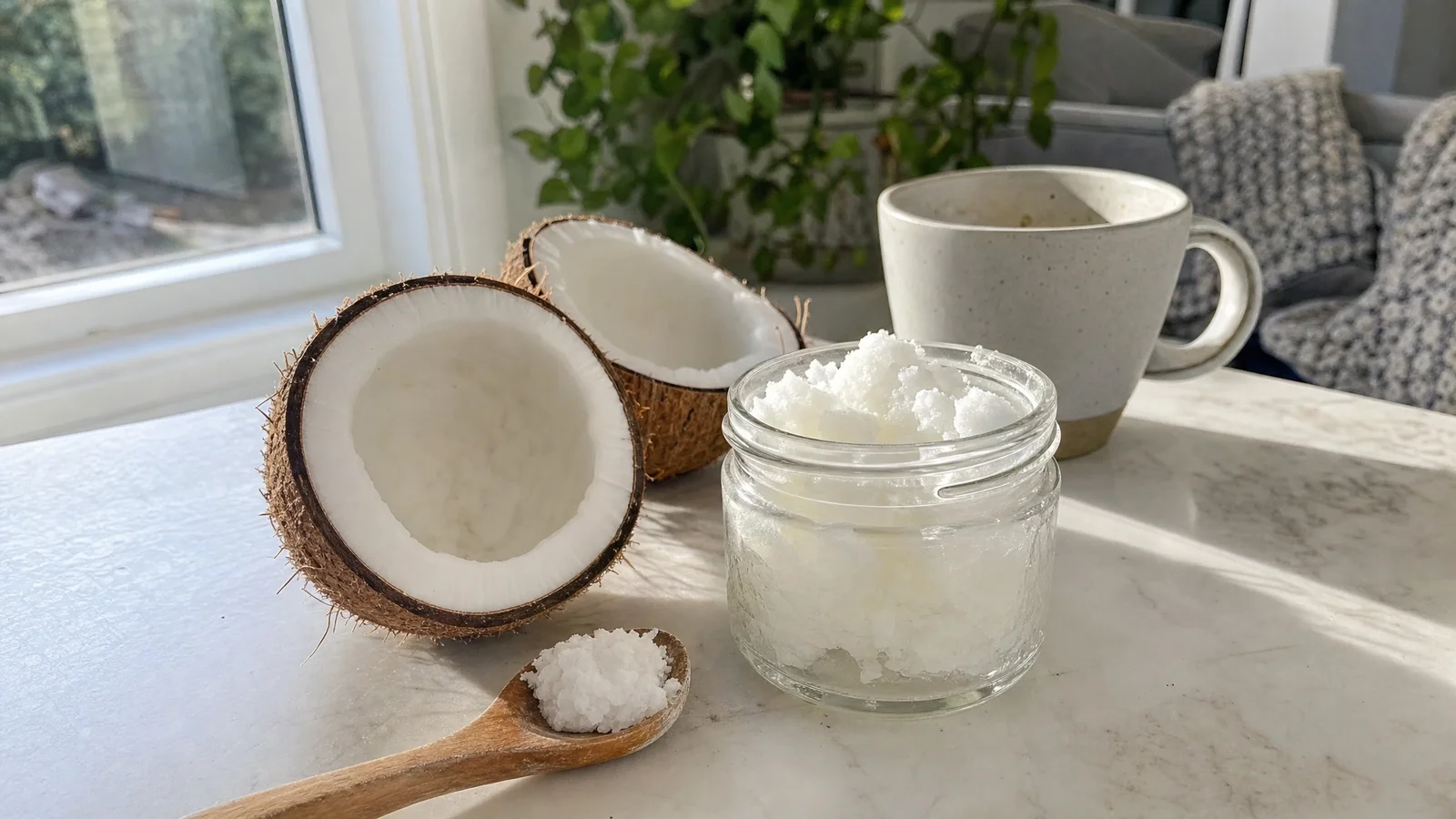
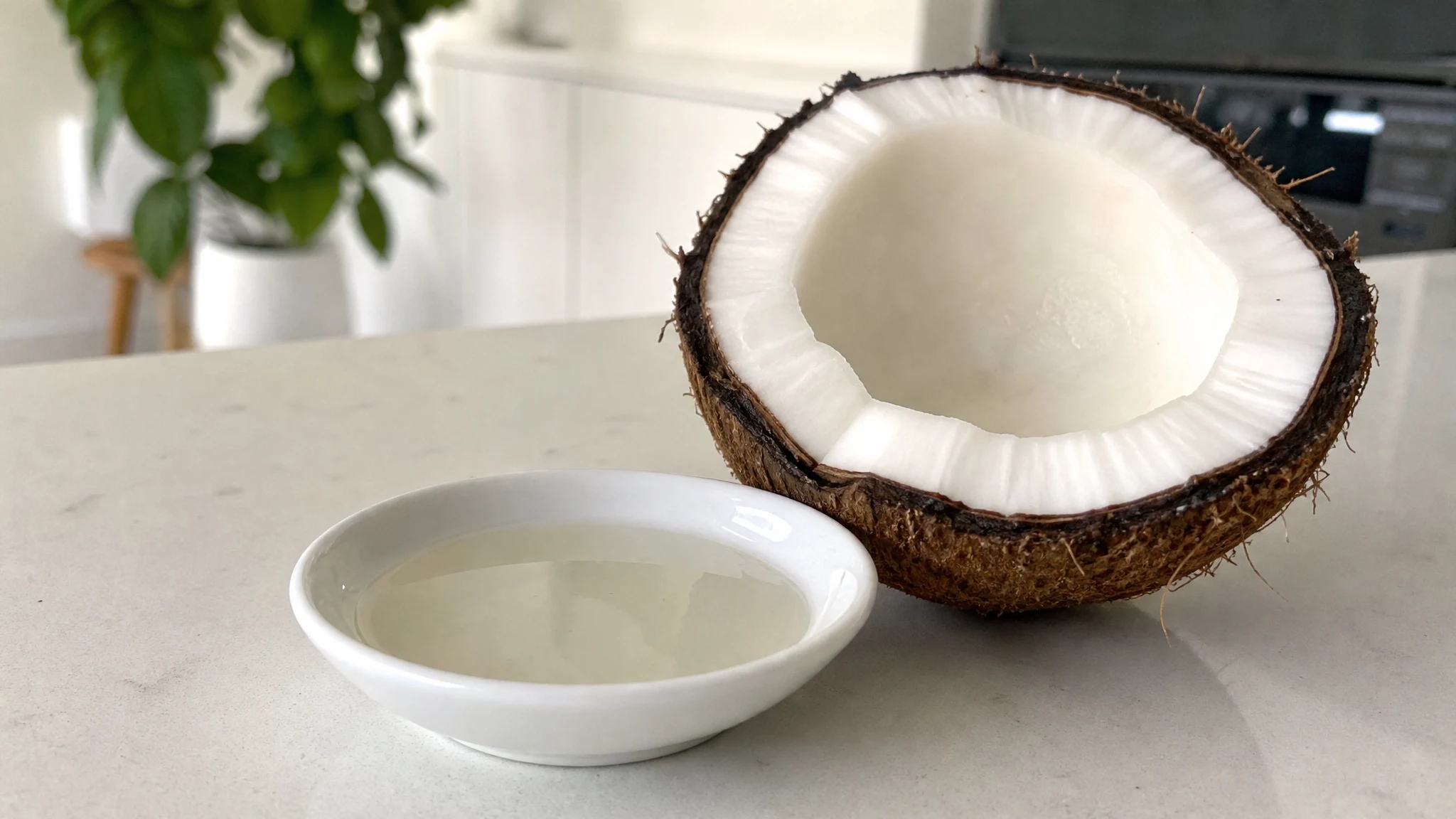
The short chains are the ones that stay liquid. Lauric acid and its longer cousins are what make a jar of coconut oil firm up in a cool room, and taking most of them away leaves a thin, clear oil that pours at any temperature. That is the practical reason people reach for the liquid version in a roll-on, a pump bottle or an essential oil blend, and our guide to what fractionated coconut oil is follows the process step by step.
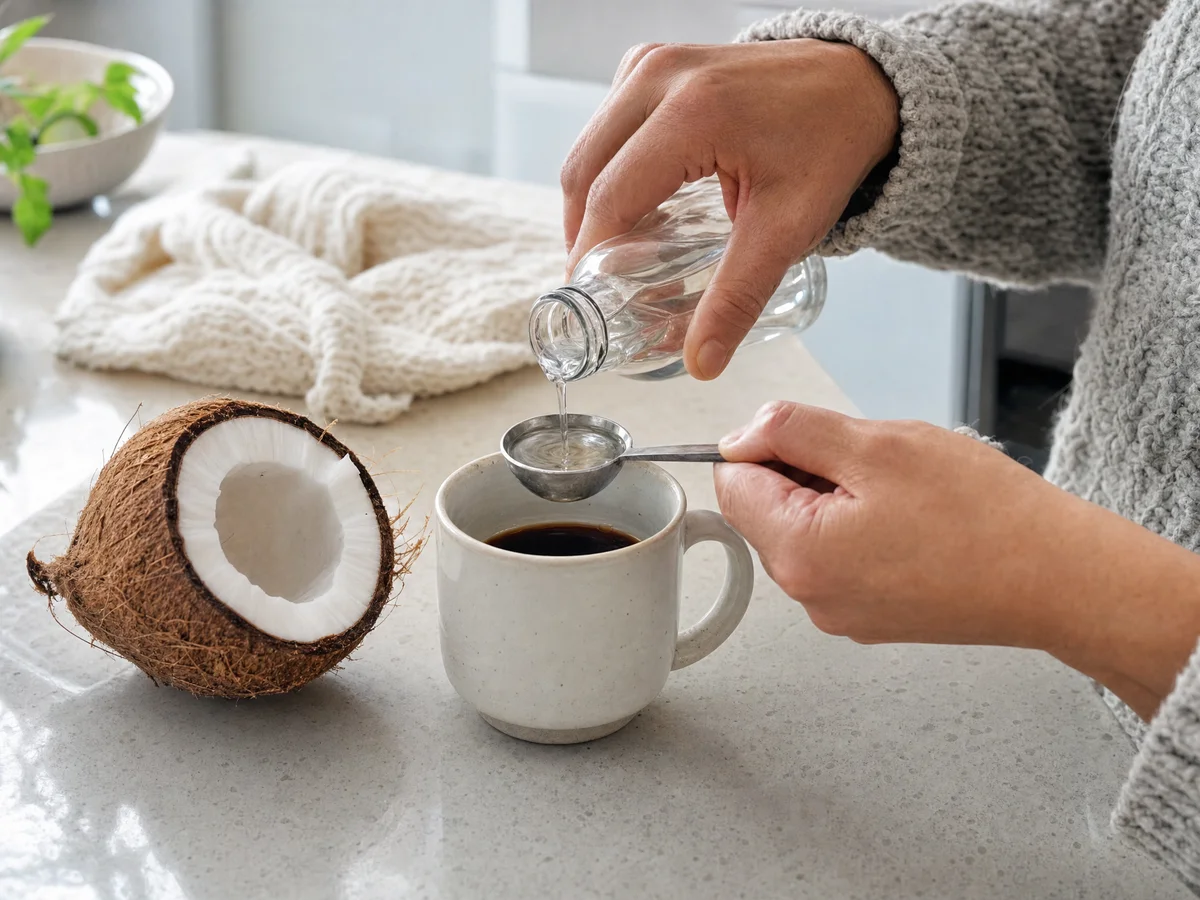
It also explains why the same ingredient shows up under several names. Healthline (2019) notes that this kind of liquid oil is sold as fractionated coconut oil for skin and hair, as MCT oil for dietary use and as liquid coconut oil in food. The name tells you the family. The label tells you what the maker intends it for.
What the label has to say about use
In the United States, whether a product counts as a cosmetic, a drug or neither depends on its intended use, as shown by its labeling and advertising (FDA). That is why a bottle sold for skin and a bottle sold as a supplement can contain similar-looking oil and still be different products. We sell our oils neat, for external cosmetic use only. If you want an oil to eat, buy one labeled for food, with its own fatty-acid specification, and talk with a doctor or registered dietitian about whether it belongs in your day.
A glimpse of how they differ when eaten
People often ask about ketones, so here is a useful illustration of why a lauric-rich oil and an MCT oil are not interchangeable. In a small study in Sherbrooke, Canada, nine healthy adults took test oils in skim milk and had blood drawn every 30 minutes for eight hours. Pure caprylic triglyceride raised blood ketones clearly, a classic C8/C10 MCT oil reached a peak of 646 micromoles per liter, and coconut oil was not significantly different from the milk-only control (Vandenberghe et al., 2017). Nine people is a small group, so we read it as a pointer rather than a verdict: results from one oil should not be borrowed for the other. The same goes for the cholesterol debate around coconut oil, which we unpack separately in our heart health post, and for the weight-loss claims in our weight loss post.
Where our fractionated oil fits
We describe our fractionated coconut oil as fractionated from pure Cocos nucifera coconut oil so that only the medium-chain triglycerides remain, liquid at any temperature. That places it closer to the MCT side of the comparison than the coconut side. We do not publish C8 or C10 percentages for it, though, and the certificate of analysis we publish for one batch reports appearance, smell, relative density (0.948 at 20 C), refractive index (1.450) and optical rotation. Those are physical checks, and they do not add up to a composition report. If you need to know whether a batch meets a particular C8/C10 specification, ask us for it in writing before you order, as you would with any supplier.
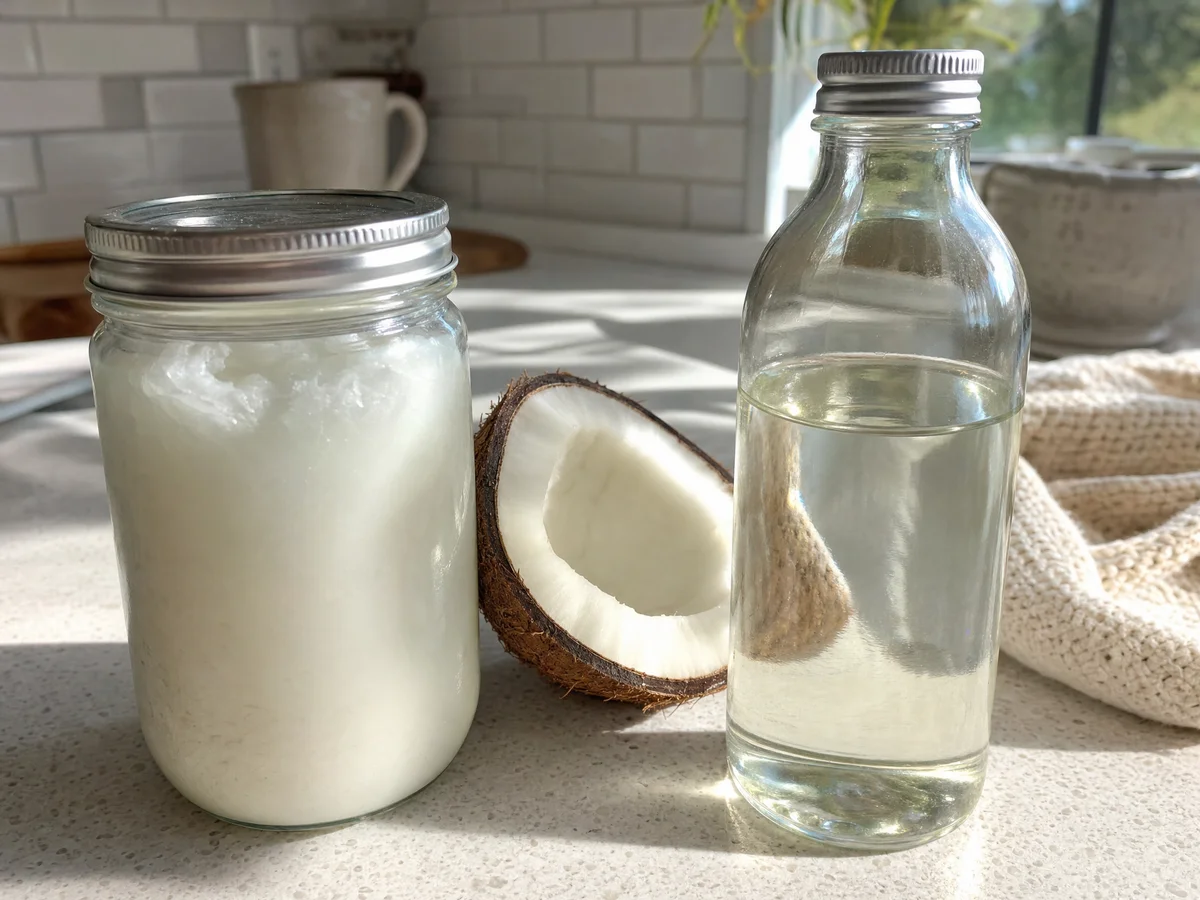
So our line is simple. We make a light cosmetic carrier for skin, hair and blending. Our virgin unrefined listing is the choice when you want the smell and feel of coconut, since it sets firm in a cool room and carries that creamy aroma, and the virgin and refined comparison helps you decide between them.
Three questions to ask about any bottle
Whatever you are buying, a few questions sort things quickly. Is it labeled for food or for external use? If composition matters to you, can the seller send a gas chromatography fatty-acid report for the batch? And which oil was the starting point, since coconut and palm kernel are both permitted under the USP definition and the words "MCT oil" alone do not say which? A certificate that lists density and refractive index confirms that an oil sits in the expected physical range, which is useful, and is a different document from a composition report.
If you would like to see how one oil becomes the other, our fractionated oil uses guide shows what the liquid fraction does best, and the fractionated coconut oil page lists our sizes.
The names on the bottles are only the start of the story. Read the label, ask the question, and choose the oil that matches the job in front of you.
Fractionated Coconut Oil
Fractionated Coconut Oil from our own shop, in sizes from 0.5 oz to bulk.
From $9.99
Shop Now →Sources & Further Reading
- Lin TK, Zhong L, Santiago JL, 2018. Anti-inflammatory and skin barrier repair effects of topical application of some plant oils. Int J Mol Sci 19(1):70. PMC5796020
- US Pharmacopeia, 2012. USP 35 Medium-Chain Triglycerides monograph. drugfuture.com USP35
- Healthline (Arnarson, reviewed 17 Oct 2019). Fractionated Coconut Oil: What Is It? healthline.com/nutrition/fractionated-coconut-oil
- US FDA. Is it a cosmetic, a drug, or both (or is it soap)? fda.gov/cosmetics
- Vandenberghe C et al., 2017. Tricaprylin alone increases plasma ketone response more than coconut oil or other medium-chain triglycerides. Curr Dev Nutr 1(4):e000257. PMC5998344