Is Coconut Oil Good for Keto? MCT Oil Compared
Coconut oil and keto seem made for each other. The diet runs on fat, and coconut oil is famous for its quick-burning medium-chain fats. The pairing works on paper, since coconut oil has no carbohydrate at all. What is more interesting is what it does and does not add once you look at the numbers, because a few of the popular stories turn out to belong to a different product.

Fractionated Coconut Oil
Our own Fractionated Coconut Oil, in sizes from 0.5 oz to bulk.
From $9.99
Shop Now →A rule about carbs, not about coconuts
In the research literature, a very-low-carbohydrate ketogenic diet means no more than 50 g of carbohydrate a day (Bueno et al., 2013). Nothing in that rule picks a favorite fat. The USDA lists coconut oil at 0 g carbohydrate and 99.06 g fat per 100 g (FoodData Central 171412), so it sits comfortably inside the diet, right next to olive oil, butter and lard. It is a fine keto fat. The better question is whether it is a special one.

Why MCT oil gets the ketone headlines
The ketone story belongs mostly to the shortest medium-chain fats, C8 (caprylic) and C10 (capric). Coconut oil contains some, about 12 g per 100 g by USDA figures, but its biggest share by far is lauric acid at 41.84 g, which behaves differently in the body.
A Canadian crossover study shows the gap nicely. Nine healthy adults took two 20 mL doses of different test oils in skim milk on separate days while researchers tracked blood ketones for eight hours. Pure C8 raised ketones by an average of 295 micromoles per liter above the milk-only control. Coconut oil peaked at about a quarter of that, and its difference from control over the day was not statistically significant (Vandenberghe et al., 2017). Nine people is a small group, so take it as a clear hint rather than a rule. Each volunteer took about 2.7 tablespoons in total, which is a lab dose and not a spoonful in your coffee.
The takeaway is simple: if ketones are your goal, a purified MCT oil is the product the evidence points to. We compare the two side by side in MCT oil vs coconut oil, and coconut oil earns its place for a different reason, which is its flavor and the way it behaves in a pan.
Weight loss belongs to the diet
A 2013 meta-analysis pooled 13 trials of at least 12 months. People on a ketogenic diet lost about 0.91 kg more than people on a low-fat diet (95% CI 0.17 to 1.65 kg, 1,415 patients), and their LDL cholesterol was 0.12 mmol/L higher (Bueno et al., 2013). Those trials did not isolate coconut oil. When researchers did pool coconut oil alone, 16 trials showed no significant effect on body weight or body fat, and LDL ran 10.47 mg/dL higher than with non-tropical oils (Neelakantan et al., 2020). So a tablespoon of coconut oil is a source of energy and flavor, and the diet as a whole does the rest. Our weight loss article walks through those studies one by one.
Doing the saturated fat sums
Here is a bit of kitchen arithmetic that makes the choice of fat much easier. The 2025 to 2030 Dietary Guidelines, as summarized by Harvard's Nutrition Source in January 2026, keep saturated fat at no more than 10% of daily calories (Harvard, 2026).
- 10% of 2,000 calories is 200 calories, or about 22 g of saturated fat at 9 calories per gram.
- A tablespoon of coconut oil (13.6 g) holds about 11.2 g of saturated fat and about 121 calories, so two tablespoons use up that whole allowance.
- The same Harvard piece puts a tablespoon of butter at about 7 g.
Because keto caps carbohydrate and lets fat fill the plate, the total climbs quickly, which follows from how the diet is defined. Going above the guideline is a personal choice to make with your doctor. The American Heart Association's 2017 advisory concluded that swapping saturated fat for unsaturated fat, especially polyunsaturated, lowers cardiovascular disease (Sacks et al., 2017). Our own take is that coconut oil shines as one fat among several on keto, with olive oil and others carrying much of the load. If you follow a ketogenic diet for epilepsy or another medical reason, your treating team's plan comes first. The cholesterol evidence has its own home in our heart health article.
Taste is the real reason to cook with it
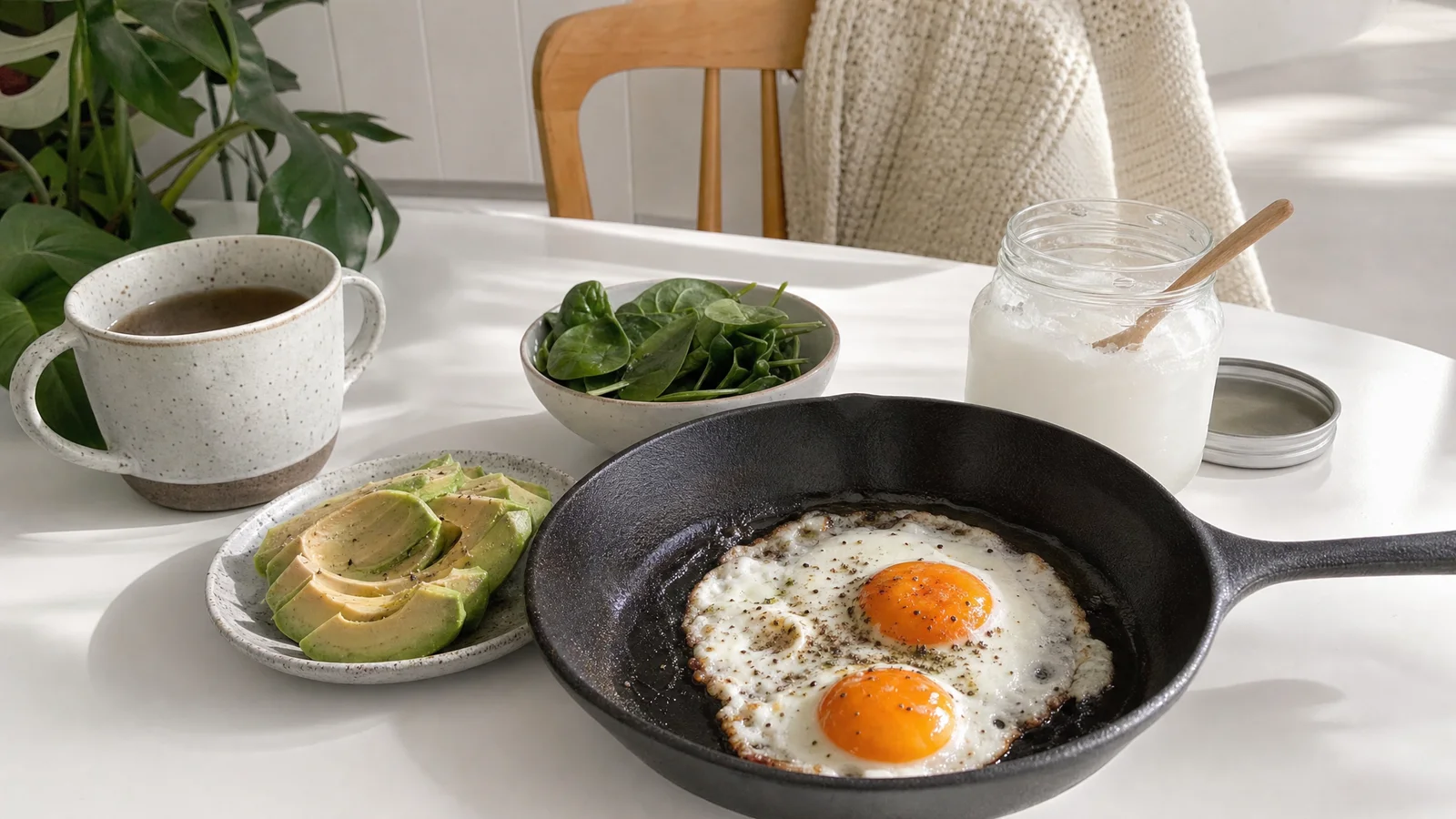
Set the ketone headlines aside and coconut oil still earns a spot in a keto kitchen for plain, delicious reasons. Refined coconut oil is quiet and neutral, so it will not fight with eggs or vegetables. Virgin coconut oil carries a sweet, toasty coconut note that suits curries, roasted sweet spices and anything with lime. Picking the jar is a matter of whether you want that flavor in the dish, and it is a good question to ask before you pick your fat for the week.
Where our oils belong
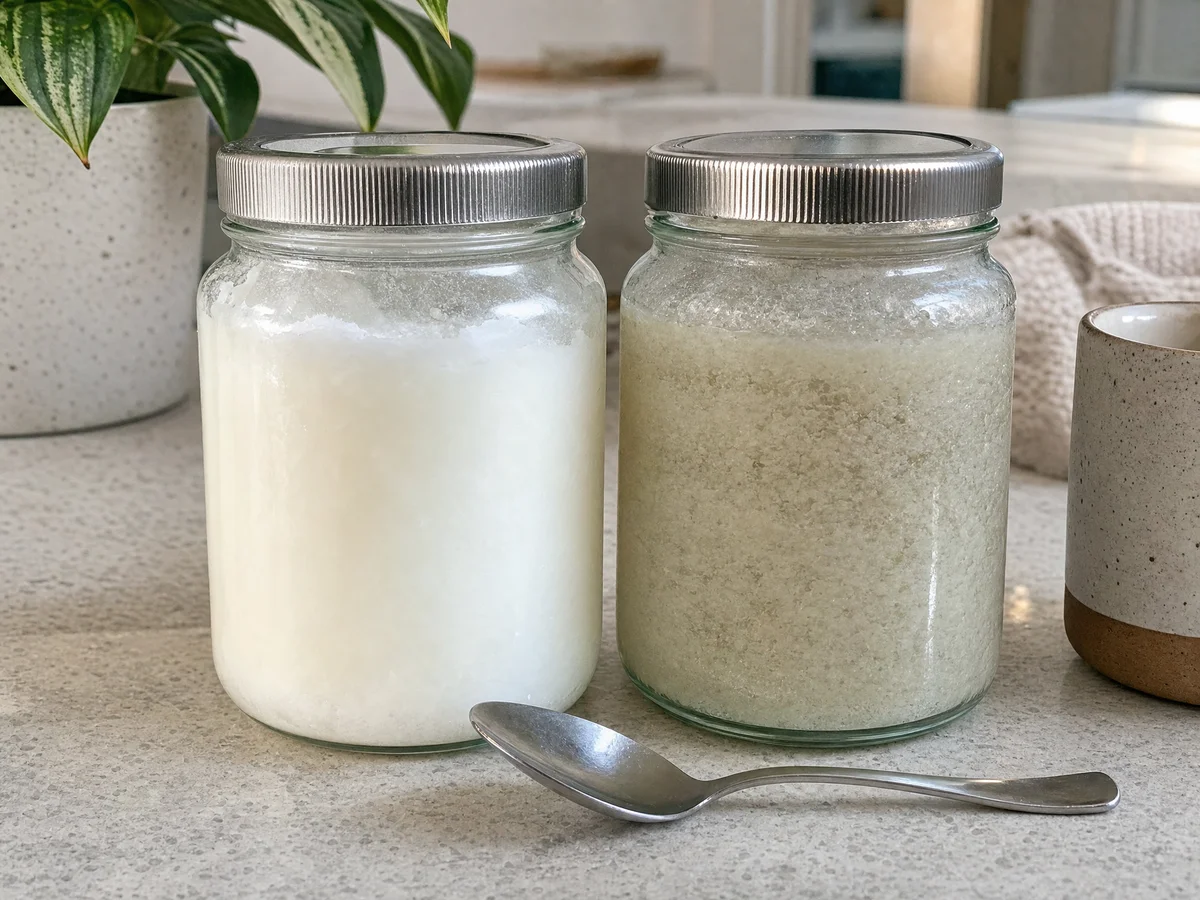
On the bathroom shelf and the craft table, not in the skillet. We sell a fractionated coconut oil and a virgin unrefined listing, both for external cosmetic use only, so neither is a food or an MCT supplement. The certificate of analysis we publish for one fractionated batch covers density, refractive index and optical rotation, and it carries no C8 or C10 percentages, so we do not state a medium-chain content for our oil. For keto cooking, pick a coconut oil sold as food. For a light, pourable carrier for massage or a DIY skin recipe, our fractionated coconut oil is the one we built our shop around. And if the chemistry has you curious, the fatty acid breakdown explains why every chart looks a little different.
Enjoy coconut oil for its flavor, keep the carbs where your plan wants them and let the rest of the plate do its share.
Fractionated Coconut Oil
Fractionated Coconut Oil from our own shop, in sizes from 0.5 oz to bulk.
From $9.99
Shop Now →Sources & Further Reading
- Bueno NB et al., 2013. Very-low-carbohydrate ketogenic diet v. low-fat diet for long-term weight loss. Br J Nutr. pubmed/23651522
- USDA, 2019. FoodData Central, Oil, coconut (SR Legacy, FDC ID 171412). fdc.nal.usda.gov/171412
- Vandenberghe C et al., 2017. Tricaprylin alone increases plasma ketone response more than coconut oil or other medium-chain triglycerides. Curr Dev Nutr. PMC5998344
- Neelakantan N, Seah JYH, van Dam RM, 2020. The effect of coconut oil consumption on cardiovascular risk factors. Circulation. pubmed/31928080
- Harvard T.H. Chan School of Public Health, Nutrition Source, 9 Jan 2026. Dietary Guidelines for Americans 2025-2030. nutritionsource.hsph.harvard.edu
- Sacks FM et al., 2017. Dietary fats and cardiovascular disease: a presidential advisory from the American Heart Association. Circulation. pubmed/28620111