Coconut Oil for Massage: Fractionated or Virgin?
Ask a massage therapist what they want from a carrier oil and the list is short: it should glide, it should be easy to dispense, and it should not make the room smell like something the client did not ask for. Coconut oil can tick all three boxes, as long as you choose the right coconut oil. The two we sell behave very differently once they meet a treatment table, and the choice is more fun than it sounds.

Fractionated Coconut Oil
Our own Fractionated Coconut Oil, in sizes from 0.5 oz to bulk.
From $9.99
Shop Now →How each oil handles on the table
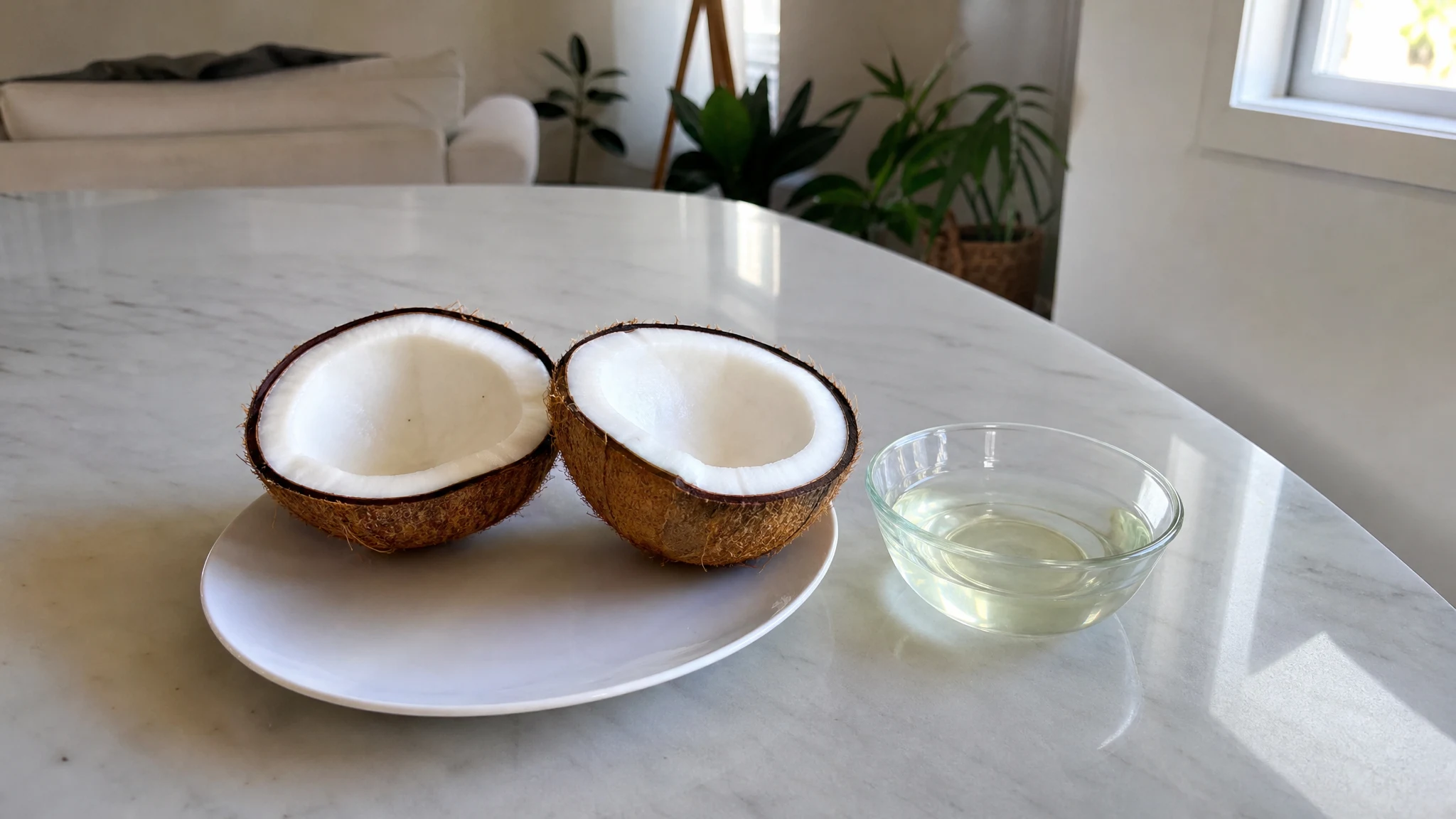
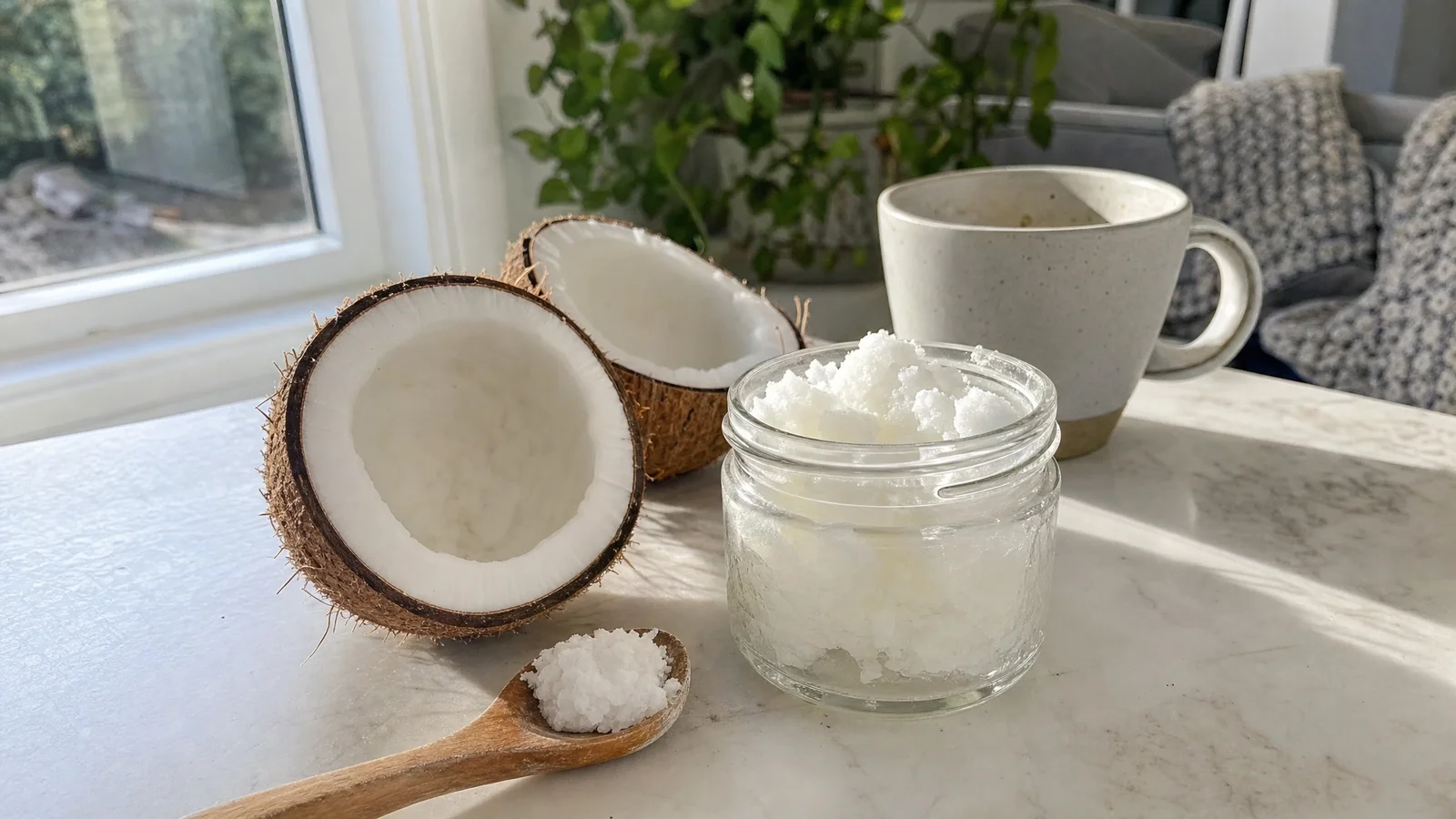
Our virgin unrefined coconut oil is firm in a cool room (our oil page puts the change at about seventy-six degrees Fahrenheit), melts the moment it touches warm hands and smells unmistakably of coconut. Our fractionated coconut oil stays liquid at any temperature, is fast-absorbing and is virtually odorless. We use that wording on purpose: the one certificate of analysis we publish lists the smell standard as "Mild, Earthy," so we stay with "virtually odorless."
Reasoning from those descriptions, here is what changes in a treatment room.
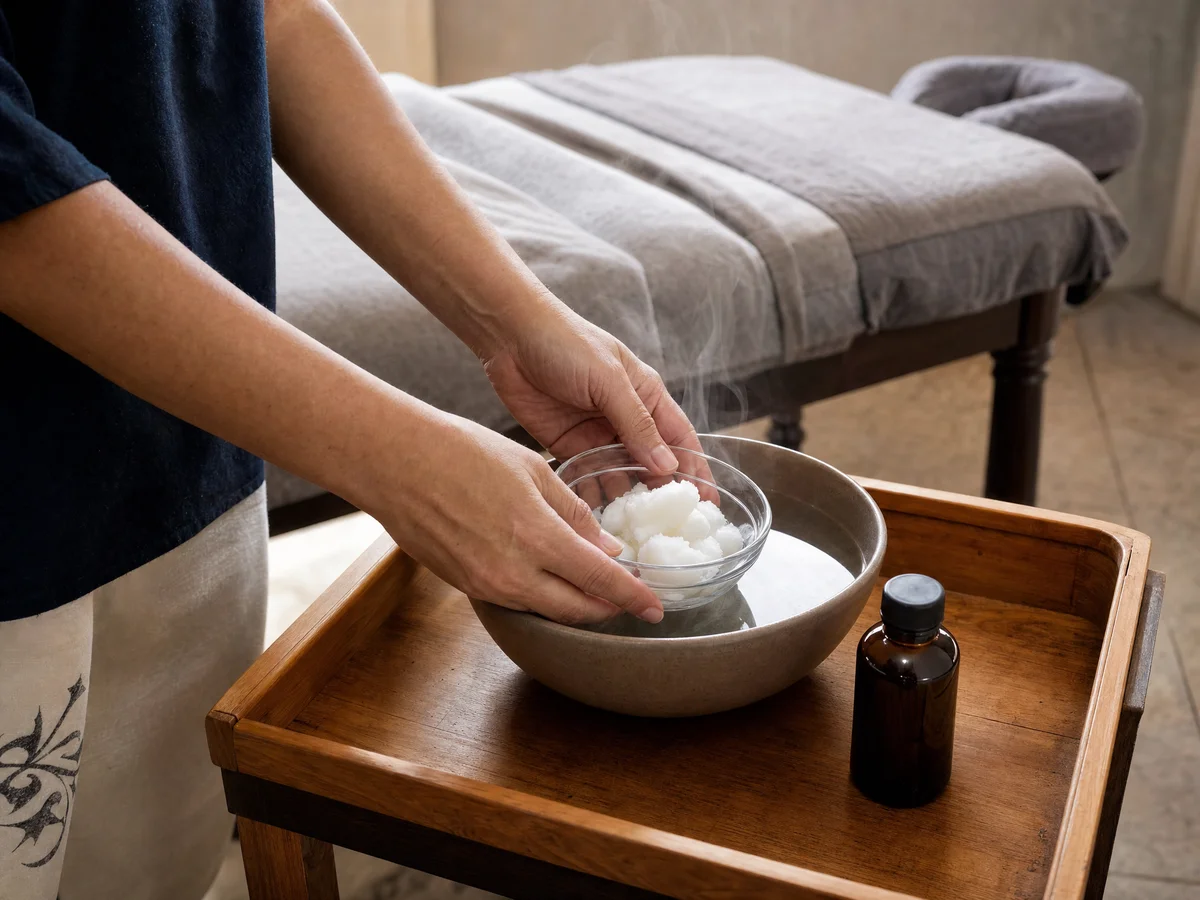
Dispensing. A liquid oil pours from a pump or squeeze bottle with no warming. A firm oil comes from a jar, and a jar invites hands going in and out of the supply, so take what you need with a clean spatula.
Session length. A fast-absorbing oil is likely to need a top-up sooner over a large area like a back or legs. That is an inference from the description and not a measured figure, so go by feel and keep the dispenser within reach.
Scent. Virgin oil chooses a scent for the client. Some people adore the warm coconut aroma and some do not, so ask before the session starts. Fractionated oil leaves room for whatever fragrance, if any, the client has chosen.
Our view is that fractionated oil is the easier all-round table oil, and virgin is the treat for a client who asks for the coconut experience. Our fractionated oil uses guide and virgin versus refined breakdown go further on how they differ.
A kind thing to do for your own hands
Therapists spend their days with oil on their hands, so what is in the oil matters as much to the person giving the massage as to the person receiving it. A study from the German-speaking Information Network of Departments of Dermatology looked at 128 massage therapists with occupational dermatitis. Sensitization to fragrances or essential oils was the most common finding, in 54 of them, or 42.2%, and eight of those 54 were picked up only with an extended fragrance series (Brans and colleagues, Contact Dermatitis, 2023).
These therapists had already been sent for patch testing, so 42.2% is not a rate for the profession. What the study supports is a practical idea: if you want to look after your hands, pay attention to the scent in your oil and how often it touches your skin. A plain, fragrance-free carrier removes that exposure from the room, which is a point in favor of a simple oil. A therapist with persistent hand dermatitis should see a dermatologist about patch testing.
If you add essential oils
The Tisserand Institute lists 1 to 3% as the adult dilution range for body oils and lotions, and notes that aromatherapists have used it for body massage for over 50 years (Tisserand Institute, dilution). One ounce of carrier is 29.57 ml, so 1% is about 0.3 ml of essential oil and 3% about 0.9 ml. Individual essential oils have their own limits, and several are unsuitable in pregnancy or for children, so check each one against a safety reference and ask a client's midwife or physician when pregnancy or a medical condition is involved. We pair our fractionated oil with lavender, lemon, tea tree, peppermint, frankincense and rose, and our virgin oil with sweet orange, lavender, ylang ylang, vanilla, patchouli and sandalwood. Our dilution guide has the worked math, and the tea tree article looks at one oil in detail.
Before the first client: allergy history
Add one line to the intake form about coconut and tree nut allergy. Our product pages ask anyone with a tree nut or coconut allergy to check with a professional first. The FDA's allergen FAQ says it no longer considers coconut a major food allergen and has removed it from the Tree Nut List, which is a food-labeling decision (FDA). Philip Lieberman, MD, writing for the AAAAI, notes that coconut allergy is reasonably rare, that cross-reacting allergens with tree nuts have been demonstrated, and that coconut oil is known to cause contact dermatitis in some people (AAAAI). If a client reacts to coconut, or to nuts and is unsure, use another oil and suggest an allergist. Our allergy article covers the details.
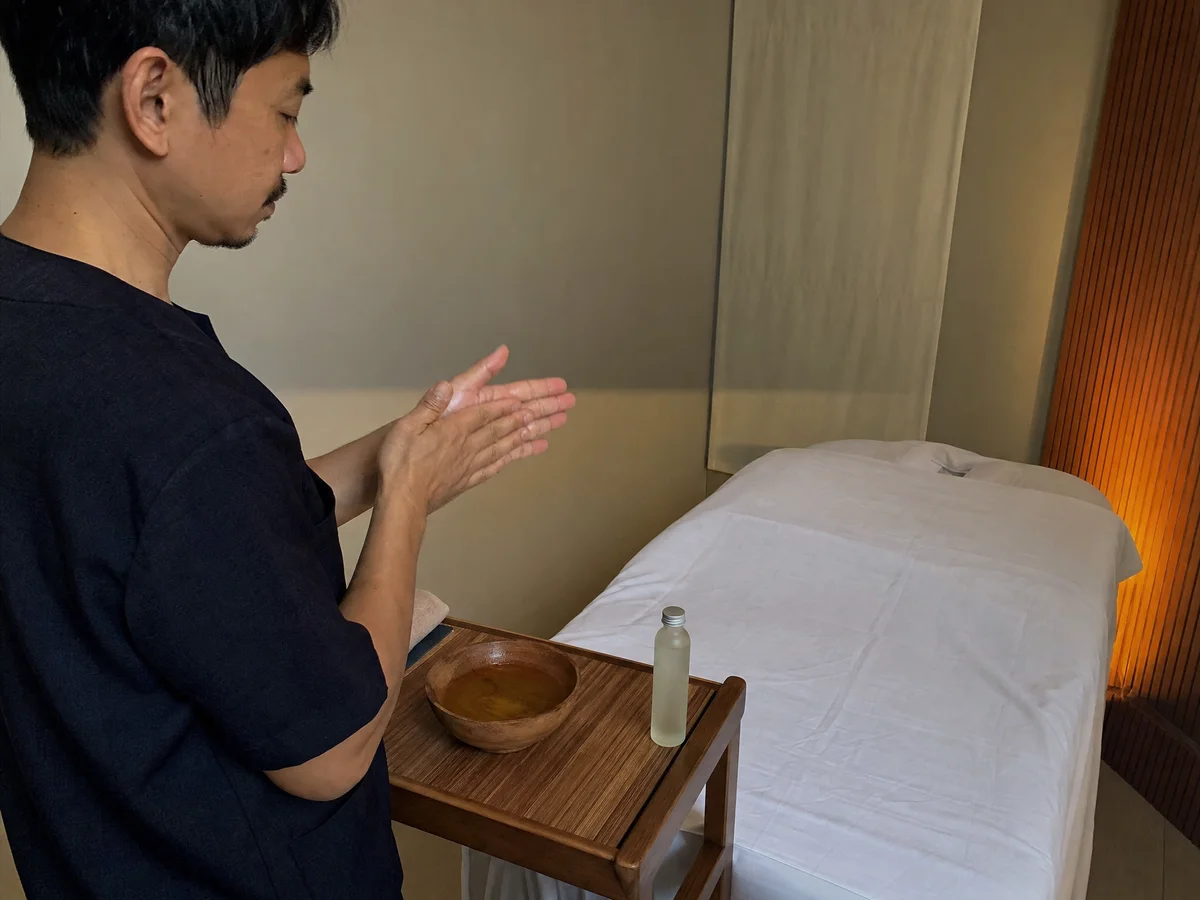
A glide medium, not a treatment
Coconut oil is there to let hands move. The FDA explains that a massage oil marketed to relieve muscle pain becomes a drug under the law (FDA, Is it a cosmetic, a drug, or both?), and we sell our oils as cosmetic carriers with no medical claims. Clients with broken skin, a skin condition, recent surgery or a medical diagnosis should be cleared by their physician or dermatologist. Our oils are external cosmetic oils and are not intended as a personal lubricant.
Storage, linens and buying
Keep both oils closed, cool and dark. We say about 2 years unopened for the fractionated oil and 18 to 24 months in a cool, dark place for the virgin, and those are our figures and not lab data. The NHS warns that clothing and bedding that have touched emollients can catch fire easily (NHS, emollients). That advice is about skin products in general, and it is a good reason for a studio to ask its laundry supplier how to wash oiled linens. Our stain removal article covers the cleaning side.
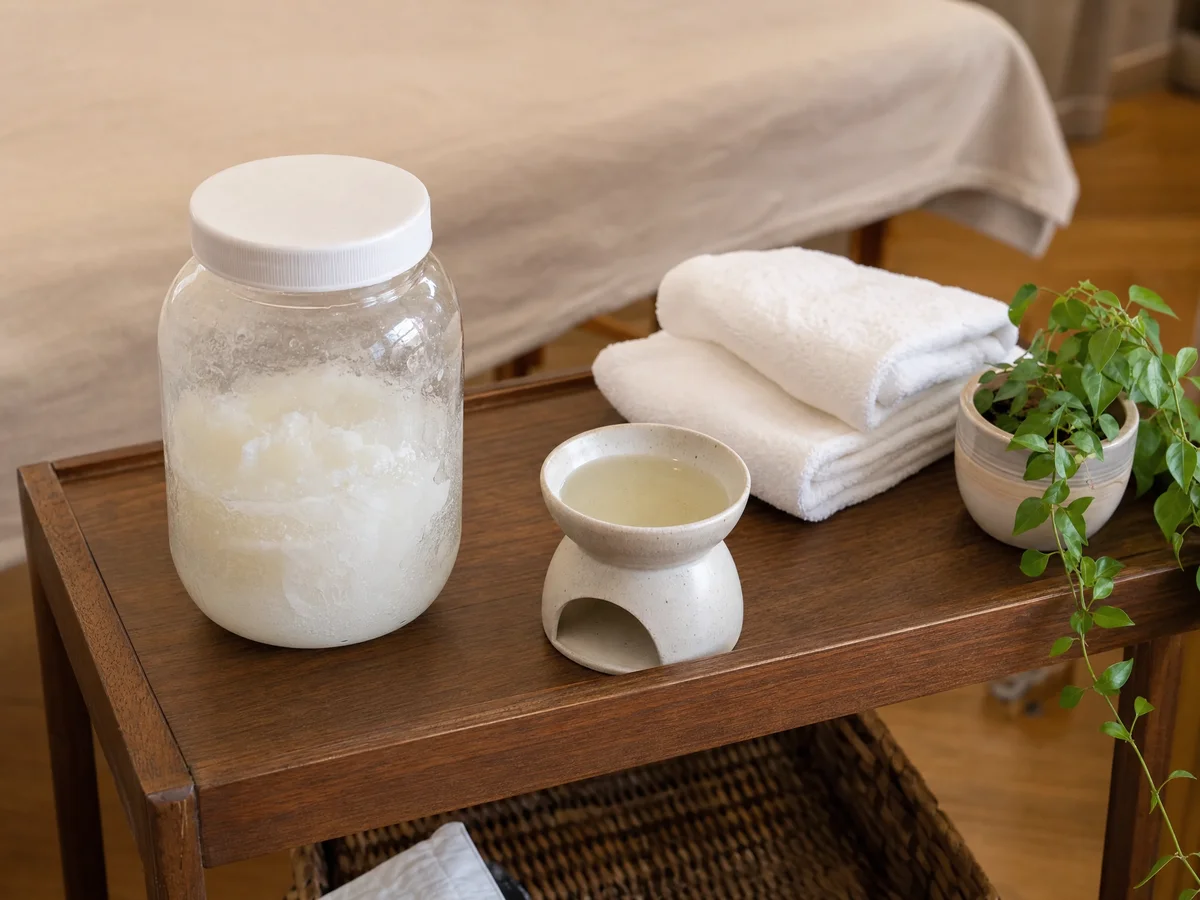
We sell both oils in ten sizes from 0.5 oz to 400 lb, and our wholesale page offers sample bottles, so a studio can try before stocking a case.
Whichever oil you reach for, the nicest sessions come from small habits: warm the oil in your hands first, use a little at a time, and let the pace of your strokes set the amount.
Fractionated Coconut Oil
Fractionated Coconut Oil from our own shop, in sizes from 0.5 oz to bulk.
From $9.99
Shop Now →Sources & Further Reading
- Brans R et al., 2023. Contact sensitizations in massage therapists with occupational contact dermatitis. Contact Dermatitis 88(1):43-53. doi.org/10.1111/cod.14218
- Tisserand Institute. Dilution. tisserandinstitute.org/safety/dilution
- US FDA. Food allergen labeling guidance FAQ. fda.gov
- AAAAI, Lieberman P. Ask the Expert: reaction to coconut. aaaai.org
- US FDA. Is it a cosmetic, a drug, or both? fda.gov
- NHS. Emollients. nhs.uk/conditions/emollients