Tea Tree Oil in Coconut Oil: Dilution Math for Blends
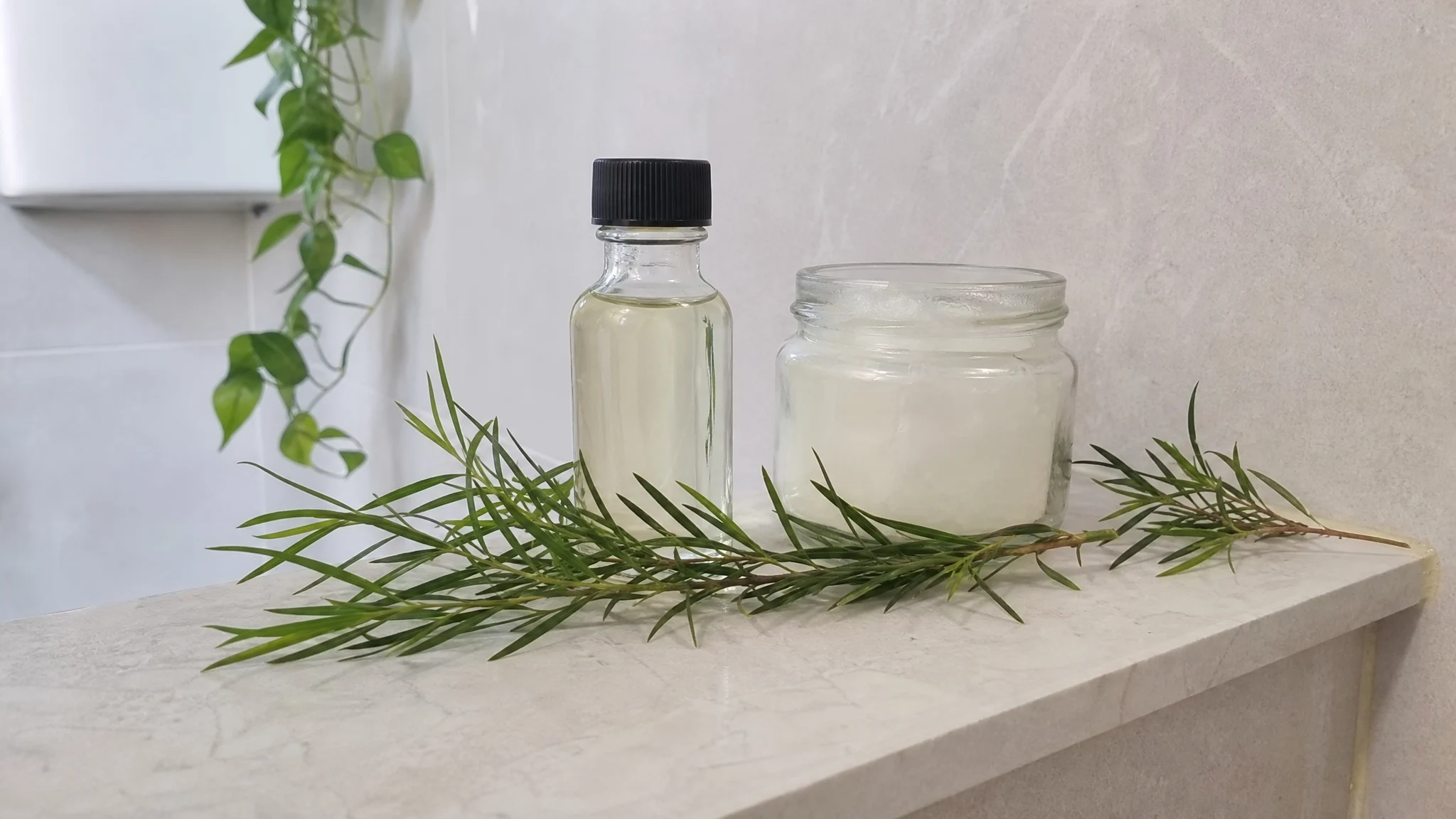
Tea tree oil smells sharp, clean and a little camphor-like, and people tend to love it or find it a lot. It is also far too concentrated to use neat on skin. Coconut oil is the friendly partner: smooth, easy to spread, and happy to turn a potent essential oil into something pleasant to handle. The fun part of blending them is working out the right amounts, so let us do the sums together.
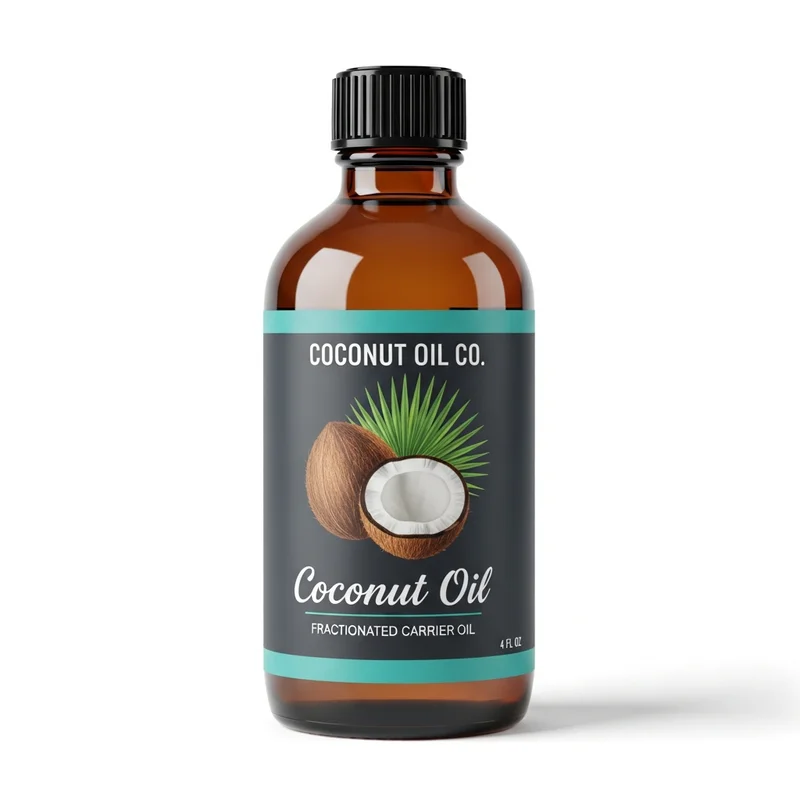
Fractionated Coconut Oil
Our own Fractionated Coconut Oil, in sizes from 0.5 oz to bulk.
From $9.99
Shop Now →What each oil brings to the bottle
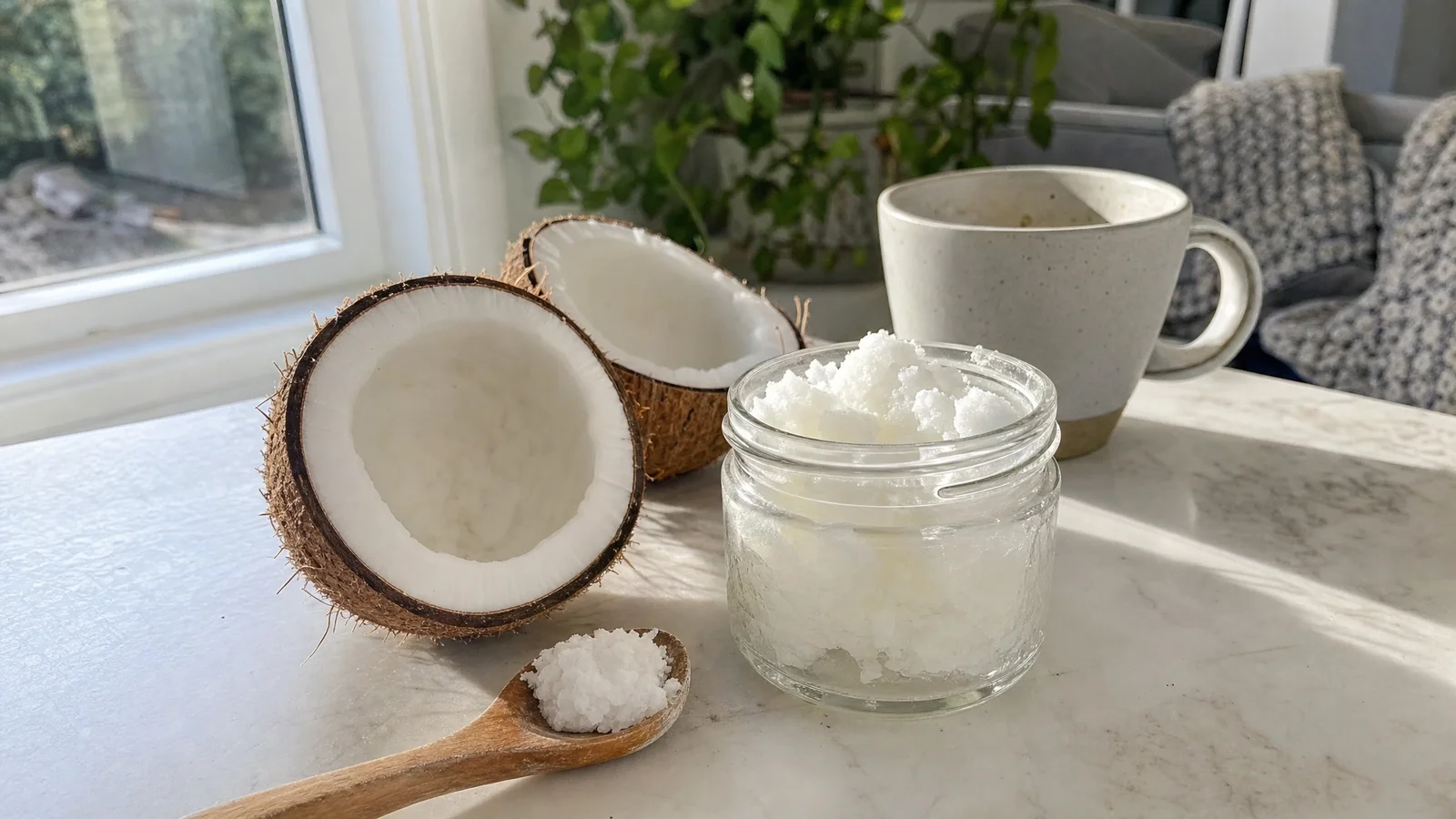
We sell fractionated coconut oil and a virgin unrefined listing, both for external cosmetic use, and we do not sell tea tree oil. Our fractionated oil stays liquid at any temperature, which makes it an easy carrier to measure into, and we list tea tree among the oils it blends with. The virgin oil is firm in a cool room and carries a rich coconut scent that will sit beside the tea tree aroma instead of vanishing behind it.
Tea tree is the half worth reading the label on. The international standard, as summarized in a 2023 review in Antioxidants (Nascimento and colleagues), asks for at least 35% terpinen-4-ol and no more than 10% 1,8-cineole. The same review notes that composition shifts with plant genetics, season and processing, and that cheaper oils are sometimes used to stretch the real thing. A supplier who names the species and botanical name and shows what is in the oil is worth more than a bottle that simply says "pure."
The dilution numbers, worked out
The Tisserand Institute, an essential oil safety education group, publishes dilution ranges by use: 0.2 to 1% for sensitive skin, 0.5 to 1.2% for facial products and deodorants, 1 to 3% for body oils, and 2 to 10% for short-term spot use. It is upfront that drop conversions are always approximate, which is why we work in milliliters. With 1 fluid ounce at about 29.57 ml, the arithmetic looks like this.
| Target strength | Tea tree oil in 1 oz (29.57 ml) of coconut oil | In 4 oz (118.3 ml) |
|---|---|---|
| 0.5% | about 0.15 ml | about 0.59 ml |
| 1% | about 0.30 ml | about 1.18 ml |
| 2% | about 0.59 ml | about 2.37 ml |
| 3% | about 0.89 ml | about 3.55 ml |
These are straight percentage sums, so a small graduated dropper or syringe will serve you better than counting drops. Starting at the low end of the range for your use is the friendliest way in: the next batch can always be a touch stronger, and you cannot take oil back out once it is mixed. The Tisserand page gives no range for children, so we do not offer one. Keep any blend away from your eyes, as we say for the oil itself.
Fresh oil makes a better blend
The U.S. National Center for Complementary and Integrative Health (NCCIH, updated April 2025) says most people can use topical tea tree products without trouble, though some get redness or irritation, more likely when a product is old or has been exposed to heat, light or air. The Nascimento review points the same way, linking allergic contact dermatitis to older oil. From both, three easy habits follow: buy tea tree oil in small bottles, keep it capped, cool and dark, and mix small batches with the date written on the label. The same thinking suits the carrier, and our storage guide covers it. We say about 2 years unopened for our fractionated oil.
Patch test before wider use. Our fractionated oil page asks you to wait 24 hours, and a blend deserves the same patience. A clean patch is reassuring and not a guarantee, and if you have reacted to fragranced products in the past, check with a dermatologist or allergist first. Keep blends off broken or inflamed skin.
Who to check with first
Tea tree oil is for the skin only. NCCIH is direct about swallowing it: taken by mouth it can cause confusion, unsteadiness, inability to walk and coma. A finished blend therefore belongs somewhere out of children's reach.
Pets deserve special care. Pet Poison Helpline's tea tree page says low-concentration products used as labeled, such as shampoos under 1 to 2%, are generally considered non-toxic, while a few concentrated drops on the skin or swallowed can cause severe poisoning in dogs and cats, with liver failure reported in cats. A homemade blend on a pet's coat is not the place to improvise, so call a veterinarian. We do not sell pet products and offer no pet recipe.
The NCCIH page does not cover children, and Tisserand gives no children's range, so for babies and kids a pediatrician is the person to ask. NCCIH says topical products may be safe in pregnancy and breastfeeding, and your OB/GYN, midwife or pharmacist can judge your situation best.
Keeping the big claims in perspective
Search results love to present this pairing as a fix for everything. The NCCIH summary is much calmer: early research points to topical tea tree oil possibly helping with acne and athlete's foot, more evidence is needed, and for athlete's foot it may not work as well as standard treatments. Those studies used tea tree oil, not our coconut oil, and a trial of tea tree in some base does not show that coconut oil adds anything beyond carrying it. If acne is why you are here, a dermatologist is the right first call, and our acne comparison walks through what the trials measured. We leave household-surface claims out, since coconut oil is not a cleaner or disinfectant.
A quick way to decide
- For a pet, baby or child, ask a veterinarian or pediatrician first.
- If you are pregnant or breastfeeding, ask your OB/GYN, midwife or pharmacist.
- If you have reacted to fragrance or essential oils before, see a dermatologist or allergist.
- Otherwise choose a strength from the lowest range that fits your use, measure in ml, patch test for 24 hours, and retire old blends.
For the carrier, our fractionated coconut oil stays pourable and pairs with tea tree by design.
The same arithmetic works for any essential oil, and our essential oil dilution guide shows the wider picture. Our coconut allergy article has the questions worth asking first.
Fractionated Coconut Oil
Fractionated Coconut Oil from our own shop, in sizes from 0.5 oz to bulk.
From $9.99
Shop Now →Sources & Further Reading
- NCCIH, 2025. Tea Tree Oil. nccih.nih.gov/health/tea-tree-oil
- Nascimento T et al., 2023. Antioxidants 12(6):1264, tea tree oil in acne. pmc.ncbi.nlm.nih.gov/articles/PMC10295805
- Tisserand Institute. Essential oil dilution. tisserandinstitute.org/safety/dilution
- Pet Poison Helpline. Tea Tree Oil. petpoisonhelpline.com/poison/tea-tree-oil