How to Store Coconut Oil So It Stays Fresh
Coconut oil is one of the most easygoing oils to keep. It does not need the refrigerator, and a jar that goes solid in winter and liquid in summer is simply doing what coconut oil does. What really shortens its life comes down to three things: water, heat, and a lot of air and light. Here is why, how to tell a texture change from true spoilage, and what we say about the two oils we sell.

Fractionated Coconut Oil
Our own Fractionated Coconut Oil, in sizes from 0.5 oz to bulk.
From $9.99
Shop Now →Why coconut oil keeps so well
Oils go off through oxidation. Oxygen attacks the fatty acids, first making peroxides and then smaller compounds that smell rancid. A 2025 review explains that the more unsaturated an oil, the faster it oxidizes, and gives relative rates for C18 fatty acids at 100 C: 1 for stearic (saturated), 10 for oleic, 100 for linoleic and 150 for linolenic. It adds that more saturated oils such as coconut, palm and babassu do better on oxidation stability, and in a six-week sunlight comparison of four oils, coconut oil was the most resistant (Gharby et al., Food Chem X, 2025). Coconut oil is more than 90% saturated by fatty acid (Yang et al., Food Chem X, 2026), which puts it at the stable end of that scale.
Those studies concern coconut oil in general, mostly as a food ingredient. Carrying them over to fractionated oil is our inference, since fractionation changes the mix of fatty acids, but its saturated, medium-chain character points the same way.
Three habits that matter most
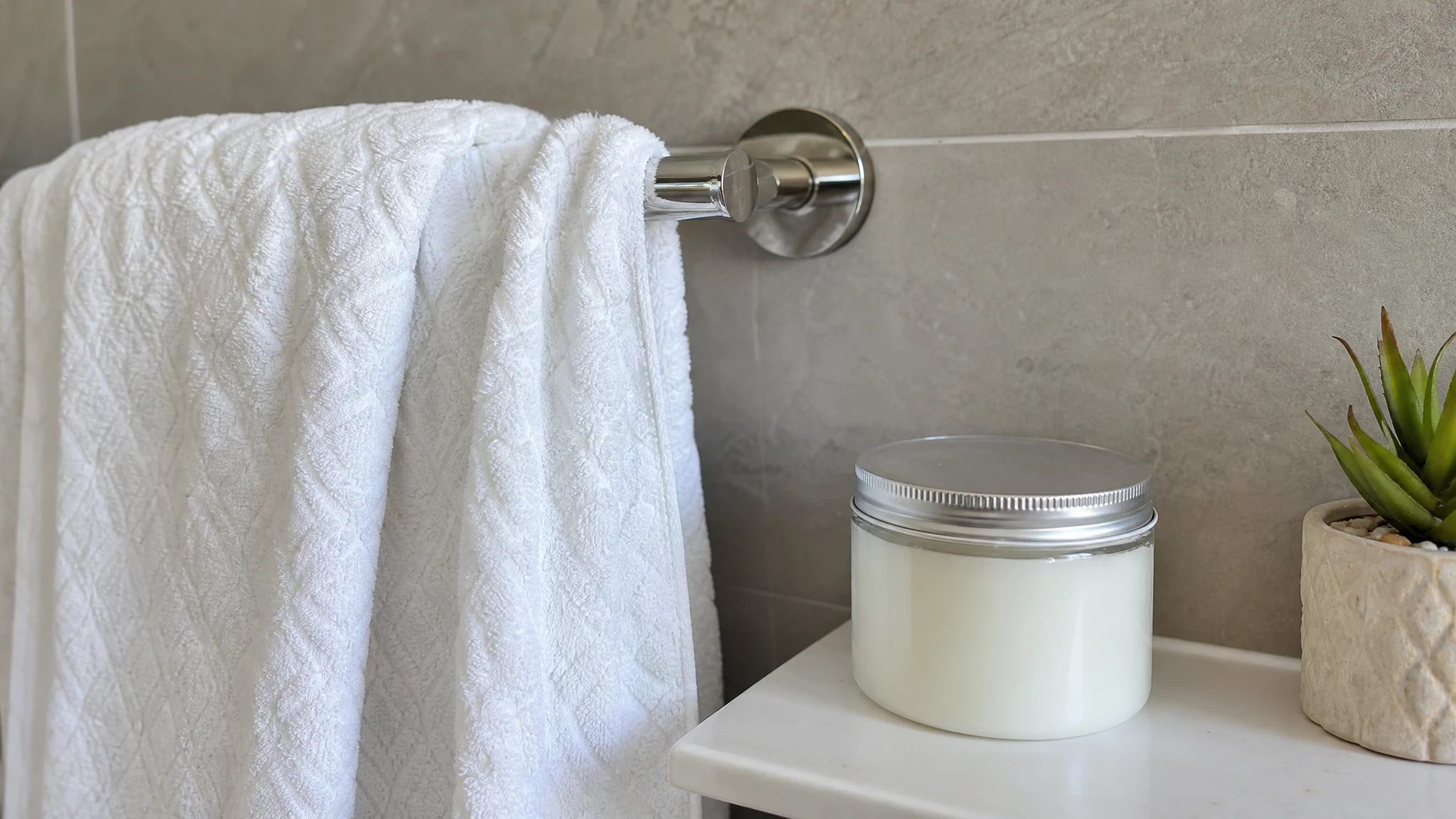
Keep it dry. The same review notes that water is well known to act as an oxidation catalyst. A wet spoon, a wet hand or a jar that collects steam in the bathroom are the usual routes, and this is the easiest one to prevent. Use a dry spoon or a clean dry finger, and keep the jar away from the shower.
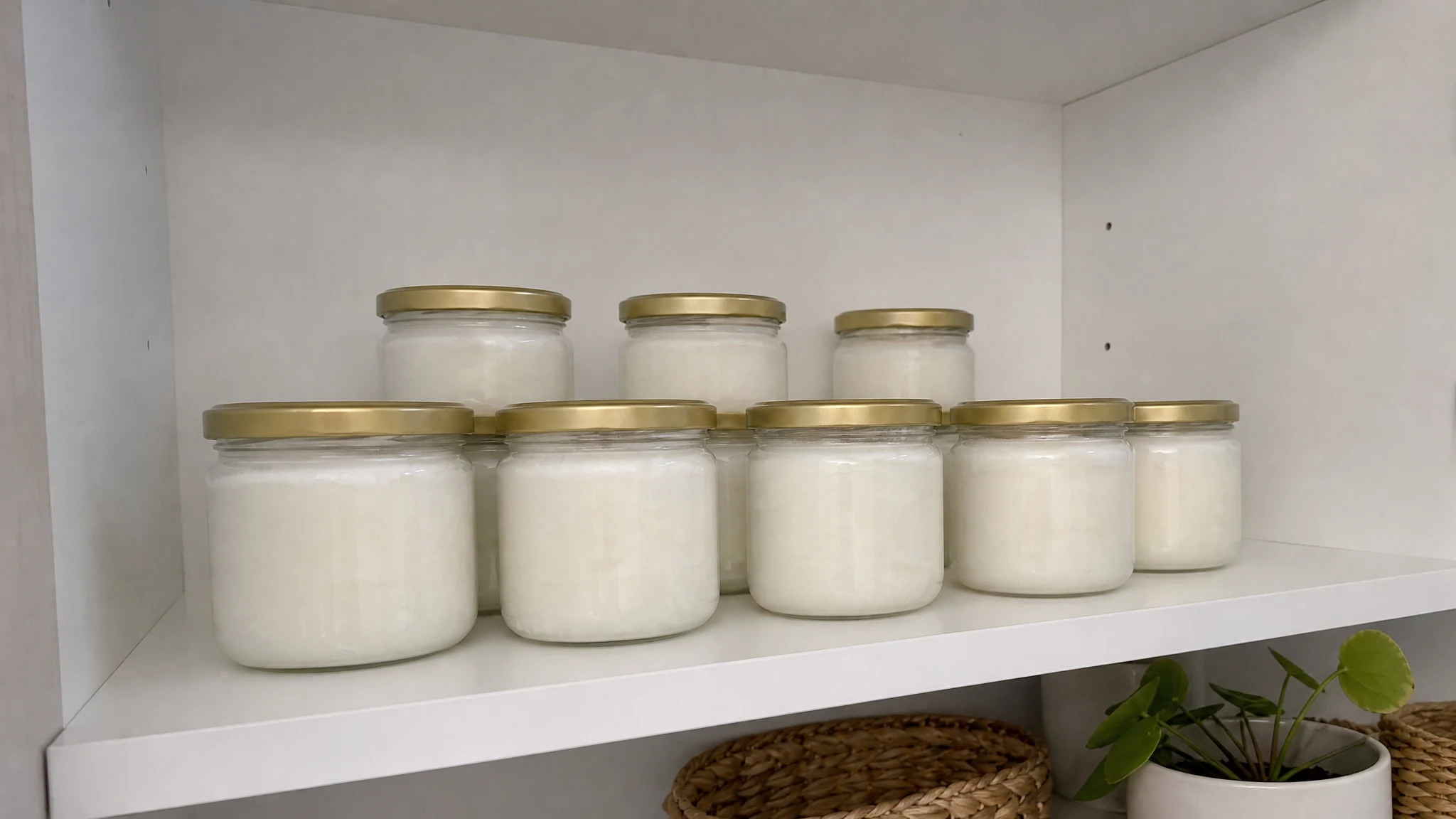
Keep it cool. Oxidation rate roughly doubles for each 10 C rise in temperature, per the review. Reasoning from that, a jar on a shelf above the stove at 30 C ages about twice as fast as one at 20 C. A cool cupboard is the best home.
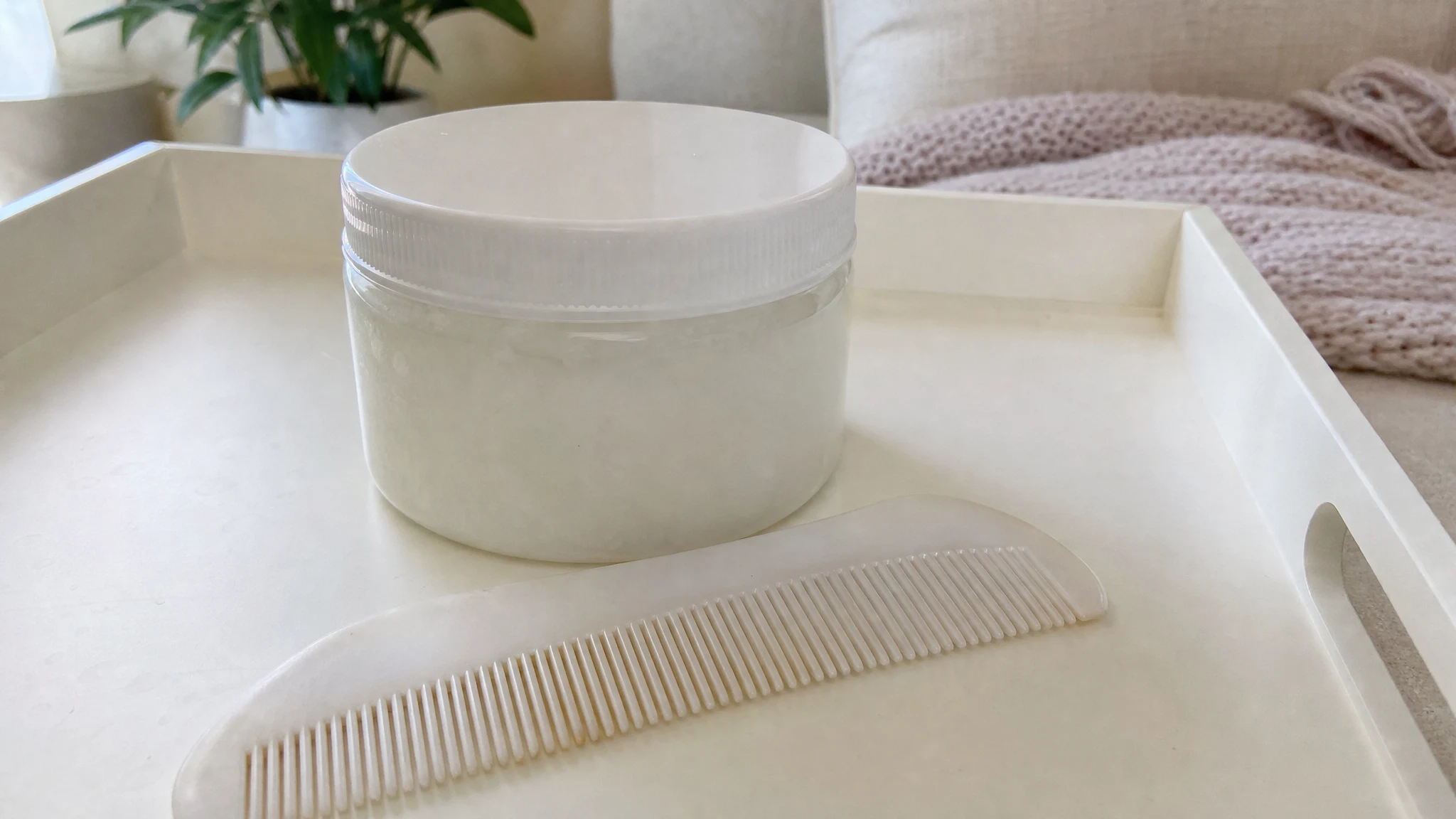
Keep air and light out. The review reports that oxidation stability is better preserved without light, and that lowering the oxygen in the headspace of soybean oil bottles from over 15% to 3% stretched shelf life from 60 to 180 days. A half-empty jar holds more air than a full one, so a smaller jar for slow-use oil beats a big one left open all year. If you buy large, decant a small working jar and keep the rest sealed. Our bulk page lists the sizes.
Solid in winter, liquid in summer
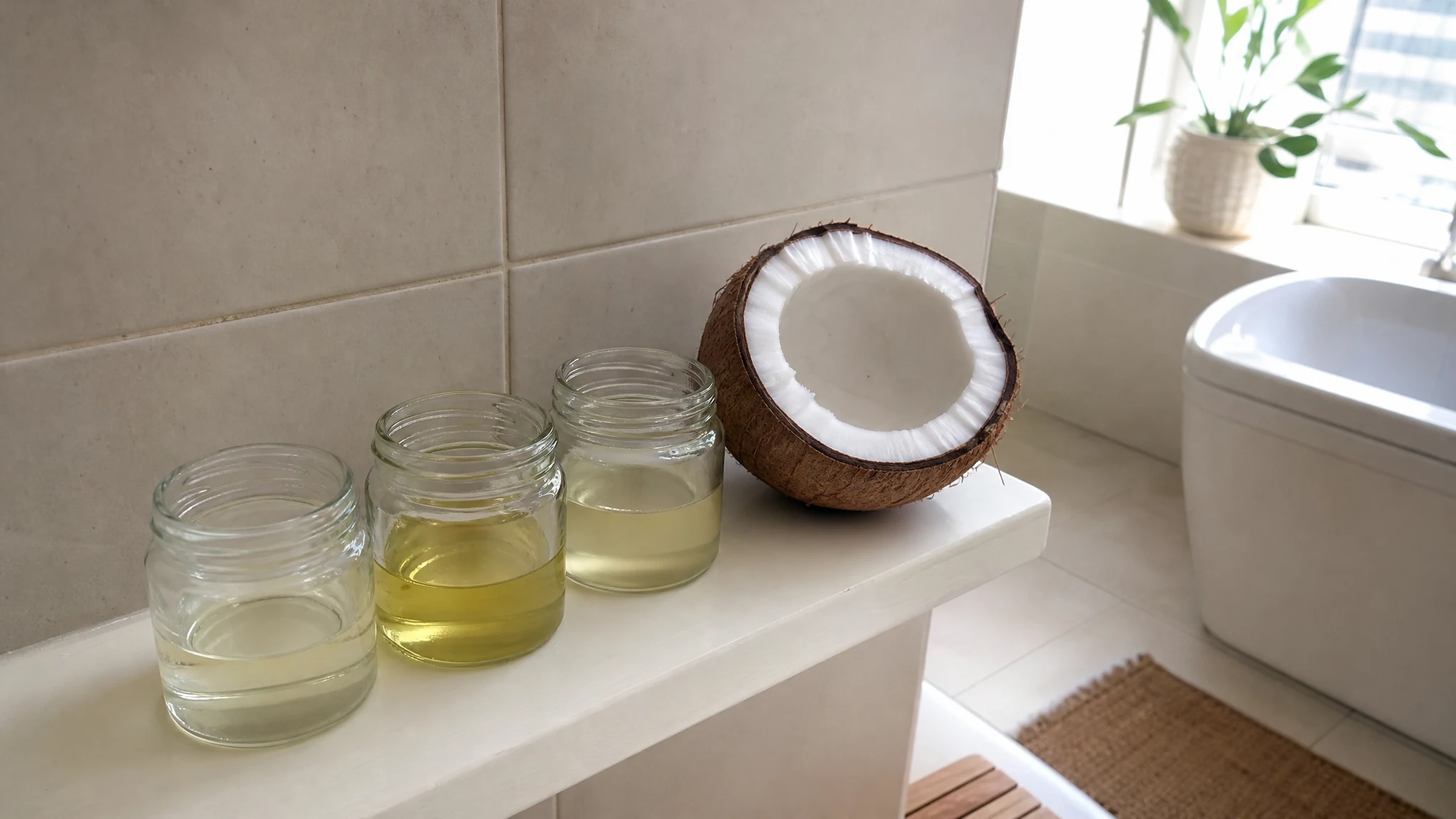
In the 2026 study, untreated virgin coconut oil melted at about 25.25 C (77.5 F) and refined oil at 26.86 C (80.3 F), so a kitchen that crosses 77 F will liquefy it. Our virgin unrefined oil sets at about 76 F. Going back and forth does not mean the oil has turned. What heat does is speed up oxidation, so a jar that sits liquid in a hot cupboard all summer ages faster than one in a cool spot. Our melting guide covers warming a jar gently, and summer skin care covers using it in hot weather. If the texture swings bother you, fractionated oil is the answer and the fridge is not: we describe it as staying liquid at any temperature.
Refrigerating is allowed but not required. The Brunei team that made virgin oil four ways in the lab kept their oils refrigerated until use (Ghani et al., 2018), without reporting for how long. Cold makes the oil firmer and harder to scoop, which is the main trade-off.
How to tell whether it has turned
No single lab number settles it. Peroxide value captures only the early stage of oxidation, and the unpleasant off-notes come from secondary compounds that form later, so in a kitchen or bathroom your nose is the best tool.
- Smell. Fresh virgin oil smells of coconut, and we describe fractionated oil as virtually odorless. A sharp or stale smell that was not there when it was new suggests oxidation. The review ties off-notes to secondary compounds but gives no number that matches a rancid smell, so we cannot offer a threshold.
- Appearance. Cloudy liquid, a water layer, specks or any fuzzy growth means discard it. Water lets microbes grow, which is our reasoning and not a coconut-specific finding.
- Color. A once-white solid turning yellow is a prompt to smell, not a verdict.
If it smells off, stop using it on skin. We do not know what oxidized coconut oil does to skin, so if you have a reaction, a dermatologist is the person to ask.
It helps to open the jar and smell it each time you use it. Fresh virgin oil has a gentle coconut note, and we describe fractionated as virtually odorless, so you will quickly learn what normal smells like for your jar.
What we say about ours
For our fractionated coconut oil we say about 2 years unopened. For our virgin unrefined oil we say typically 18 to 24 months when kept tightly closed in a cool, dark place. Those are our own statements, not lab measurements. The certificate of analysis we publish covers one fractionated batch (best by 07/31/2028) and gives physical measurements only, with no peroxide value or free fatty acid result, so if you need a measured shelf-life figure for a formula, ask us in writing before ordering. Keep both cool and dark, with the cap on tight and water out.
If storage is part of how you are choosing between them, our comparisons of virgin and refined and fractionated and virgin lay out the other differences, and our questions-answered post covers more. Both of our oils are for external cosmetic use, and a cooking oil in your kitchen follows its own label.
Fractionated Coconut Oil
Fractionated Coconut Oil from our own shop, in sizes from 0.5 oz to bulk.
From $9.99
Shop Now →Sources & Further Reading
- Gharby S et al., 2025. Vegetable oil oxidation: mechanisms, impacts on quality, and approaches to enhance shelf life. Food Chem X. PMC12146556
- Yang H et al., 2026. Synergistic effects of ultrasound and stirring on crystallization behavior of coconut oil. Food Chem X 37:104068. PMC13277645
- Ghani NAA et al., 2018. Physicochemical properties, antioxidant capacities, and metal contents of virgin coconut oil produced by wet and dry processes. Food Sci Nutr 6(5). PMC6060898