How to Make Coconut Oil From Fresh Coconuts at Home
Cracking a mature coconut, grating the meat and watching a pale cream rise in a bowl is a deeply satisfying kitchen project. It also comes with a surprise: turning that cream into clear oil takes an afternoon for a single small jar, and the published yields show why. Here is how the wet method works in the lab, how it can be adapted for a home kitchen, and where buying a bottle is the happier road.
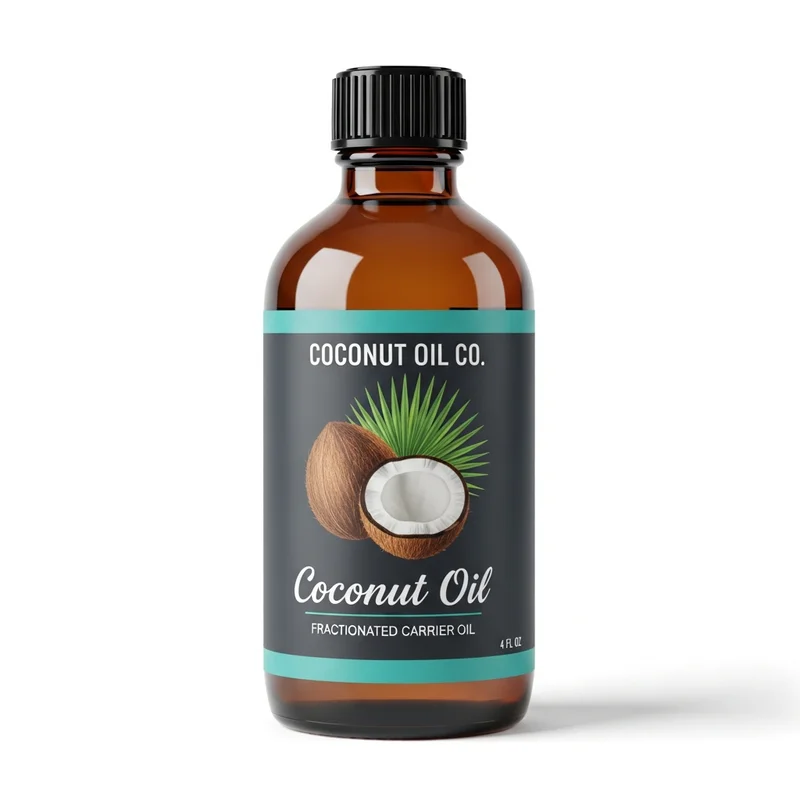
Fractionated Coconut Oil
Our own Fractionated Coconut Oil, in sizes from 0.5 oz to bulk.
From $9.99
Shop Now →Decide what the oil is for
A kitchen batch arrives without a peroxide value, a moisture reading or a free fatty acid figure, and how much that matters depends on the job. For a curiosity project, or a hair oil you will use up quickly, it is a lovely thing to try. If you plan to eat it, check a food-safety source for current guidance, because that is outside what we can advise. For anything you sell, a baby product, or skin that is damaged, supplier batch paperwork exists for exactly this reason, and homemade oil cannot match it.
Our view is that making oil at home is a wonderful way to understand where coconut oil comes from, and a less reliable way to get consistent oil. If consistency matters to you, buying is the practical route, and how coconut oil is made commercially shows what a producer can control that a kitchen cannot.
How the lab version goes
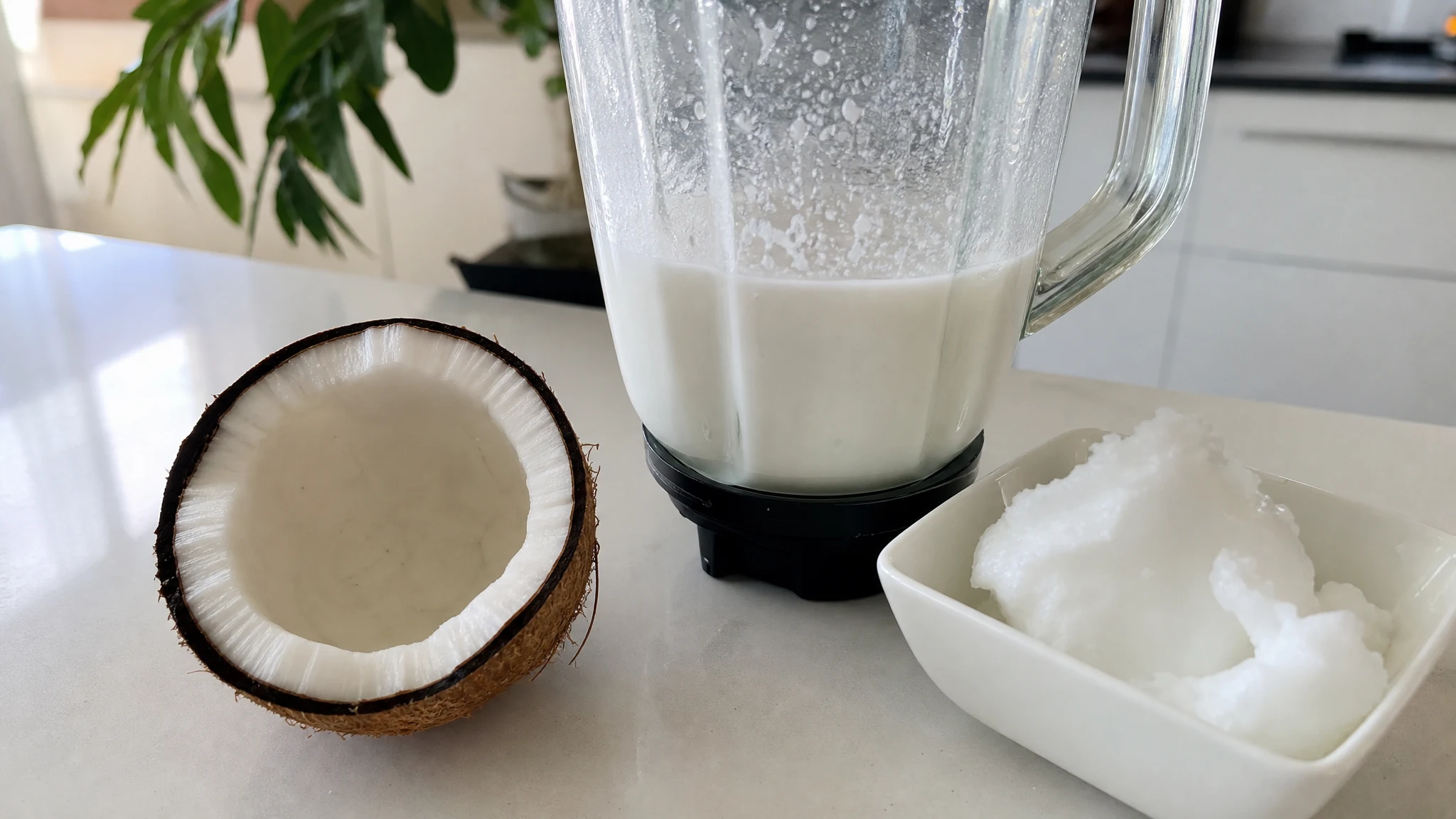
The closest published description of a fresh-coconut wet process comes from a Brunei laboratory that compared four ways of making virgin oil (Ghani et al., 2018). They used mature, unsprouted nuts more than 12 months old. For the wet routes they de-husked and grated the meat, discarded the water from the cavity, then squeezed and filtered the milk through cheesecloth. In the chill-and-centrifuge version the milk was chilled below 4 °C and mixed for 15 minutes, the cream was lifted off and thawed in a 50 °C water bath, and it was spun at 6,000 rpm for 45 minutes. The fermentation version let the milk sit at room temperature for 72 hours before the same spin.
The yields tell the story. Chill-and-centrifuge gave 20.44% and fermentation 9.43%, while the two dry routes (drying grated meat in an oven or in sunshine, then pressing it) gave 47.92% and 40.60%. The paper does not state in the parts we read what those percentages are measured against, so treat them as a ranking and not a promise. The ranking is still useful: fermenting gave less than half the yield of chilling, and its free fatty acid reading (0.53%) was above the 0.2% limit the paper lists, while the chilled oil came in at 0.17%. All four oils had moisture between 0.10 and 0.17%, inside the 0.3% limit the authors cite.
A kitchen adaptation
The one thing a home kitchen lacks is a centrifuge, so the steps below follow the lab sequence and let gravity and cold do the separating. These substitutions are our reasoning from the published method, not a published home recipe.
- Choose mature nuts. The Philippine copra bulletin describes mature nuts as about 10 months old with husks turning from green to brown (BAFS, 2021), and the Brunei team used even older ones. Skip any with cracks or mold.
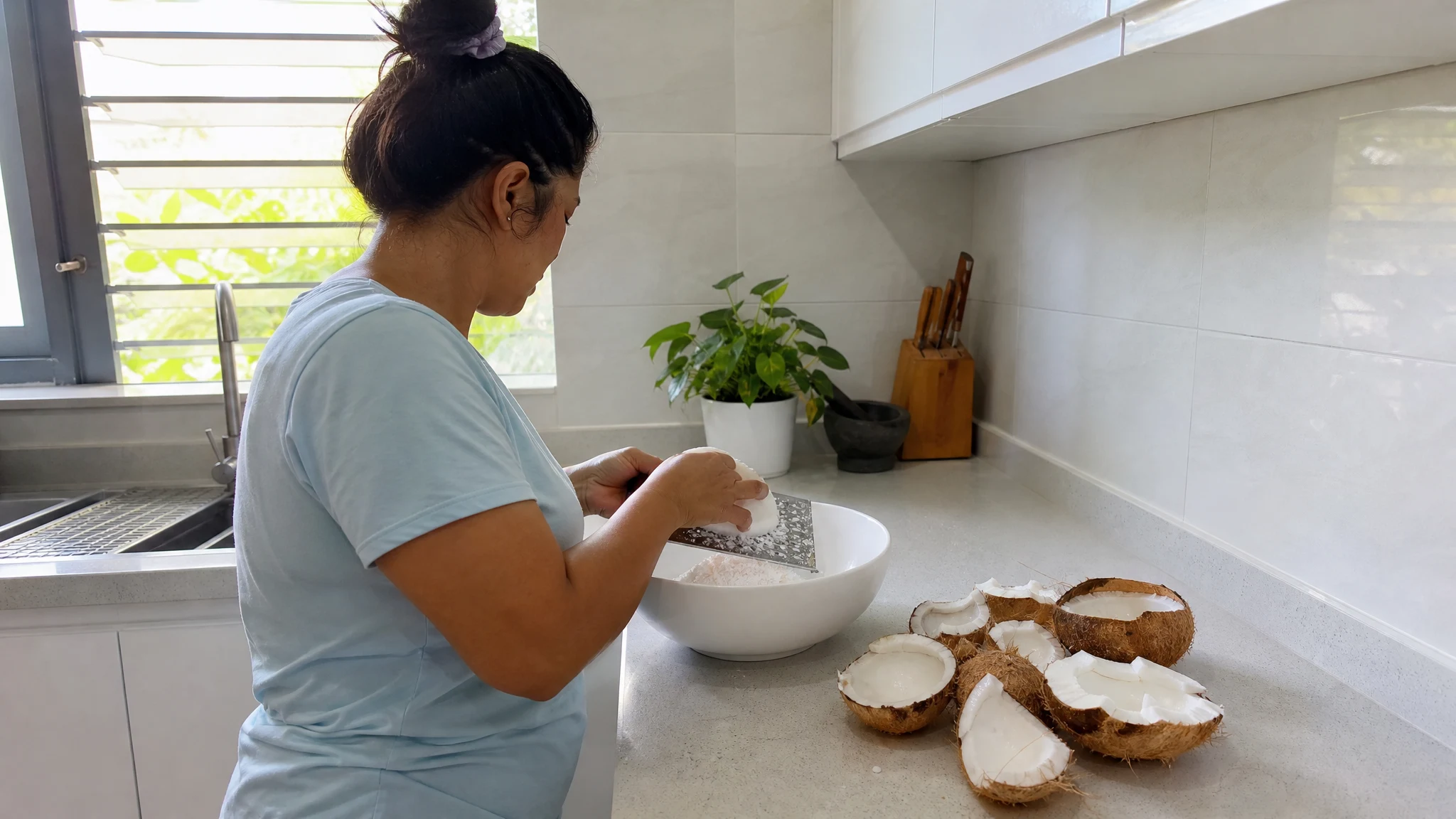
- Open, drain, remove the meat on a clean surface with clean tools, and pour away the water inside.
- Grate and squeeze through cloth. The paper gives no water ratio, so any water you add is your own variable, and more water means more to separate later.
- Chill the milk in a refrigerator until the cream sets on top, then lift it off. A fridge is slower than the lab's 15-minute rotator, so watch the milk, not the clock.
- Warm the cream gently in a water bath near the lab's 50 °C. India's CFTRI review describes commercial practice as heating cream to 60-80 °C before centrifuging (Gopala Krishna et al., 2010), so staying under that keeps it a gentle-heat oil.
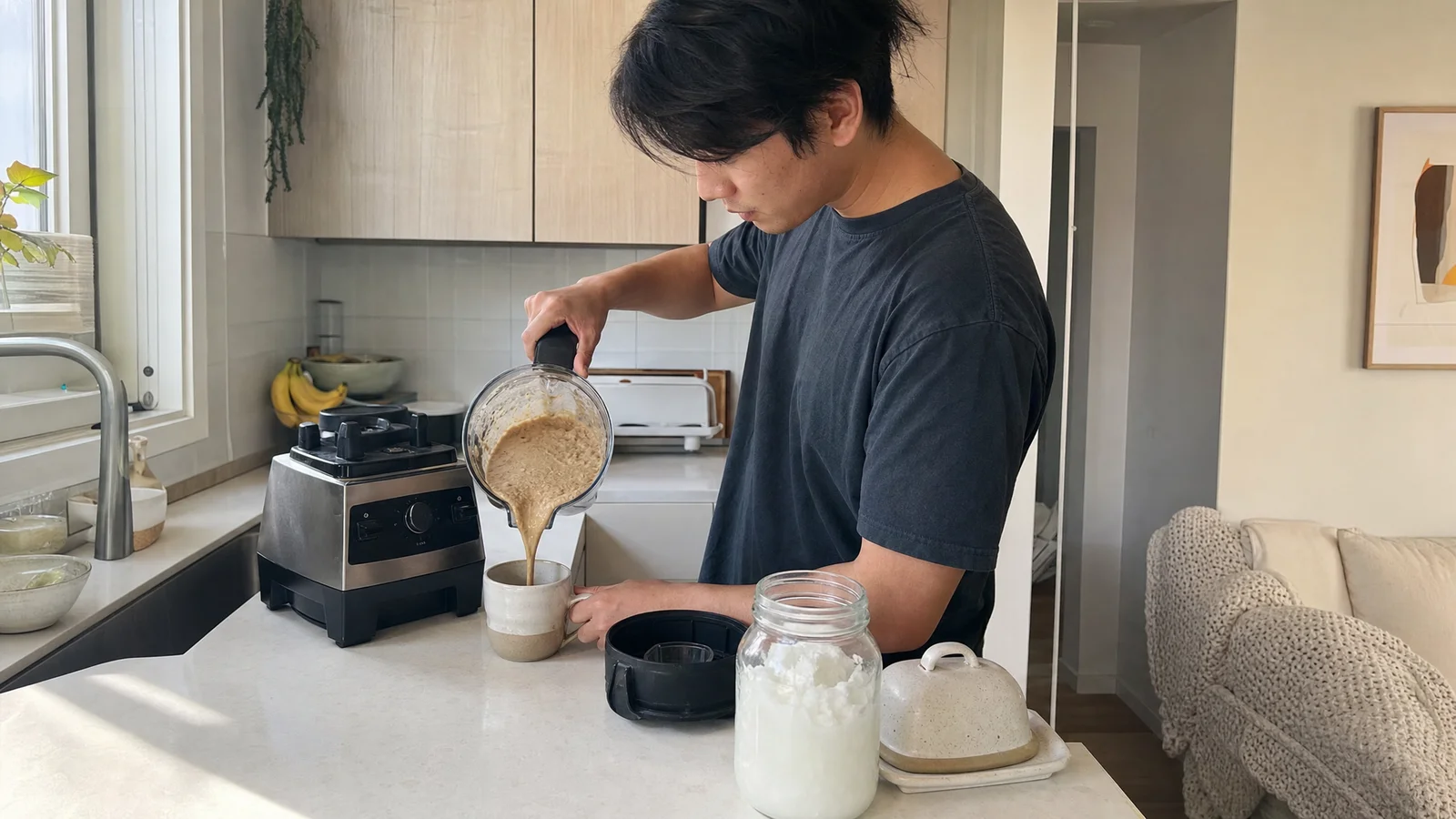
- Separate oil from water. Without a spin, let the warm mixture settle until clear oil rises, chill so the oil firms, then lift it off the water below. Repeat if it looks cloudy, because this is the step where water gets trapped.
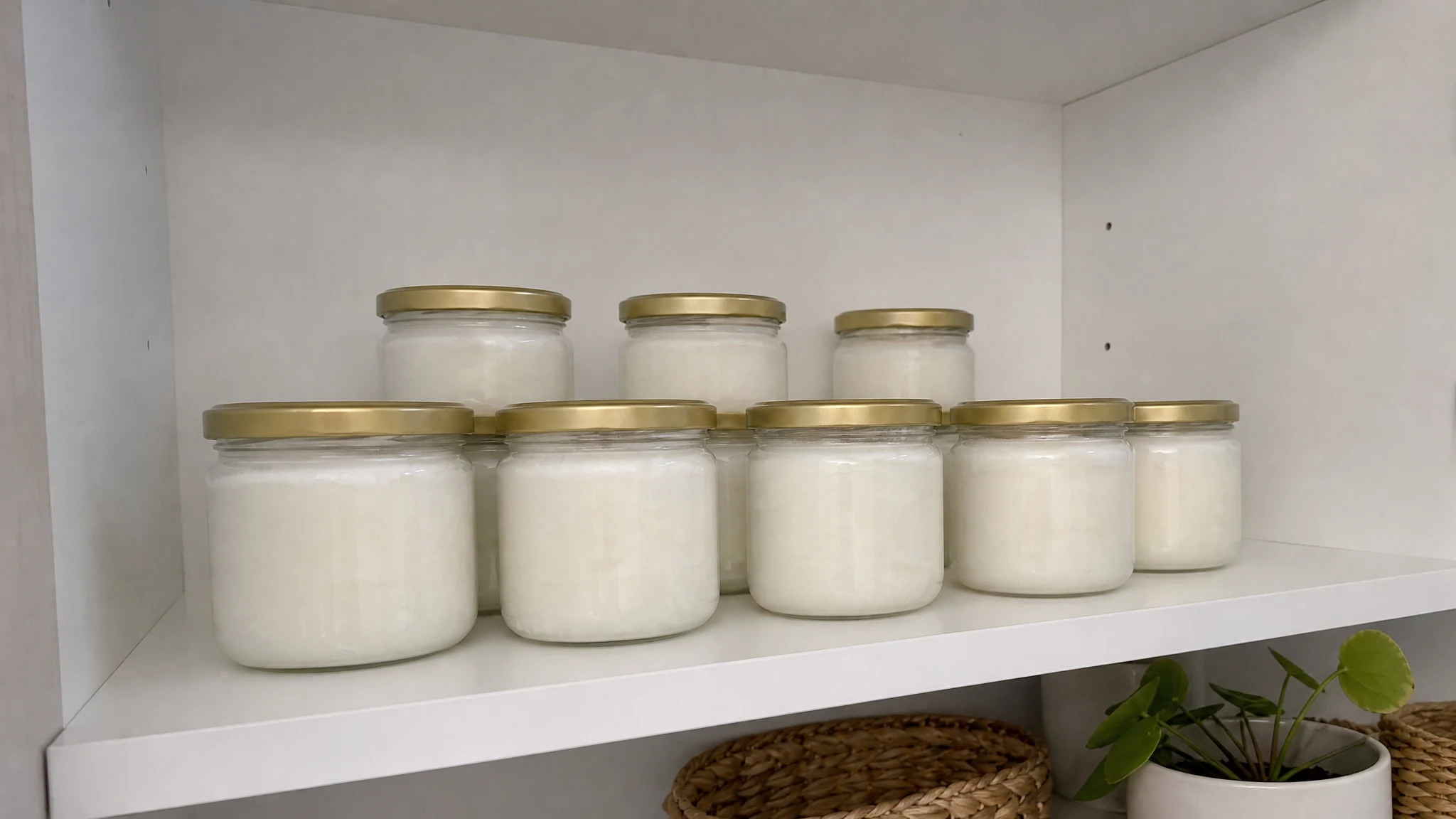
- Filter through a clean cloth into a small, clean, dry jar.
Water is the thing to watch
The lab measured moisture by heating samples at 105 °C for at least 24 hours, which is not a kitchen test. From that follows our practical conclusion: residual water is the big unknown in a home batch, and water is what lets spoilage organisms grow in oil. Keep jars small and refrigerated, since no source gives a shelf life for homemade oil and we will not invent one. Discard any batch that turns cloudy at the bottom, bubbles, smells sour or shows mold. Keep it out of damp bathrooms, and leave herbs and flowers out of the jar, because wet plant material brings the water question right back.
How many coconuts a jar takes
Because the wet route yields so much less than the dry ones, a small jar takes a lot of coconuts. That is one plausible reason the CFTRI review reports that India and Sri Lanka generally make oil from copra, although wet processing has its own appeal, since it skips the long drying step where mold can set in. For a regular supply, the arithmetic favors buying, and our bulk sizes and our guide to buying fractionated coconut oil in bulk cover larger quantities.
When a bottle is the better answer
A homemade batch will set firm in a cool room and smell richly of coconut, which suits some projects beautifully. If you want a liquid oil for massage blending, roll-on blends or a beard oil, our fractionated coconut oil is designed to stay liquid at any temperature. If coconut aroma is the point, our virgin unrefined coconut oil is the closer match, and we can supply specifics on request, since we do not publish a certificate of analysis for it. The virgin versus refined and fractionated versus virgin comparisons help you choose.
Our oils are for external cosmetic use. Whatever oil you use on skin, patch test a small area first, and if you have a coconut or tree nut allergy, check with a professional before using coconut products. Happy grating.
Fractionated Coconut Oil
Fractionated Coconut Oil from our own shop, in sizes from 0.5 oz to bulk.
From $9.99
Shop Now →Sources & Further Reading
- Ghani NAA et al., 2018. Physicochemical properties, antioxidant capacities, and metal contents of virgin coconut oil produced by wet and dry processes. Food Sci Nutr 6(5). PMC6060898
- Gopala Krishna AG et al., 2010. Coconut Oil: Chemistry, Production and Its Applications, A Review. Indian Coconut Journal. coconutboard.in
- Philippine Bureau of Agriculture and Fisheries Standards, 2021. Ensuring the Safety and Quality of Copra. bafs.da.gov.ph