Coconut Oil Beard Oil: Liquid or Firm, Which to Pick?
Ask a few people with beards what they want from a beard oil and the answers sound alike: soft, easy to comb, a little sheen, and nothing that smells like a candle shop by lunchtime. Coconut oil can do all of that, but the two coconut oils we sell behave so differently on a face that the choice between them matters more than any recipe.
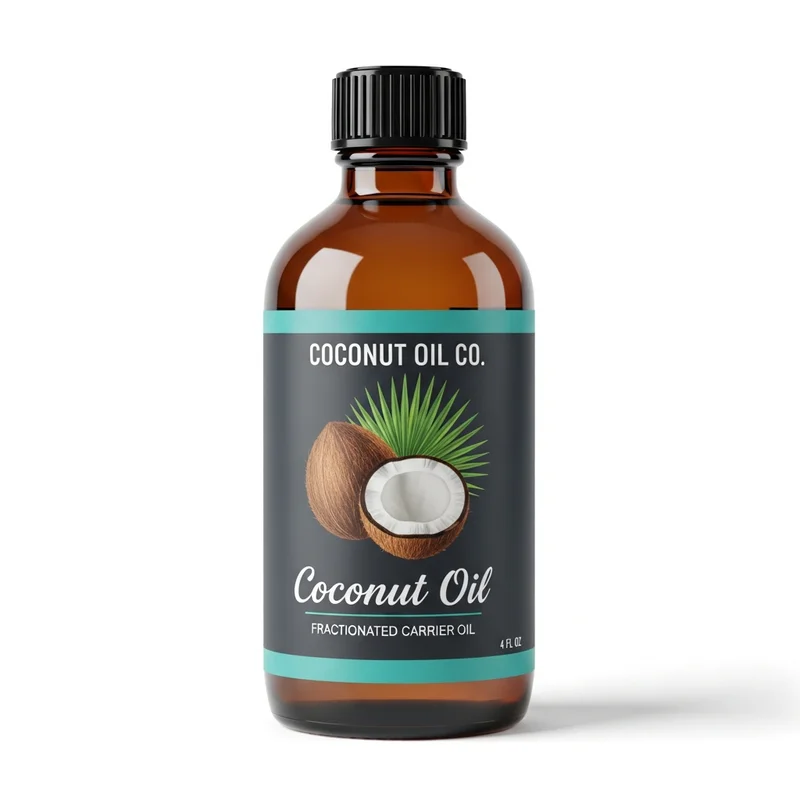
Fractionated Coconut Oil
Our own Fractionated Coconut Oil, in sizes from 0.5 oz to bulk.
From $9.99
Shop Now →Liquid or firm: the choice that shapes everything
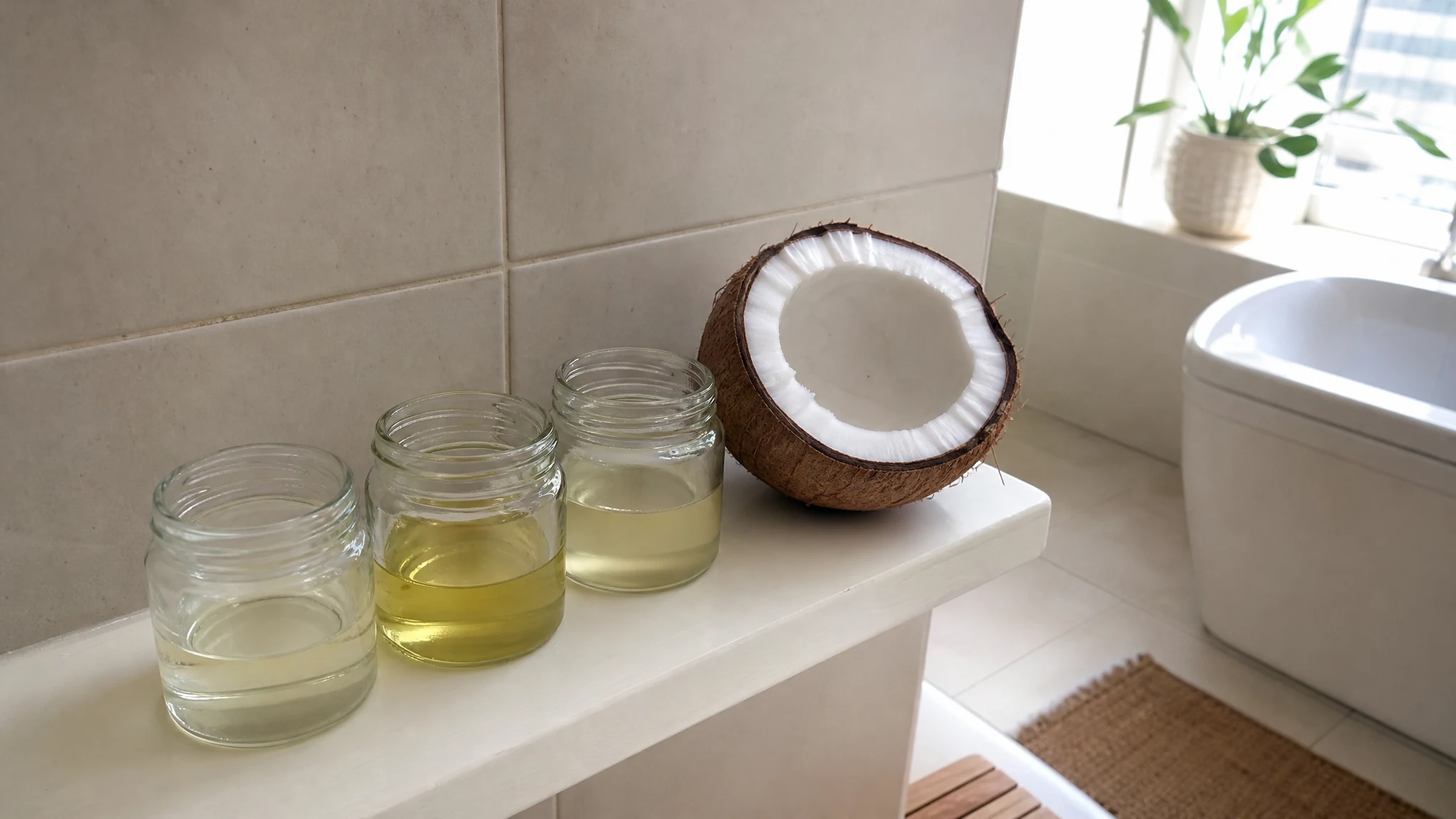
Our fractionated coconut oil stays liquid at any temperature, and we describe it as colorless, fast-absorbing and virtually odorless. It pours, spreads across your palms without any warming, and leaves no coconut scent behind, which counts for a lot when the oil sits right under your nose all day. For a daily leave-in, this is the one we would point you to.
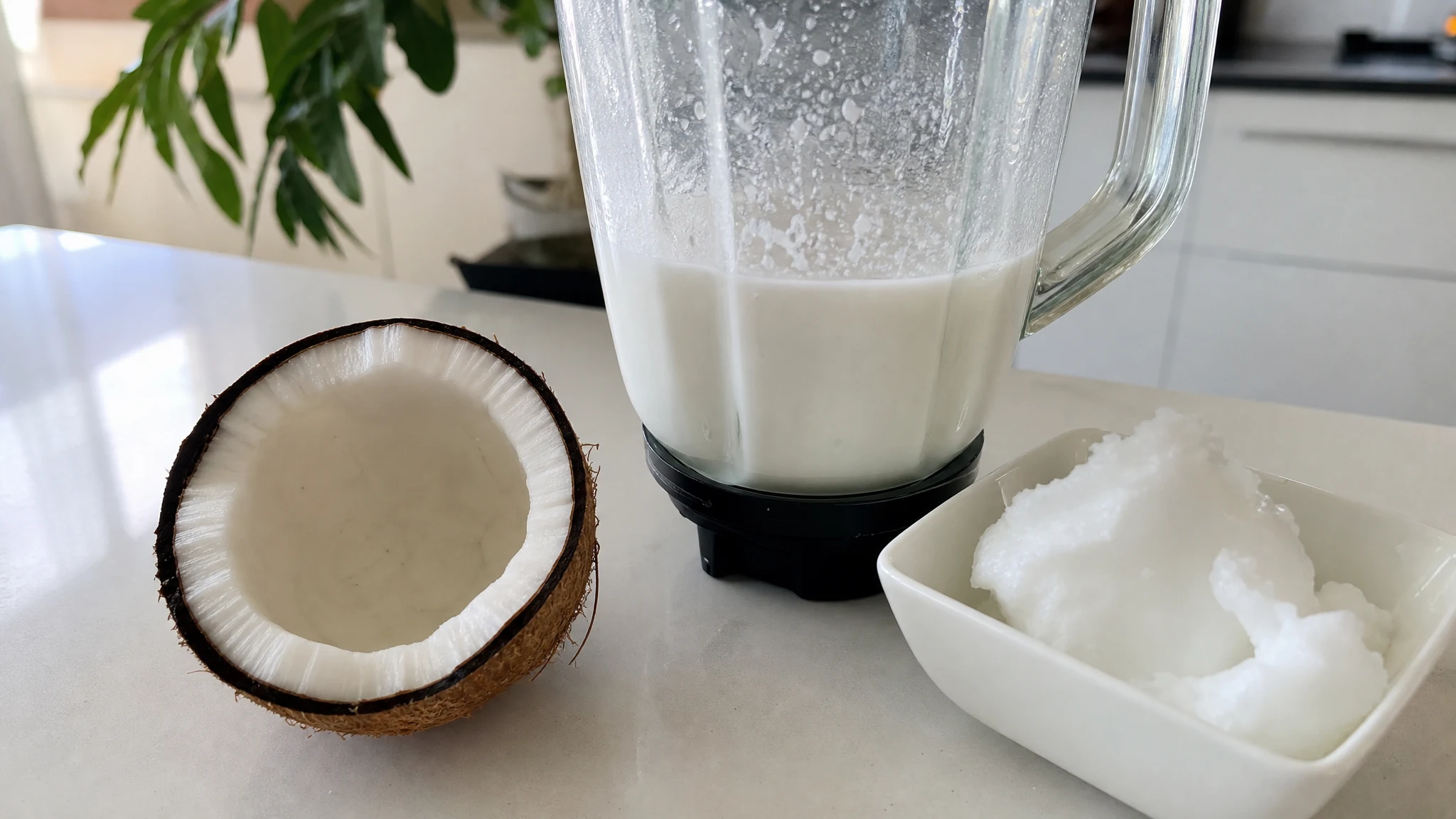
Our virgin unrefined coconut oil is a different experience. It is firm in a cool room, melts the moment it meets warm hands, and smells unmistakably of coconut. For some people that scent is the whole appeal, and it makes a lovely weekend conditioning pass. On a dense beard a thick film takes more combing and is easy to overdo, so we would treat it as the occasional indulgence and keep the liquid oil for every day.
Neither is a finished beard product, since we sell the oil neat. Scent, hold and anything waxy would be your own additions.
What the hair studies tell us
Most of the evidence on coconut oil and hair comes from fibers taken from the scalp. A 2003 paper compared mineral, sunflower and coconut oil used before or after washing, and coconut oil was the only one that clearly reduced protein loss from both undamaged and damaged hair; the authors pointed to the affinity of lauric acid triglyceride for hair protein (Rele and Mohile, 2003). A 2005 paper from the same research group found that coconut oil reduced adhesion between fibers over time, which they read as the oil moving into the fiber (Keis et al., 2005).
Both were company-backed studies of scalp-type fibers, and beard hair was not part of them. Beard hair is still hair, so similar behavior is a reasonable expectation, but that is our inference, not a result. There is one more detail worth knowing: those studies used coconut oil with its lauric acid, while fractionated oil keeps only the medium-chain triglycerides and has no published fatty-acid profile. So virgin oil is the closer match to what was studied, and fractionated oil wins on everyday wearability. Choose the trait you value more.
How much to use
Beards hold a thin film beautifully and a heavy one not so well. A quarter teaspoon is about 1.2 ml, which works out to roughly 1.2 g at the 0.948 relative density measured on the one fractionated batch behind our published Certificate of Analysis. Rub that between your palms until you have a sheen rather than a puddle, work it in from the skin outward with your fingertips, then comb it through. A longer beard may take a second quarter teaspoon and a short one often needs less. Add more only after a few days, once you can see what one measure does.
It goes on best after a shower, onto a clean, slightly damp beard. Extra oil mostly ends up on collars and pillowcases, which is the easiest sign that you used more than the beard could hold.
Start with less than you think you need. Warm a few drops between your palms until they disappear, then work them from the skin outward, ending with a comb or brush so the oil spreads evenly. If the beard feels heavy, you used a touch too much, and next time you will know your amount.
Adding a scent
If you like a beard oil that smells of cedar or citrus, blending in an essential oil is the usual route. The Tisserand Institute's dilution guide gives 0.5 to 1.2% as the range for facial products (Tisserand Institute). In a 30 ml (1 oz) bottle, 1% is 0.3 ml of essential oil, so very little goes a long way. Each essential oil has its own limits, so check the one you pick, and our dilution guide walks through the arithmetic. Fractionated oil blends well with lavender, lemon, tea tree, peppermint, frankincense and rose.
Looking after the skin underneath
Patch test first on the inside of your forearm or the side of your neck, and wait 24 hours, as we advise on our fractionated page. Keep the oil away from your eyes, and check with a professional before use if you have a tree nut or coconut allergy. Our oils are for external cosmetic use only.
If you notice flakes under the beard, a shampoo is the better first move. The American Academy of Dermatology points to dandruff shampoos with actives such as zinc pyrithione, salicylic acid or sulfur, and to a dermatologist if the flaking persists or becomes severe (AAD). The yeast most often linked with dandruff, Malassezia, cannot make its own fatty acids and depends on lipids from outside (Xu et al., 2007). Reasoning from that, a triglyceride oil is not the obvious fix for flaky skin, and our dandruff article goes through the logic in more detail. Red, painful bumps along the follicles, or hair that suddenly thins in patches, deserve a clinician rather than more oil.
What oil is for
Oil changes how the hair you have looks and feels: softer, smoother, easier to comb. It does not make claims about how much hair you have, and neither do we. The FDA treats claims that a product will restore hair growth as drug claims, which is why they do not belong on a cosmetic oil (FDA). And if you like a dry, matte beard, any oil will leave some sheen, so a lighter hand is the answer.
For the wider question of what coconut oil does for hair, our hair research article sorts the studies, and the hair oiling piece covers pre-wash and overnight methods. If you are still deciding between the two bottles, the fractionated oil explainer shows how it differs from virgin oil. A small bottle of fractionated oil is an easy place to start a daily routine.
Fractionated Coconut Oil
Fractionated Coconut Oil from our own shop, in sizes from 0.5 oz to bulk.
From $9.99
Shop Now →Sources & Further Reading
- Rele AS, Mohile RB, 2003. Effect of mineral oil, sunflower oil, and coconut oil on prevention of hair damage. PubMed 12715094
- Keis K et al., 2005. Investigation of penetration abilities of various oils into human hair fibers. library.scconline.org/v056n05
- Tisserand Institute. Essential oil dilution. tisserandinstitute.org/safety/dilution
- American Academy of Dermatology. Dandruff: shampoo choice and when to see a dermatologist. aad.org/dandruff-shampoo
- Xu J et al., 2007. Dandruff-associated Malassezia genomes reveal convergent and divergent virulence traits. PMC2141845
- FDA, 2024. Is it a cosmetic, a drug, or both? fda.gov/cosmetics