What Is Fractionated Coconut Oil? How It Stays Liquid
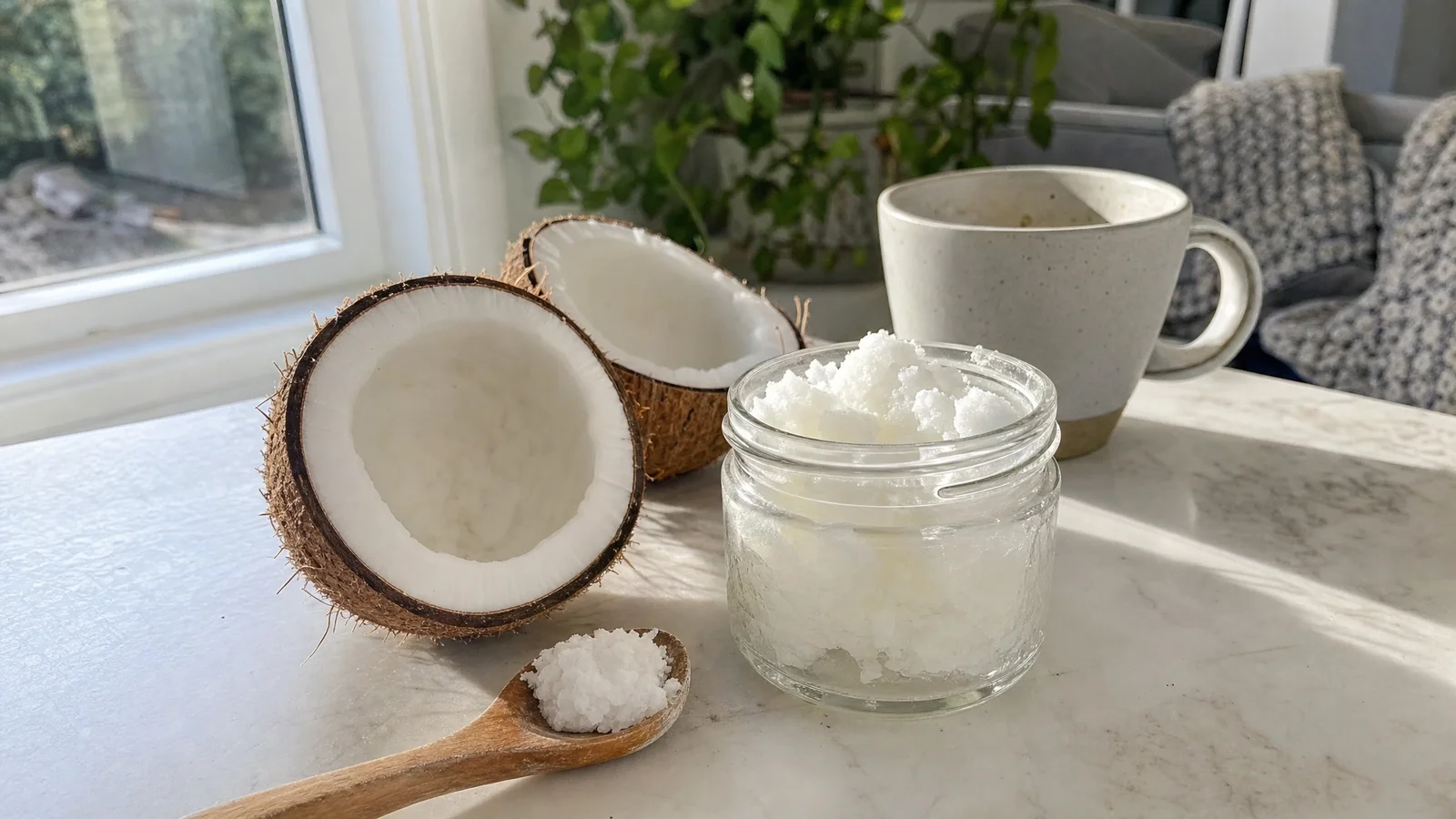
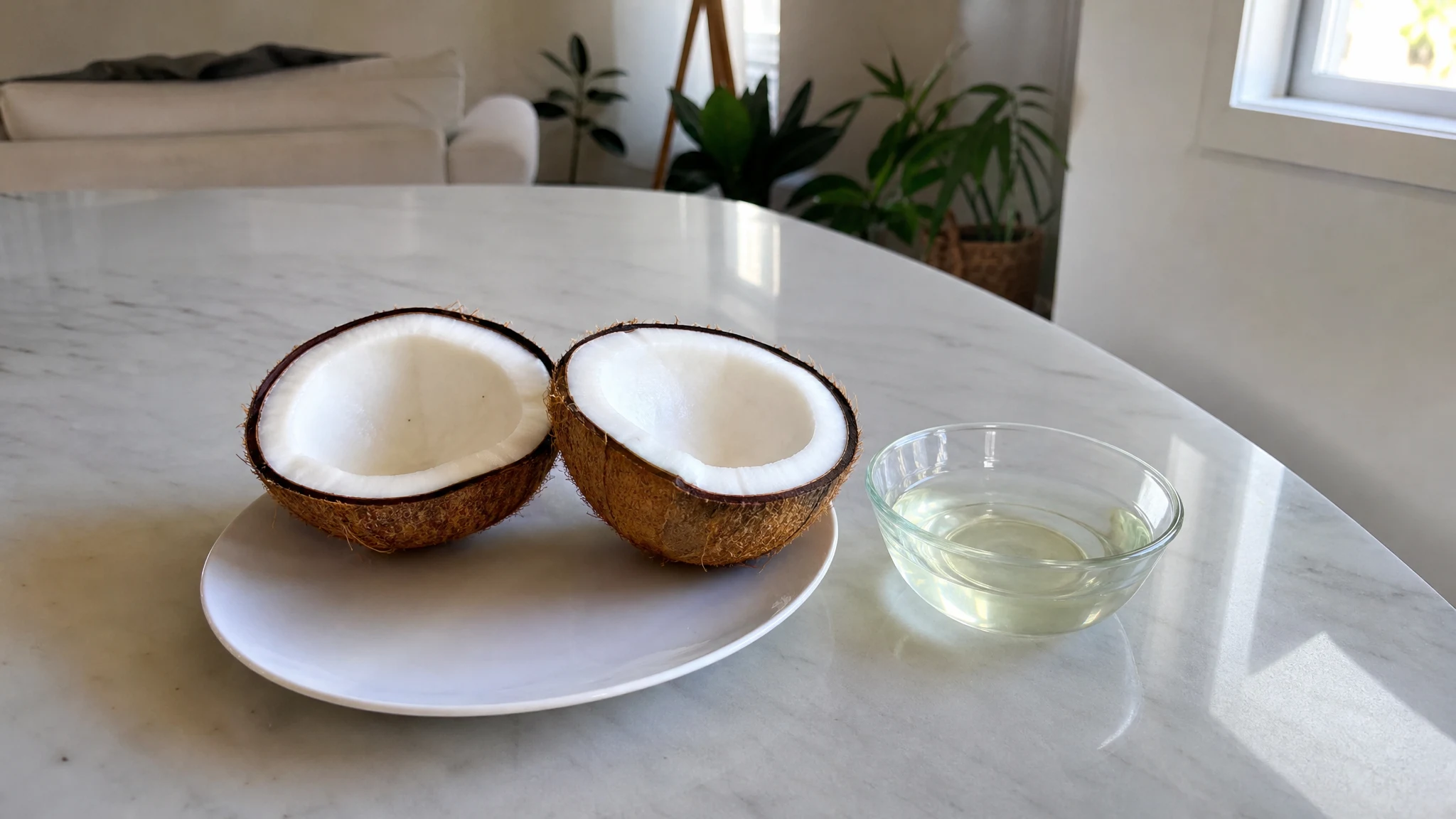
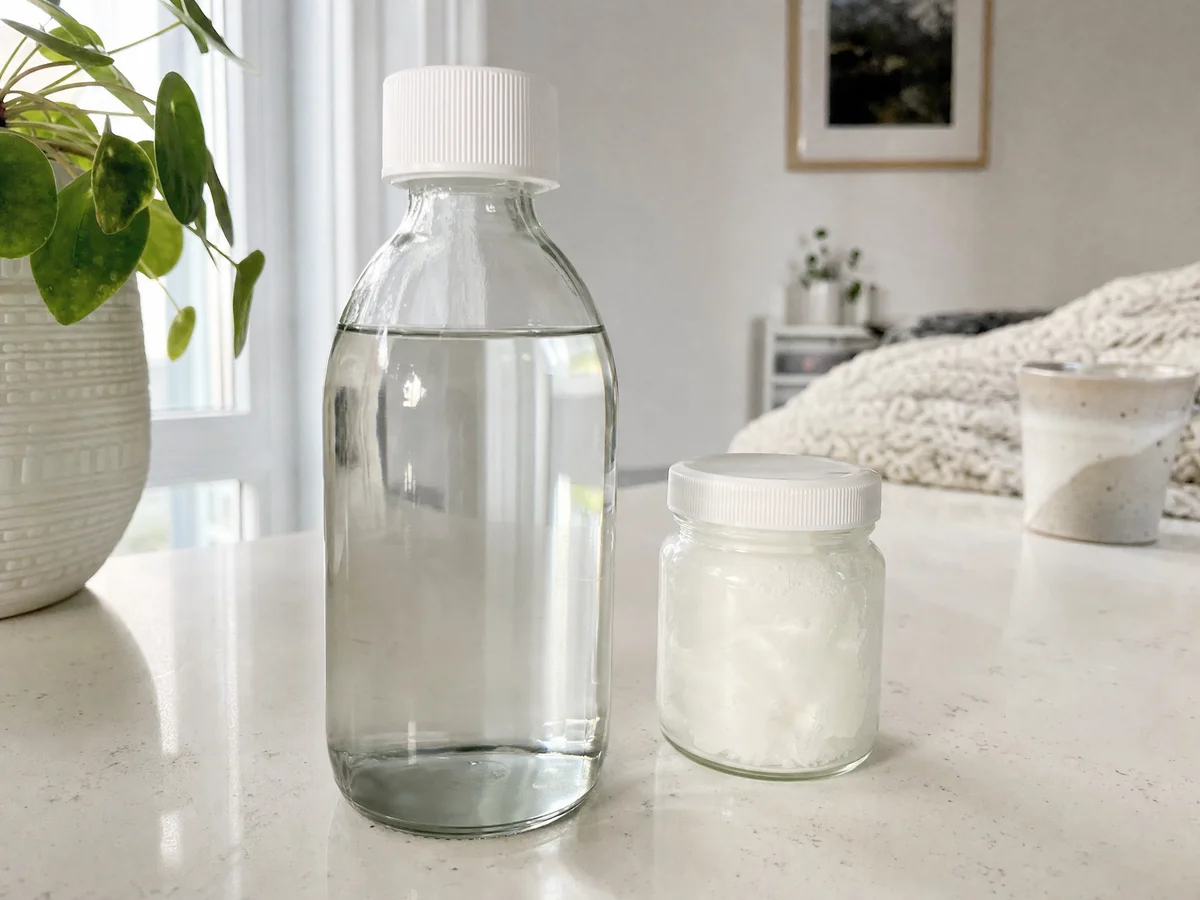
Put a jar of ordinary coconut oil next to a bottle of fractionated coconut oil and you would hardly guess they began as the same thing. One is a soft white solid in a cool kitchen; the other is clear, thin and pours like a light syrup. Nothing exotic was added to get there. The oil was simply sorted, and the part that would have set firm was set aside.

Fractionated Coconut Oil
Our own Fractionated Coconut Oil, in sizes from 0.5 oz to bulk.
From $9.99
Shop Now →Why regular coconut oil goes solid
Coconut oil is a blend of fats built from different fatty acids, and each has its own melting behavior. Lin, Zhong and Santiago (2018) put whole coconut oil at roughly 49% lauric acid, 18% myristic and 8% palmitic, with about 8% caprylic and 7% capric. The longer saturated chains, lauric and up, are what make a jar firm in a cool room; our virgin listing begins to solidify below about seventy-six degrees Fahrenheit. The two shortest, caprylic (C8) and capric (C10), stay fluid.
What fractionation does
The idea is to separate those fats by how they melt. As Healthline's explainer (reviewed 2019) describes it, the oil is warmed, cooled so the higher-melting fats set, and the solid part is separated from the liquid. What remains is mostly C8 and C10, and most fractionated coconut oils contain little or no lauric acid.
The medium-chain triglyceride oils sold for dietary use are the standardized end of this family. The pharmacopeial monograph asks for C8 and C10 together to make up at least 95% of the fatty acids (USP 35). We mention that for scale, as a picture of the product class. How a producer carries out the separation varies, so if a specific method matters to your formula, ask any supplier, us included, in writing.
One oil, several names
Healthline points out that this same kind of liquid oil is sold as fractionated coconut oil for skin and hair, as MCT oil for dietary use and as liquid coconut oil in food. The name tells you the family, and the label tells you the intended use. We sell ours neat, as a cosmetic oil for external use only. If you are shopping for something to eat, that is a different aisle, and our MCT versus coconut oil article explains the difference.
On our certificate the ingredient is listed as Cocos nucifera (Coconut) Fruit Oil, with the extraction method shown as Fractionated. Other brands may print a different ingredient name, so it pays to read the list rather than the front of the bottle.
Seeing the difference for yourself
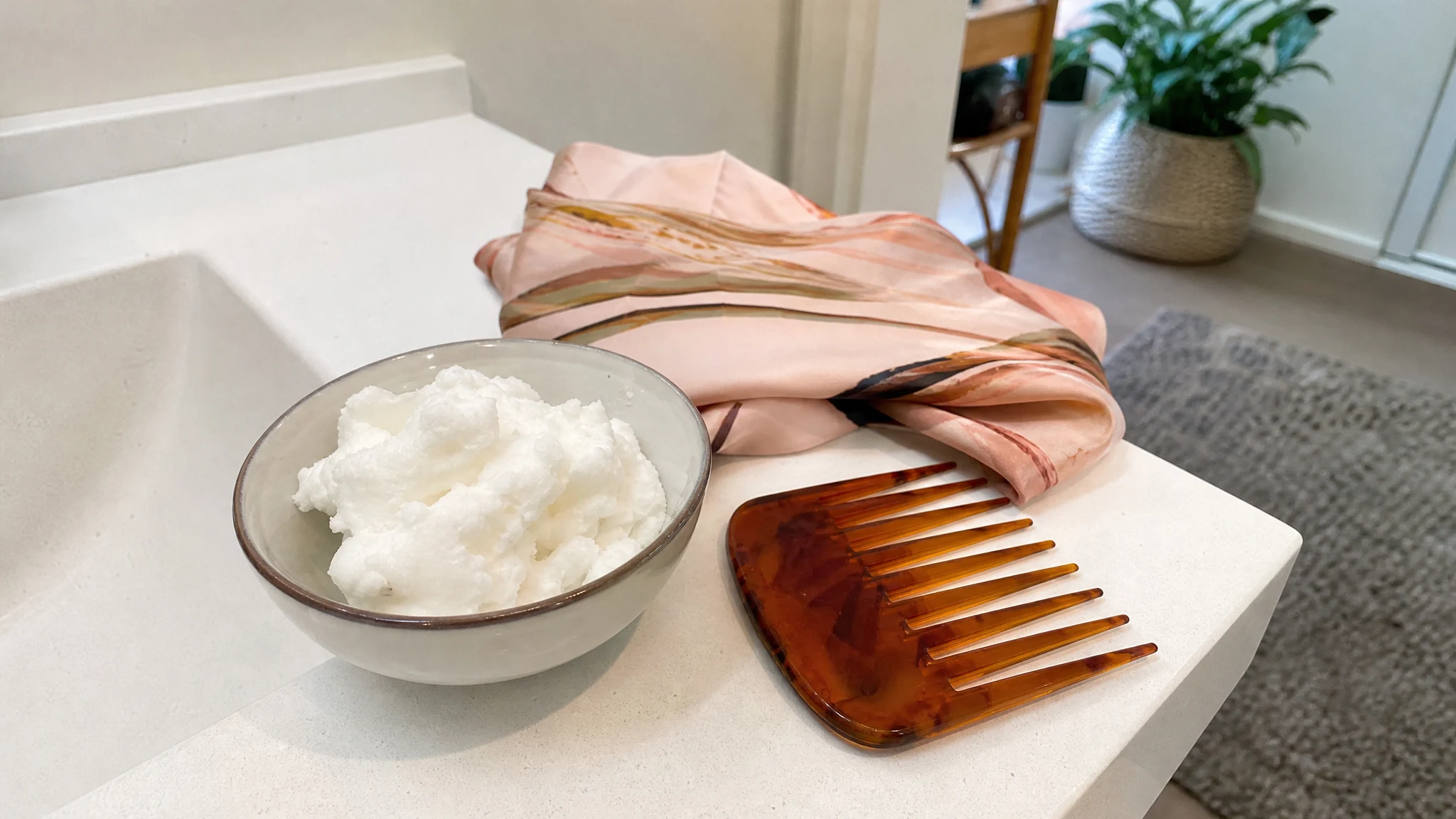
The easiest way to understand it is to compare by eye and by hand. Spoon a little ordinary coconut oil into a small dish and leave it in a cool room: it sets into an opaque, waxy white. Our fractionated oil in a second dish stays clear and runny in the same room, and tipping the dish shows it flowing like a thin syrup. Rub a drop between your fingers and you will notice how quickly it spreads.
Reading our certificate of analysis
The certificate we publish covers one batch, number COCQGACNUNC008A, with a best-by date of 31 July 2028. It reports relative density at 20 C of 0.948 (standard range 0.938 to 0.950), refractive index of 1.450 (standard 1.445 to 1.455), optical rotation of +0.00 degrees (standard -0.5 to +0.5) and "complies" for appearance and smell. Those are physical constants, and they are a quick way to confirm a clear, light oil sitting in its expected range. They do not describe the fatty-acid split or lauric content, and the certificate has no peroxide, moisture, heavy-metal or microbial results. If your formula depends on any of those, send us a written request before you order and we will tell you what we can provide.
The density figure also hands you a handy bit of kitchen-scale math. At 0.948 g/ml, half a teaspoon (about 2.5 ml) of that batch weighs roughly 2.3 g, which helps when you are scaling a recipe by weight. It comes from one batch, so treat it as a working number.
How it feels in use
We describe the oil as fast-absorbing, non-greasy and virtually odorless, and it stays liquid, which is the main practical reason people choose it. That makes it a natural base for roll-ons, pump bottles and essential oil blends, and our guide to uses goes through the jobs it suits. You can also read about it on our fractionated oil page and our oil page. If you want the scent or the solid texture of coconut oil, choose virgin, which our virgin and refined comparison covers.
A research note that is easy to miss: nearly all the studies you see for "coconut oil" on skin, hair or diet used virgin, refined or whole oil, where lauric acid is the largest component. Carrying those findings over to a fraction with little lauric acid would be an inference, so we make no health claims for either of our oils.
Shelf life and a few handling notes
We describe the oil as keeping about two years unopened, and our storage article explains how to check an older bottle. Patch test a small area and wait 24 hours, and if you have a coconut or tree nut allergy, check with a professional before use. For anything you would eat, use an oil labeled for food, and for skin conditions a dermatologist is the right call. To see how it sits next to pressed oils, take a look at our fractionated and virgin comparison.
Once you know how the oil is sorted, the clear bottle on the shelf stops looking mysterious: it is simply the part of coconut oil that stays fluid.
Fractionated Coconut Oil
Fractionated Coconut Oil from our own shop, in sizes from 0.5 oz to bulk.
From $9.99
Shop Now →Sources & Further Reading
- Healthline (Arnarson, reviewed 17 Oct 2019). Fractionated Coconut Oil: What Is It? healthline.com/nutrition/fractionated-coconut-oil
- Lin TK, Zhong L, Santiago JL, 2018. Anti-inflammatory and skin barrier repair effects of topical application of some plant oils. Int J Mol Sci 19(1):70. PMC5796020
- USP 35, 2012. Medium-Chain Triglycerides monograph. drugfuture.com/Pharmacopoeia/USP35