Virgin vs Refined Coconut Oil: Scent, Texture, Use
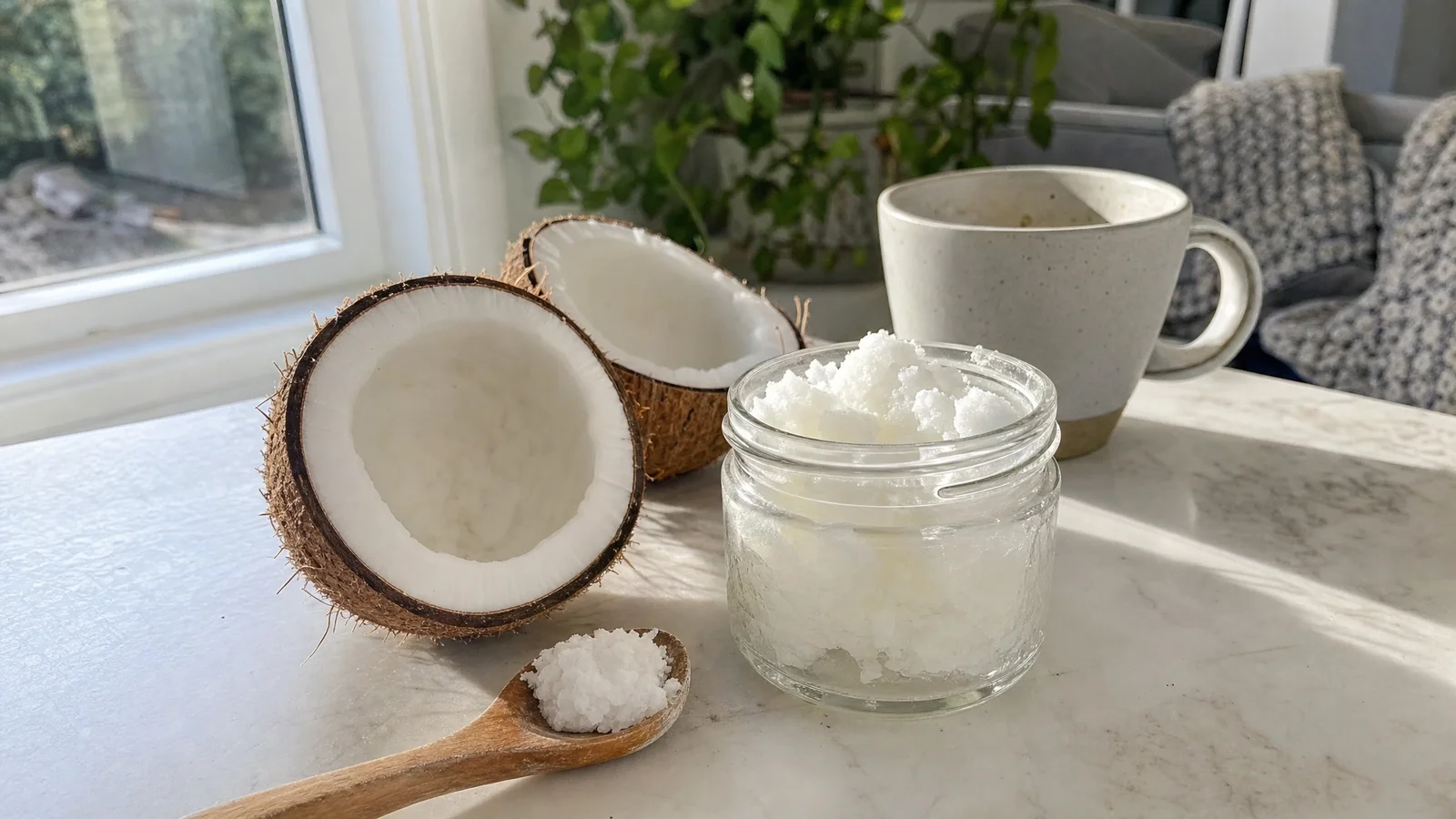
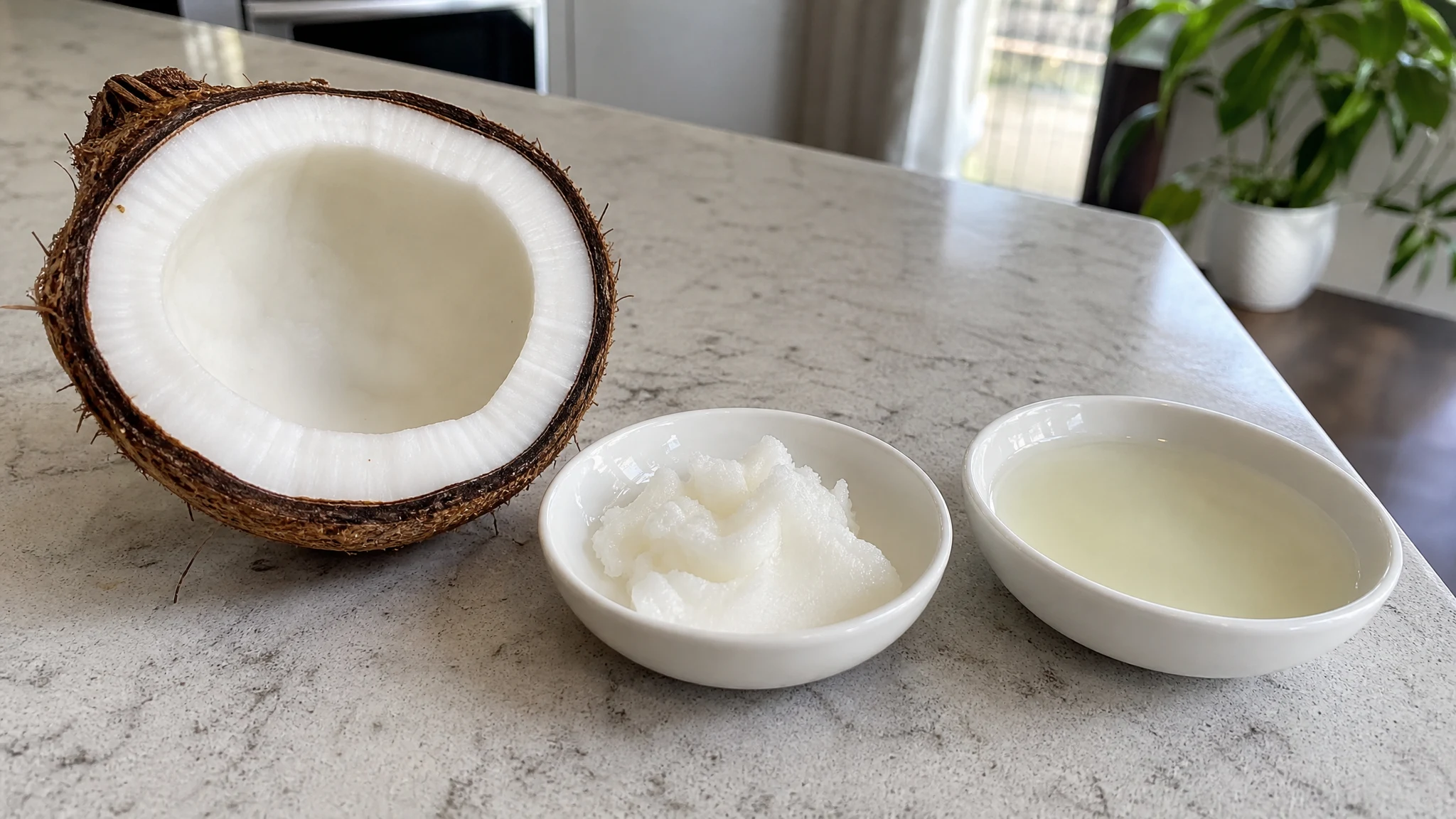
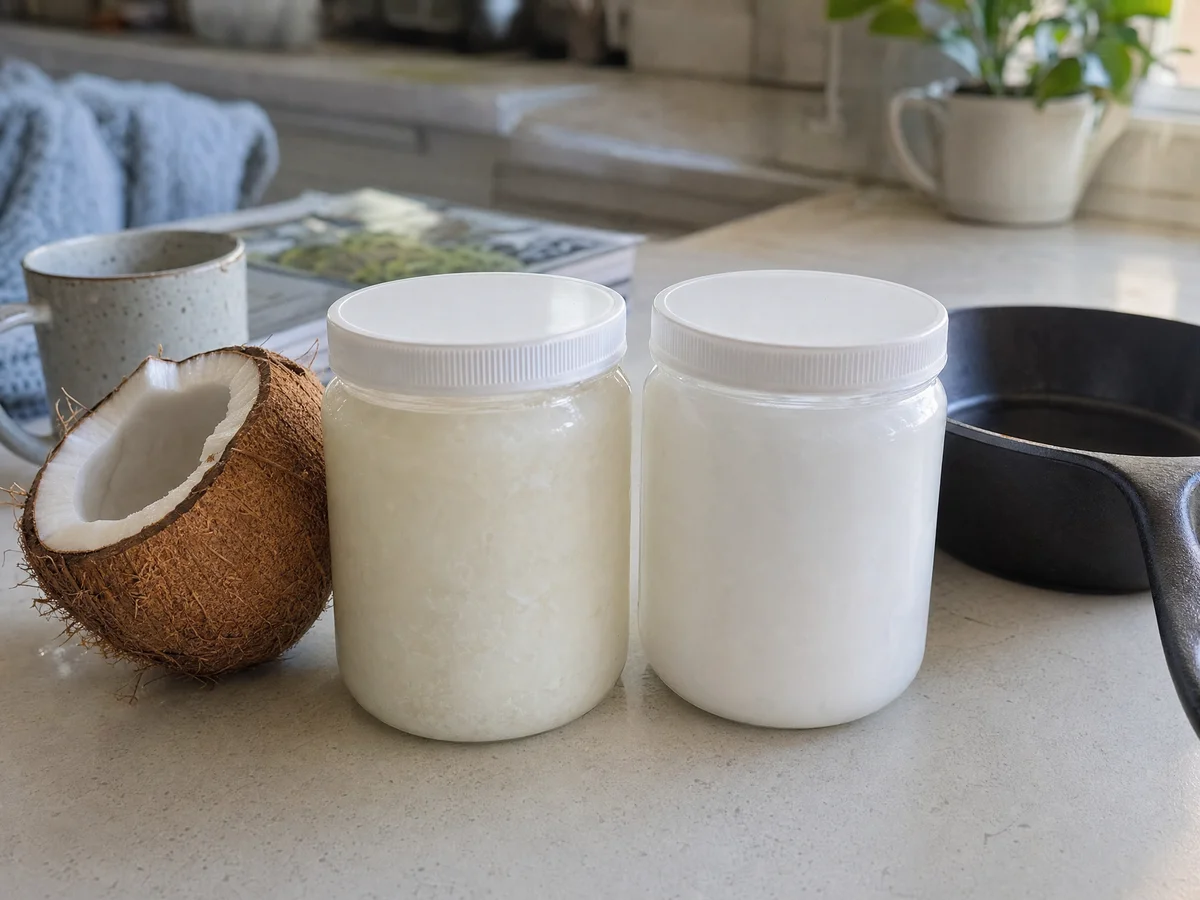
Open a jar of virgin coconut oil and the tropics arrive at once: warm, creamy, unmistakably coconut. Open a jar of refined and there is almost nothing, a plain white fat that stays politely out of the way. That difference in personality is the heart of the choice, and it is a lot more useful than most of the "which is healthier" debates you will find online.
Fractionated Coconut Oil
Our own Fractionated Coconut Oil, in sizes from 0.5 oz to bulk.
From $9.99
Shop Now →Our short answer
If you love the smell of coconut, or you are making soap, balm or candles, reach for virgin. If you want a quiet base so a delicate scent can lead, refined is the traditional pick, and fractionated oil goes a step further by staying liquid too. Claims that one is better for skin run ahead of the evidence, so we choose by scent, texture and job, and the rest of this page shows our reasoning so you can disagree with any step.
Two roads from coconut to jar
Virgin coconut oil, as Ghani and colleagues (2018) describe it, is an edible oil obtained from the milk of the fresh, mature kernel. They compared four ways of making it: chilling and centrifuging coconut milk, fermenting it, and two dry routes in which grated coconut is oven-dried or sun-dried and pressed. Yields ranged from about 20% for chilling to about 48% for oven-dried pressing, which goes some way to explaining why two jars labeled virgin can differ in character and price.
Refined oil takes a different road. Marina and colleagues (2009) call it RBD, for refined, bleached and deodorized, and the deodorizing step is the one that removes the smell and flavor. That is exactly why refined oil is neutral.
Words like "cold-pressed," "virgin" and "extra virgin" do not have a single legal definition for cosmetics, so the process behind the label is a fair question for any seller. Our cold-pressed explainer goes into what the term can and cannot tell you.
What the lab adds, and where to stop
There is one genuinely interesting finding. Marina's team found that virgin oils made by chilling or fermentation had greater antioxidant capacity than RBD oil, which they linked to phenolic compounds such as ferulic and p-coumaric acid. That is a lab assay on the oil, not a result on skin. It also does not hand cold methods the win, because Seneviratne, Hapuarachchi and Ekanayake (2009) found more phenolics and more antioxidant activity in hot-extracted coconut oil than in cold-extracted. What "virgin" reliably tells you is that the oil was not chemically refined. How it was made matters as much as the word.
Freshness is its own number. Ghani's team measured peroxide value, an early sign of oxidation, in their four virgin oils and got 2.2 to 4.2 against a limit of 3 that they cite. So virgin is not a promise of low oxidation, and neither is refined; it is a figure a supplier can report for a lot, and a buyer can ask for.
On skin the two are close relatives. Lin, Zhong and Santiago (2018) list coconut oil as about 49% lauric acid, 18% myristic, 8% palmitic, 8% caprylic and 7% capric. Their review discusses coconut oil as comparable to mineral oil for mild to moderate dry skin, but those studies used virgin coconut oil, so we do not carry the results over to either of our oils. For eczema or very dry skin, a dermatologist or your doctor is the person to ask.
Buying virgin well
Because virgin covers several processes, the best questions are about the lot. Ask how it was made, and ask for a peroxide value, a free fatty acid figure and a best-by date. Ghani's four oils had moisture of 0.10 to 0.17% and free fatty acids of 0.17 to 0.53%, which gives you a feel for the kind of numbers a good supplier can share. We publish no certificate of analysis for our virgin unrefined listing. Our product page invites you to contact us for specifics and documentation, and we will send you what we have in writing.
Matching the oil to the job
| Job | Lean toward | Why |
|---|---|---|
| Body oil with a coconut scent | Virgin | The aroma is the point, and ours is rich and creamy. |
| Soap, balm, candle or fragrance crafts | Virgin | Firm in a cool room and soft in warm hands; we put the change at about 76 F. |
| Blending with delicate essential oils | Refined or fractionated | A quiet base lets the scent lead. |
| Roll-on, pump bottle, massage | Fractionated | It stays liquid at any temperature. |
| Anything you eat | A food-labeled product | Our oils are cosmetic and for external use only. |
We do not sell a refined listing, so for a plain refined coconut oil you would shop elsewhere. Fractionated is a different oil again, with most or all of the lauric acid removed (Healthline, 2019). Our fractionation explainer and uses guide pick up that story, and if you are planning a project, our DIY beauty guide matches oils to recipes.

A note before you buy
If you have a coconut allergy, wait for an allergist or another professional to say it is fine; our own guidance is to check with a professional if you have a tree nut or coconut allergy, and to patch test a small area first. Neither oil is a sunscreen or a personal lubricant, and for cooking the numbers belong with a kitchen source, such as our smoke point article.
Whichever you lean toward, open the jar and breathe in. Scent is the quickest way to tell these two oils apart, and your nose will usually settle the question.
Fractionated Coconut Oil
Fractionated Coconut Oil from our own shop, in sizes from 0.5 oz to bulk.
From $9.99
Shop Now →Sources & Further Reading
- Ghani NAA, Channip AA, Chok Hwee Hwa P, Ja'afar F, Yasin HM, Usman A, 2018. Physicochemical properties, antioxidant capacities, and metal contents of virgin coconut oil produced by wet and dry processes. Food Sci Nutr 6(5):1298-1306. PMC6060898
- Marina AM, Man YB, Nazimah SA, Amin I, 2009. Antioxidant capacity and phenolic acids of virgin coconut oil. Int J Food Sci Nutr 60 Suppl 2:114-123. PMID 19115123
- Seneviratne KN, Hapuarachchi CD, Ekanayake S, 2009. Comparison of the phenolic-dependent antioxidant properties of coconut oil extracted under cold and hot conditions. Food Chem 114(4):1444-1449. doi:10.1016/j.foodchem.2008.11.038
- Lin TK, Zhong L, Santiago JL, 2018. Anti-inflammatory and skin barrier repair effects of topical application of some plant oils. Int J Mol Sci 19(1):70. PMC5796020
- Healthline (Arnarson, reviewed 17 Oct 2019). Fractionated Coconut Oil: What Is It? healthline.com/nutrition/fractionated-coconut-oil