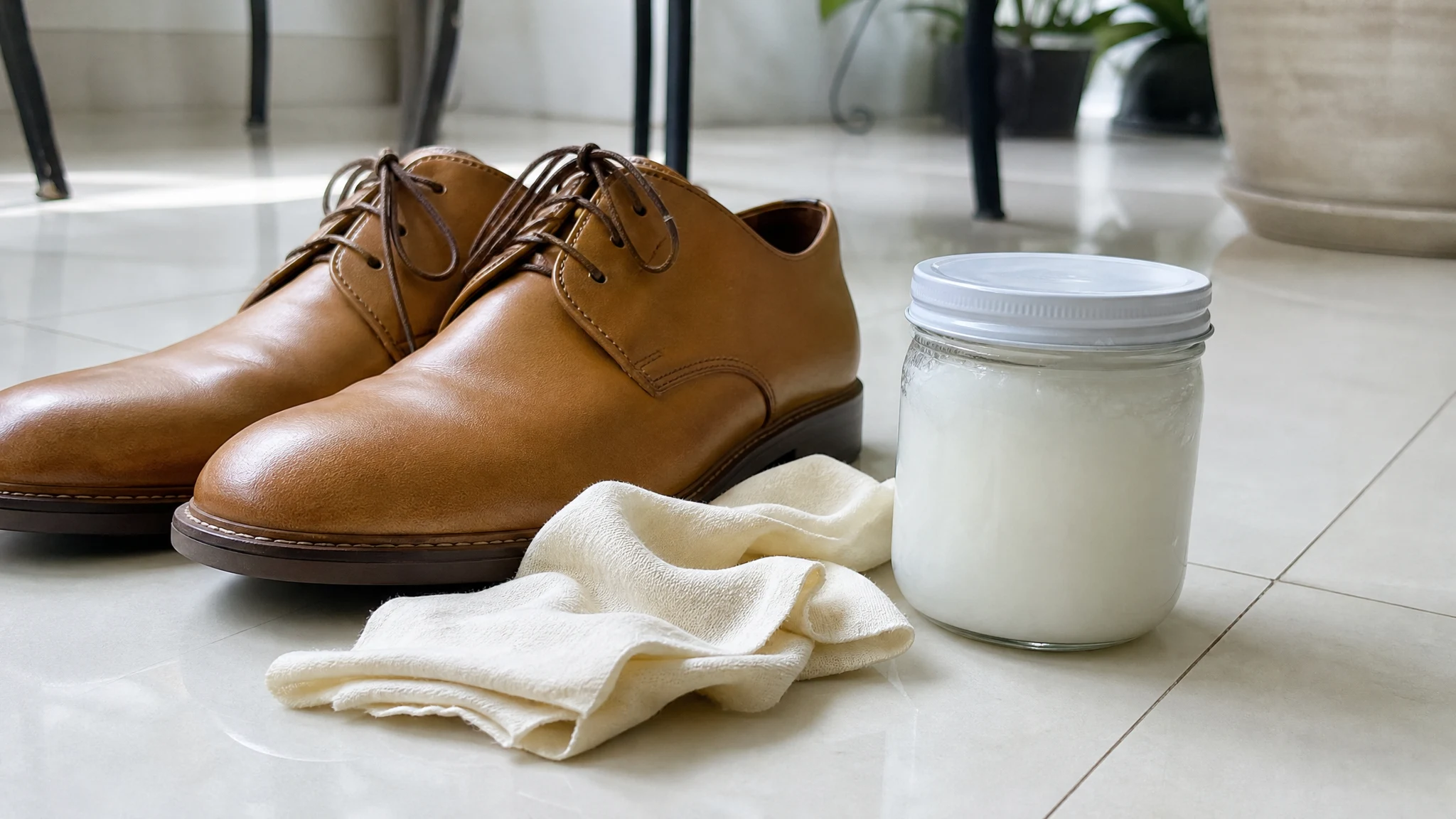
Can You Use Coconut Oil on Leather? What Conservators Say
Leather is skin, skin gets dry, and oil softens skin, so oil must be the answer for a thirsty pair of boots. It is a charming idea, and the people who care for leather for a living have spent about a century testing it. What they report is surprising, and it makes a good story. We sell oils made for skin, which makes us the unlikeliest fans of oiling less, and yet that is where the conservation documents point.

Fractionated Coconut Oil
Our own Fractionated Coconut Oil, in sizes from 0.5 oz to bulk.
From $9.99
Shop Now →A century of testing, in short
The U.S. National Park Service's Conserve O Gram 9/1 (2025 version) tells the history. Researchers concluded nearly 100 years ago that dressings have no preservative effect. One study found chestnut-tanned leather treated with a dressing aged faster than untreated leather, and a long-term British study found that leaving dressing off did not make leather more prone to decay. Dressing nineteenth-century children's shoes at Harpers Ferry Center in 1978 did not restore flexibility, and the shoes deteriorated. Leather conservators meeting in 1982 reported no outstanding successes with dressings on historic collections.
Those are museum collections, and the leaflet is clear about the difference. It says dressings can be acceptable for personal, non-museum items that still have to work, and names leather work boots, baseball gloves and saddles. So the message is not "never oil a boot." It is that oiling does less than product labels suggest, and some of its effects are permanent, which is worth knowing before you start.
What oil does to leather over time
According to the same leaflet, the oil and fat in dressings can leave a sticky surface, discolor and stain leather, oxidize and stiffen it, grow more acidic and turn rancid with a smell that cannot be reversed. The first thing you will notice is usually the darkening, as leather takes on an oily look. Stiffening and a rancid smell can follow over months. Adhesives also stick poorly to oily surfaces, so a cobbler who later needs to re-glue a sole has a harder job.
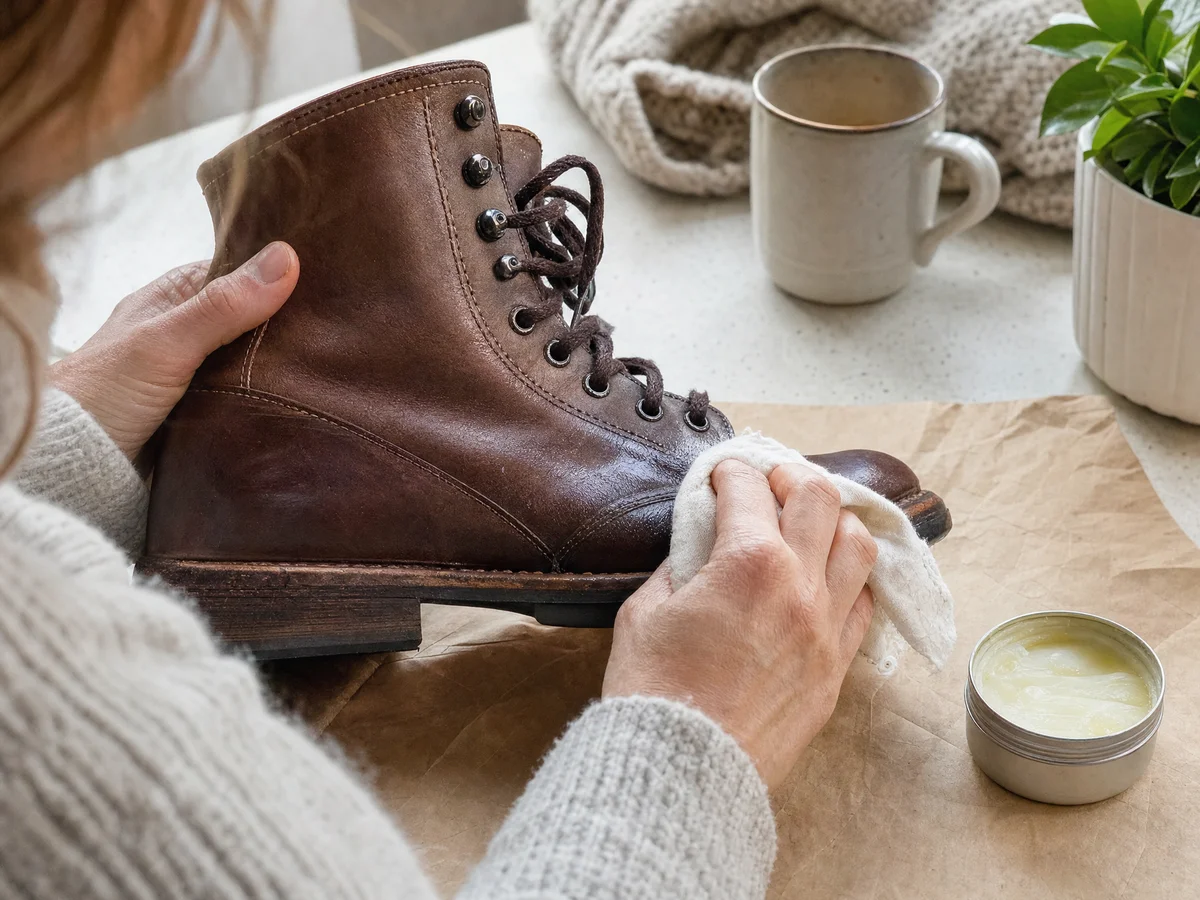
The Canadian Conservation Institute adds a point that rarely appears in home advice: oil can dehydrate. Its guidance on alum-, vegetable- and mineral-tanned leather says applied oils can cause further stiffening by dehydrating the leather (CCI Note 8/2). Leather that feels dry may not be starved of oil at all, and you cannot tell from the outside.
Where coconut oil fits in
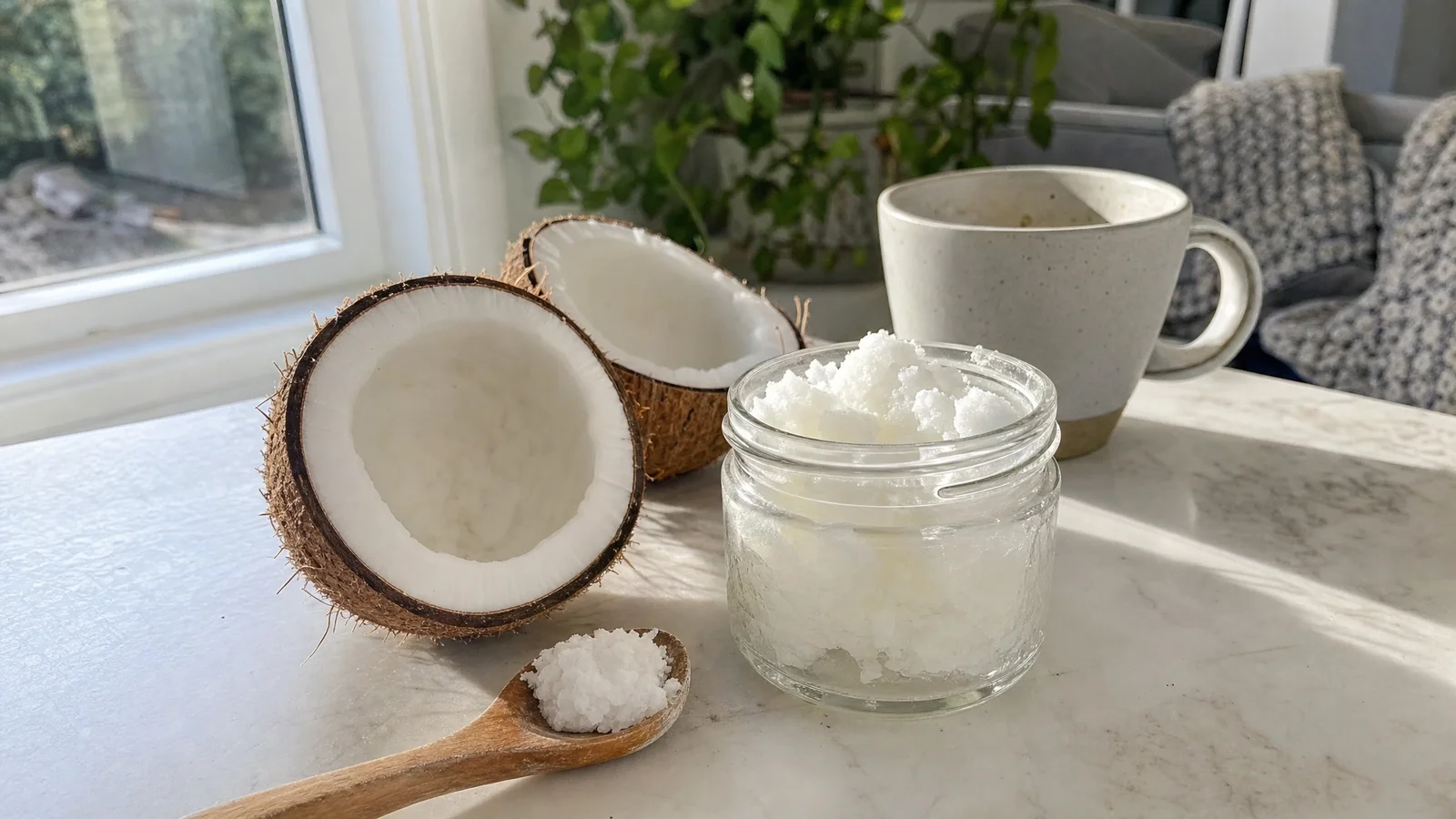
None of these sources tested coconut oil on leather, so this part is reasoning from composition. One published profile puts coconut oil at about 49% lauric acid, with oleic at 6% and linoleic at 2% (Lin et al., 2018). Oxidation, the route the conservators connect to stiffening and rancidity, depends on unsaturated bonds, and coconut oil has few of them. So coconut oil should oxidize more slowly than the neatsfoot or vegetable oils often used on leather, which is a point in its favor. Slower is still not never, and the darkening, tackiness and difficulty of repair do not depend on oxidation at all.
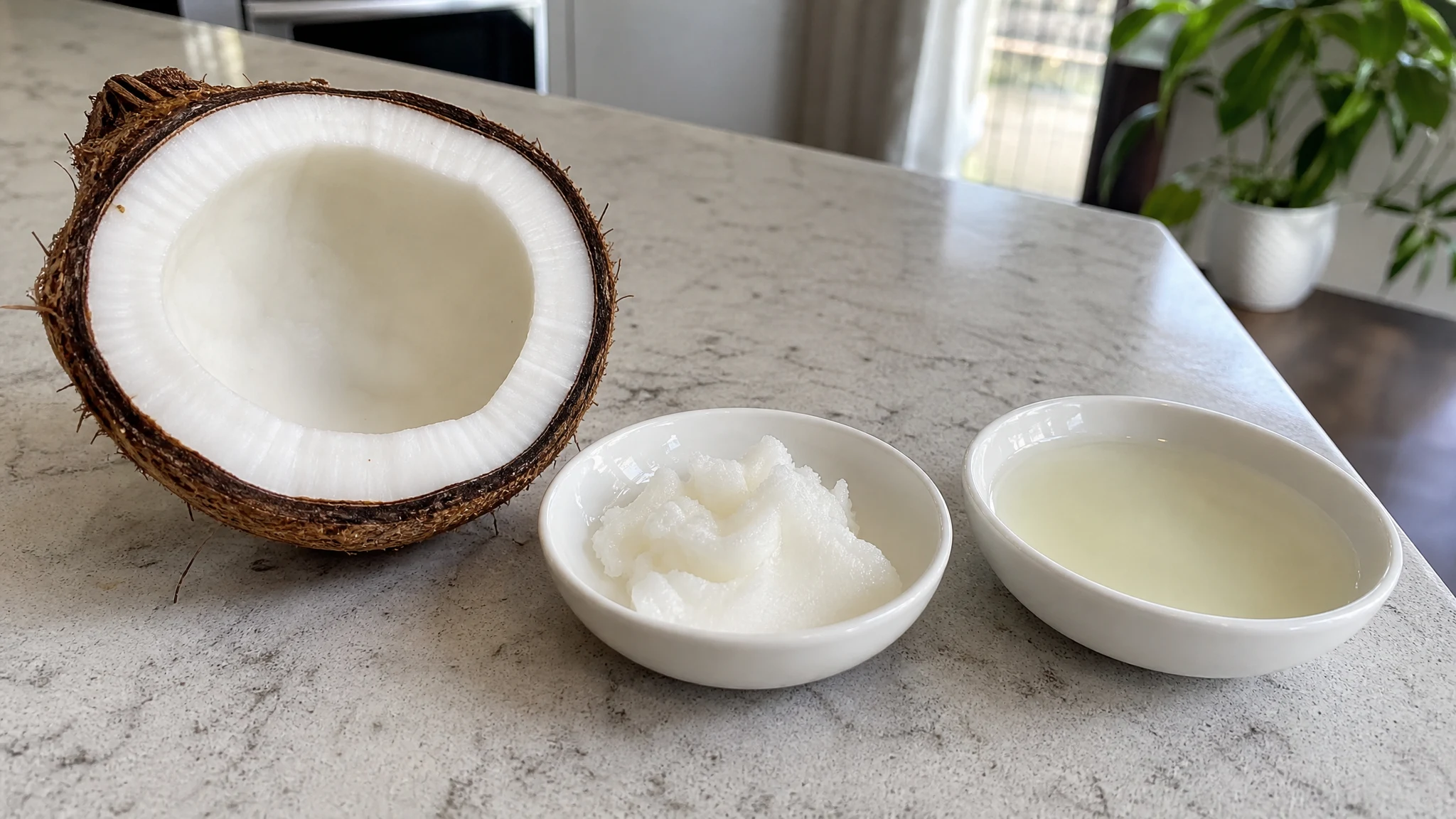
Our two oils feel different in hand. Our fractionated oil stays liquid and spreads thinly, and our virgin unrefined oil is firm in a cool room with a coconut aroma. We sell both for skin and not for leather, and our guide to fractionated versus virgin coconut oil explains how they differ.
Cleaning and water resistance
Leather guides often pair oiling with saddle soap. The CCI calls saddle soap very alkaline and says it degrades leather. That is museum guidance, and it still suggests that for an everyday boot a damp cloth and air drying are the gentle steps. We have no source supporting coconut oil as a cleaner, so we do not suggest it.
When guides talk about protection they usually mean water resistance. None of the conservation sources we cite measured water resistance after a coconut oil application. Reasoning from how oil sits on and between fibers, we would not count on it to keep a boot dry, and the conservators' finding that dressings do not preserve leather points the same way. For waterproofing, use what the maker recommends.
What conservators recommend instead
The Park Service points to preventive care: stable humidity and temperature, inert padding for shape and clean storage. Translating that for boots is our reasoning, not a quotation: let them dry naturally away from radiators, store them on shape in a cool closet and avoid repeated soaking and baking. For an heirloom or high-value piece, call a conservator. For a working boot with a care card from the maker, the card wins.
The white bloom that looks like mold
One more finding is handy before you worry about an old jacket. Leather can develop a white, waxy growth called fatty acid spew that looks a lot like mold. The leaflet lists unstable surface spew among the effects of the oils and fats in dressings, says it can be reduced but never fully and safely removed from the fibers, and notes that in its green jacket example it returned within five years. A white film is therefore not a cue to add more oil. If you see it on something you value, photograph it and ask a conservator.
Which leathers this covers
The CCI note covers alum-, vegetable- and mineral-tanned leather, and the Park Service covers museum leather broadly. Neither addresses chrome-tanned fashion leather, bonded leather or coated synthetics. If you do not know what your item is made of, start with the maker.
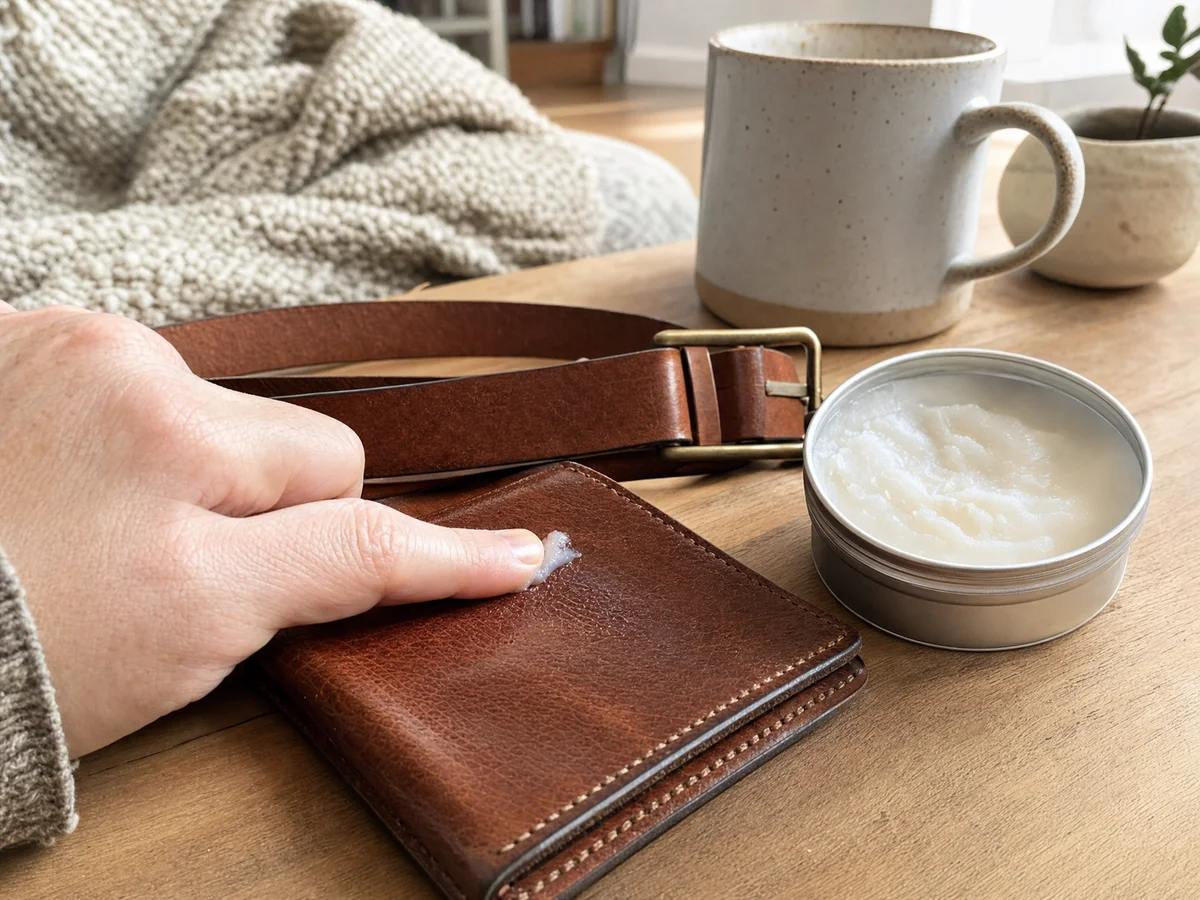
If you do decide to oil
Go in with eyes open. Test a hidden patch, use a very little, expect darkening and keep it away from pale linings and suede. If oil lands on clothes, our stain removal article has the steps, and our storage guide helps you judge the age of the oil, since a rancid oil is worse than none. Our look at polishing furniture applies the same conservation thinking to wood.
We think the best news in all this is that leather needs oil far less often than the internet claims, so a lighter hand is a good outcome. Your skin, on the other hand, is a different story, and our household uses roundup sorts out which jobs around the house suit a skin oil.
Fractionated Coconut Oil
Fractionated Coconut Oil from our own shop, in sizes from 0.5 oz to bulk.
From $9.99
Shop Now →Sources & Further Reading
- U.S. National Park Service, 2025. Conserve O Gram 9/1: Fatty Acid Spew on Leather Objects. nps.gov
- Canadian Conservation Institute. CCI Note 8/2: Care of Alum, Vegetable and Mineral-tanned Leather. canada.ca
- Lin TK, Zhong L, Santiago JL, 2018. Anti-inflammatory and skin barrier repair effects of topical application of some plant oils. Int J Mol Sci 19(1):70. pmc/PMC5796020