Everyday Household Uses for Coconut Oil, and What to Skip
A jar of oil in the cupboard feels like a household multitool, and for a few small jobs it really is a nice thing to have around. The idea that it can replace your cleaning products is where the story needs a gentle adjustment, because oil is exactly what detergents are designed to lift off. Here is a friendly tour of what coconut oil does well at home, what is better left to wax or detergent, and why.

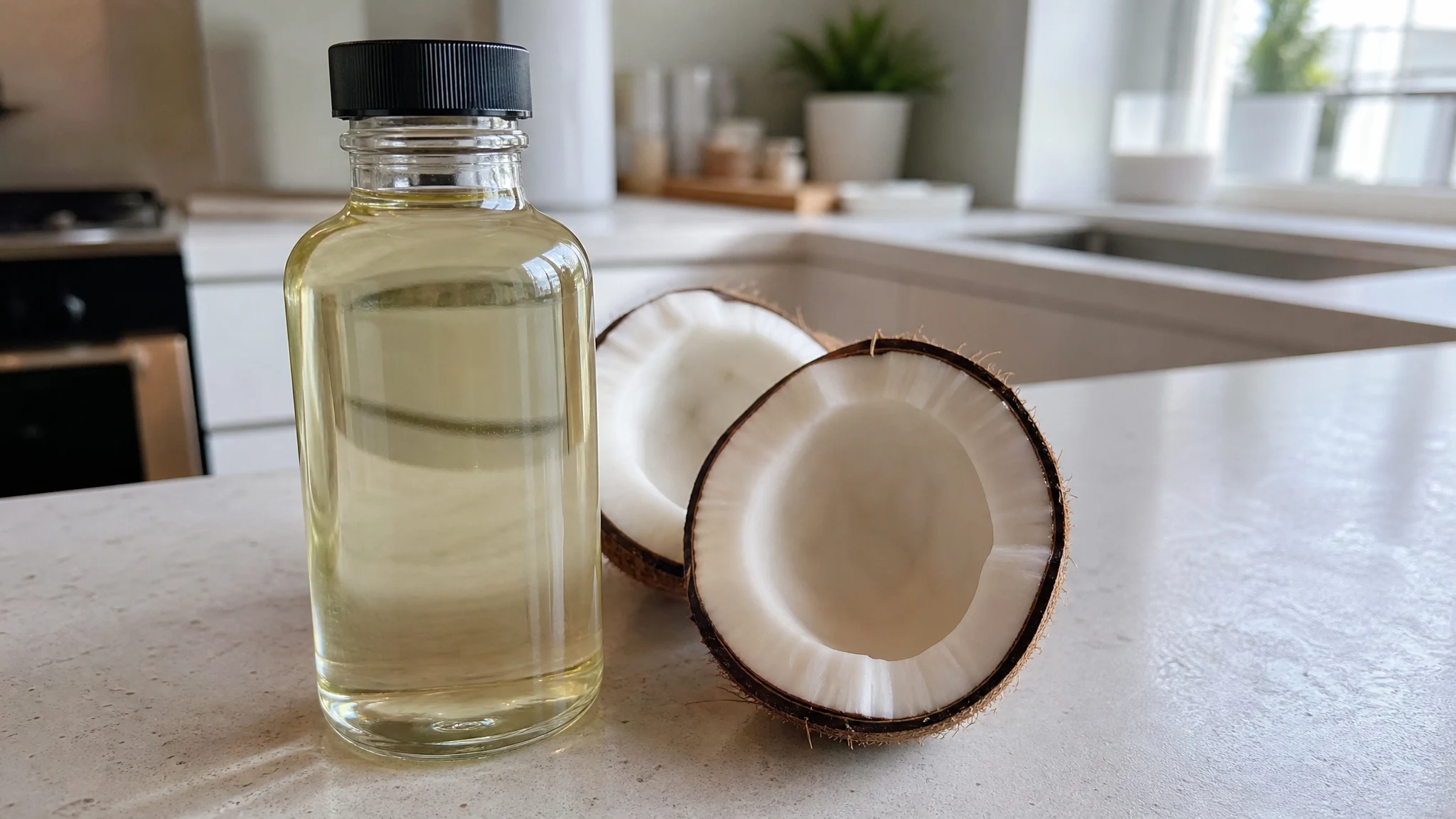
Fractionated Coconut Oil
Our own Fractionated Coconut Oil, in sizes from 0.5 oz to bulk.
From $9.99
Shop Now →Gentle and good for the object are two questions
When people say they want to avoid harsh products, they usually mean fragrances and chemicals on their own skin and in their air, which is a perfectly reasonable wish. A gentle ingredient can still be wrong for what you put it on, though. The National Park Service's guidance on museum cleaning makes the point neatly: even safer, natural cleaning products can stain or otherwise damage collections (Conserve O Gram 2/21). It is written for museums, but the logic carries over. On a table, a boot or a shirt, coconut oil is a grease, and that shapes everything below.
Small jobs where oil is a lovely helper
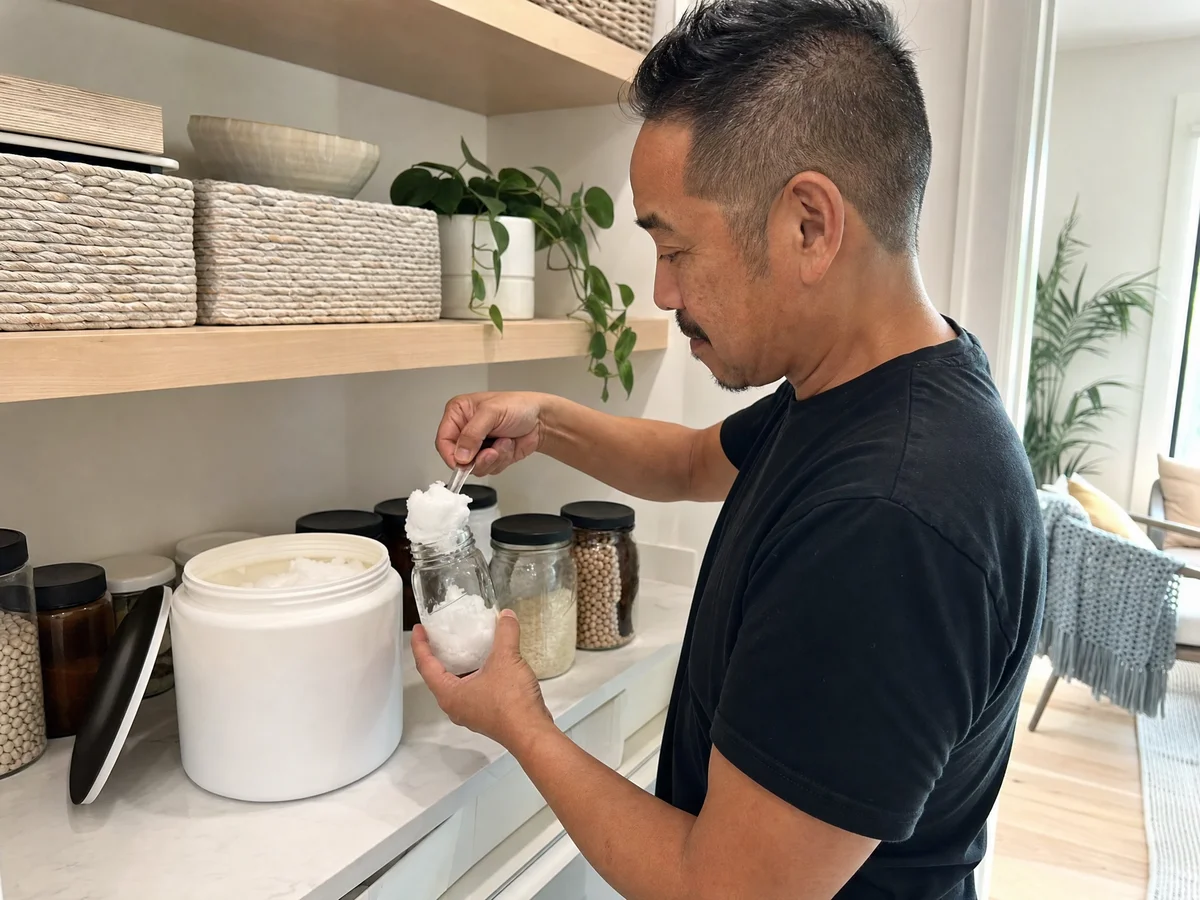
These ideas come from thinking about what an oil physically does rather than from a trial, so try them somewhere hidden first.
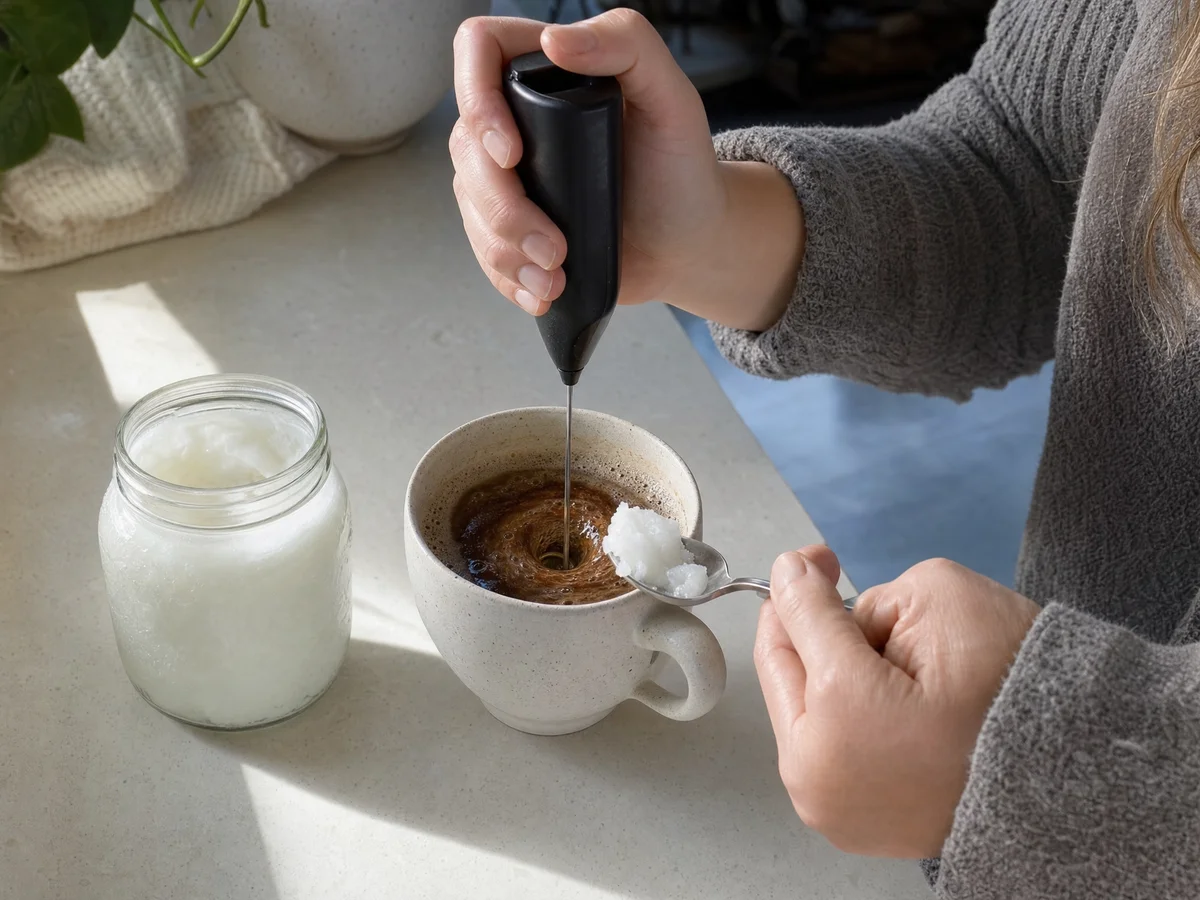
A squeaky hinge or a sticky zipper is the classic. Any oil lubricates, so a drop on a cotton swab touched to the pivot or the teeth does the job, and wiping the excess straight away keeps it off fabric, carpet and painted frames. Sticker and label residue is another. Oil can soften adhesive, so a little rubbed onto glass or glazed ceramic, left for a few minutes and lifted with a plastic scraper, helps the glue come away. Wash the surface with dish detergent afterward until it no longer feels slick. Skip the trick on raw wood, unsealed stone or painted walls, where oil can soak in and darken.
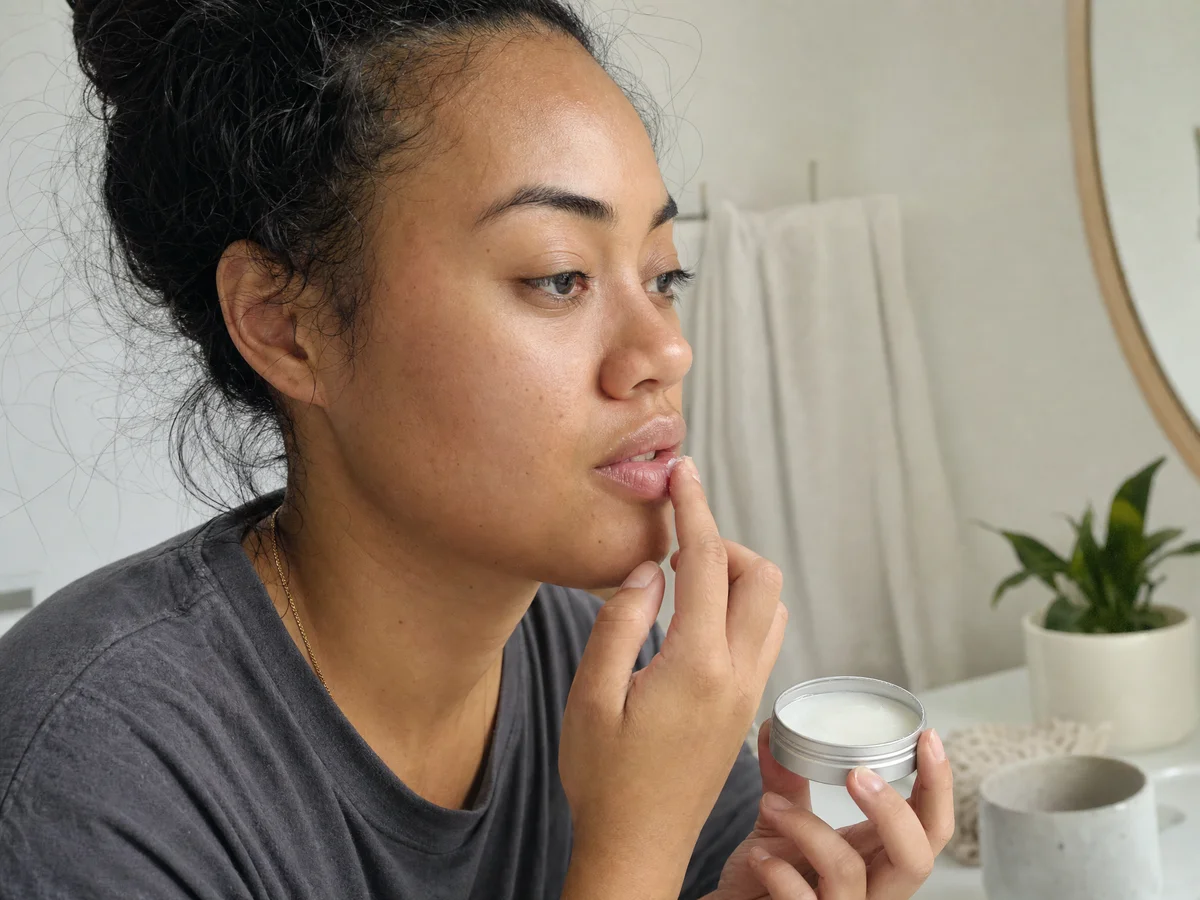
The third job is the one this oil was made for: your own hands after a day of scrubbing, sanding or gardening. A few drops on skin, not on the cloth, make a pleasant finish. We describe our fractionated coconut oil as fast-absorbing and non-greasy, so it will not leave a slick on the phone you pick up next, and our virgin unrefined oil has a creamy coconut aroma that some people enjoy as a small reward.
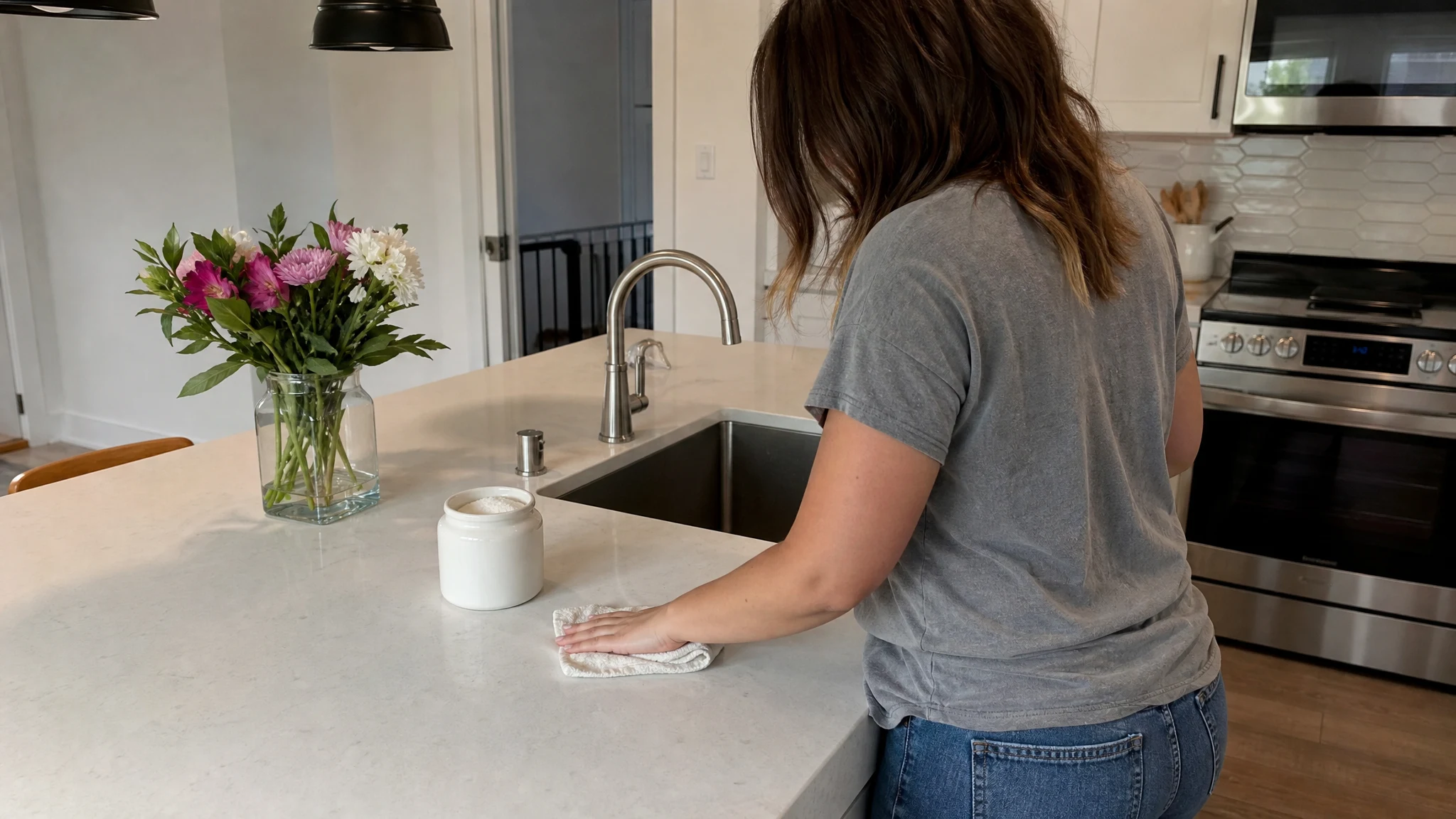
Start small. Pick one job, a squeaky hinge or a sticker residue, put a little oil on a cloth rather than straight onto the object, and wipe. You will quickly see how little you need, and a cloth keeps the oil exactly where you meant it to go. Wipe off any extra so nothing is left to attract dust.
Why oil is not a cleaner
For grease stains on fabric, the American Cleaning Institute's stain guide starts light stains with a prewash stain remover, liquid laundry detergent or a liquid detergent booster, then launders in the hottest water that is safe for the fabric (American Cleaning Institute). Notice what that recipe uses: something that grabs grease. Oil is itself the grease. We make no cleaning or disinfecting claim for coconut oil, and for germs on a counter the right tool is a product labeled for that job. If you do get oil on cloth, our stain removal guide covers it.
Leather and wood: where conservators say wait
Leather is the tempting one, since a soft, nourished look feels right for boots and bags. The National Park Service's leather conservation note says researchers concluded nearly 100 years ago that dressings have no preservative effect on leather. It adds that the oil and fat parts of dressings can turn rancid with an odor that cannot be reversed, oxidize and stiffen the leather, and leave sticky or stained surfaces, and that applying a dressing is an irreversible procedure because the ingredients soak deep (Conserve O Gram 9/1). That is museum guidance and your boots are not in a museum, but it is the best source we could read, and it is why our leather care article keeps its promises modest.
For furniture, the same conservators favor paste wax on stable, clear finishes such as shellac, lacquer and varnish. They caution against wax on bare wood because it sinks into the pores and is nearly impossible to remove, and they say most liquid and aerosol polishes contain silicones that could harm finishes (Conserve O Gram 7/2). Oil is not discussed there at all. Our own reading, set out in the wood furniture article, is that coconut oil stays a soft film instead of hardening, because it is mostly saturated fat (around 90% saturated fatty acids, per Abrante-Pascual et al., 2024), so it tends to collect dust. That is a conclusion from composition. For anything valuable, a restorer's advice beats a pantry experiment.
Kitchen cousins, and what we sell
Wooden boards and cast iron are conversations of their own, and since both involve food contact, they call for an oil sold as food. Ours are sold for external cosmetic use only, and our articles on cutting boards and cast iron go through what the sources say. There is a cost angle too: a cosmetic carrier oil is a lot to spend polishing a table when it does its best work on skin and hair, so a can of paste wax or a bottle of dish detergent is the better buy for those chores.
If you are swapping products because of a specific sensitivity, such as to fragrance, an allergist or your doctor is the right person to ask. Anyone with a coconut allergy should check with a professional before the oil touches skin, and we suggest a patch test on a small area first.
So keep a small bottle for hinges, stickers and hands, and reach for wax and detergent for the rest. If you are still deciding which oil suits your skin and hair, virgin versus refined is a friendly place to start.
Fractionated Coconut Oil
Fractionated Coconut Oil from our own shop, in sizes from 0.5 oz to bulk.
From $9.99
Shop Now →Sources & Further Reading
- U.S. National Park Service. Conserve O Gram 2/21: Safer Cleaning Alternatives for the Museum and Visitor Center. nps.gov conserve-o-gram 2-21
- U.S. National Park Service. Conserve O Gram 9/1: Fatty Acid Spew on Leather Objects. nps.gov conserve-o-gram-9-1
- Sheetz R, U.S. National Park Service. Conserve O Gram 7/2: Waxing Furniture and Wooden Objects. nps.gov conserve-o-gram 7-2
- American Cleaning Institute. Stain Removal Guide. cleaninginstitute.org
- Abrante-Pascual S et al., 2024. Vegetable oils and their use for frying: a review of their compositional differences and degradation. Foods 13(24):4186. pmc/PMC11675685