Which Country Makes the Best Coconut Oil?
Ask which country makes the best coconut oil and you will get a confident answer, usually the Philippines, sometimes Sri Lanka, now and then a small island with a lovely story. It makes a pretty picture, but the tables that actually exist count how much gets grown, not how good any one bottle is. A more useful question turns out to be how the oil was made and what paperwork travels with it, and that one has real answers.

Fractionated Coconut Oil
Our own Fractionated Coconut Oil, in sizes from 0.5 oz to bulk.
From $9.99
Shop Now →Who grows the most coconuts
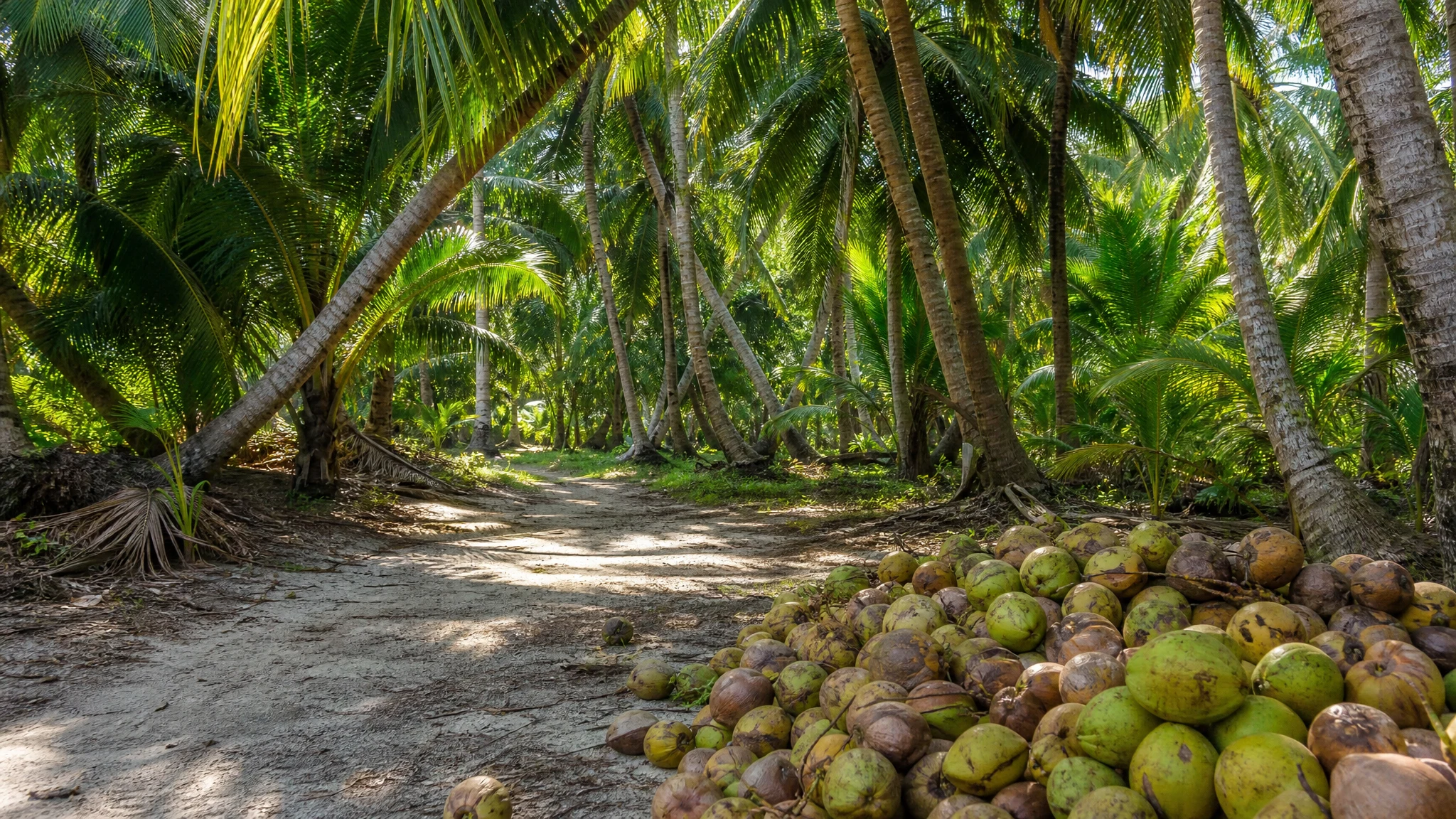
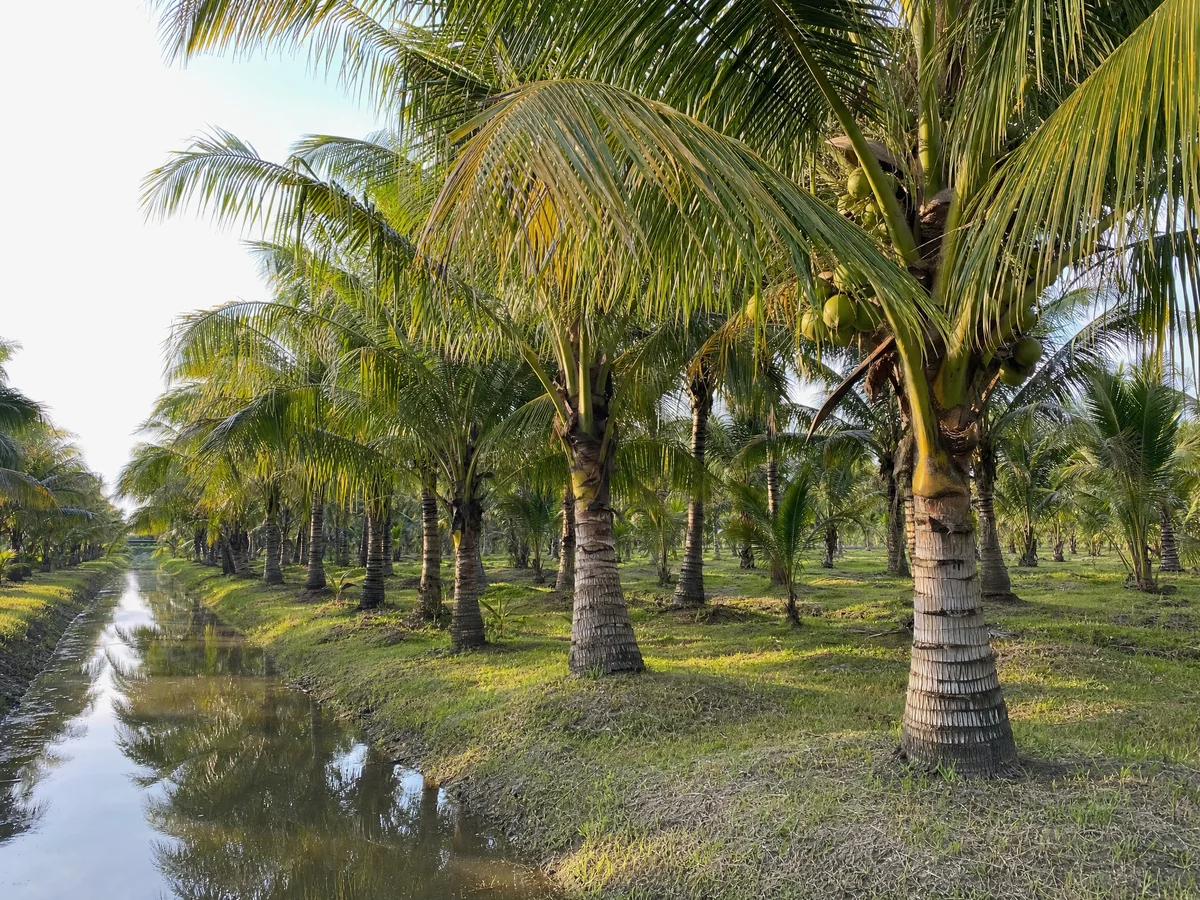
Production tables are what most "best country" lists are quietly built on. Wikipedia's list of countries by coconut production, which compiles Food and Agriculture Organization figures, puts Indonesia at about 17.2 million tonnes of coconuts in 2022, the Philippines at about 14.9 million and India at about 13.3 million (Wikipedia, citing FAO). Brazil comes fourth at about 2.7 million, so the top three each grow roughly five times as much, which is a fact about land and climate. It is also a table of whole fruit: only part of any harvest becomes oil, and only part of that ends up in a cosmetic bottle.

On the oil side, the best figures we could verify come from the Philippines. A May 2026 trade report on the U.S. Department of Agriculture's annual Philippine report gives coconut oil output of about 1.7 million tonnes this marketing year, from a copra crush of 2.7 million tonnes (copra is dried coconut kernel), with a large share exported and some kept home for industrial and food use (OFI Magazine, 2026). What follows from numbers like these is simple reasoning: coconut oil moves in mill-sized volumes, and a small brand buys somewhere along that chain. A country on a table tells you where the nuts grew. It does not say who crushed, refined, fractionated or bottled the oil in your hand.
What really changes the oil: how it is made
One experiment makes the point better than anything. Researchers in Brunei made virgin coconut oil from locally grown coconuts four different ways: chilling and centrifugation, fermentation, and two direct-expelling routes, one oven-dried and one sun-dried. Every oil met the Asian and Pacific Coconut Community standard on the properties measured, and all were mostly lauric acid. But total phenolic content, the plant compounds some buyers look for, ranged from 1.16 to 12.54 mg gallic acid equivalents per gram, and antioxidant activity varied widely too (Ghani et al., 2018). Same country, same coconuts, and roughly a tenfold spread in phenolics. If you want one sentence to carry into any shop, it is that method can move an oil more than geography does. Our piece on phenolics in coconut oil goes deeper, and how coconut oil is processed walks through the routes.
Money is the other reason a flag is a light guarantee. Virgin coconut oil costs more than common vegetable oils, and a 2023 study on detecting adulteration notes that this encourages blending in cheap oils such as sunflower, maize and peanut; the researchers used infrared spectroscopy to catch it (De Luca et al., 2023). Another 2023 team showed NMR could tell virgin from refined coconut oil and spot virgin oil blended with refined (Bao et al., 2023). Both used instruments rather than noses. Origin still counts for something, because a region's usual methods can shift the odds, but the oil in your hand is what you are buying.
How we talk about our own oil's origin
We keep it plain: we do not name a country for our oils, so we would rather say that than guess. We describe our fractionated coconut oil as fractionated from Cocos nucifera coconut oil, and the certificate of analysis we publish for one fractionated batch reports appearance, smell, relative density (0.948), refractive index (1.450) and optical rotation. It does not name a country, a mill or a laboratory, and it carries no fatty-acid profile or peroxide value. For our virgin unrefined oil no certificate is published. If a country matters to you for a sourcing statement or a personal policy, ask in writing through our wholesale page before you order, and treat a verbal answer as unconfirmed. That is good advice with any supplier you compare.
If you like a good story with your oil, enjoy it, and then turn the bottle over. A label that tells you what the oil is, how it was made and what paperwork exists for the batch is worth more than a pretty map on the box.
Questions that do more work than a country name
Start with the type of oil, because virgin, refined and fractionated are three different products with different jobs, and virgin versus refined shows how. Then ask whether a batch certificate with numbers exists, and whether those numbers belong to the batch you are buying. For virgin oil the useful ones are moisture, peroxide value and free fatty acids against a named standard such as APCC. Ask who did what, since the grower, crusher, refiner and bottler are often different companies, and "product of" and "bottled in" answer different questions. If organic is claimed, our organic labels guide covers what the term means. We do not claim organic status for either oil. For label wording and paperwork generally, our buying checklist is a good companion.
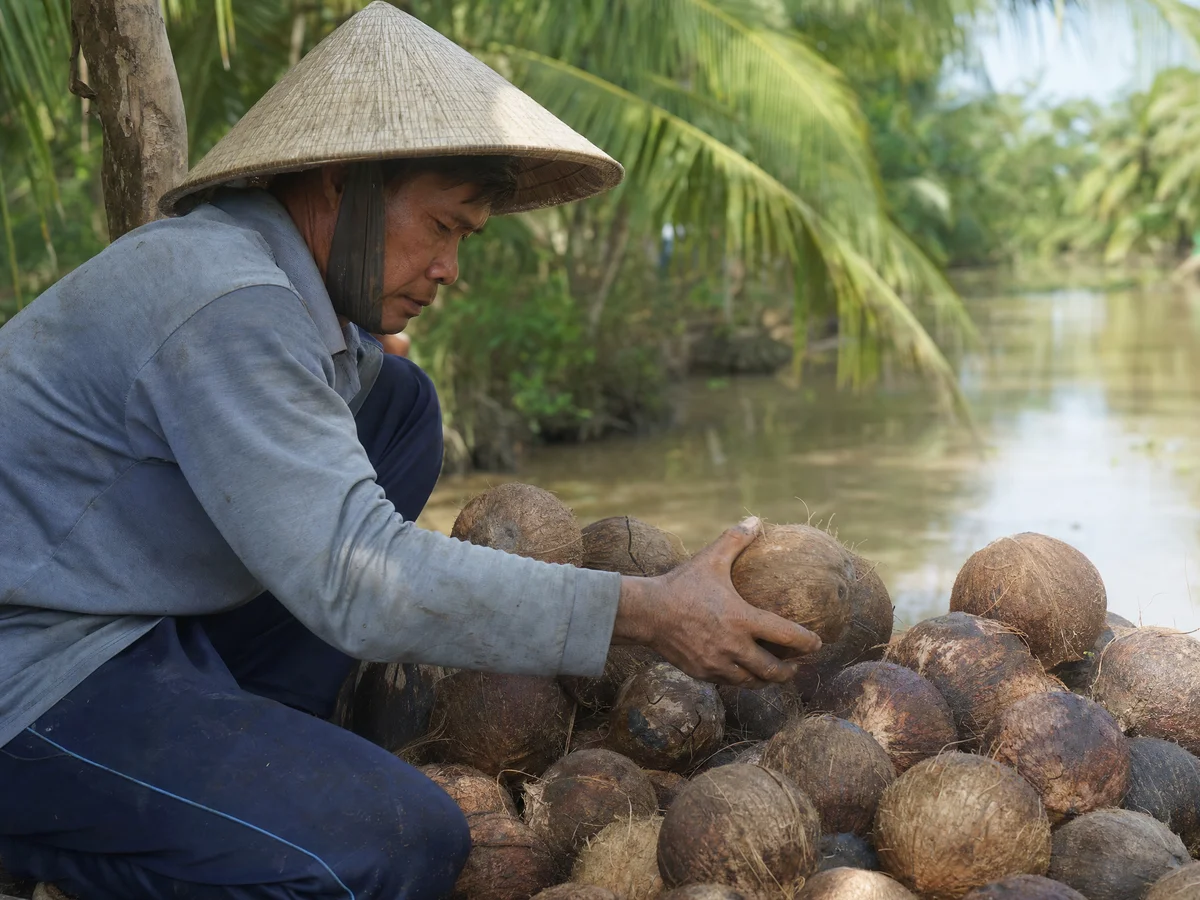
Caring where your oil comes from is a perfectly good instinct, for ethical and supply-chain reasons alike. It simply works best as the second question, right after the one about method and documents.
Fractionated Coconut Oil
Fractionated Coconut Oil from our own shop, in sizes from 0.5 oz to bulk.
From $9.99
Shop Now →Sources & Further Reading
- Wikipedia (data: FAO statistical database, 2022). List of countries by coconut production. en.wikipedia.org
- OFI Magazine, 4 May 2026 (citing USDA FAS). Philippines coconut oil exports expected to increase as output rises. ofimagazine.com
- Ghani NAA et al., 2018. Physicochemical properties, antioxidant capacities, and metal contents of virgin coconut oil produced by wet and dry processes. Food Sci Nutr 6(5):1298-1306. PMC6060898
- De Luca M et al., 2023. Multivariate curve resolution methodology applied to the ATR-FTIR data for adulteration assessment of virgin coconut oil. Molecules. PMC10302750
- Bao R et al., 2023. A comparative evaluation of low-field and high-field NMR untargeted analysis: authentication of virgin coconut oil adulterated with refined coconut oil as a case study. Anal Chim Acta 1273:341537. pubmed/37423668