Coconut Oil After a Workout: Massage and Other Uses
Search for coconut oil and workouts and you will mostly find advice about eating a spoonful before a run. The side we find more interesting is the skin side: the post-session rubdown that feels like a small reward for showing up. Here is how the usual workout ideas sort out, which ones suit a cosmetic coconut oil, which belong elsewhere, and what the research says about each.

Fractionated Coconut Oil
Our own Fractionated Coconut Oil, in sizes from 0.5 oz to bulk.
From $9.99
Shop Now →Post-workout massage: the best fit
Of everything people attach to coconut oil and training, massage has the strongest research, though that research is about massage and not any particular oil. A meta-analysis pooling 29 randomized studies with 1,012 participants found no evidence that massage improves strength, jump, sprint, endurance or fatigue, but did find small, statistically significant improvements in flexibility and delayed onset muscle soreness (Davis et al., 2020). A larger comparison of recovery methods across 99 studies concluded that massage looked like the most effective technique for soreness and perceived fatigue (Dupuy et al., 2018).
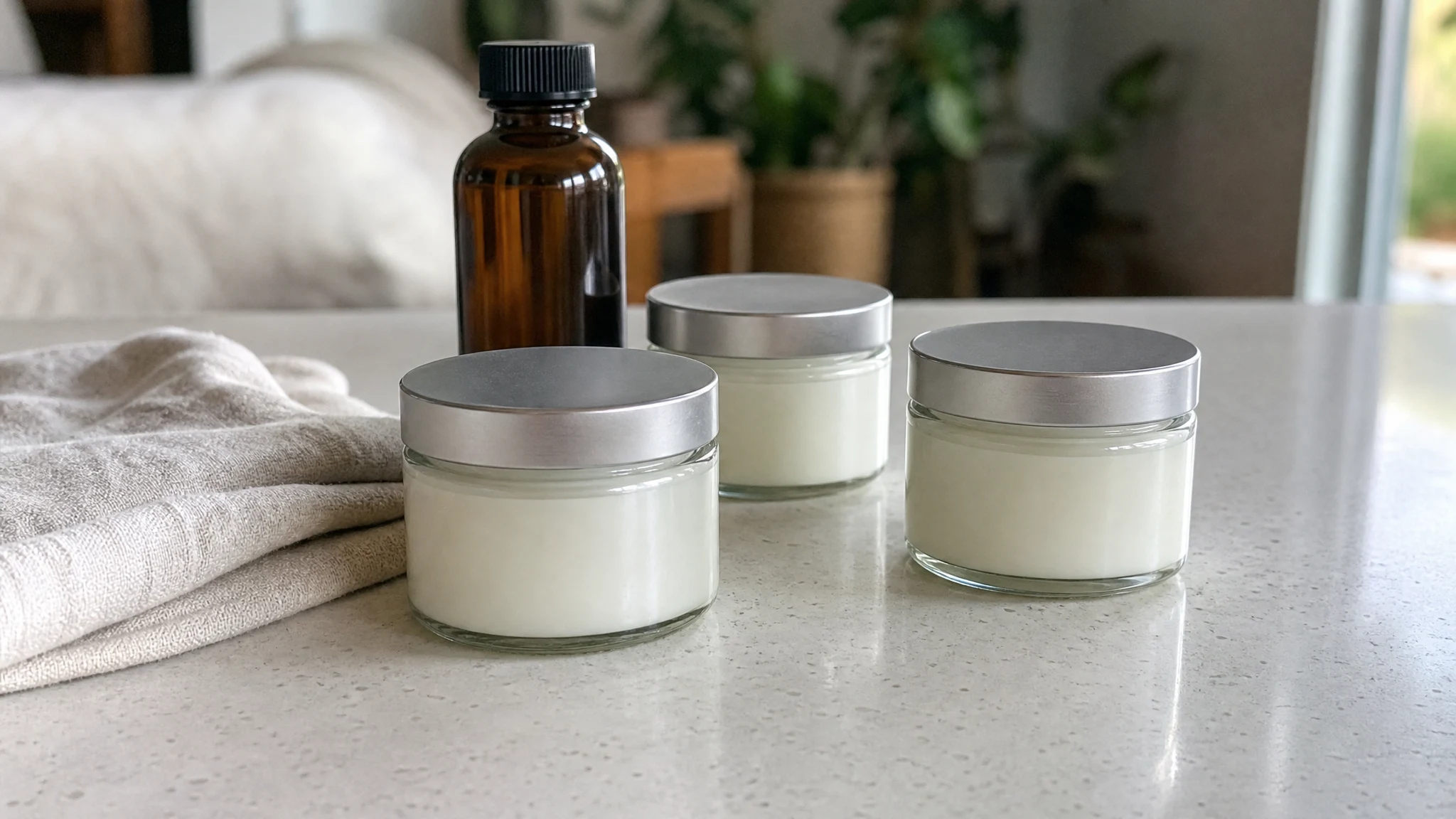
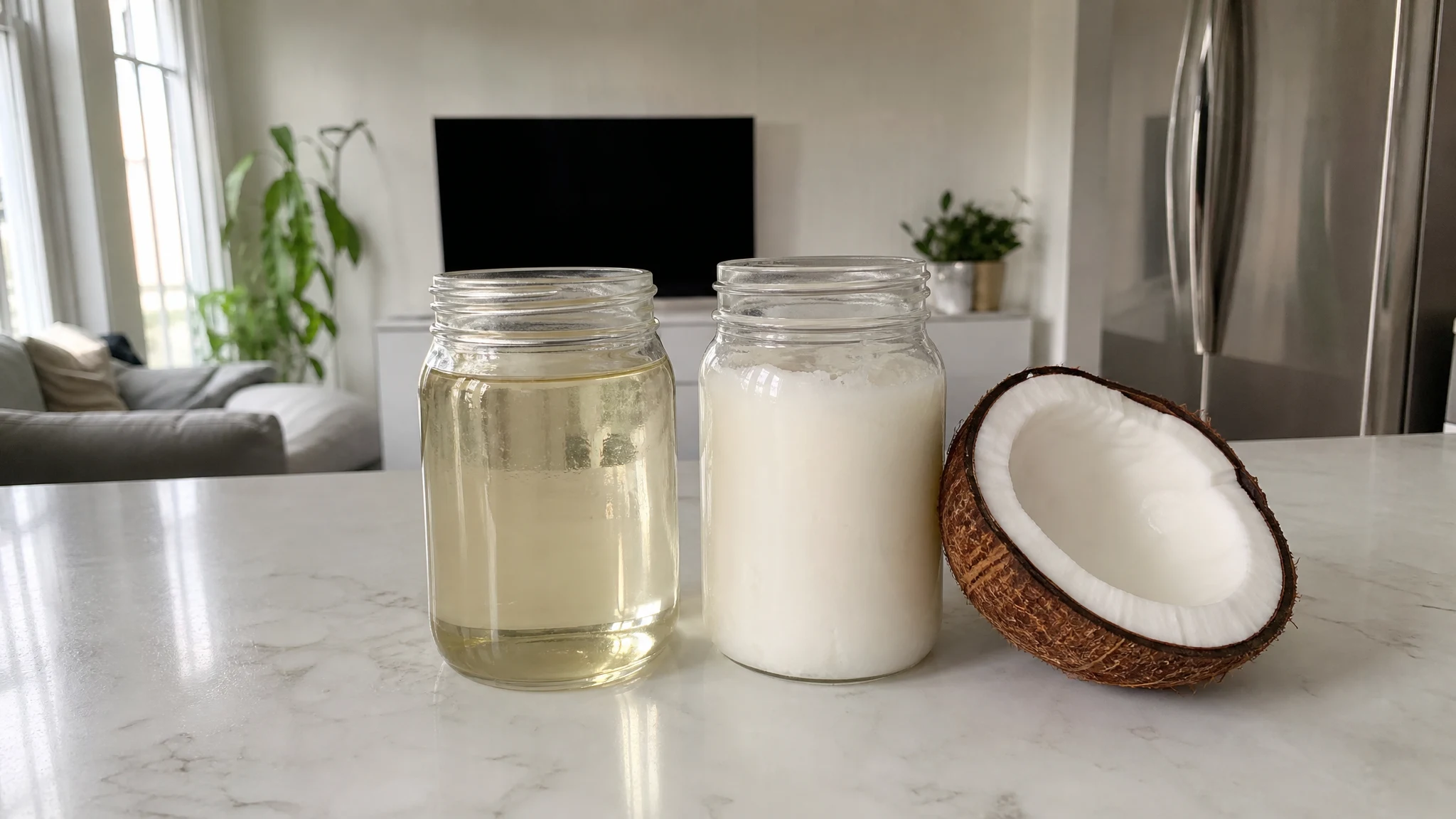
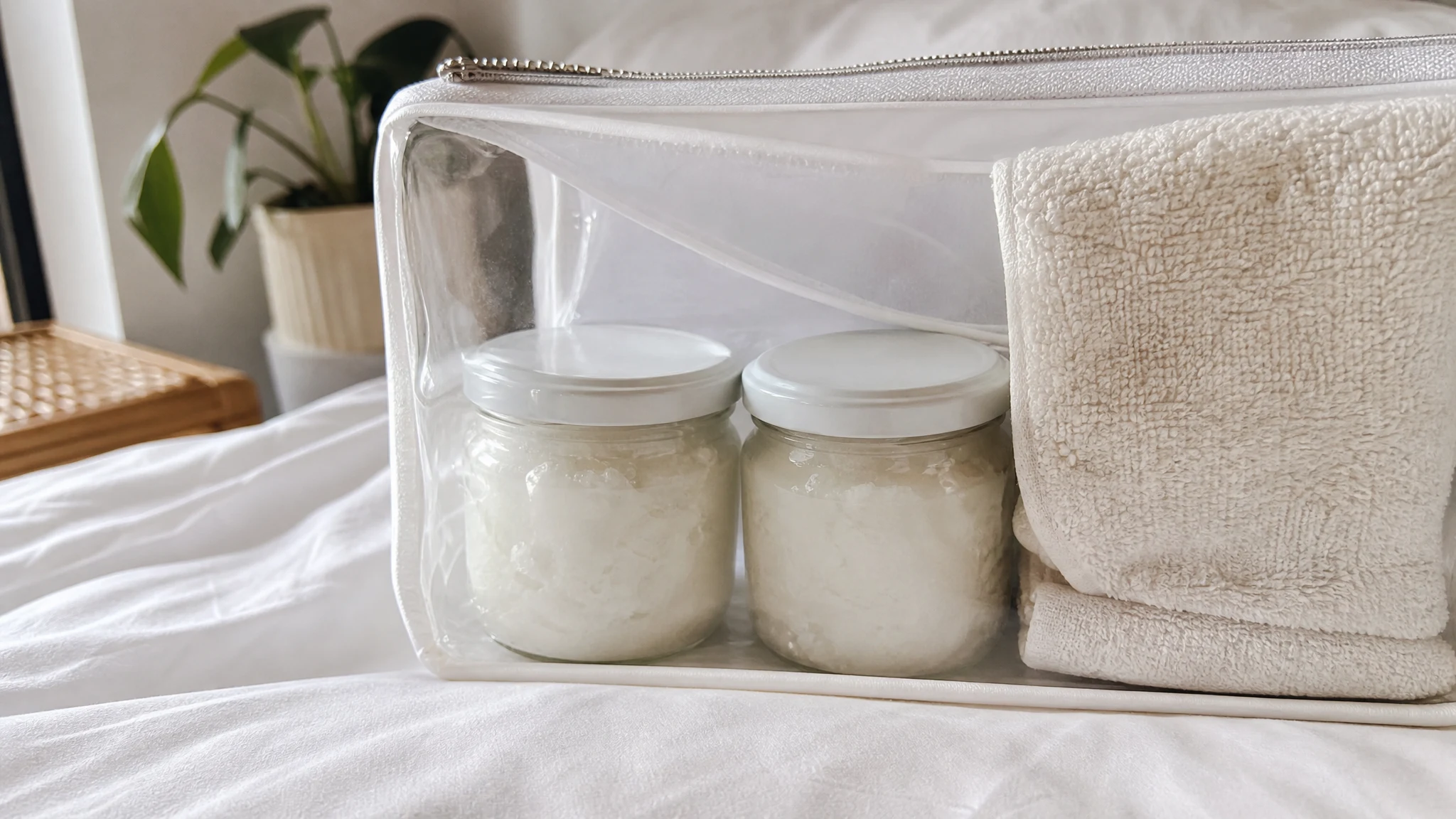
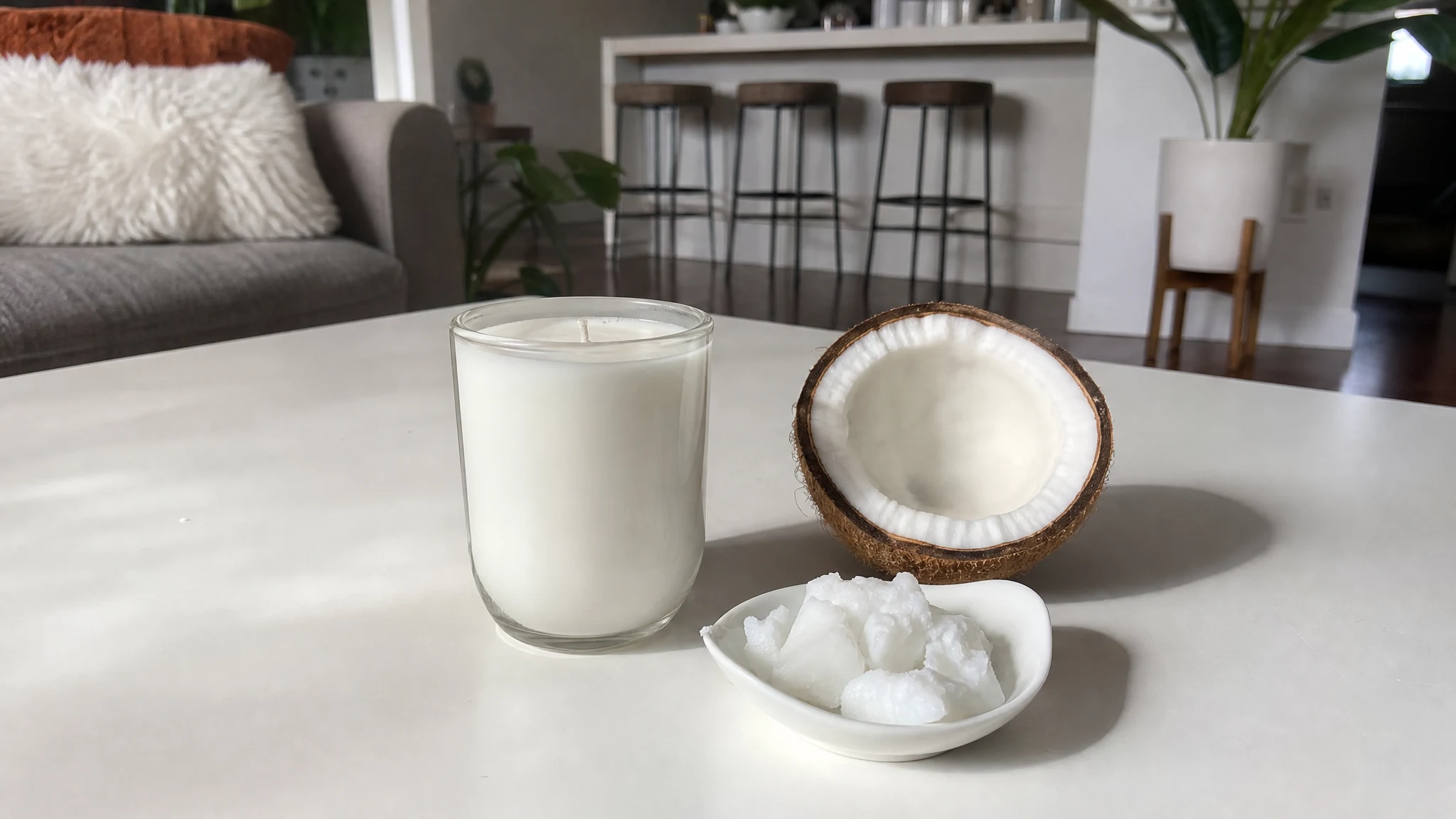
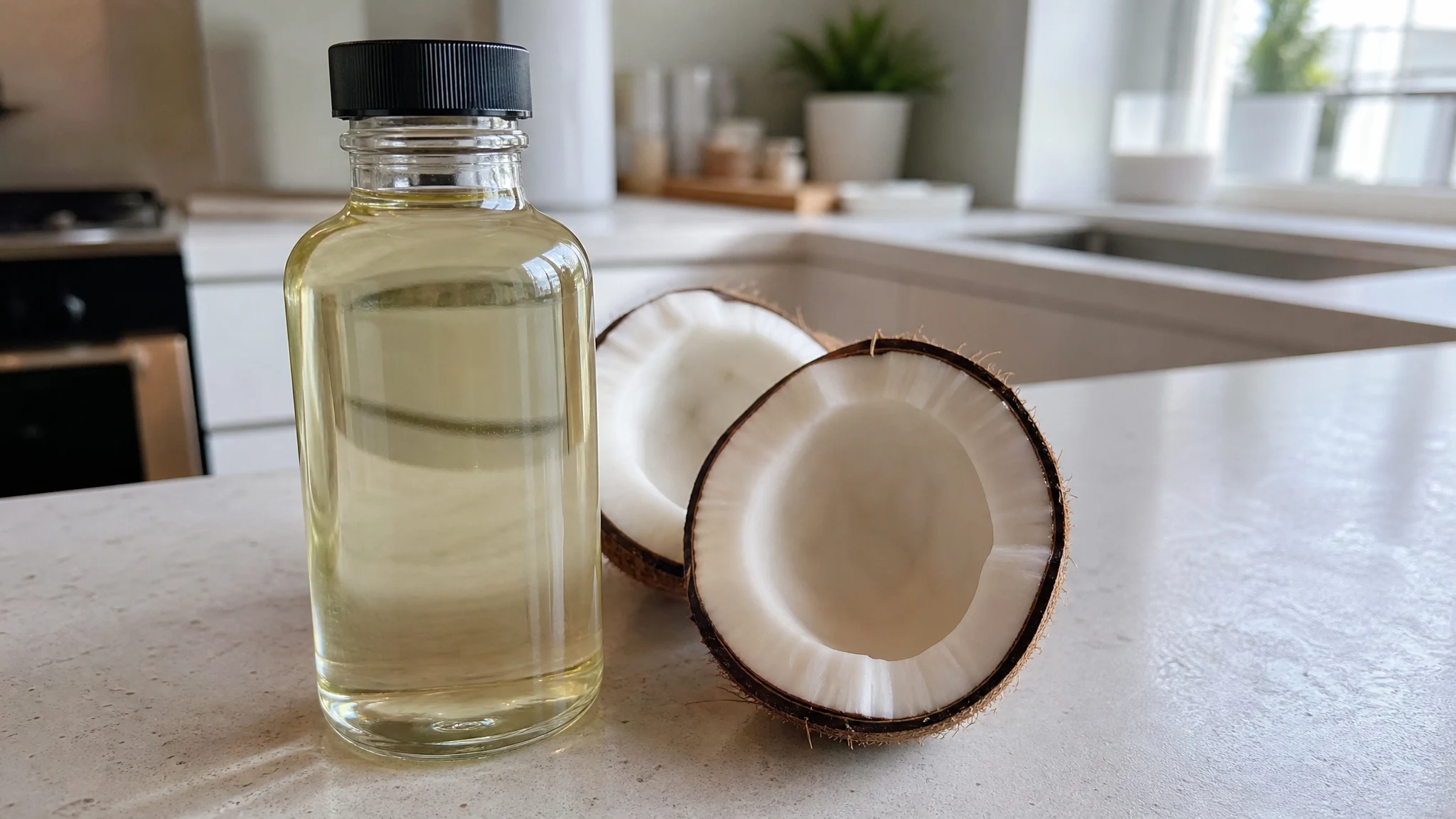
So massage may take the edge off a hard session without making you faster next week, and that is still a lovely reason to do it. What oil adds is glide, which is reasoning from how massage works rather than a trial result: it lets hands travel over skin without dragging. Our fractionated coconut oil suits the job. We describe it as fast-absorbing and non-greasy, it stays liquid at any temperature so it will not set hard in a cold gym bag, and we describe it as virtually odorless, which is a kindness in a shared locker room. Our virgin unrefined oil is firm below about 76 degrees Fahrenheit, softens in warm hands, and carries a rich coconut aroma that some people love after a session. Our massage article goes through how the two behave.
A rough sense of quantity helps with choosing a size. A teaspoon is about 4.9 ml, so a 4 oz bottle (about 118 ml) holds roughly 24 teaspoons. If a calf and quad self-massage takes about a teaspoon, that is around two dozen sessions from one bottle, and a bigger area or a partner massage will take more. Lay a towel under the area, since oil can stain fabric, and wash your hands before you pick up a phone or a barbell.
Many people like to add a scent, and our dilution guide has the percentages. One boundary is worth knowing. The FDA separates cosmetics from drugs by intended use, and its cosmetics page says a massage oil meant simply to lubricate the skin and impart fragrance is a cosmetic, while one meant to relieve muscle pain is a drug (FDA). That is why we sell our oils for glide and feel. Pain that is sharp, one-sided or lingers for days is a matter for a physician or physical therapist.
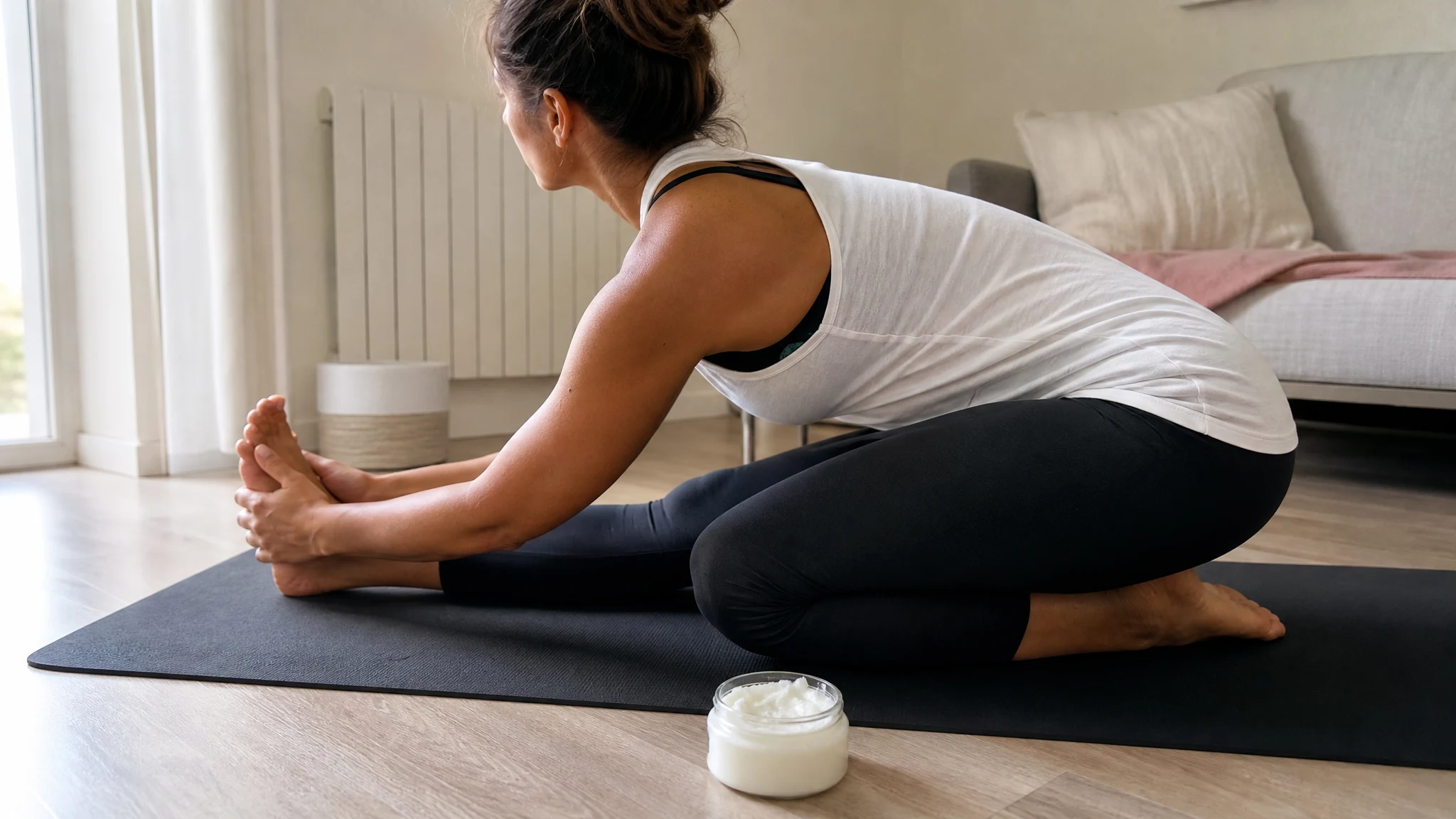
It also helps to think of the rub as part of cooling down. Do it after you have stretched and had a drink of water, with warm hands, and use slow, long strokes rather than hard digging. Your hands will warm the oil as they move, and with the fractionated oil you will notice it glide without any tacky drag. Five minutes on tired calves is a pleasant way to end a session.
Eating oil before training: a different product
The classic pitch is a spoonful before training for quick medium-chain energy. The research behind it is on MCT oil, which is a different mixture from coconut oil, and it is modest. A systematic review of MCT oil in healthy people found that most studies reported no improvement in exercise performance, and the authors suggested 30 grams as a maximum dose to limit adverse reactions during or after exercise (Chapman-Lopez and Koh, 2022). Applying those findings to coconut oil is an inference, since the two are different fats.
Either way, our oils are sold for external cosmetic use only, so for a smoothie or a pre-run coffee you will want an oil sold as food, and a registered dietitian can help with amounts. Our MCT versus coconut oil article untangles the two.
Outdoor sessions: sunscreen first
If part of your plan for an outdoor run or ride is a coat of coconut oil, let sunscreen handle the sun. The FDA's sunscreen guidance advises broad spectrum sunscreen with an SPF of 15 or higher, applied as directed and reapplied at least every two hours, and more often when you are sweating or swimming (FDA). We make no SPF claim for our oils. The post-run oil rub is best enjoyed once you are indoors and the sunscreen has done its job. More is in our SPF article.
Chafing and other practical corners
Runners often wonder about an oil for thighs, underarms and feet on long efforts, and our chafing article looks at where an oil fits on a run. A few practical points need no study. Oil can stain clothing and may reduce your grip on a handlebar, racket or bat, so keep it for after the session. Skin that is raw, open or bleeding calls for care from a clinician.
A quick way to sort your own list
Massage after a session is a happy use for a cosmetic oil, and the evidence backs massage for soreness and flexibility. Eating an oil is a food question, best met with a food-grade product and a dietitian. Sun protection is sunscreen's job. Anything involving pain, injury or open skin starts with a clinician. And if coconut or tree nut allergy is part of your picture, our allergy article is the place to begin before you apply anything.
We suggest a patch test on a small area first, and keeping oil away from your eyes. For a simple, quick-absorbing post-workout rub, the fractionated oil is the one we would point you to, since it stays pourable in a cold bag.
Fractionated Coconut Oil
Fractionated Coconut Oil from our own shop, in sizes from 0.5 oz to bulk.
From $9.99
Shop Now →Sources & Further Reading
- Davis HL, Alabed S, Chico TJA, 2020. Effect of sports massage on performance and recovery: a systematic review and meta-analysis. BMJ Open Sport Exerc Med 6(1):e000614. pubmed/32426160
- Dupuy O et al., 2018. An evidence-based approach for choosing post-exercise recovery techniques. Front Physiol 9:403. pubmed/29755363
- Chapman-Lopez TJ, Koh Y, 2022. The effects of medium-chain triglyceride oil supplementation on endurance performance and substrate utilization in healthy populations: a systematic review. J Obes Metab Syndr 31(3):217-229. pubmed/36096496
- US FDA. Is it a cosmetic, a drug, or both? fda.gov/cosmetics
- US FDA. Sunscreen: how to help protect your skin from the sun. fda.gov/drugs