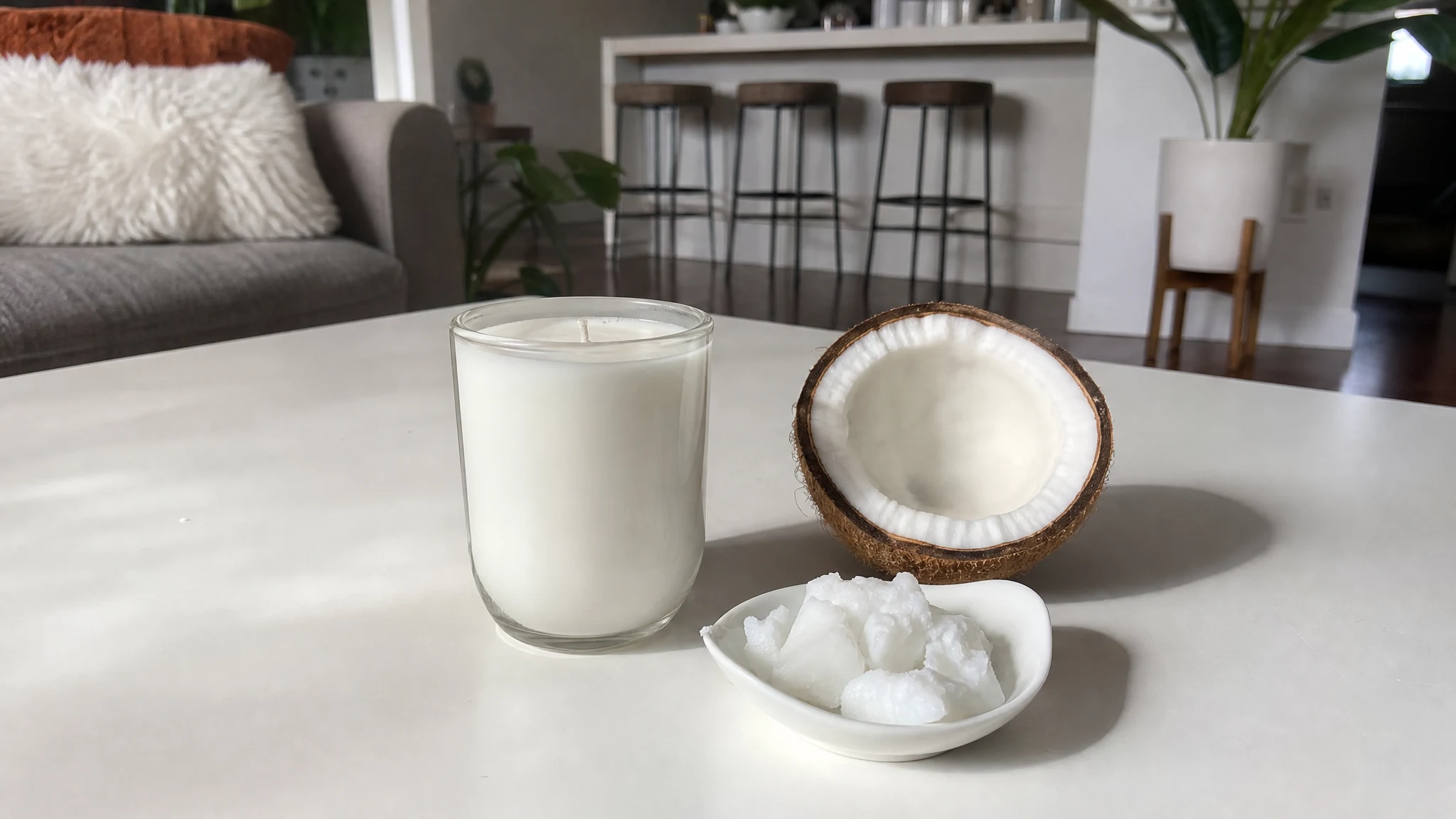
Coconut Oil Massage Candles: Melt Points and Safe Warmth
A massage candle is a small piece of kitchen-table engineering. It has to hold a flame like a candle and pour like a warm oil, and the whole charm is that the wax melts at a temperature your skin can enjoy. Get that one number right and the gift is lovely. Here is how to think it through before you pour anything.

Fractionated Coconut Oil
Our own Fractionated Coconut Oil, in sizes from 0.5 oz to bulk.
From $9.99
Shop Now →The melt point is the whole recipe
A lit candle makes a small pool of liquid around the wick, and that pool is what ends up on skin. Its temperature is set by the wax and not by the flame. Paraffin candle wax melts hot enough that nobody would pour it on a back, which is why massage candles are built on soft, low-melt soy. Wikipedia's soy candle entry gives soy wax a melting range of roughly 49 to 82 C (120 to 179 F) depending on the blend, a big spread where the low end is the part you want. Wax suppliers that sell for this purpose name a specific soy blend for skin contact; Voyageur Soap and Candle, for example, names a soy wax (GW 415) for its massage candle recipe, so ask your own supplier for the melt point of the wax you choose.
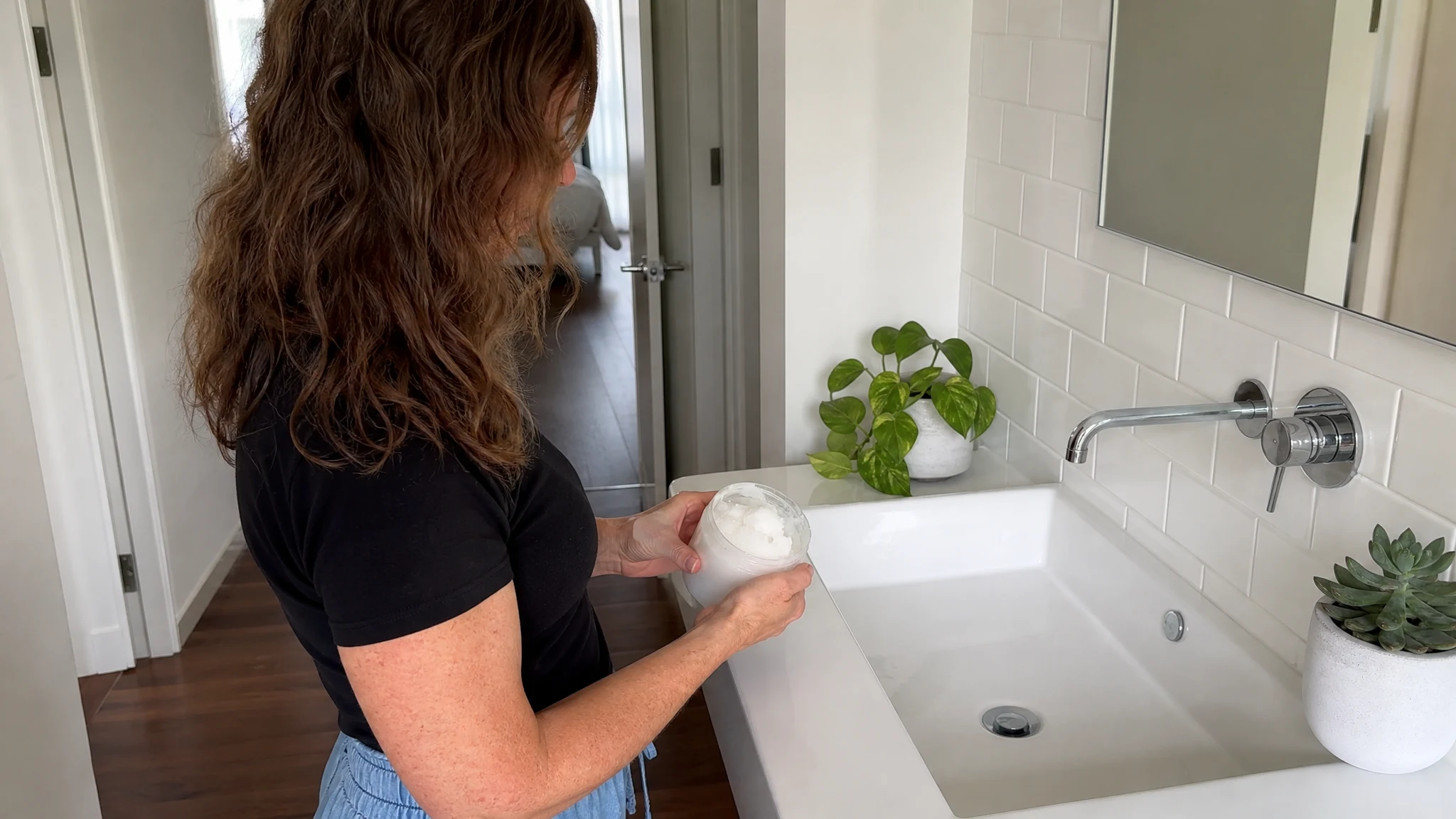
Coconut oil is the other half. A review from India's Central Food Technological Research Institute lists virgin coconut oil as melting at about 24 C, or 75 F (Gopala Krishna et al., 2010), and our virgin unrefined listing is firm in a cool room and melts in warm hands. Our fractionated coconut oil stays liquid at any temperature. Either one softens soy wax, lowers the melt point of the blend and leaves the pool silky instead of waxy, which is the real reason coconut oil shows up in nearly every massage candle recipe.
How warm is warm enough
The sensible guide to a safe pool temperature is how quickly hot liquid injures skin. A widely repeated scald chart, which Wikipedia's scalding page attributes to the American Burn Association, says hot water at 51.7 C (125 F) takes about 90 seconds to cause injury, while at 60 C (140 F) it takes about 5 seconds and at 68.3 C (155 F) about 1 second. That chart describes water, and oils hold heat differently, so read it as a margin guide.
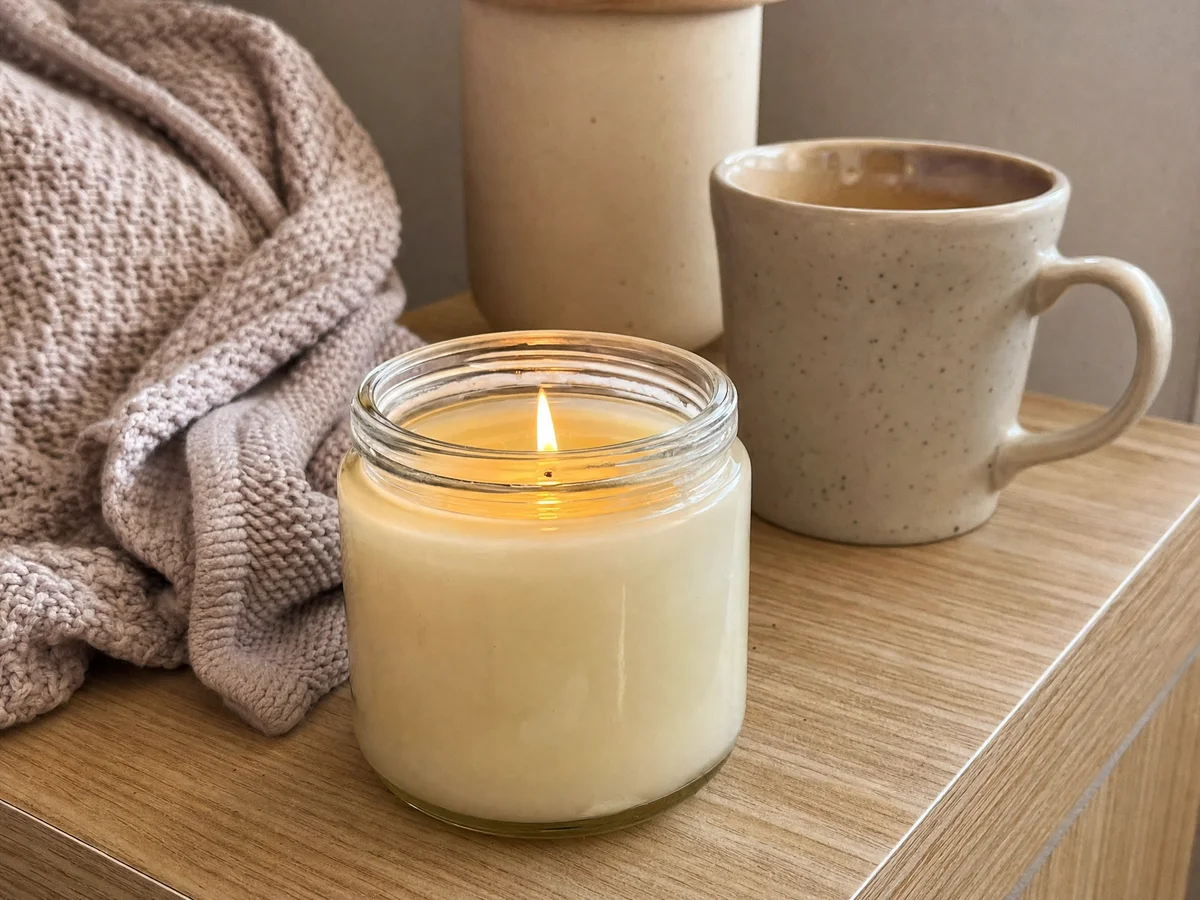
The practical lesson is that a pool that feels comfortably hot on a fingertip can still be too warm for a shoulder, and a person with reduced sensation will not feel the warning at all. So cool the pool and check it instead of judging by eye. A kitchen thermometer and a wrist test do the job.
A recipe you can scale by weight
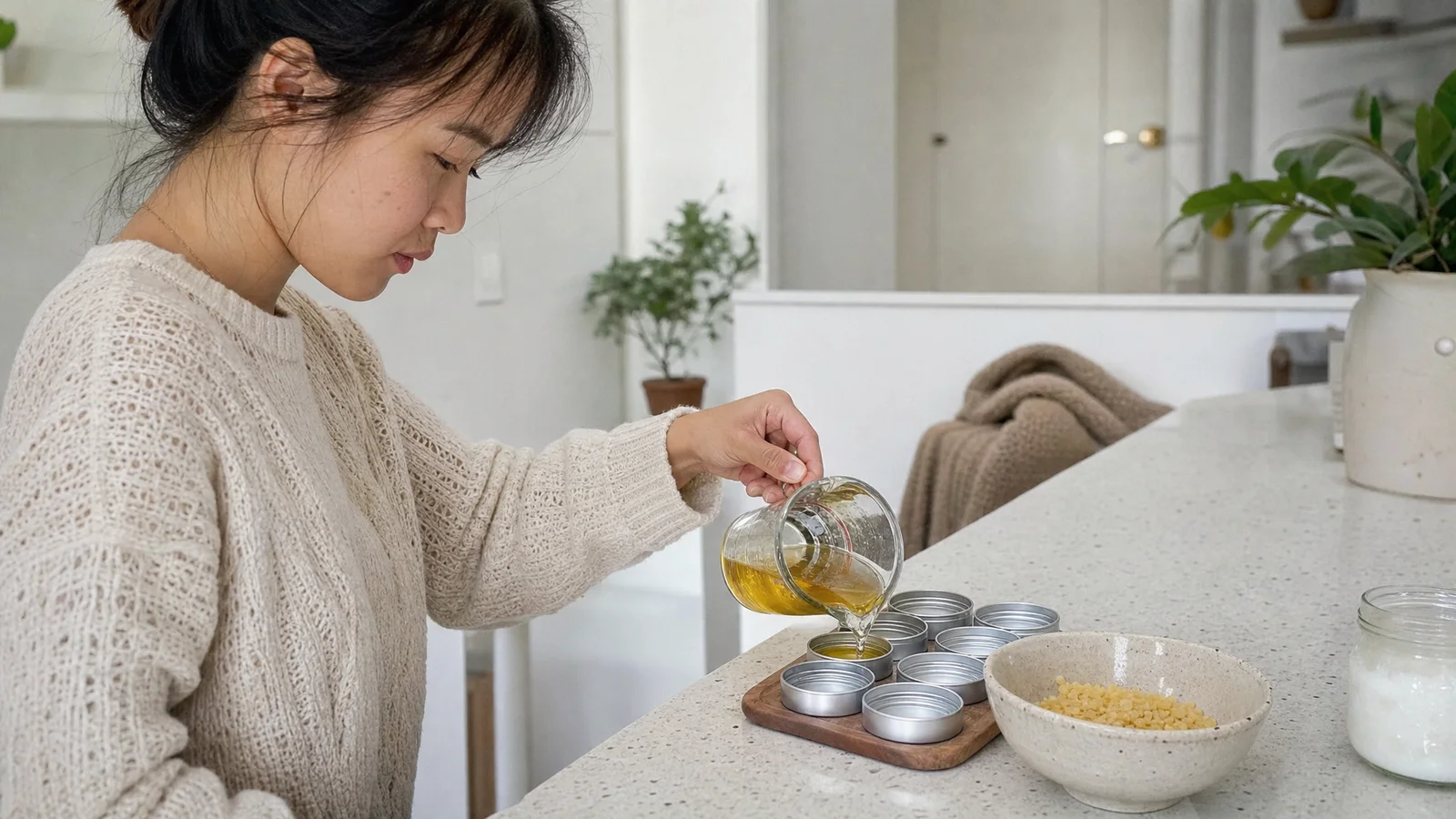
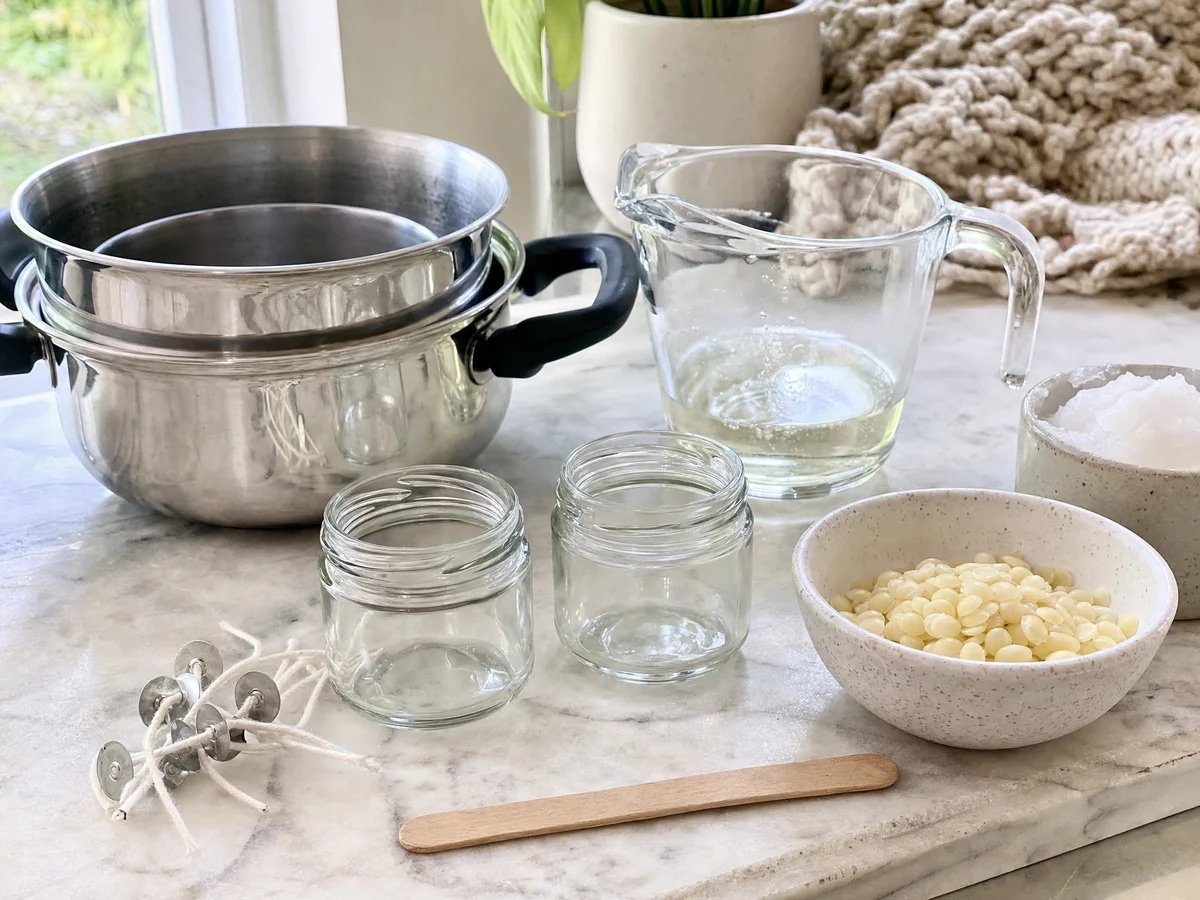
The common home recipe calls for about a cup (240 ml) of coconut oil, a couple of tablespoons of another liquid oil and two tablespoons (about 28 g) of wax. At a density of 0.948 g/ml, the figure on the one fractionated batch whose Certificate of Analysis we publish, 240 ml of oil is about 227 g, so the wax is only about 1 part in 8 by weight. Compare that with the 1 part beeswax to 3 to 5 parts oil that Hobby Farms (Peacher, 2019) suggests for salves. A massage candle sits far on the soft side of a salve, which is exactly what you want from it and why it likes a deep, wide container.
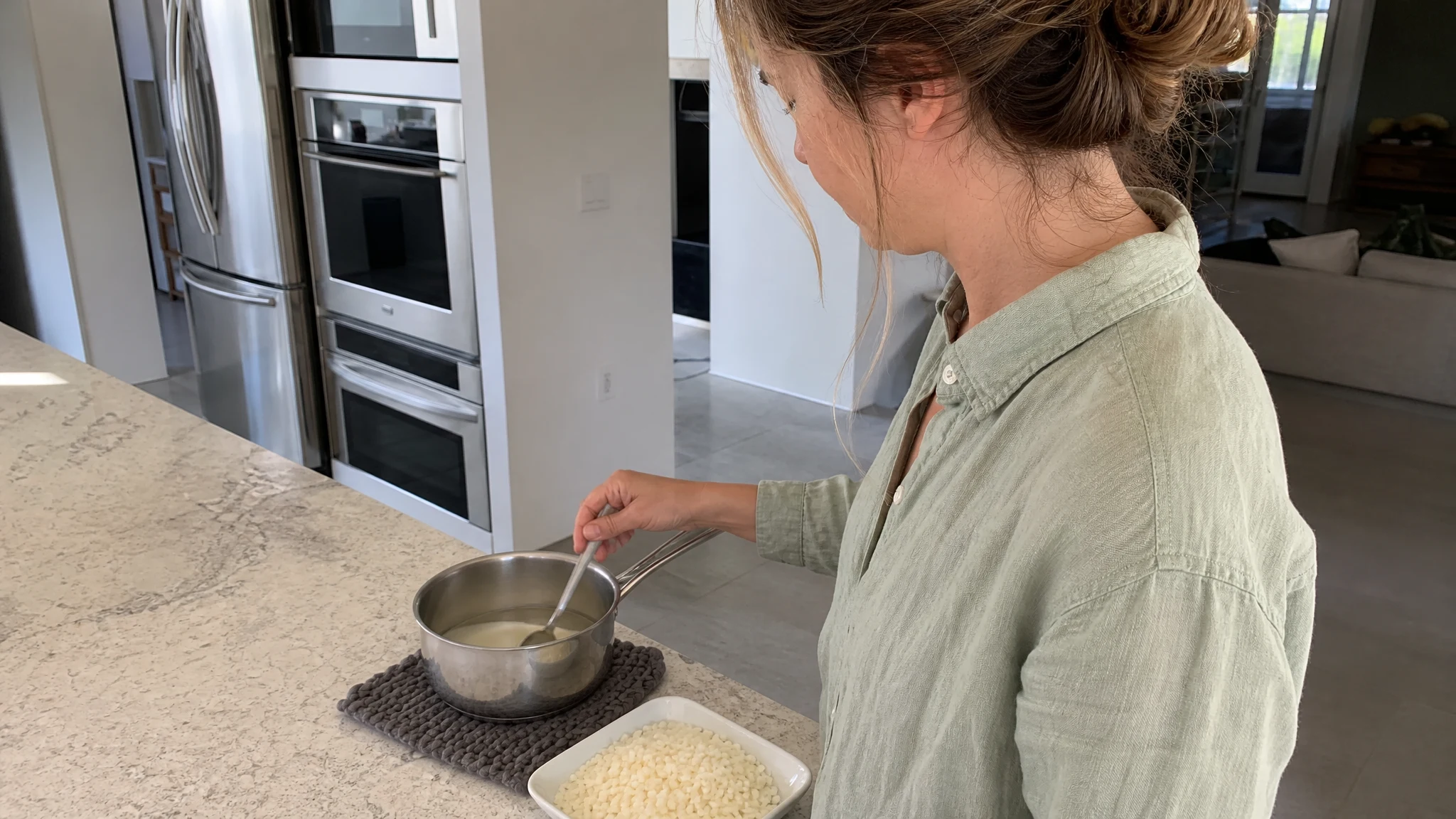
The wax-supplier recipe runs the other way, with a candle-style ratio of 454 g of soy wax to 150 ml of liquid oil, melted in a double boiler to 180 F and poured at 140 to 160 F. That is a firmer candle you would let pool before use. Both approaches work: pick the soft one for a bigger pool of oil, and the firmer one if you want it to burn like a candle and keep its shape in a travel tin.
From flame to skin
- Burn the candle until a pool has formed across most of the surface, then blow it out.
- Check the pool with a thermometer if you have one, or pour a little into a heatproof dish and wait.
- Test a drop on the inside of your own wrist. It should feel barely warm, not hot.
- Pour in small amounts away from the face, and keep the candle off the bed and away from fabric.
That last step matters beyond candles. The NHS notes that clothing and bedding that have been in contact with an emollient can easily catch fire, so keep flames away from any sheet or towel that has oil on it.
Choosing the container
Pick a jar or tin that is wide and fairly shallow, because a broad surface melts into a generous pool. Make sure it is heatproof and sits flat, and keep it on a plate or tray so a spill never lands on a bedspread. A short wick that sits in the center gives the pool time to spread evenly. Leave a little room below the rim, so the liquid has somewhere to go when you tip it.
Scent, color and finishing touches
Keep it simple. Candle fragrances and dyes are made for air and not for skin, so a skin-appropriate essential oil at a low level, or no scent at all, is the better choice. The Tisserand Institute suggests 0.2 to 1% for sensitive skin and 1 to 3% for body oils, and a few drops in a 250 g candle comes out well below 1%. Essential oils are not food, so the National Capital Poison Center advises storing them where children cannot get them.
A word on our oils: they are cosmetic carrier oils for external use, and we do not sell candles, wax or wicks. If anyone on the gift list has a coconut allergy, an allergist is the person to ask before coconut oil goes on skin. A massage candle is also not a personal lubricant, and a pharmacist can say which products suit condoms.
If you want the gift without the flame, a jar of whipped body butter is the easy cousin. Our notes on coconut oil for massage and gift ideas that keep well help you choose between the two oils.
Fractionated Coconut Oil
Fractionated Coconut Oil from our own shop, in sizes from 0.5 oz to bulk.
From $9.99
Shop Now →Sources & Further Reading
- Wikipedia, undated. Soy candle. en.wikipedia.org/wiki/Soy_candle
- Voyageur Soap and Candle, undated. How to Make Massage Candles. voyageursoapandcandle.com
- Gopala Krishna AG et al., 2010. Review of coconut oil (CFTRI Mysore). Indian Coconut Journal, July 2010. coconutboard.in
- Wikipedia, undated. Scalding (table attributed to the American Burn Association). en.wikipedia.org/wiki/Scalding
- Peacher R, Hobby Farms, 2019. Beeswax salve guidance. hobbyfarms.com/?p=63105
- NHS, reviewed 2023. Emollients. nhs.uk/conditions/emollients
- Tisserand Institute, undated. Essential oil dilution. tisserandinstitute.org
- National Capital Poison Center, undated. Essential oils. poison.org