How to Make a Coconut Oil and Beeswax Salve
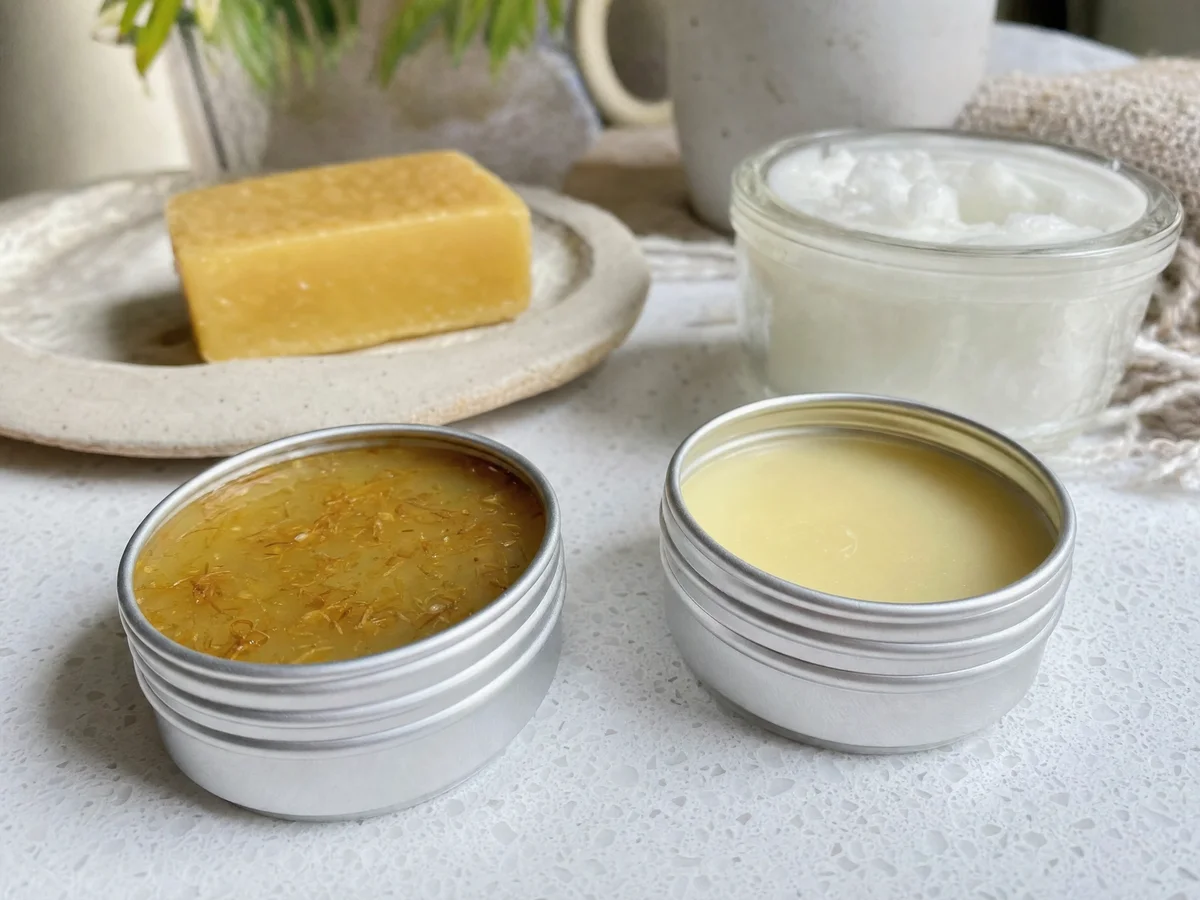
A little jar of coconut oil and beeswax salve is one of the most satisfying things you can make for rough hands, elbows and heels. It melts into skin and leaves it feeling soft and smooth, and the whole recipe comes down to one ratio, wax to oil. Get that right, check it with a cooled spoonful, and you can dial the texture from creamy to firm.
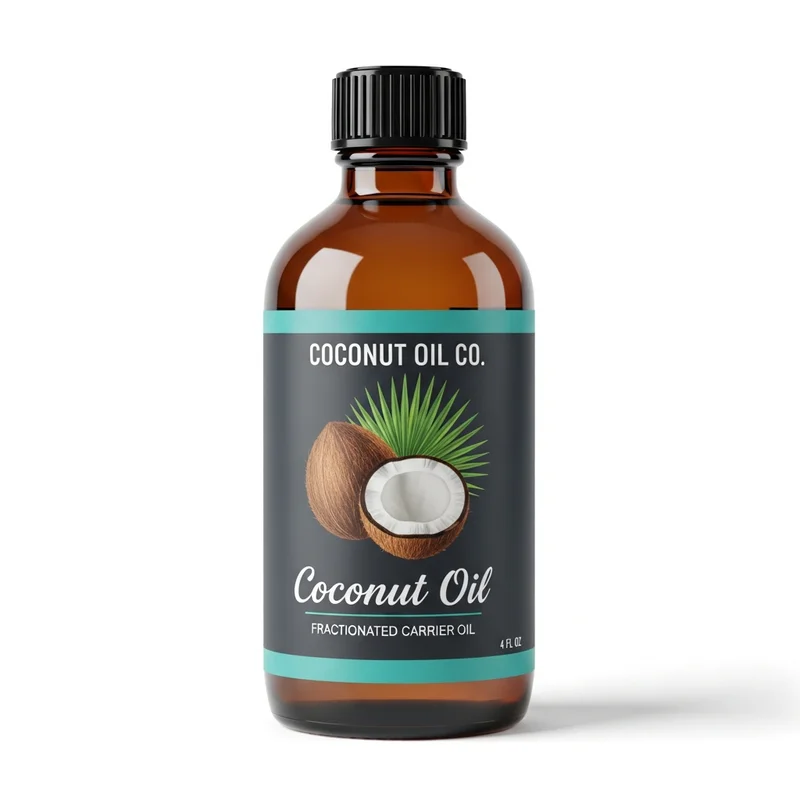
Fractionated Coconut Oil
Our own Fractionated Coconut Oil, in sizes from 0.5 oz to bulk.
From $9.99
Shop Now →What a salve is, and why it is easy
A salve is anhydrous, which just means oil and wax with no water. With no water to manage, it does not need the preservative system a lotion does. It can still go rancid over time, and fingers dipped into the jar can carry contamination in, so a clean spoon or spatula is the better habit. Dry, rough skin on hands, elbows, heels and cuticles is where this balm feels at home.
The ratio, with the arithmetic
The one published rule we fetched comes from Rhoda Peacher in Hobby Farms (24 June 2019): one part beeswax to three to five parts oil. Her sample salve combines 2 oz beeswax, 1 oz jojoba oil, 7 oz infused olive oil and 1 oz coconut oil, about 2 parts wax to 9 parts oil. She suggests spooning a little of the warm mixture onto a cold plate to see how it sets: if it is too firm, add oil, and if it is too soft, add wax. A creamier salve suits winter and a firmer one suits summer.
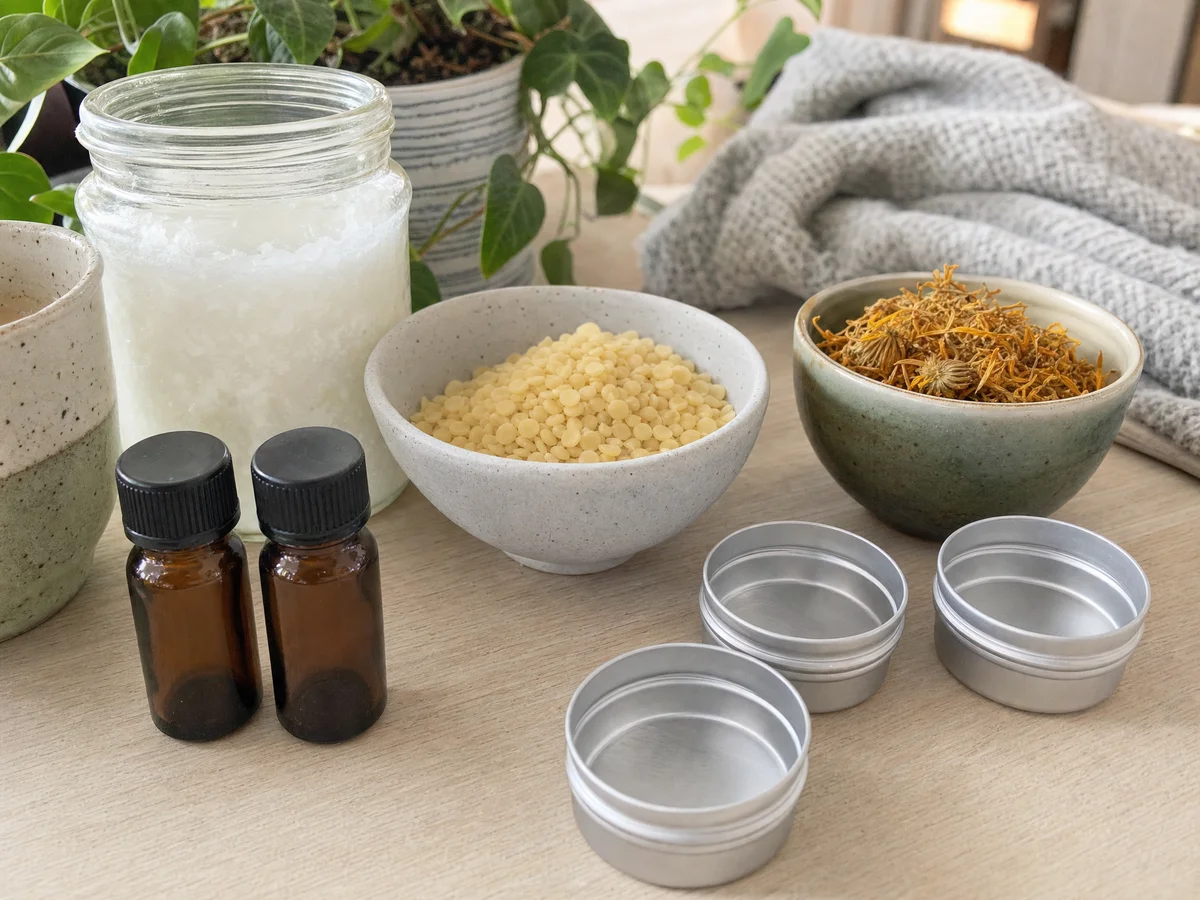
Here is that rule turned into a small 30 g batch, treating it as a ratio by weight (our arithmetic):
| Ratio (wax : oil) | Wax | Oil | Wax share | Feel (reasoning) |
|---|---|---|---|---|
| 1 : 3 | 7.5 g | 22.5 g | 25% | Firmest end of the rule |
| 1 : 4 | 6 g | 24 g | 20% | Middle of the rule |
| 1 : 5 | 5 g | 25 g | 16.7% | Softest end of the rule |
That rule was written around an olive-oil-based salve, and a different oil changes the firmness, which is why the cooled test spoonful matters more than the table.
Which coconut oil: a choice of personality
This is where our two oils give you two different salves. Fractionated coconut oil stays liquid at any temperature, so all of the firmness comes from the wax, and the salve will not harden further in a cold room because the oil itself never sets. We describe it as fast-absorbing, non-greasy and virtually odorless, which makes a clean, neutral base. Virgin unrefined coconut oil is firm below about seventy-six degrees Fahrenheit and carries a creamy coconut aroma. Since it brings firmness of its own, it makes sense to start at the softer end of the wax rule and check the cooled sample. That last point is reasoning from the two oils' melting behavior.
Both of our oils are sold neat, for external cosmetic use only. For a jar that smells of coconut, choose our virgin unrefined oil. For a calm, neutral base that lets a scent or your own fragrance lead, our fractionated oil is the one. We do not sell beeswax, so pick up cosmetic-grade pellets from a craft or soap-making supplier.
Making it
- Weigh the wax and the oil into a heatproof jar or bowl.
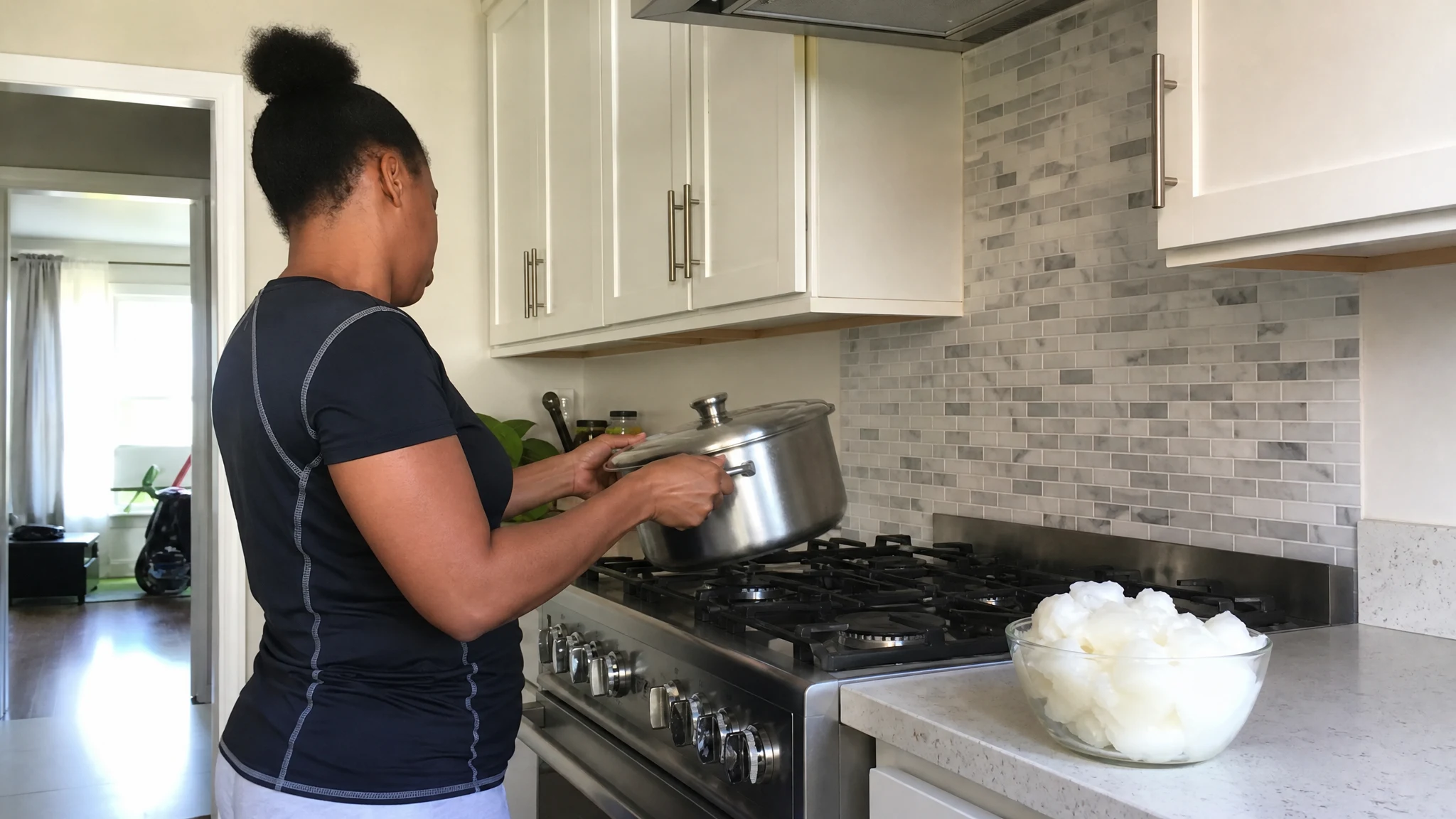
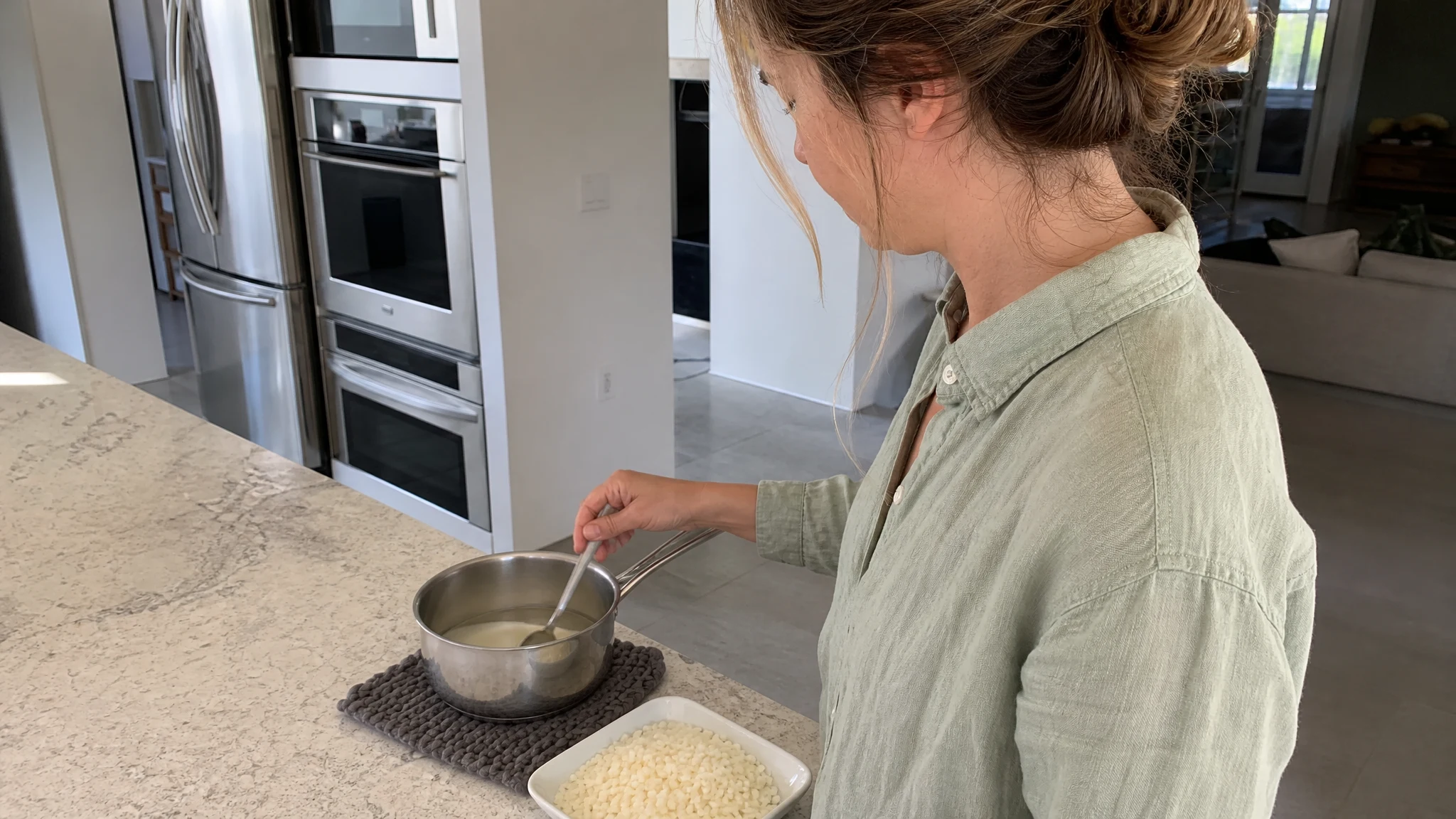
- Warm gently over a pan of simmering water, stirring until the wax has melted completely.
- Take it off the heat and spoon a little onto a cold plate. Wait a minute and press it with a finger to judge the firmness, then add oil or wax as the rule suggests.
- Pour into clean tins or jars while it still flows, and leave it to set undisturbed.
Measuring without a scale
The oil side converts easily. The one fractionated batch on our published certificate of analysis measured a relative density of 0.948 at 20 C, so 1 ml of that batch weighs about 0.948 g (one batch, so a working number). For the 1 : 4 row, 24 g of oil is about 25.3 ml, a little over 5 teaspoons at about 4.93 ml each. Beeswax pellets do not convert as cleanly by volume, so weigh the wax if you can. The finished 30 g batch comes to roughly 31 to 32 ml, a touch over an ounce (29.57 ml), so plan jars accordingly.
Small touches that keep it nice
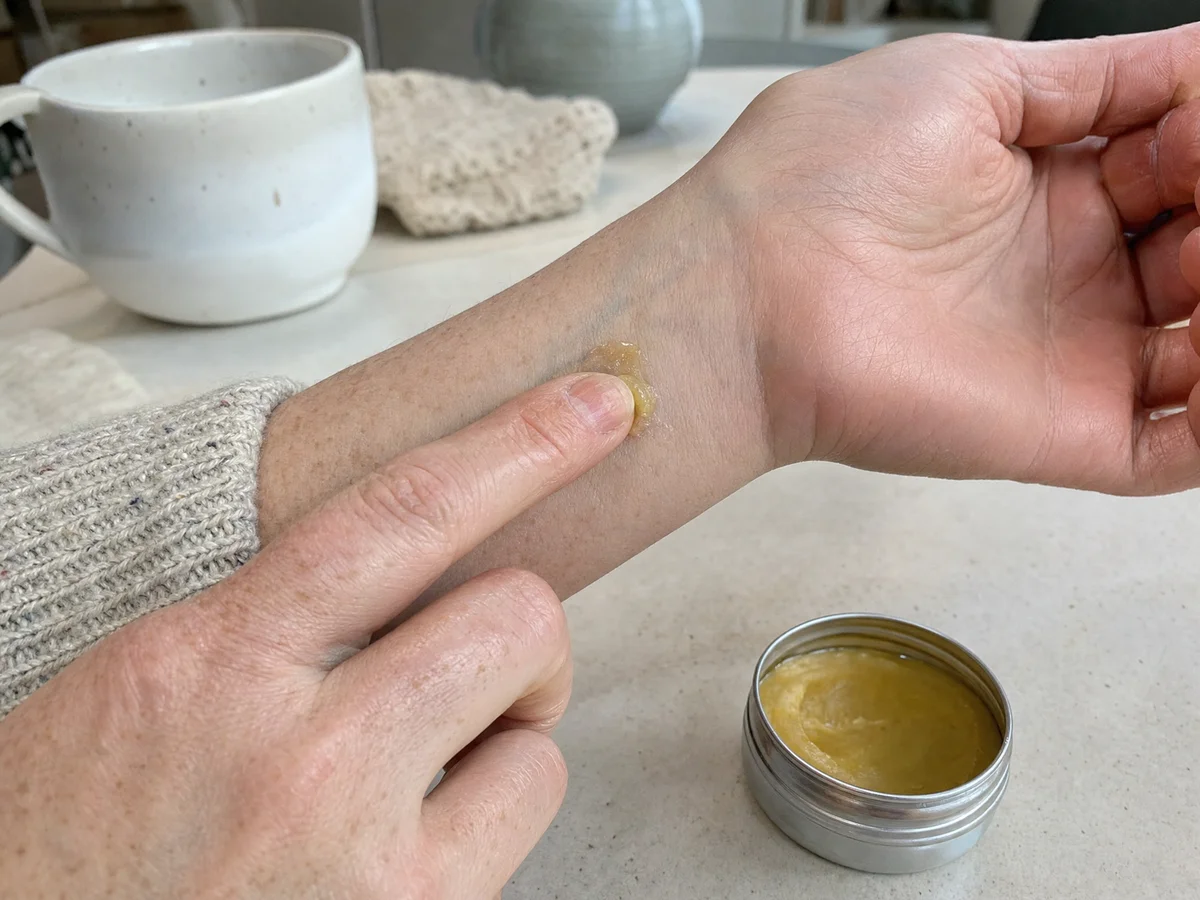
A dry-skin salve needs only two ingredients. If you want to scent it, use a published dilution table, and keep scented balm off open skin. Patch test a small area first and wait 24 hours, as we advise for the fractionated oil, and if you have a tree nut or coconut allergy, check with a professional before use. Keep the jar cool and dark, and stop using it if skin turns red, itchy or sore.
NHS guidance on emollients notes that dressings, clothing and bedding that have been in contact with an emollient can catch fire easily (NHS, reviewed 24 October 2023). A wax-and-oil balm belongs in that group, so let it soak in before cooking or lighting a candle.
A word on cuts
A salve is a moisturizer, so it sits outside first aid. The NHS guidance on cuts and grazes (last reviewed 2 April 2026) says most can be handled at home by stopping the bleeding, cleaning the wound, patting it dry and covering it with a plaster or dressing. It advises an urgent GP appointment or a call to NHS 111 for wounds with dirt or pus, bites, wounds that become swollen, red and more painful, or cuts longer than about 5 cm, and emergency care for bleeding that will not stop or very deep wounds. Because a homemade mix is not sterile, a clean dressing is the right companion for a cut. If dry skin is cracked, bleeding or weeping, or has not improved after a couple of weeks, a doctor or dermatologist is the right call.
When the salve is sorted, the same wax-and-oil logic carries into our lip balm recipe by weight and travel lotion bars. For particular dry spots, take a look at dry heels and chafing on a run, and if you are curious how coconut oil compares with a classic moisturizer, see coconut oil against mineral oil.
Fractionated Coconut Oil
Fractionated Coconut Oil from our own shop, in sizes from 0.5 oz to bulk.
From $9.99
Shop Now →Sources & Further Reading
- Peacher R, Hobby Farms, 24 June 2019. Use Beeswax to Make Salves and Balms. hobbyfarms.com/?p=63105
- NHS, page last reviewed 2 April 2026. Cuts and grazes. nhs.uk/conditions/cuts-and-grazes
- NHS, reviewed 24 October 2023. Emollients. nhs.uk/conditions/emollients