Whipped Coconut Shaving Balm: How to Make and Use It
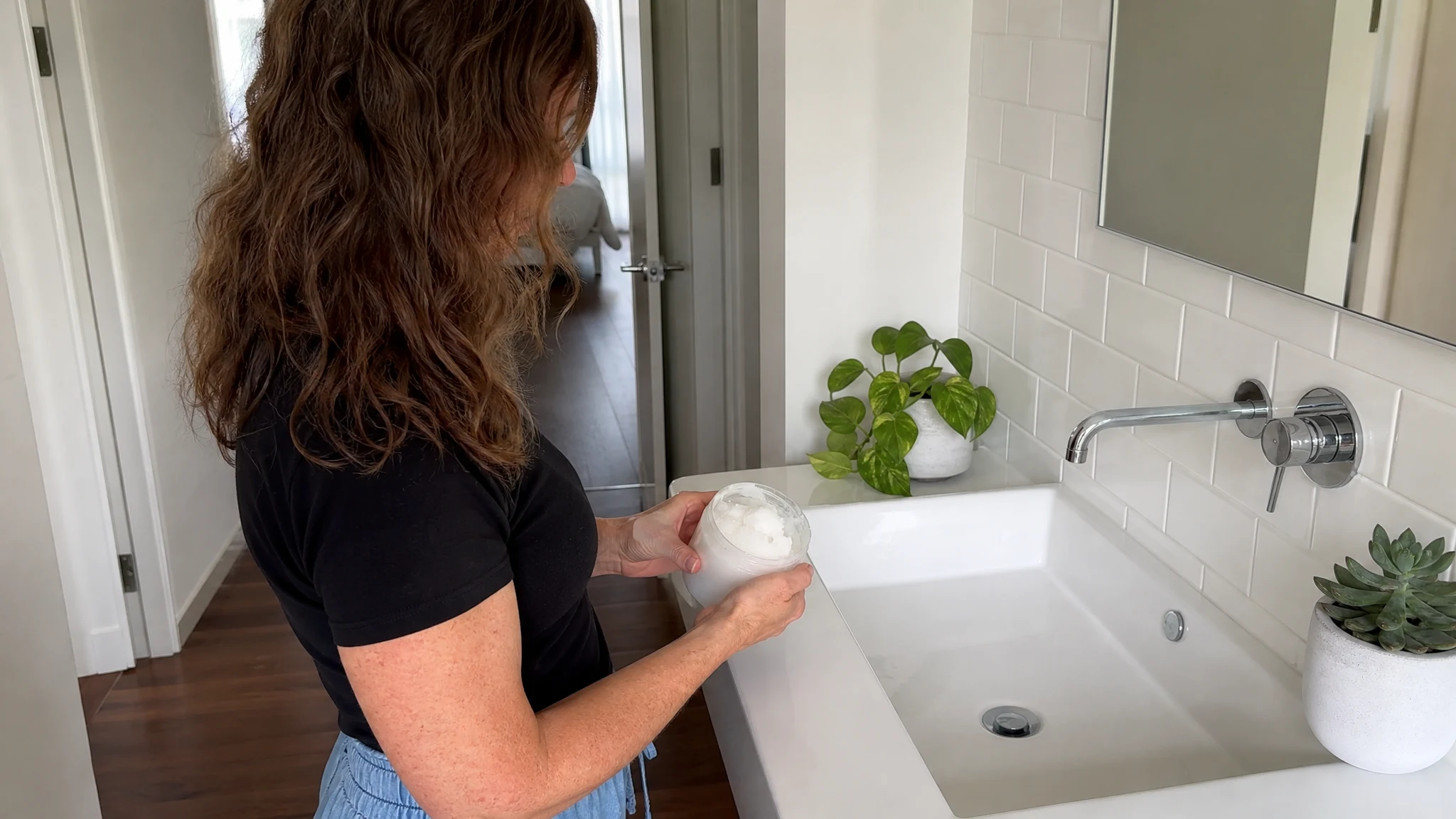
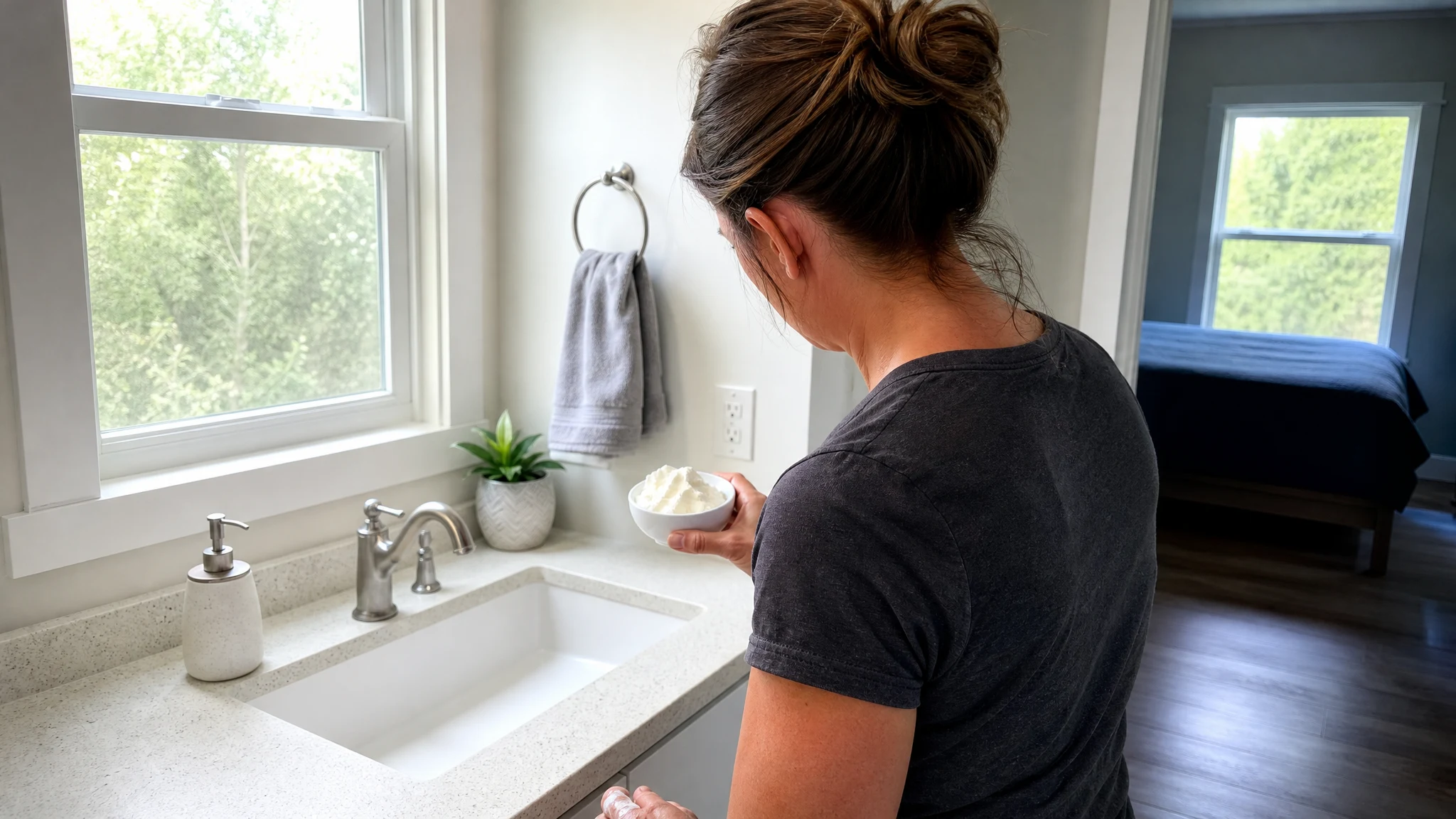
Whipped coconut oil is not shaving foam, and that is exactly what makes it fun to work with. It is a soft, airy balm that gives a razor a slick, glossy surface to glide over, and its white opacity lets you see where you have already been. If you are curious how it differs from a can of lather, and which of our coconut oils actually whips, this is the page for you.
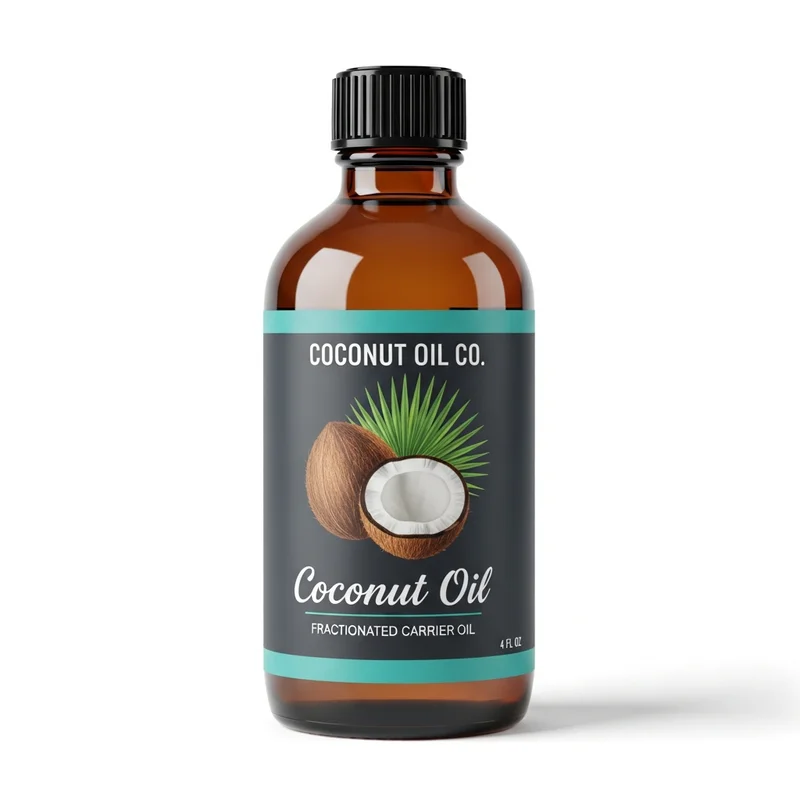
Fractionated Coconut Oil
Our own Fractionated Coconut Oil, in sizes from 0.5 oz to bulk.
From $9.99
Shop Now →Glide instead of lather
Canned and tubed shaving creams are mostly water and soap. They work as a foam: the lather softens the hair and keeps a wet cushion between blade and skin. A whipped oil has no water, so it does not lather. What it gives you is glide. The oil coats skin and hair, the blade moves over a slippery surface, and the balm stays where you put it. If suds are what you love about shaving, a water-based cream is your tool, with a little oil afterward if you like.
For the research behind shaving comfort, a 2012 review of male skin care in the British Journal of Dermatology by Z. D. Draelos is the most relevant research we know of (Draelos, 2012). Its abstract notes that hair-removal technique often drives razor irritation, that keeping facial hair soft during shaving matters, and that post-shave moisturizers with glycerin and emollients are reported to support the skin barrier. It does not discuss oils or whipped products, so our balm is a formulation built from how the materials behave, not a research result.
Which coconut oil whips
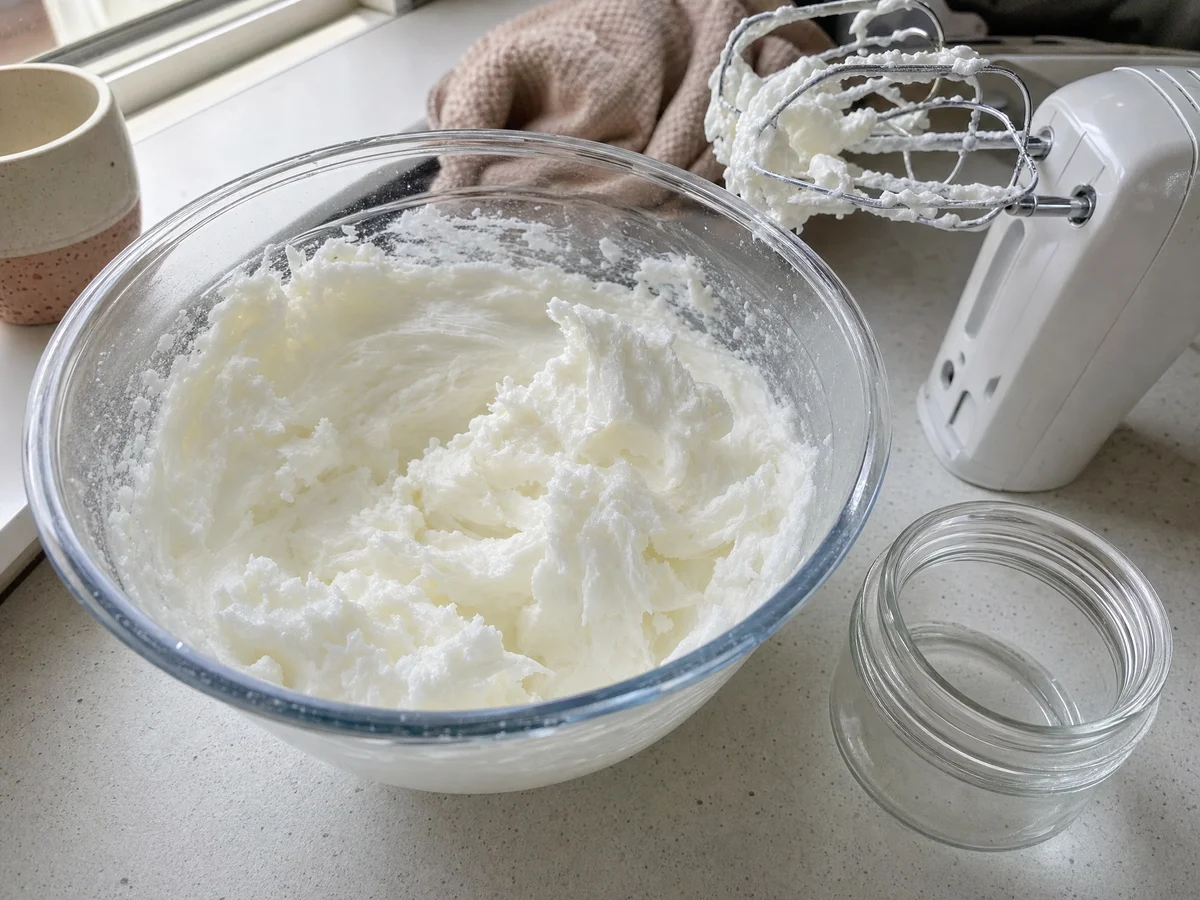
Whipping works on a fat that is solid or semi-solid, because the beater folds air into the crystals and the structure holds it. Our virgin unrefined coconut oil is firm in a cool room and melts in warm hands, at about 76 F (24 C). Chilled until firm but not hard, it whips into a stiff little cloud.
Our fractionated coconut oil stays liquid at any temperature, so a beater only churns it, which is the same trait that makes it a lovely roll-on and massage oil. In a balm it plays a supporting role, softening the finished texture. For the full comparison, virgin versus refined is the place to look.
A balm to work out by weight
This is a starting formulation for one small jar, reasoned from the oil's melting behavior.
- 80 g virgin unrefined coconut oil and 20 g fractionated coconut oil, weighed on a scale. A liquid oil folded into a solid fat makes the balm softer and slower to turn hard in a cold bathroom. Twenty percent is a first guess to adjust to your own room.
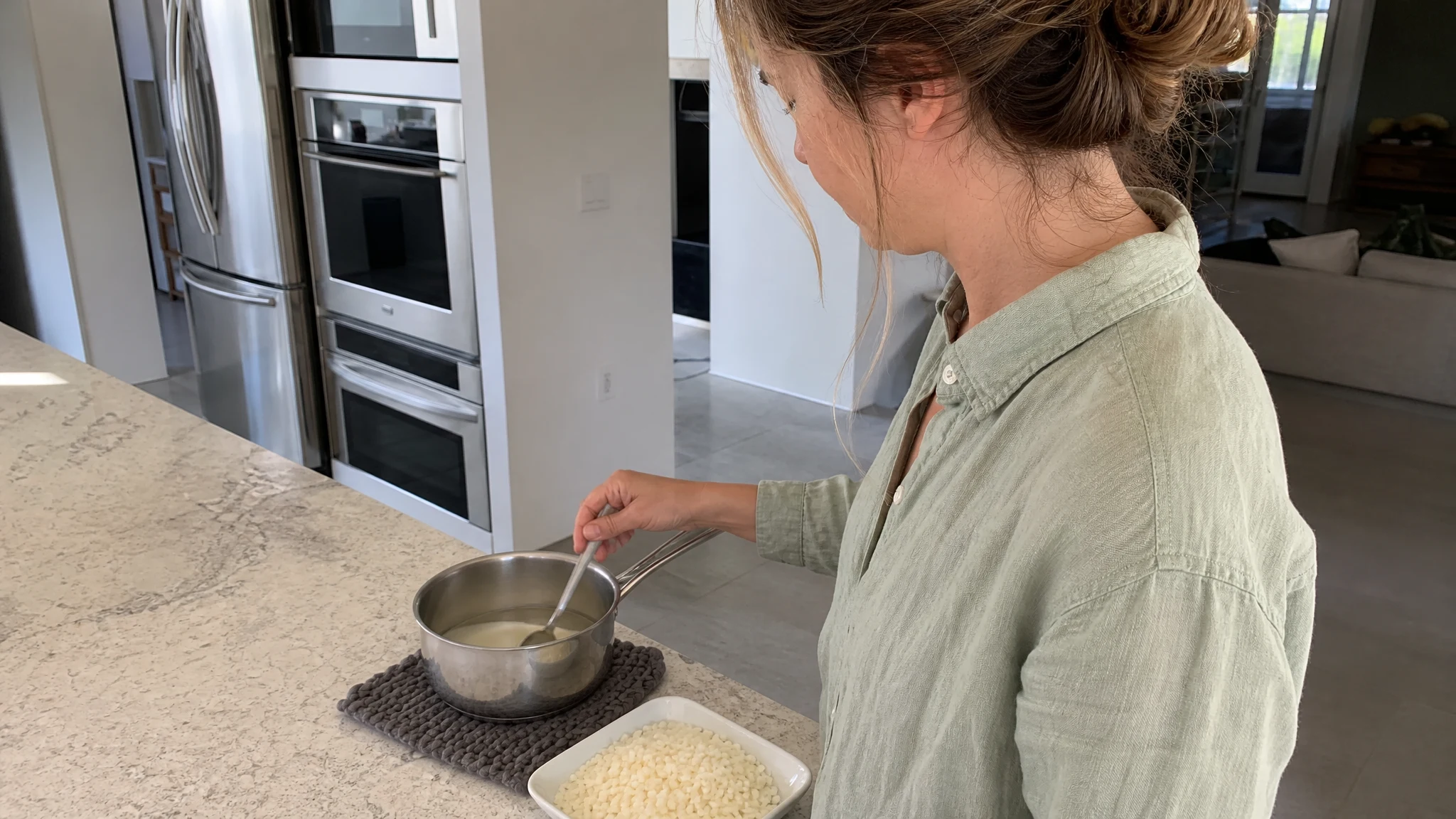
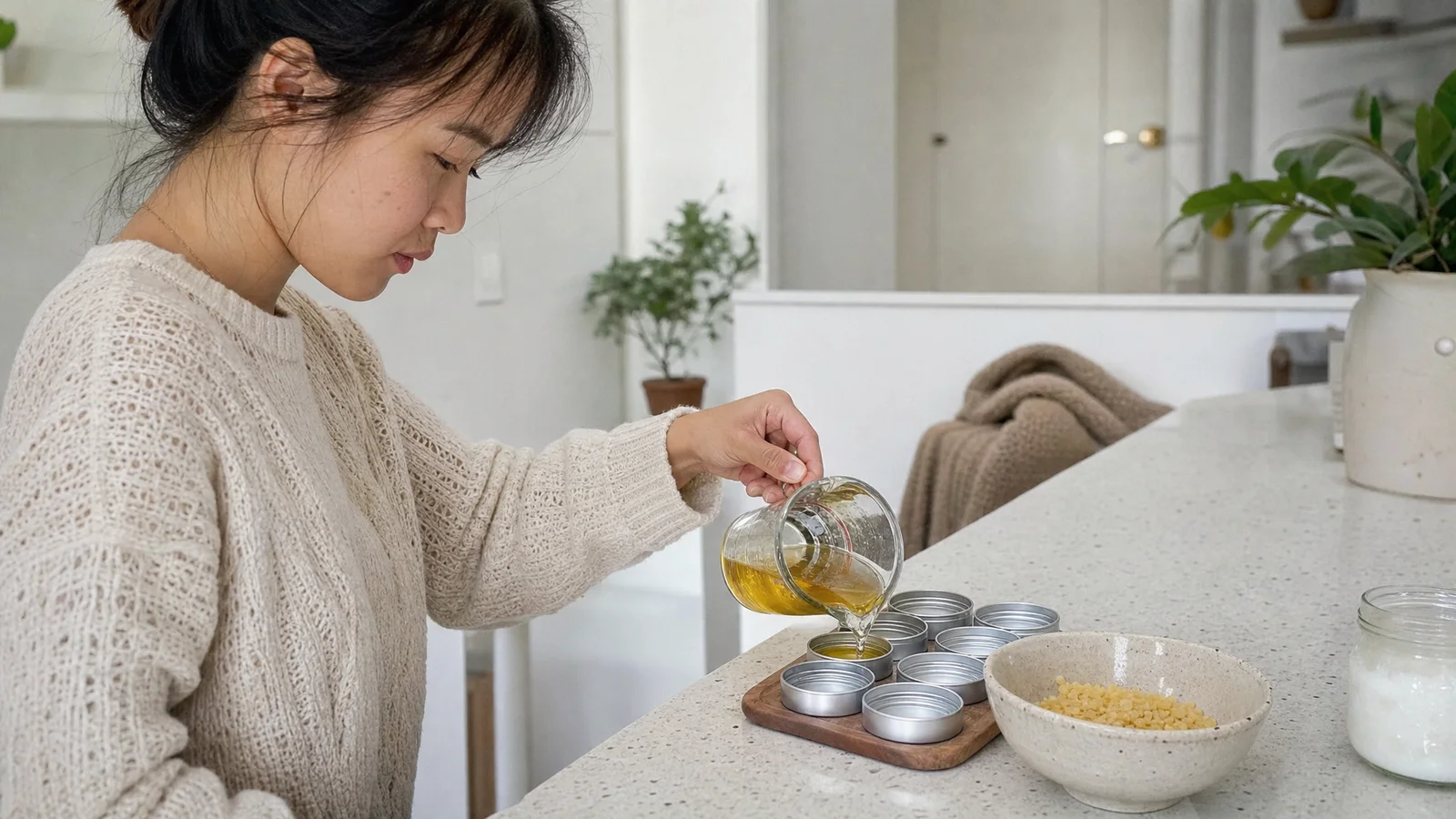
- Warm both just until clear and stir, then chill in the refrigerator until the mix is opaque and firm at the edges but still yields to a spoon.
- Beat with a hand mixer for several minutes until it holds a peak. If it slumps, chill it again. If it crumbles, let it stand for ten minutes.
- Leave out fragrance for a first jar. If you would like to scent it, the Tisserand Institute lists 0.5 to 1.2% for facial cosmetics and 0.2 to 1% for sensitive skin, which in 100 g is well under a gram. Freshly shaved skin has tiny nicks, so a quiet, unscented balm is the gentlest start.
- Skip water, aloe and hydrosol. The FDA's microbiological safety page lists contaminated water and ineffective preservation as routes to unsafe cosmetics, and says warm, damp storage can break preservatives down. An all-oil balm gives microbes no water to use.
Keep the jar closed and cool. Below about 76 F it stays whipped, while in a warm room it melts back to oil, which is harmless but loses the airy texture. A summer bathroom is warmer than it feels, so the refrigerator is a happy home for it in July.
Shaving with it
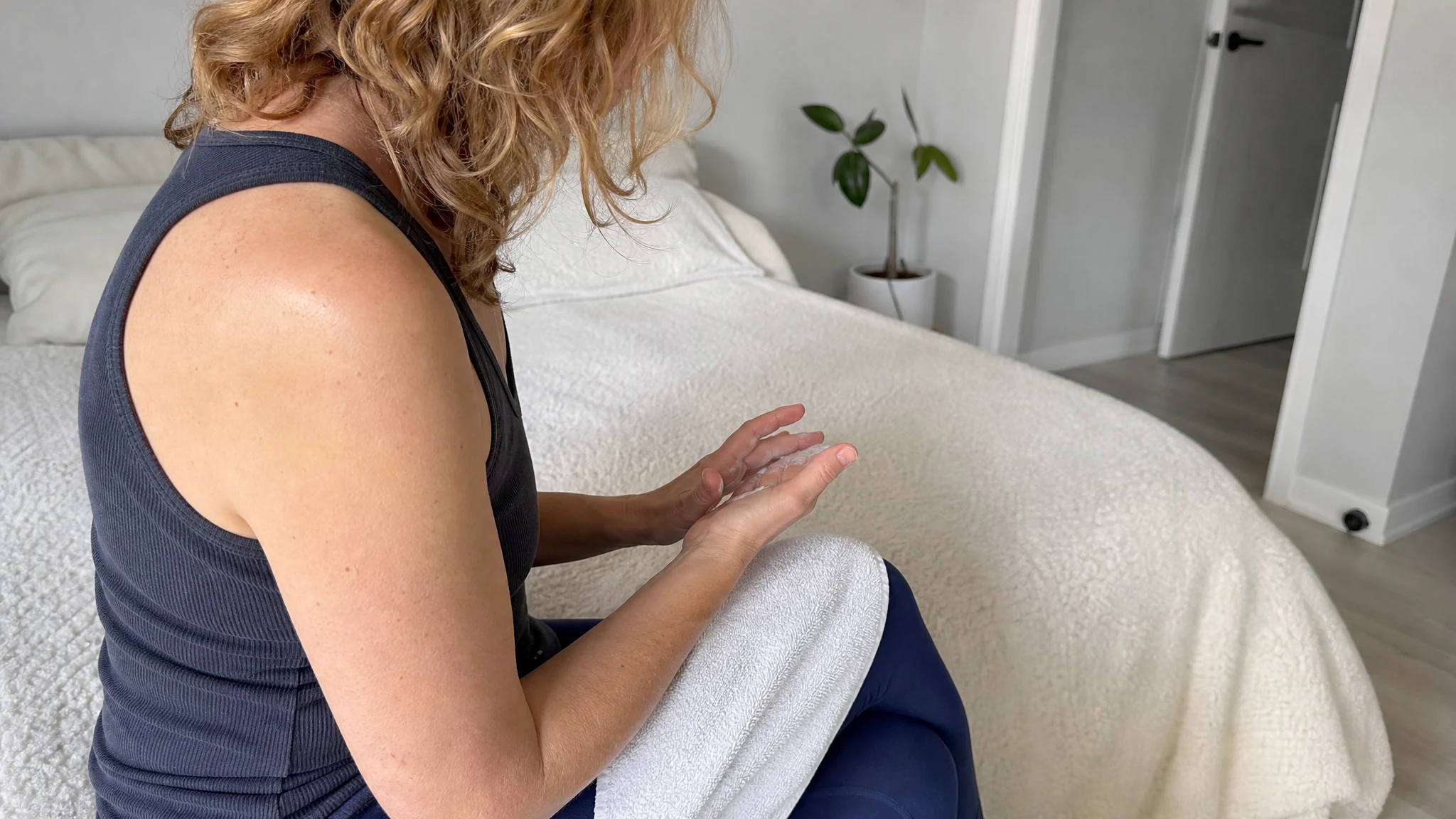
Wet your skin and hair with warm water first, since water softens facial hair, which echoes the Draelos review's point about keeping hair soft. Work a thin layer of balm over the area, use a sharp, clean razor with light strokes, and rinse the blade often, because oil can build up on a blade faster than foam does (that is reasoning from how oil behaves, not a test result). Rinse the skin afterward, and if you want a moisturizer on top, glycerin-based ones are what the review names. One more practical tip: oil that is liquid in a warm sink can set in cool pipes, so wipe the sink with a paper towel rather than rinsing much balm down cold water.
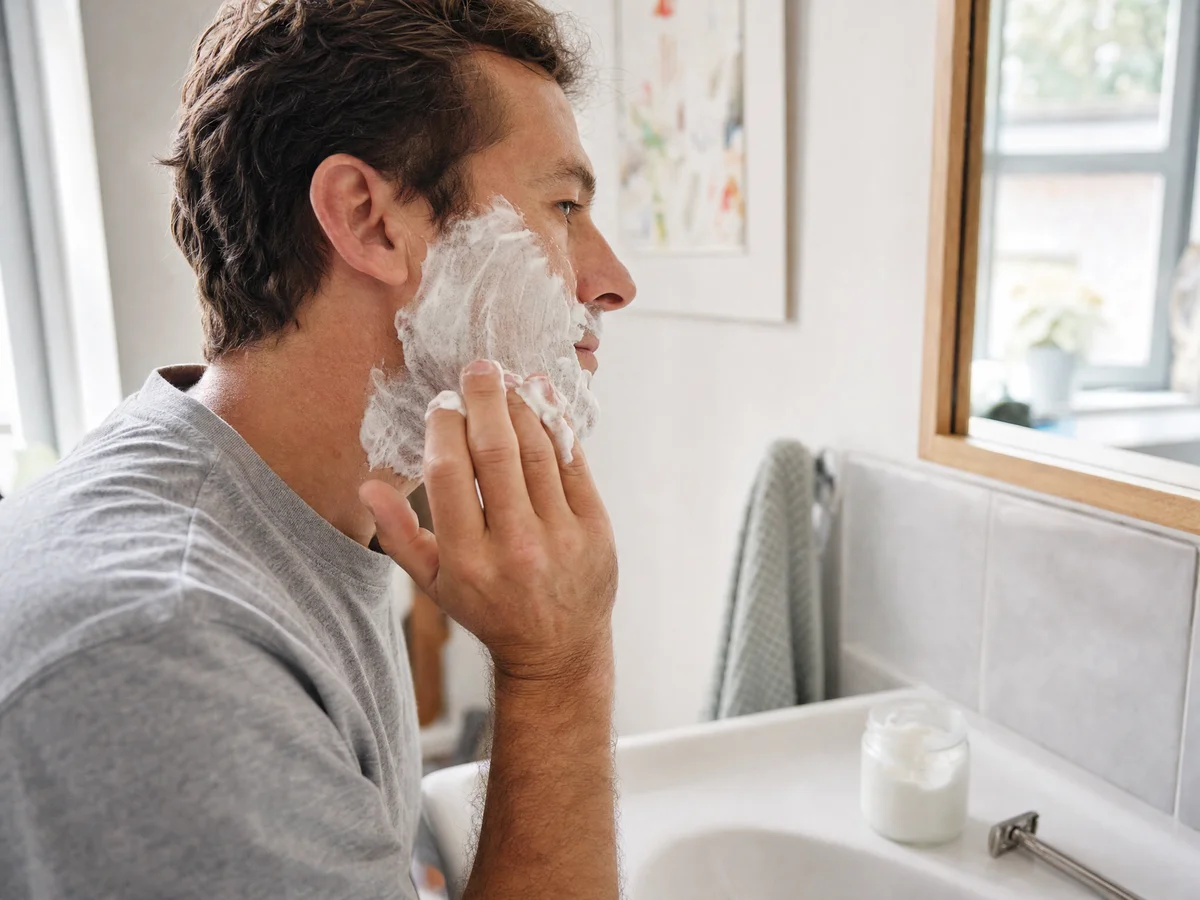
A thin, even coat is all it takes. Too much and the blade clogs, so you will be rinsing every stroke; too little and you lose the glide. Aim for a coat you can still see, and add a touch more where the hair is thickest.
Who might prefer a different route
If your skin is breakout-prone or you get repeated shaving bumps, a dermatologist is the right person to ask. The American Academy of Dermatology's oily skin page (updated September 2024) advises oil-free, noncomedogenic products and avoiding oil-based cleansers for oily skin. Coconut oil's reputation on this point is mixed: a six-person test found that finished products made with comedogenic ingredients are not necessarily comedogenic (Draelos and DiNardo, 2006). Patch test first, and our piece on whether coconut oil clogs pores goes deeper.
If you have a coconut allergy, check with a professional first. The AAAAI notes that coconut allergy is rare but that coconut oil can cause contact dermatitis, and the FDA's food-labeling position on coconut does not speak to skin.
Our oils are sold neat for external cosmetic use, so patch test a small area first and keep the balm away from your eyes. For beard care rather than shaving, see coconut oil for beard grooming, and for the body version of this method, try the whipped body butter.
Fractionated Coconut Oil
Fractionated Coconut Oil from our own shop, in sizes from 0.5 oz to bulk.
From $9.99
Shop Now →Sources & Further Reading
- Draelos ZD, 2012. Male skin and ingredients relevant to male skin care. Br J Dermatol 166 Suppl 1:13-16. pubmed/22385030
- Tisserand Institute, undated. Dilution guidelines. tisserandinstitute.org
- U.S. FDA, 2024. Microbiological safety and cosmetics. fda.gov/cosmetics
- American Academy of Dermatology, 2024. Oily skin. aad.org/oily-skin
- Draelos ZD, DiNardo JC, 2006. A re-evaluation of the comedogenicity concept. J Am Acad Dermatol 54(3):507-12. pubmed/16488305
- AAAAI, 2023. Reaction to coconut (Ask the Expert). aaaai.org