Does Coconut Oil Clog Pores? Rabbit Ears and Real Skin
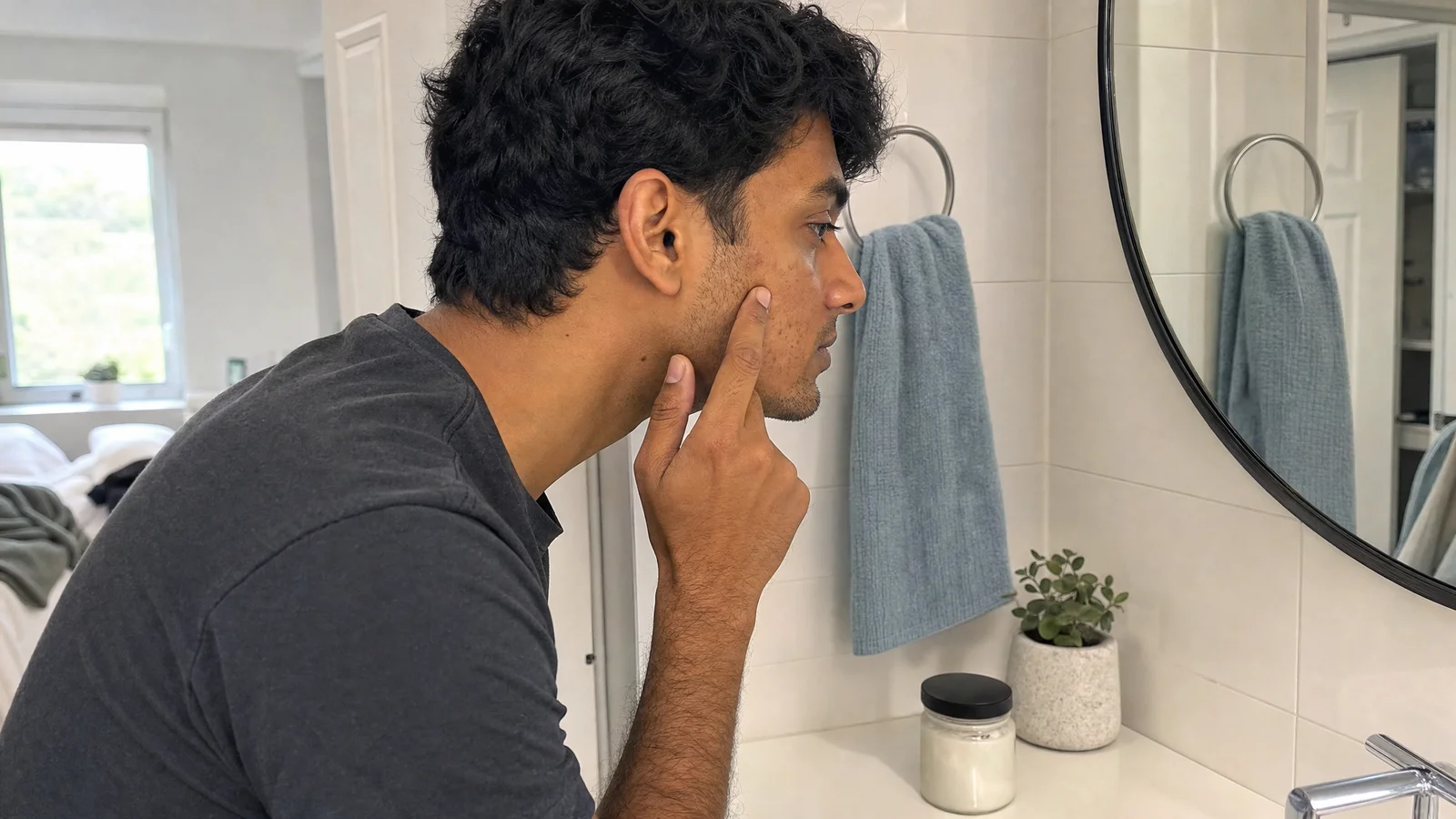
Every few months someone asks us whether coconut oil clogs pores, and every website seems to have a different confident answer. The reason is a little surprising: the famous 0 to 5 comedogenic scale was built by looking at rabbit ears. That one fact explains most of the confusion, and it points to a more useful question than "what is the number?" It is "what is my skin like, and where do I want to use the oil?"
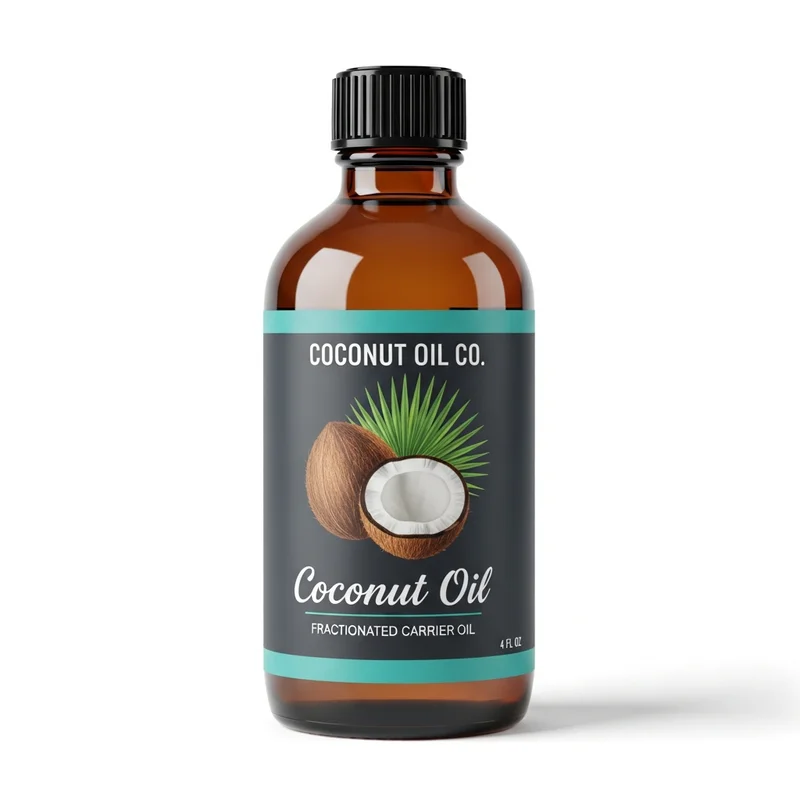
Fractionated Coconut Oil
Our own Fractionated Coconut Oil, in sizes from 0.5 oz to bulk.
From $9.99
Shop Now →How rabbit ears ended up on your skin care label
The idea that a cosmetic can block follicles goes back to Kligman and Mills, who gave it a name, acne cosmetica, in 1972. Their experiments used rabbits, and the ratings you see online trace back to the rabbit ear method, as collected by James Fulton in a 1989 survey of common ingredients. Fulton graded each ingredient from 0 to 5, where Grade 5 is, in his words, "the presence of large comedones throughout the ear."
It is a clever tool for a formulating chemist who needs to sort hundreds of ingredients quickly. It was never meant to be a verdict on your cheeks, and a single number on a blog post rarely tells you where the oil went, how much was used or whose skin it was on.
An ingredient is not a finished product
The best-known pushback came from Draelos and DiNardo in 2006. They adapted the test for people and for finished products: six volunteers with prominent follicle openings wore product-saturated patches on the upper back three times a week for four weeks. Their conclusion was that a product made with comedogenic ingredients is not necessarily comedogenic itself. It was a small study, but it makes a pleasing point about how a formula behaves differently from its parts.
It does not say coconut oil is gentle on pores, either. What it says is that the chart is not the last word, which leaves a bit of room for your own skin to have a say.
What dermatologists advise for acne-prone skin
This is the part we would not soften. The American Academy of Dermatology's acne overview says to use only oil-free skin care, sunscreen and makeup if you have acne, and adds that applying anything that contains oil will likely clog your pores again. Its page on oily skin (updated 9/3/24) advises against oil-based cleansers. Neither page names coconut oil; they speak about oil in general. If your face breaks out, a dermatologist is the best first call, and a bottle of coconut oil from us or anyone else comes after that conversation.
What the moisturizer trials did and did not look at
Coconut oil trials get pulled into this debate, so here is what one of them covered. In Agero and Verallo-Rowell's 2004 trial, 34 people with mild to moderate dry skin and negative patch tests used extra virgin coconut oil or mineral oil on their legs twice a day for two weeks. Both oils improved skin hydration and surface lipids, with no significant difference between them in water loss or skin pH. That is nice news for dry legs. It was not a face study and it did not count blemishes, so it neither clears nor convicts coconut oil on the question you searched.
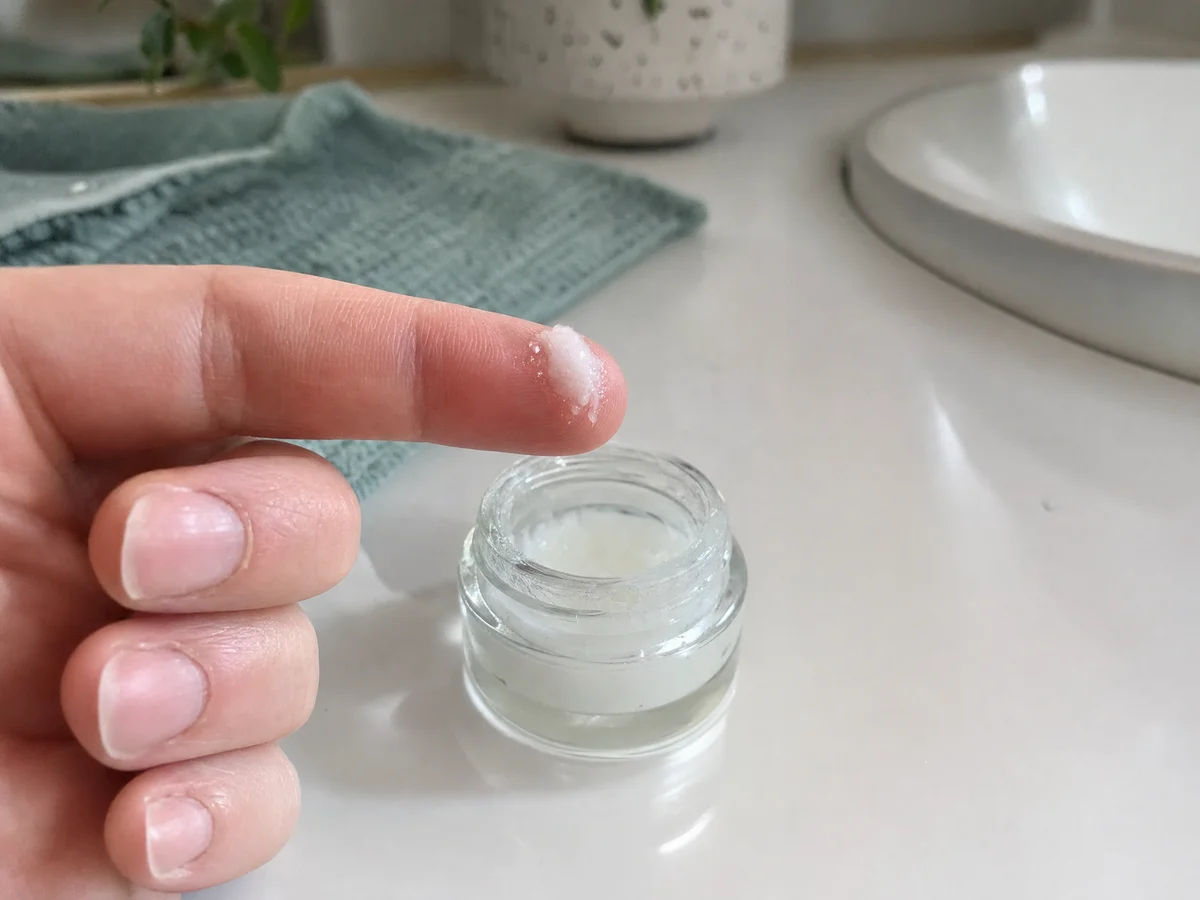
Does fractionated or virgin make a difference?
Possibly, though nobody has measured it for our oils. Healthline (October 2019) describes fractionated coconut oil as mainly caprylic (C8) and capric (C10) acid with most or all of the lauric acid removed, while regular coconut oil is about half lauric acid. Fulton's survey noted that medium-chain fatty acids blocked rabbit follicles more than shorter or longer ones did. Putting those two statements side by side, a lighter, more fluid oil is not automatically the pore-friendlier one. That is reasoning from two different kinds of evidence, so we hold it loosely. We publish no fatty-acid profile for our oil, which is why we do not lean on composition either way.
A kind way to find out
If you get breakouts or have oily skin, keep oils off your face and follow your dermatologist's plan. Body skin that has never had comedones is a different conversation, and our piece on coconut oil on the face walks through it. The tea tree oil comparison covers what trials have tested for acne.
If your skin is dry, calm and clear, a small trial is reasonable, because a chart cannot answer for you. Patch test on the inner forearm first (our fractionated page says to wait 24 hours). Then try a few drops on one small spot along the jaw instead of the whole face, and change nothing else that week so you know what caused what. Comedones are slow to appear, so give it a few weeks, and treat new small bumps in that spot as your cue to stop.
If your skin is reactive or you have a diagnosed condition such as eczema, rosacea or a perioral rash, ask a professional first. Our eczema and psoriasis article shows what the trials did and did not test.
If you have a history of coconut or tree nut allergy, talk to an allergist before the oil goes near your face. The FDA's allergen FAQ says it no longer considers coconut a major food allergen, which is a food labeling decision. An allergist writing for AAAAI notes that coconut oil can cause contact dermatitis.
Which of our oils is which
Our virgin unrefined coconut oil is the nearer cousin to the oils in the skin trials. It smells like coconut, sets firm in a cool room and melts in warm hands. Our fractionated coconut oil stays liquid at any temperature, and we describe it as fast-absorbing, non-greasy and virtually odorless, which is why people reach for it as a body oil or a blending base. We do not call either oil non-comedogenic, since that word needs a test we can show you. Both are for external cosmetic use and should stay out of your eyes.
So here is the short version for anyone who came for a yes or a no. The scale is rabbit ear science, human data on faces is thin, and dermatologists point acne-prone skin toward oil-free products. For everyone else, start small and let your skin vote. When you are ready to compare textures, our guide to choosing a coconut oil by job is the natural next stop.
Fractionated Coconut Oil
Fractionated Coconut Oil from our own shop, in sizes from 0.5 oz to bulk.
From $9.99
Shop Now →Sources & Further Reading
- Kligman AM, Mills OH Jr, 1972. Acne cosmetica. Arch Dermatol 106(6):843-850. pubmed/4264346
- Fulton JE Jr, 1989. Comedogenicity and irritancy of commonly used ingredients in skin care products. J Soc Cosmet Chem 40:321-333. library.scconline.org/v040n06/13
- Draelos ZD, DiNardo JC, 2006. A re-evaluation of the comedogenicity concept. J Am Acad Dermatol 54(3):507-512. pubmed/16488305
- Agero AL, Verallo-Rowell VM, 2004. A randomized double-blind controlled trial comparing extra virgin coconut oil with mineral oil as a moisturizer for mild to moderate xerosis. Dermatitis 15(3):109-116. pubmed/15724344
- American Academy of Dermatology, accessed 2026. Acne: overview. aad.org
- American Academy of Dermatology, updated 9/3/24. How to control oily skin. aad.org
- Healthline, October 2019. Fractionated coconut oil. healthline.com
- US FDA, current 2026. Frequently asked questions: food allergen labeling guidance. fda.gov
- AAAAI Ask the Expert (P. Lieberman, MD). Reaction to coconut. aaaai.org