Does Coconut Oil Kill Germs? Lab Dishes vs Real Life
Lauric acid has a real claim to fame: in laboratory dishes it holds back some bacteria, and its close relative monolaurin disables certain viruses. That is genuine science, and it is how coconut oil picked up its reputation as a natural germ-fighter. The interesting part is the journey from a dish to a countertop or a patch of skin, because each step along the way changes the story. Here is what was tested, in what form, and why the gap matters.

Fractionated Coconut Oil
Our own Fractionated Coconut Oil, in sizes from 0.5 oz to bulk.
From $9.99
Shop Now →Lauric acid and skin bacteria: a striking lab result
A 2009 study tested free lauric acid against three bacteria found on skin, including the one linked to acne. The concentrations needed to inhibit growth came out more than 15 times lower than those of benzoyl peroxide, the acid was not toxic to cultured oil-gland cells, and on mouse ears it lowered bacterial counts and swelling (Nakatsuji et al., 2009). It is lovely work. It also used the free acid, in culture and in mice, not coconut oil and not people. In coconut oil, lauric acid is mostly bound to glycerol as a triglyceride rather than floating free, which is one reason a result with the acid cannot simply be handed to the oil.
Trials on eczema-prone skin
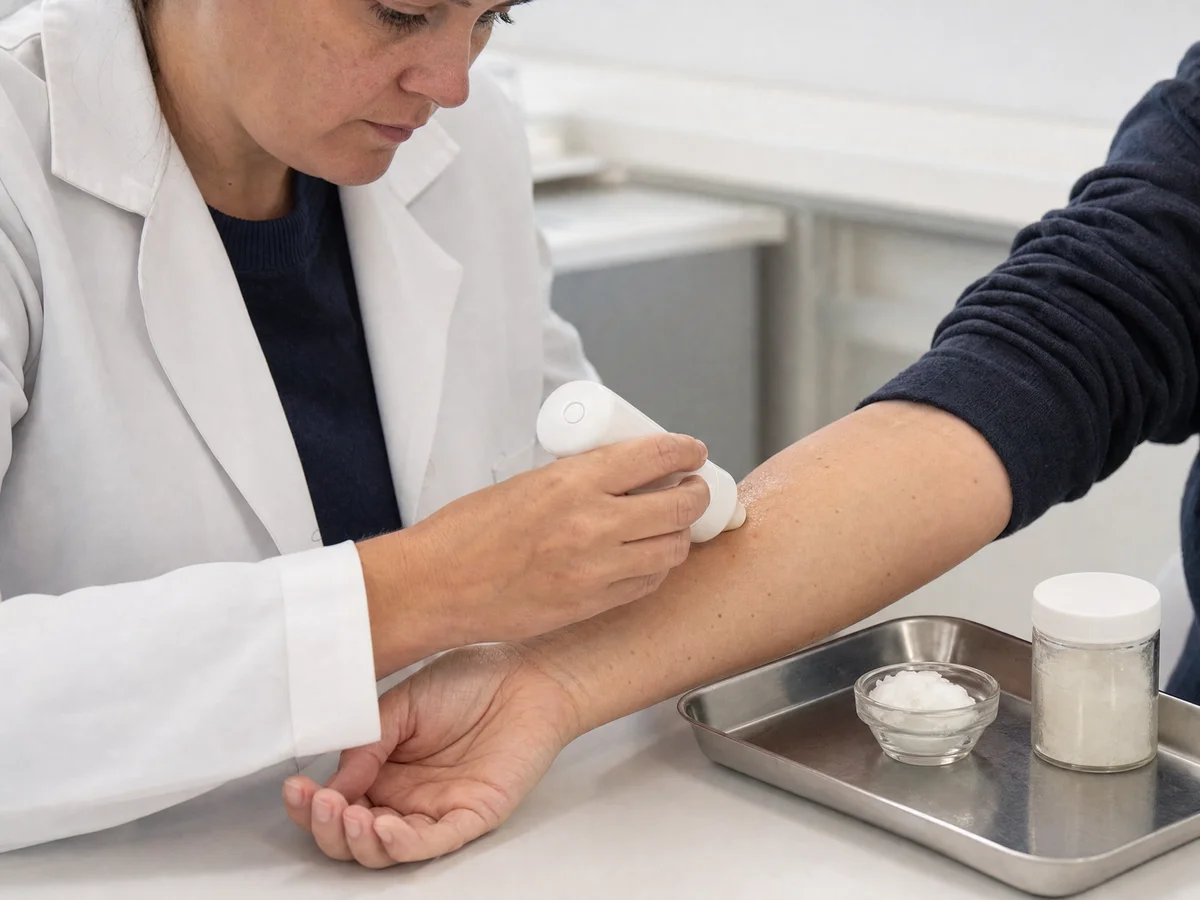
Coconut oil itself has been tried on skin that already has a medical condition, and those studies deserve a careful description. In one double-blind trial, adults with atopic dermatitis used virgin coconut oil or virgin olive oil for four weeks, and the researchers counted Staphylococcus aureus on the skin (Verallo-Rowell et al., 2008). In another randomized, double-blind trial, children with mild to moderate atopic dermatitis used virgin coconut oil or mineral oil for eight weeks (Evangelista et al., 2014).
Both are controlled trials, which makes them stronger evidence than most things you will read online. Both also involved people with a skin disease under medical care, a virgin oil, and an oil as the comparison rather than an antiseptic or nothing at all. We sell cosmetic oils and make no eczema claims. What goes on eczema-prone skin, a child's especially, is a question for a dermatologist or pediatrician, and our eczema article covers those trials on their own terms.
Monolaurin and viruses: test tube, not kitchen
The virus headline traces back to a 1982 experiment in which researchers exposed 14 human enveloped viruses to monolaurin at 1% for an hour at 23 C in cell culture. Infectivity dropped by more than 99.9%, because the viral envelope broke apart (Hierholzer and Kabara, 1982). Monolaurin is one lauric acid on a glycerol, not the three of a triglyceride, and the experiment used a concentration the researchers chose. Whether eating or applying coconut oil ever delivers anything like that to a target site is the missing link, and we trace it in our monolaurin article. A 2019 literature review found only three human studies of monolaurin with an in vivo antimicrobial effect, all topical, and no peer-reviewed evidence for it as a dietary supplement beyond its role as a nutrient (Barker et al., 2019).
From dish to real life
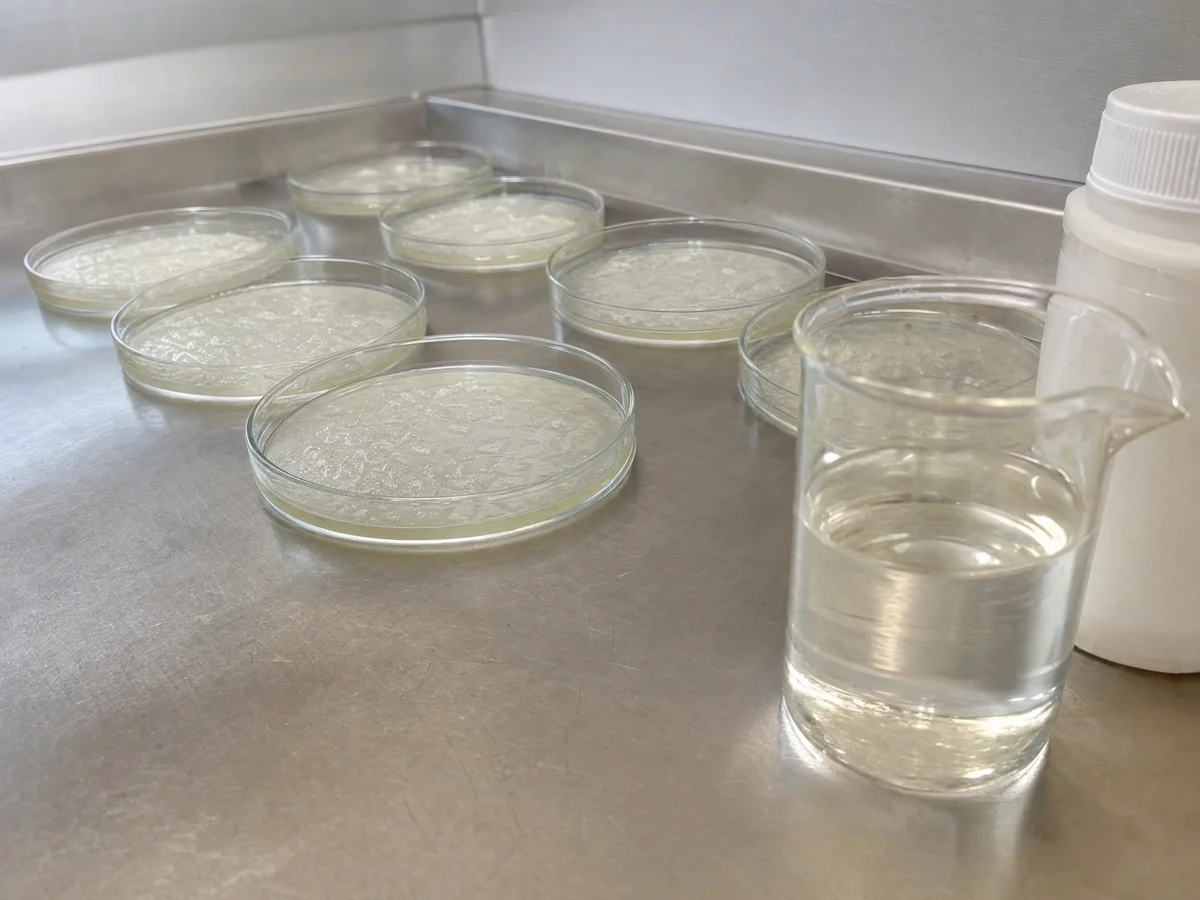
Three differences explain why these findings do not turn into a label. The first is form: the lab results used the free acid or the monoester, while the oil is mainly triglyceride. The second is exposure: dish concentrations are chosen by the experimenter, and none of these papers shows the same concentration reaching skin from an oil. The third is comparison: one trial set coconut oil against olive oil and another against mineral oil, and none set it against a recognized antiseptic. These are reasoned limits, and they are fair to the authors, who designed their studies for their own questions.
There is a legal side as well. The FDA says whether a product is a cosmetic or a drug depends on its intended use, shown by labeling, advertising and online claims (FDA). That is why we present our oils as cosmetic carrier oils for external use, and why this article reports studies rather than promising an outcome.
It helps to picture what a lab dish is: a small, controlled, tidy place where one ingredient meets one organism with nothing else going on. Real skin is the opposite. It is warm, moving, layered and busy, and anything you put on it mixes with everything already there. That gap is why a striking result in a dish is the start of a conversation rather than the end of one.
What coconut oil is wonderful at
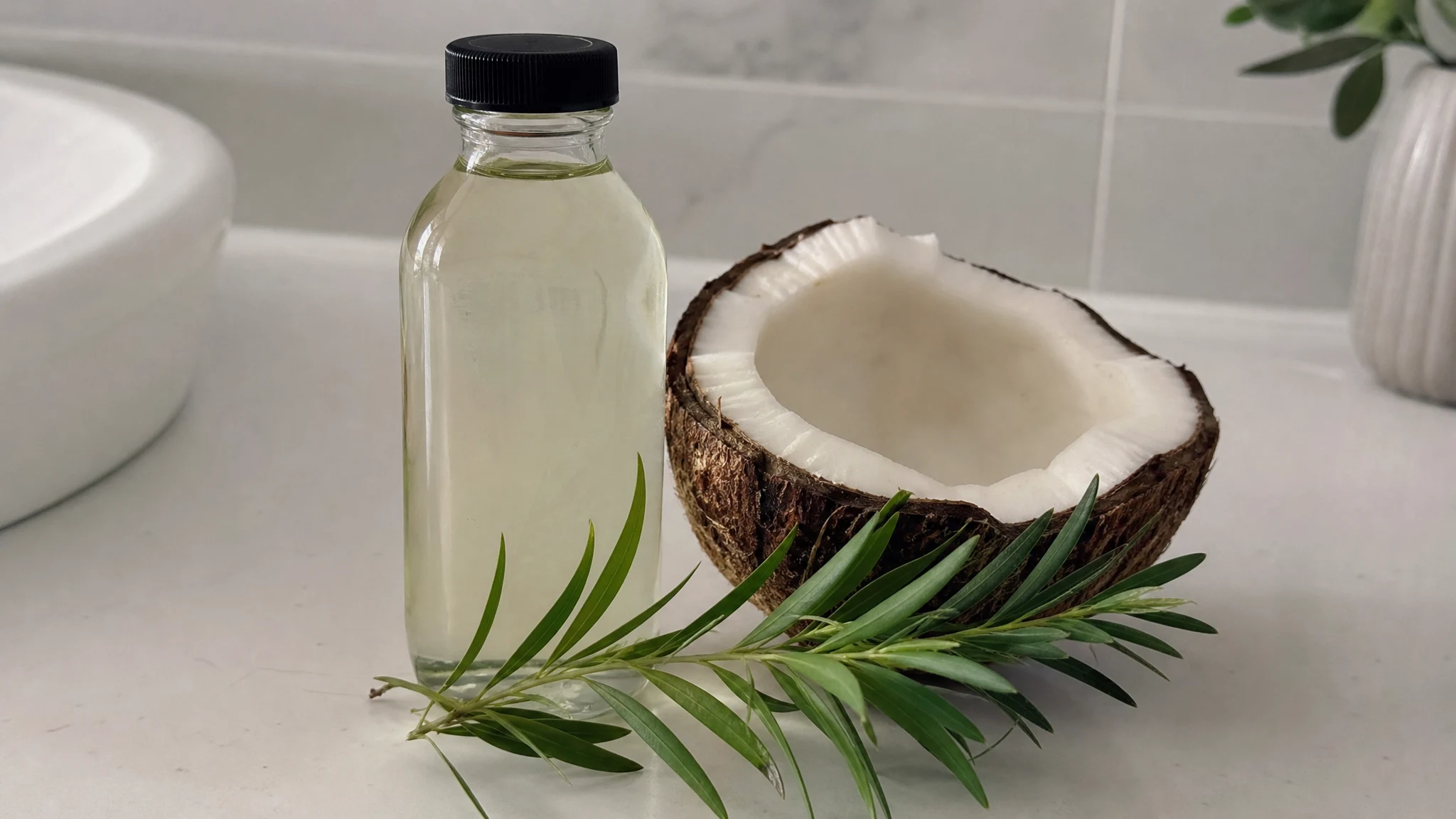
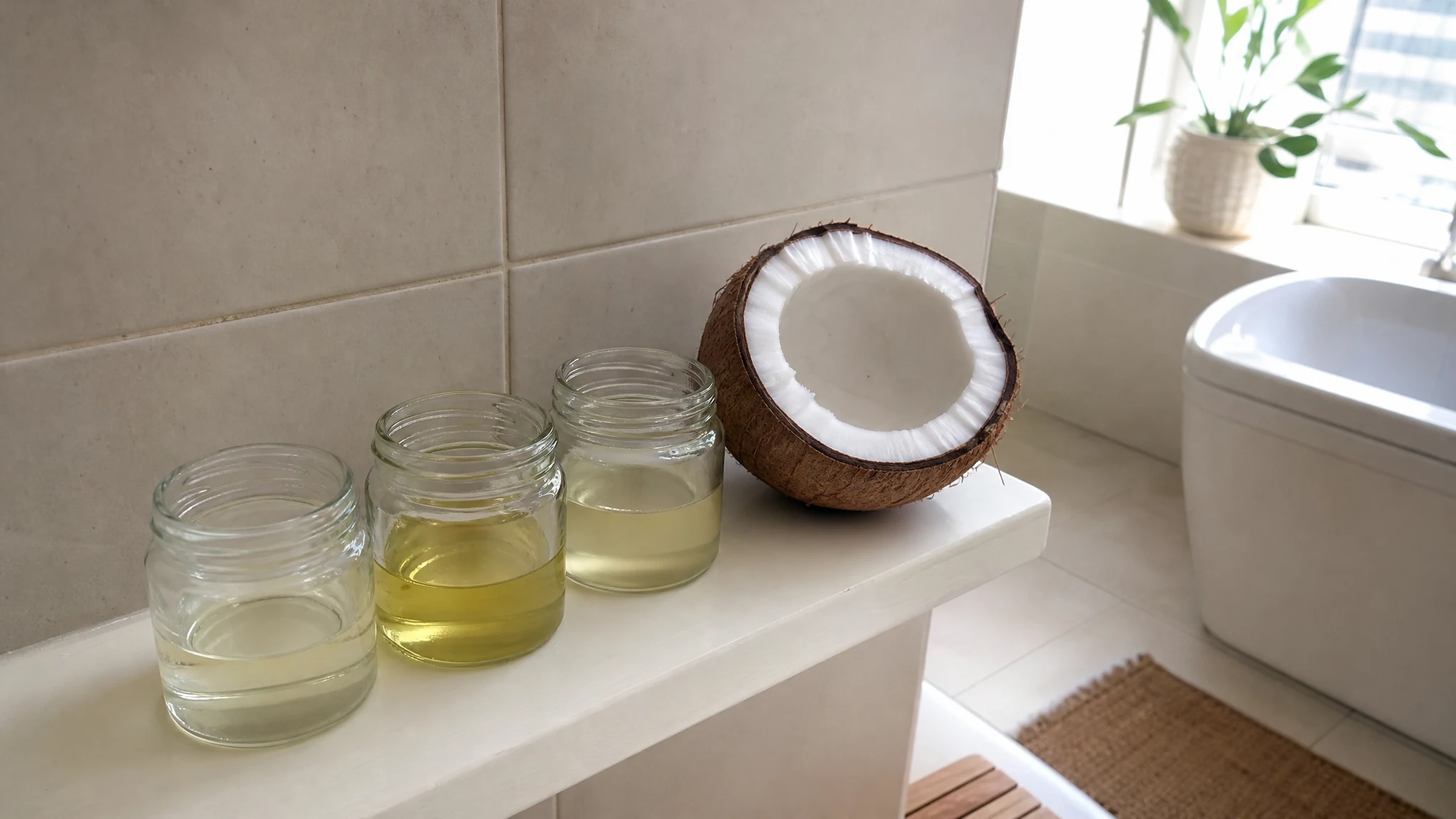
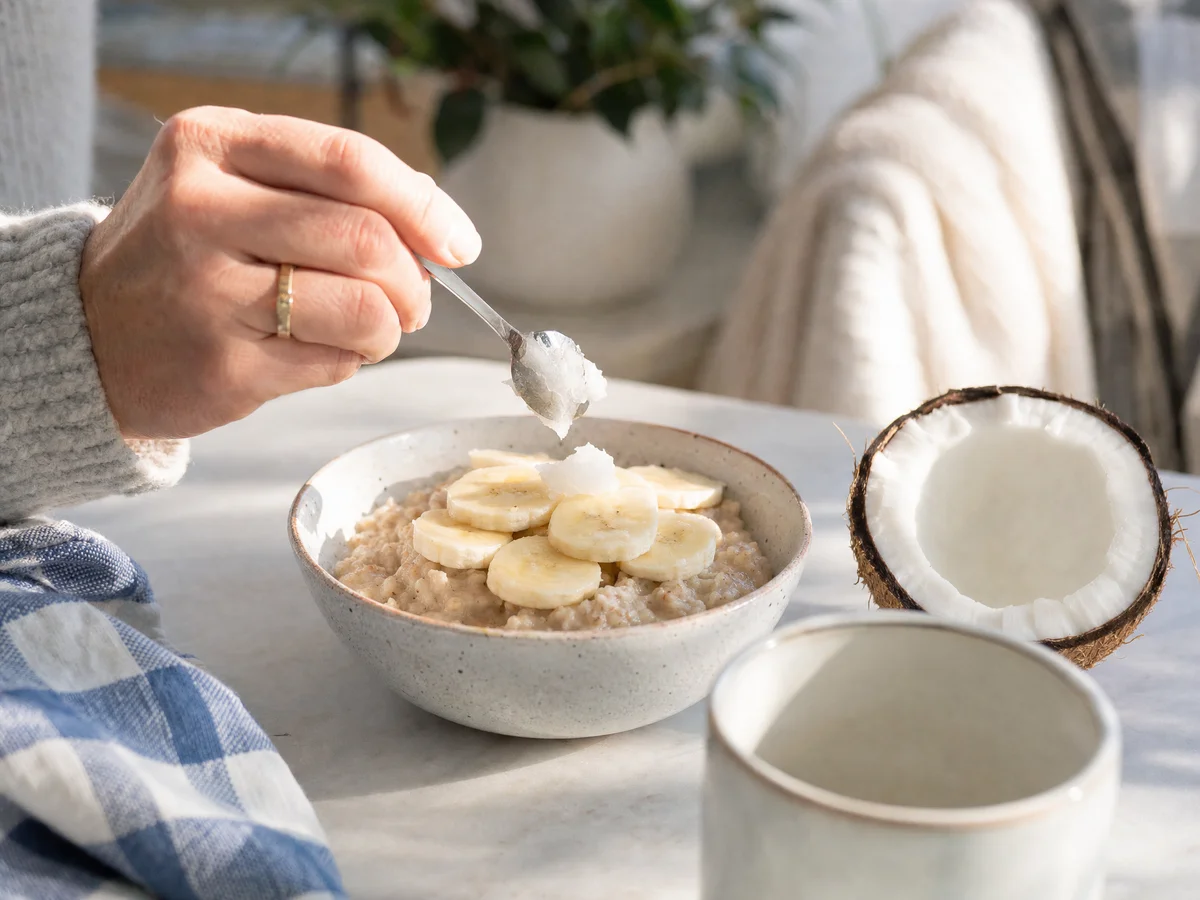
For cleaning a surface or a wound, use what was made for the job: soap and water, a pharmacy antiseptic, or a clinician if a rash looks infected or a child is involved. Coconut oil is a different kind of tool, one about feel and moisture. Our fractionated coconut oil stays liquid, we describe it as fast-absorbing and non-greasy, and it blends well with essential oils. Our virgin unrefined coconut oil is firm in a cool room and smells like coconut. If you are choosing between them, the virgin, refined and fractionated comparison helps, and what fractionated coconut oil is explains the name. As with any new oil, patch test a small area first and keep it away from your eyes.
If the germ claim you have in mind is oil pulling, the dental research is a story of its own, told in our oil pulling article, and a dentist is the right person to ask.
Fractionated Coconut Oil
Fractionated Coconut Oil from our own shop, in sizes from 0.5 oz to bulk.
From $9.99
Shop Now →Sources & Further Reading
- Nakatsuji T et al., 2009. Antimicrobial property of lauric acid against Propionibacterium acnes. J Invest Dermatol 129(10):2480-2488. pubmed/19387482
- Verallo-Rowell VM, Dillague KM, Syah-Tjundawan BS, 2008. Novel antibacterial and emollient effects of coconut and virgin olive oils in adult atopic dermatitis. Dermatitis 19(6):308-315. pubmed/19134433
- Evangelista MT et al., 2014. The effect of topical virgin coconut oil on SCORAD index, transepidermal water loss, and skin capacitance in mild to moderate pediatric atopic dermatitis. Int J Dermatol 53:100-108. pubmed/24320105
- Hierholzer JC, Kabara JJ, 1982. In vitro effects of monolaurin compounds on enveloped RNA and DNA viruses. J Food Safety 4:1-12. pubmed/32336838
- Barker LA, Bakkum BW, Chapman C, 2019. The clinical use of monolaurin as a dietary supplement: a review of the literature. J Chiropr Med 18:305-310. pubmed/32952476
- U.S. FDA. Is it a cosmetic, a drug, or both? fda.gov/cosmetics