Does Oil Pulling Work? What Coconut Oil Trials Show
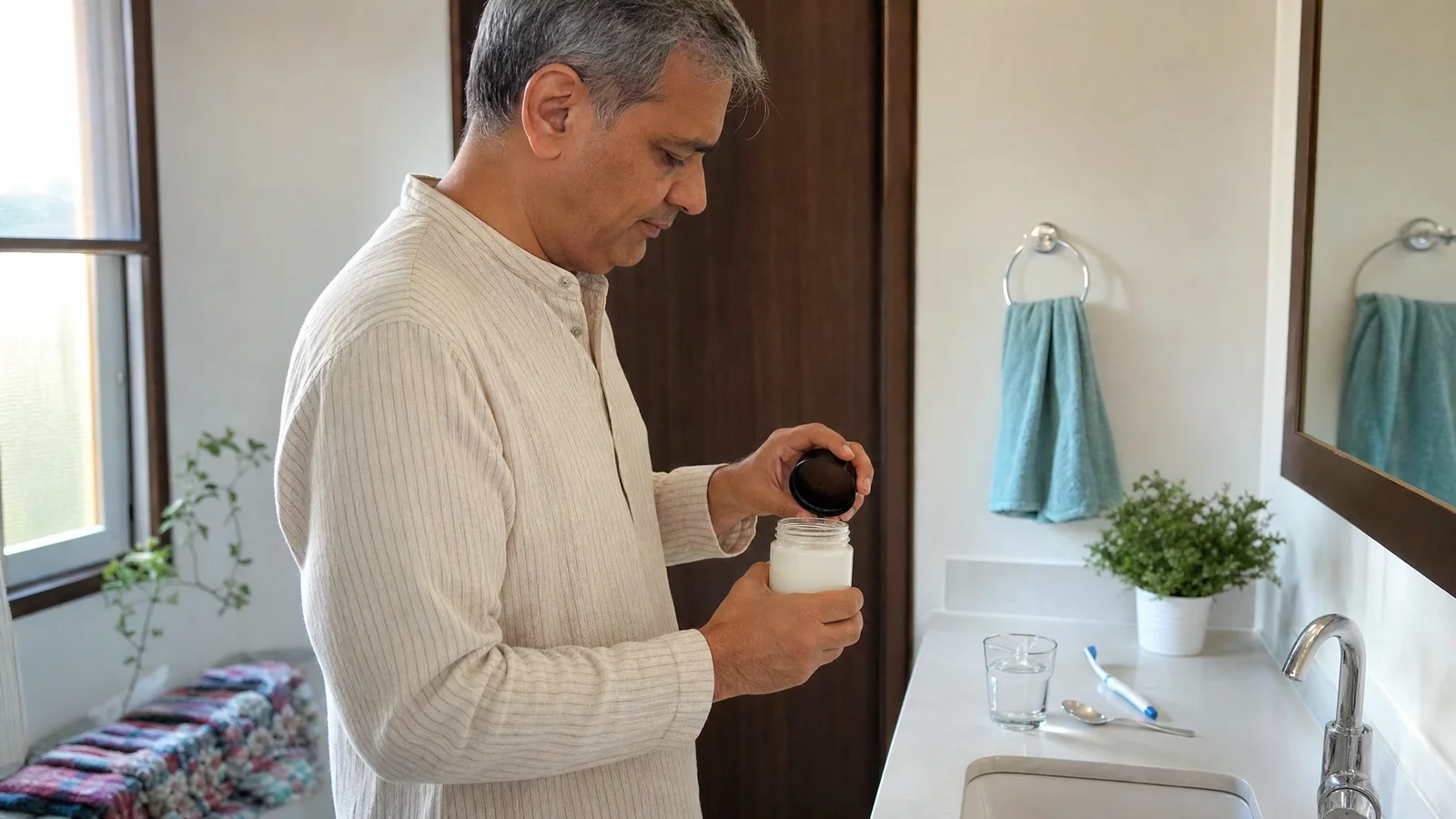
Swish a spoonful of coconut oil around your mouth for ten minutes and wake up to a cleaner mouth: it is an easy habit to fall for. The trials are small and short, and what they found is more modest than the reputation, though not nothing. The American Dental Association does not recommend oil pulling as a hygiene practice, and we sell our coconut oils for external cosmetic use, so think of this as a guided tour of the evidence and not a how-to.

Fractionated Coconut Oil
Our own Fractionated Coconut Oil, in sizes from 0.5 oz to bulk.
From $9.99
Shop Now →Where the dental association stands
The ADA's oil pulling page says there are no reliable scientific studies showing that oil pulling reduces cavities, whitens teeth or improves oral health, and on that basis it does not recommend the practice. The everyday advice it keeps repeating is the good stuff: brush twice a day for two minutes with fluoride toothpaste, floss daily and avoid tobacco.
The research is not empty, though, and it deserves a fair reading. A 2020 systematic review limited to coconut oil (Woolley et al., Heliyon) searched six databases and found four randomized trials with 182 participants. Its authors concluded that the limited evidence suggests coconut oil may have a beneficial effect, while saying the data were not enough for firm conclusions, the quality was mixed and the risk of bias was high. Both statements sit together comfortably: a small signal in small studies that nobody has yet confirmed.
Four trials, four different designs
The review did not pool the trials because they were so different, and the differences are where it gets interesting. The full text lays them out.

- Jauhari, 2015. 52 children aged 6 to 12 used coconut oil twice daily for 14 days against a distilled water rinse. The change in S. mutans bacteria was similar in both groups.
- Kaushik, 2016. 60 young adults used 10 mL for 10 minutes for 14 days against 5 mL of distilled water for a minute. Bacterial colony counts fell in the oil group, with a between-group p-value of 0.05.
- Nagilla, 2017. 40 young adults used 10 to 15 mL for 10 minutes for 7 days, with no toothbrushing in either group. Plaque index was 1.16 with oil and 1.50 with mineral water (p<0.001).
- Sezgin, 2019. 30 adults used 10 mL twice daily for 15 to 20 minutes against a 0.2% chlorhexidine rinse for 14 days. Plaque and gum scores were similar in both groups.
Side by side, a pattern appears. The clearest plaque result came from the trial where nobody brushed, so it tells you about a week without a toothbrush and not about adding oil to a normal routine. The trial against an antiseptic rinse showed oil doing about as well as that comparison in 30 people, which is a tie and not a win. And none of the four measured tooth color, which is why our whitening article takes that question on separately.
A wider net
A later meta-analysis, Peng and colleagues (Healthcare, 2022), pooled nine randomized trials with 344 participants: five using sesame oil and four using coconut oil. Salivary bacterial colony counts were significantly lower with oil pulling (mean difference 17.55, 95% CI 2.56 to 32.55). Plaque index, gum index and S. mutans counts did not differ significantly from control. Four of the nine trials were rated low quality, and the plaque funnel plot looked lopsided, which can hint that small studies with dull results never got published.
Our reading, which is reasoning from those figures, is that the one measure that moves is a lab count of bacteria in saliva. The things a person would notice or a dentist would chart, such as plaque, gum inflammation and cavities, have not been shown to shift. A lower colony count is a measurement, and it is a long way from a different mouth.
What is still unmeasured
- Cavities. None of the coconut trials ran long enough to count them.
- Anything past two weeks. Every included trial lasted 7 to 14 days.
- Which coconut oil. The review lists coconut oil without saying virgin or refined, and none of it concerns fractionated oil.
Safety, with a note on allergy
Woolley et al. found no adverse effects in the four trials. One report is still worth knowing: Kuroyama and colleagues (BMC Pulmonary Medicine, 2015) described a man who washed his nose with sesame oil nightly for 8 months and a woman who rinsed her mouth with it each morning for 6 months. Both repeatedly breathed in some oil and developed lipoid pneumonia. That is two people and a different oil, so it says nothing about how often it happens, but it shows how oil behaves if it reaches the lungs: it does not clear the way water does. Anyone with swallowing difficulty, and any young child, should check with a dentist or physician before holding oil in the mouth for ten minutes.
On allergy, the FDA's allergen labeling FAQ says it no longer considers coconut a major food allergen, following its revised guidance of January 2025. That is a labeling category and not a promise that nobody reacts, so if coconut has ever bothered you, an allergist is the person to ask.
The word "ancient"
Peng and colleagues describe oil pulling as a traditional Ayurvedic practice from ancient India, aimed at maintaining oral health. That is a fair account of where it comes from, and a long history is a lovely reason for curiosity. We simply treat it as background and not as evidence.
Where that leaves us
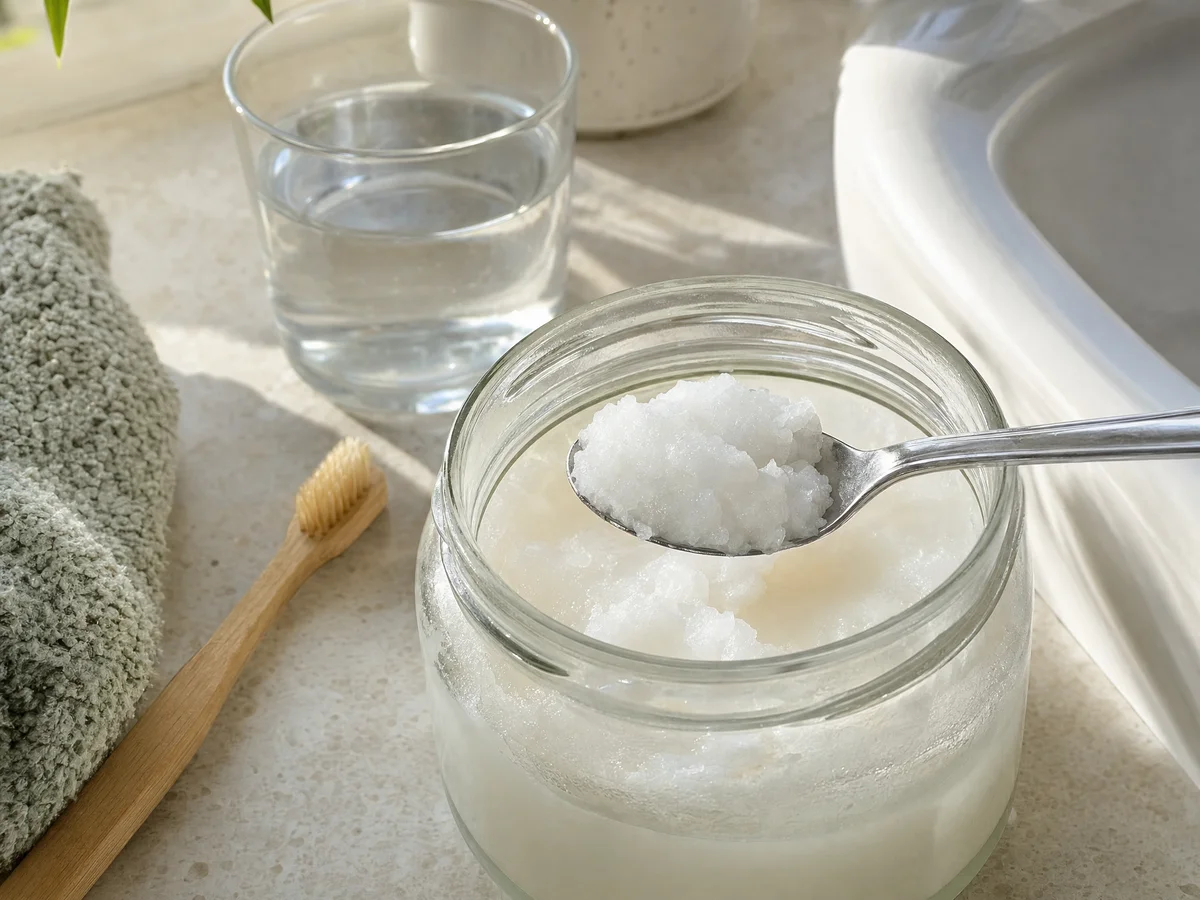
Our summary: oil pulling looks like a pleasant extra at best, and the trials give no reason to swap it for brushing or flossing. If you decide to try it, choose an oil made for eating, and call your dentist about bleeding gums, sensitivity or any worry about a cavity. Our fractionated and virgin unrefined coconut oils are sold for external cosmetic use only, and our guide to fractionated oil uses shows where they shine. Curious about a homemade paste? Our toothpaste article is next.
Whatever you decide, keep brushing and flossing at the center of your routine and treat anything extra as a pleasant bonus. Being curious about an old tradition is a fine thing, and it costs nothing to keep an open mind and a dentist on speed dial.
Fractionated Coconut Oil
Fractionated Coconut Oil from our own shop, in sizes from 0.5 oz to bulk.
From $9.99
Shop Now →Sources & Further Reading
- American Dental Association (MouthHealthy), undated. Oil Pulling. mouthhealthy.org/all-topics-a-z/oil-pulling
- Woolley J, Gibbons T, Patel K, Sacco R, 2020. The effect of oil pulling with coconut oil to improve dental hygiene and oral health: a systematic review. Heliyon 6(8):e04789. PMC7475120
- Peng T-R, Cheng H-Y, Wu T-W, Ng B-K, 2022. Effectiveness of oil pulling for improving oral health: a meta-analysis. Healthcare 10(10):1991. PMC9602184
- Kuroyama M et al., 2015. Exogenous lipoid pneumonia caused by repeated sesame oil pulling: a report of two cases. BMC Pulm Med 15:135. PMC4628246
- US FDA, current as of 2026. Frequently asked questions: food allergen labeling guidance for industry. fda.gov allergen FAQ