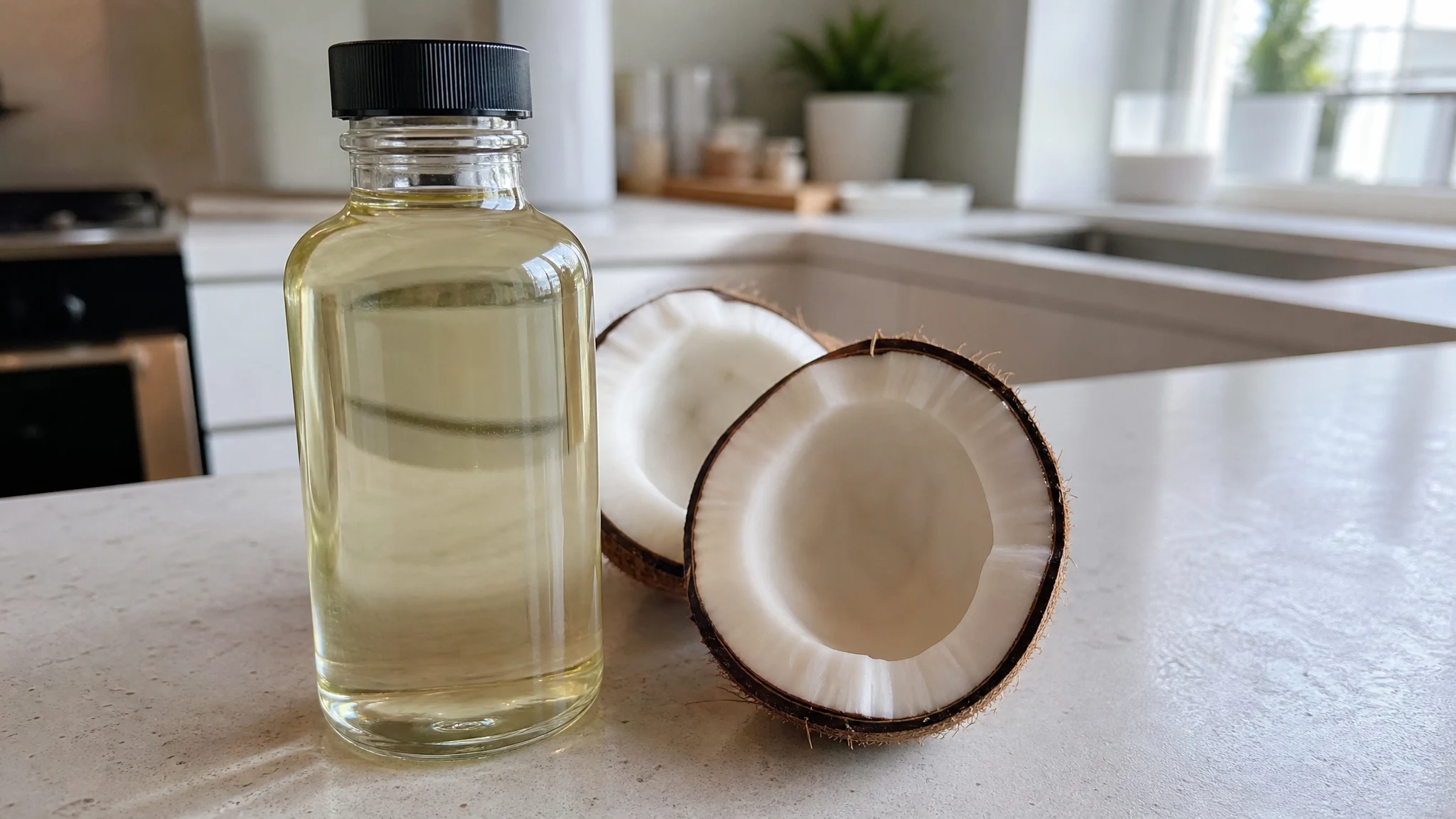
Coconut Oil for Weight Loss: Where the Hype Came From
Coconut oil and weight loss is one of those pairings that has traveled a long way on a few good headlines. If you follow the footnotes back, many lead to a related fat called MCT oil, and the handful that involve coconut oil itself are small. That makes for a rather nice detective story, so here is where the excitement started and how far each result honestly stretches.

Fractionated Coconut Oil
Our own Fractionated Coconut Oil, in sizes from 0.5 oz to bulk.
From $9.99
Shop Now →The one trial built around coconut oil
If a single study fuels the buzz, it is a Brazilian trial of 40 women with larger waists, aged 20 to 40. For 12 weeks, half took 30 mL a day of coconut oil and half took 30 mL of soybean oil, and everyone followed a reduced-calorie diet and walked for 50 minutes a day. BMI dropped in both groups, while waist circumference dropped only in the coconut group, and HDL cholesterol finished higher there (48.7 versus 45.0 mg/dL) (Assuncao et al., 2009).
It is a lovely result for a small trial, and it answers a specific question: on a diet-and-walking plan, does coconut oil behave differently from soybean oil? It does not say what happens if you simply add coconut oil to your usual meals, because nobody in the study did that. With 20 people per group, chance may also have had a hand.
Where the MCT excitement comes from
The bigger numbers belong to medium-chain triglycerides, the C8 and C10 fats that make up MCT oil. One meta-analysis pooled 13 trials and 749 adults who swapped ordinary fats for MCT and found body weight 0.51 kg lower (Mumme and Stonehouse, 2015). Another, of 11 trials, found weight 0.69 kg lower, rated the evidence low to moderate in quality, and urged caution about recommending the swap (Bueno et al., 2015). Those are real but modest changes, about the weight of a large glass of water.
The leap from MCT oil to coconut oil is where the story gets interesting. Published profiles put C8 and C10 at only about 8 to 15 percent of coconut oil's fatty acids, with lauric acid the largest share (Lin et al., 2018), and the USDA's entry gives about 12% for C8 and C10 together. Reasoning from that, a result measured with a product that is nearly all C8 and C10 should not be assumed for a fat that is mostly something else. Our article on MCT oil versus coconut oil lays out the difference.
What the pooled coconut oil data show
The widest view of coconut oil itself is a 2020 meta-analysis of 16 trials, each at least two weeks long. Compared with non-tropical vegetable oils, coconut oil did not significantly change body weight, body fat, blood sugar or inflammation markers. It did raise LDL cholesterol by 10.47 mg/dL and HDL by 4.00 mg/dL (Neelakantan et al., 2020). Our heart post follows that thread.
Is it the fat, or the diet around it?
Coconut oil often rides along with ketogenic diets, so it is fair to look there. A 2013 meta-analysis of 13 trials lasting a year or more compared very-low-carbohydrate ketogenic diets (50 g of carbohydrate a day or less) with low-fat diets. The ketogenic groups lost about 0.91 kg more (Bueno et al., 2013). That result is about carbohydrate and names no particular fat. We take up the ketone side in our keto post.
Headlines like these travel fast because they sound so easy: one ingredient, one change, one result. Most of us would love a shortcut, and a pretty jar of coconut oil on the counter makes the idea feel friendly. It is worth enjoying the oil for what it is, and keeping your expectations for it modest.
Four questions for the next headline
A few quick questions sort most claims. Which oil did the study use: virgin, refined, fractionated or MCT? Was it compared with nothing, or with another oil? Was the outcome weight, or something near it like waist size or a blood marker? How many people took part? Run the studies above through those four, and the picture is consistent: coconut oil has one small, interesting trial against soybean oil, MCT oil has a modest effect of low to moderate quality, and the pooled coconut oil data show a clear cholesterol effect and no clear change in body fat.
It can help to remember how a food trend usually travels. A small, interesting finding gets a friendly headline, the headline gets a jar-shaped photo, and by the time it reaches the kitchen the nuance has quietly dropped off. Slowing down to ask what was actually measured is a kindness to yourself, and it keeps the fun of cooking and caring for your skin intact.
Where we stand
Our position is simple and friendly. MCT oil may nudge body measures a little, coconut oil has not been shown to, and neither replaces the basics. Anyone with weight goals, cholesterol concerns or medications is best served by a physician or registered dietitian who can see the whole diet.
As for our own bottles, we sell a fractionated coconut oil and a virgin unrefined listing, both for external cosmetic use only, and neither is a food or a supplement. We make our fractionated oil so that only the medium-chain triglycerides remain, but the certificate we publish for one batch shows density, refractive index and optical rotation rather than a fatty acid breakdown, so the studies above cannot be applied to it. What our fractionated oil does beautifully is the skin-and-blend work it was made for. For the wider tour of eating, hair and skin, try our route-by-route look at coconut oil and health.
So enjoy coconut oil for what it does well, and keep an eye out for the next headline with a little healthy curiosity.
Fractionated Coconut Oil
Fractionated Coconut Oil from our own shop, in sizes from 0.5 oz to bulk.
From $9.99
Shop Now →Sources & Further Reading
- Assuncao ML et al., 2009. Effects of dietary coconut oil on the biochemical and anthropometric profiles of women presenting abdominal obesity. Lipids. pubmed/19437058
- Mumme K, Stonehouse W, 2015. Effects of medium-chain triglycerides on weight loss and body composition. J Acad Nutr Diet. pubmed/25636220
- Bueno NB et al., 2015. Dietary medium-chain triacylglycerols versus long-chain triacylglycerols for body composition in adults. J Am Coll Nutr. pubmed/25651239
- Lin TK, Zhong L, Santiago JL, 2018. Anti-inflammatory and skin barrier repair effects of topical application of some plant oils. Int J Mol Sci 19(1):70. PMC5796020
- USDA, 2019. FoodData Central, Oil, coconut (SR Legacy, FDC ID 171412). fdc.nal.usda.gov/171412
- Neelakantan N, Seah JYH, van Dam RM, 2020. The effect of coconut oil consumption on cardiovascular risk factors. Circulation. pubmed/31928080
- Bueno NB et al., 2013. Very-low-carbohydrate ketogenic diet v. low-fat diet for long-term weight loss. Br J Nutr. pubmed/23651522