Coconut Oil for Hair: What the Protein-Loss Studies Found
Coconut oil is probably the most famous hair oil on the planet, and what makes it fun is that there is a real, specific piece of science underneath the fame. A couple of careful laboratory studies found that coconut oil does something its neighbors on the shelf do not: it reduces how much protein hair loses during combing and washing. Here is what those studies measured, what it means for the two coconut oils we sell, and how to put the idea to use.
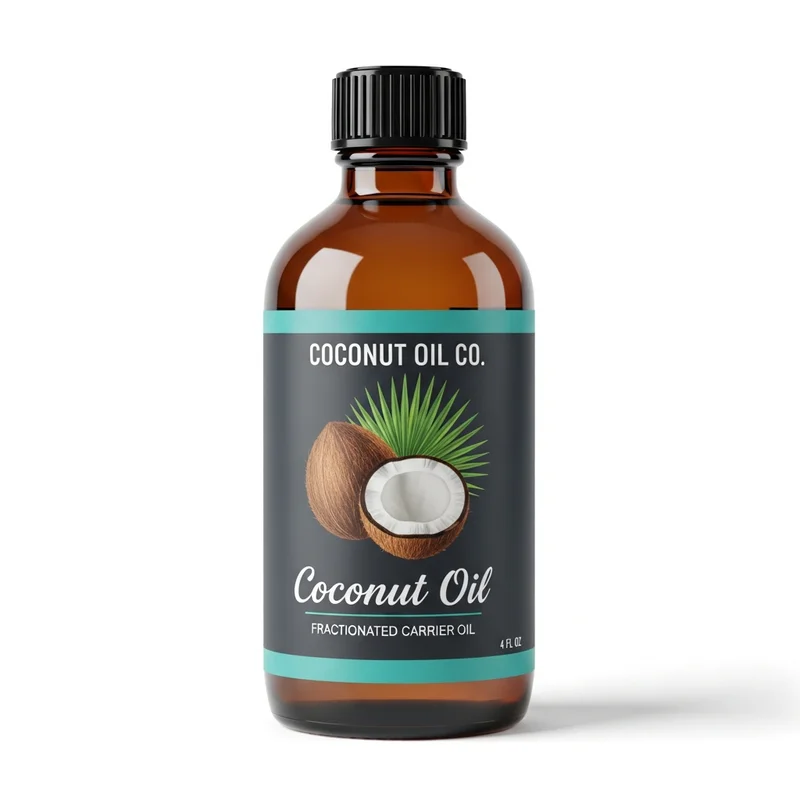
Fractionated Coconut Oil
Our own Fractionated Coconut Oil, in sizes from 0.5 oz to bulk.
From $9.99
Shop Now →Hair at work all week
Every strand is wrapped in overlapping scales called the cuticle. A review in the International Journal of Trichology links protein loss mainly to friction, abrasion and chemical damage, and notes that hair is porous, and more so once it has been damaged (Gavazzoni Dias, 2015). Combing, washing, heat and bleach all take a little off. That gives us a sensible way to look at any hair oil: the useful question is whether it changes something measurable about that wear and tear.
The protein-loss study
Rele and Mohile, at Marico Industries in Mumbai, tested coconut oil against mineral oil, a staple of traditional Indian hair oils, and sunflower oil, the second most common base. They used a Taguchi experimental design, which covers many hair types and treatments in a manageable number of runs (J Cosmet Sci, 2003). Only coconut oil clearly reduced protein loss, in both undamaged and damaged hair, whether it went on before or after washing.
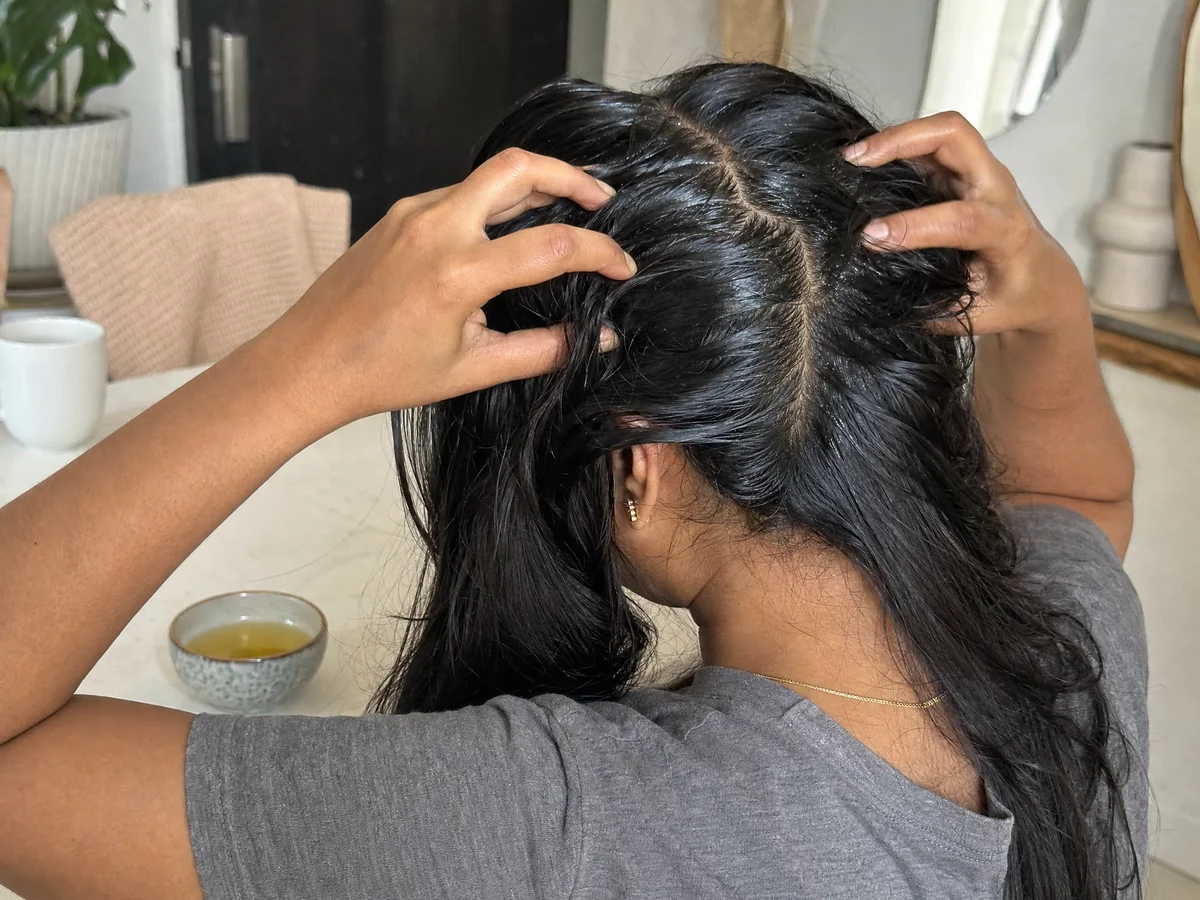
The authors' explanation is about shape. Coconut oil is a triglyceride of lauric acid, which they describe as having a strong affinity for hair protein and, being small and straight-chained, able to slip into the hair shaft. Mineral oil has no such affinity, and the bulkier fatty acids in sunflower oil are said to keep it on the outside.
The follow-up: where does the oil go?
A second group asked a different question in 2005: what happens to the cling between fibers after oiling (Keis et al., J Cosmet Sci)? With coconut, olive and sunflower oil the cling dropped over time, while with mineral oil it did not, and heat made the drop bigger for coconut and sunflower. Light-reflection measurements on single fibers showed the oil film thinning, which the authors read as oil moving into the fiber. Two methods pointing the same way is a nice bit of support, and it remains the authors' interpretation.
How we read these studies
Both are bench studies. They measured protein in rinse water and cling between fibers, and both came out of Marico, a maker of coconut hair oil, so an independent repeat would be welcome, and we have not come across one. They looked at hair and say nothing about the scalp. The FDA explains that a product's intended use decides whether it is a cosmetic or a drug, with restoring hair growth as a drug example (FDA, 2024), so for scalp or shedding questions we point you to a dermatologist. Our articles on dandruff and coconut versus castor oil go through what is known there.
Which of our oils matches the research
This is the part most coconut oil articles skip. The 2003 explanation leans on lauric acid, and general sources describe fractionated coconut oil as mostly caprylic and capric acid with the lauric acid largely removed (Healthline). Carrying the protein result over to fractionated oil would be a leap, so we do not make it. The certificate of analysis we publish for one fractionated batch lists density, refractive index and optical rotation and no fatty-acid profile, so we have no measured composition to add.
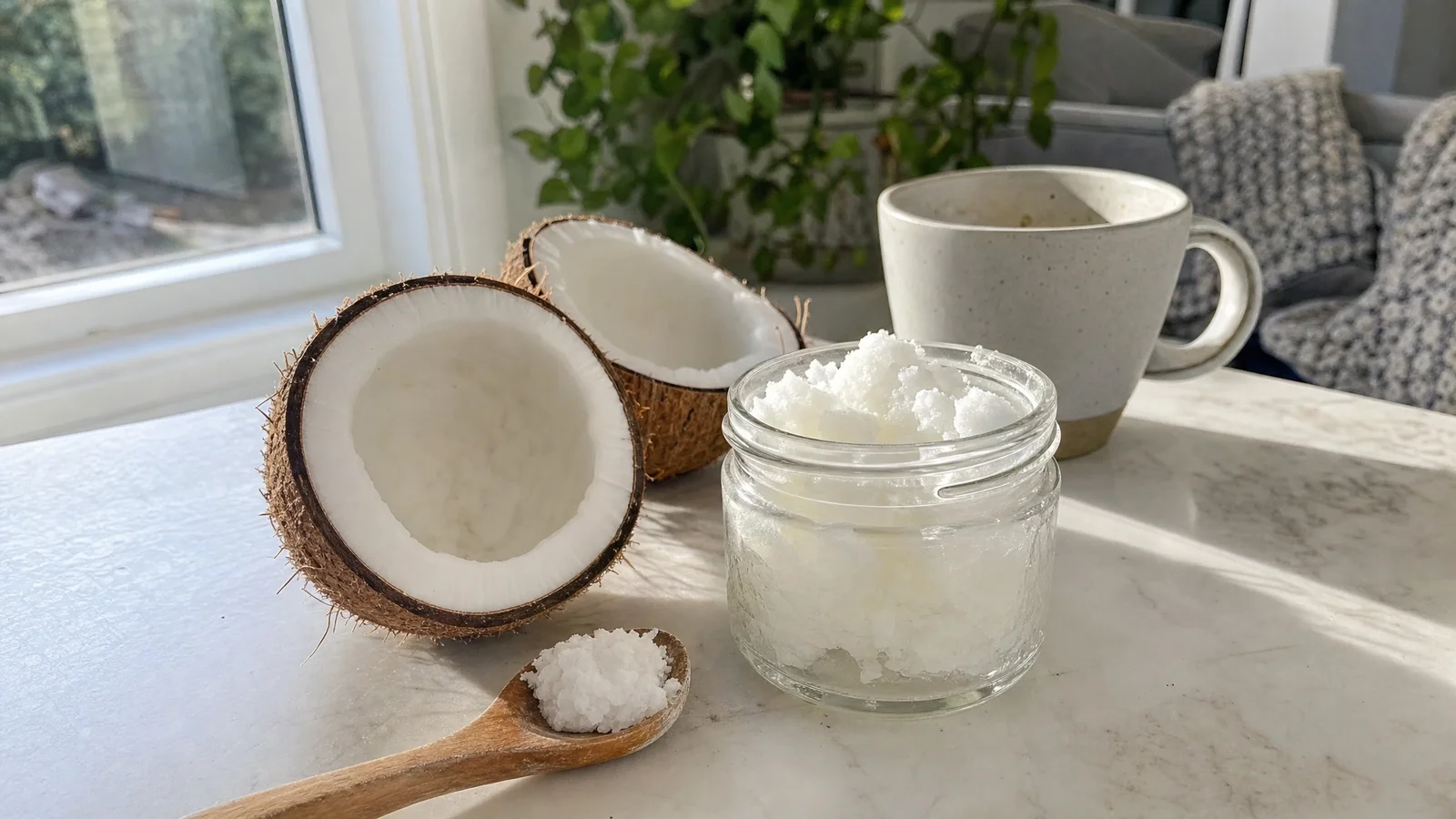
The practical split follows from that. For oiling before shampoo, the use the 2003 study came closest to, our virgin unrefined coconut oil is the nearer match to what was tested. It is firm in a cool room (our oil page puts the change at about 76 F), so warm it in your palms, and it smells like coconut. For a few drops of finish on dry ends, fractionated coconut oil stays liquid at any temperature and we describe it as fast-absorbing and non-greasy. Both are cosmetic oils for external use.
Putting it to use
If your lengths are dry and rough, a small amount on dry hair before shampooing, followed by a proper wash and conditioner, is the best-supported way to try the idea. As arithmetic, half a teaspoon is about 2.5 ml, roughly 2.3 g at the 0.948 density on our certificate. Start there and add a little only if strands still drag. If your hair is fine and low in body, a little goes a long way.
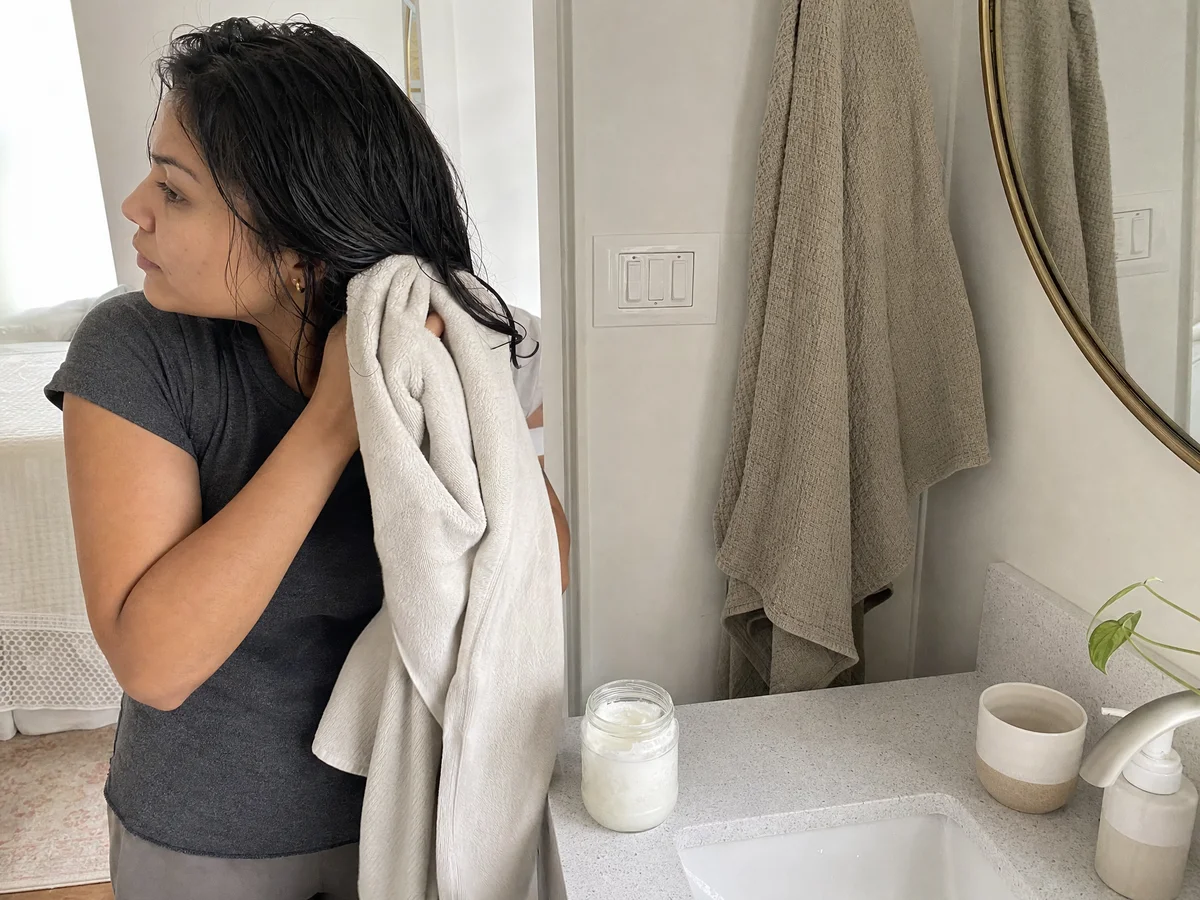
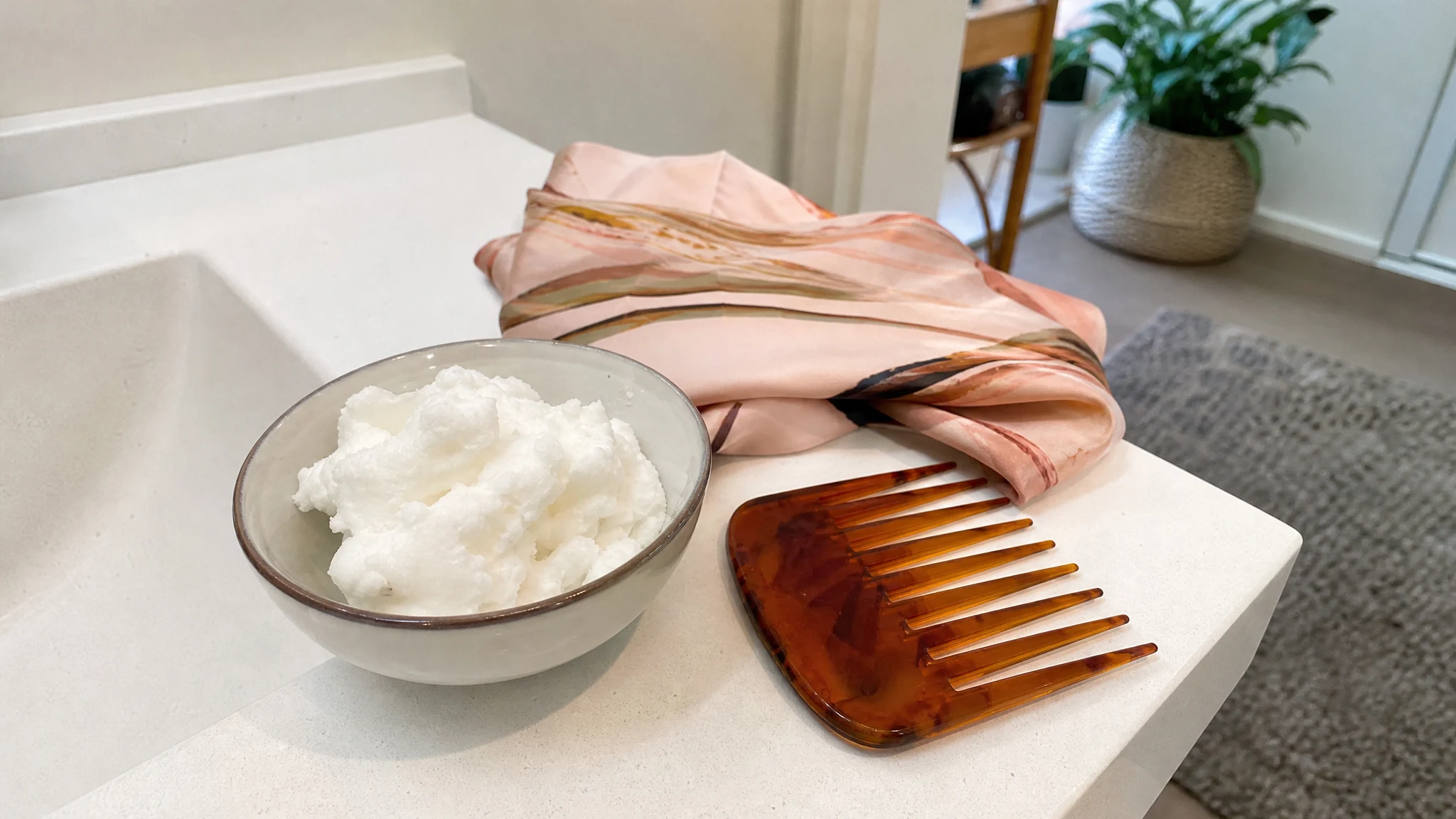
The American Academy of Dermatology's hair guidance adds habits that matter as much as any oil: conditioner after every shampoo, wrapping rather than rubbing wet hair in a towel, heat tools about once a week or less, and spacing out chemical services. Those habits address the same friction and chemical wear the papers measured. To see coconut next to another popular oil, read coconut versus olive oil for hair, and for a full routine see pre-wash, hot oil and overnight oiling.
Before you start
Patch test a small area for 24 hours, keep oil away from your eyes, and check with a professional first if you have a coconut or tree nut allergy; that is the wording on our product pages. A sore, flaking or thinning scalp belongs with a dermatologist, and a child's hair with suspected lice belongs with a pharmacist or pediatrician.
One measured effect, in one kind of coconut oil, in the lab: it is a modest claim and still a charming one. Whether it is reason enough to try is your call, and a small amount on dry ends before shampoo is all the idea needs.
Fractionated Coconut Oil
Fractionated Coconut Oil from our own shop, in sizes from 0.5 oz to bulk.
From $9.99
Shop Now →Sources & Further Reading
- Rele AS, Mohile RB, 2003. Effect of mineral oil, sunflower oil, and coconut oil on prevention of hair damage. J Cosmet Sci 54(2):175-92. pubmed/12715094
- Keis K, Persaud D, Kamath YK, Rele AS, 2005. Investigation of penetration abilities of various oils into human hair fibers. J Cosmet Sci 56(5):283-295. library.scconline.org
- Gavazzoni Dias MFR, 2015. Hair cosmetics: an overview. Int J Trichology 7(1):2-15. pmc/PMC4387693
- U.S. FDA, 2024. Is it a cosmetic, a drug, or both? fda.gov
- Healthline. Fractionated coconut oil. healthline.com
- American Academy of Dermatology. How to stop damaging your hair. aad.org