Coconut Oil vs Castor Oil for Hair: Gloss or Light?
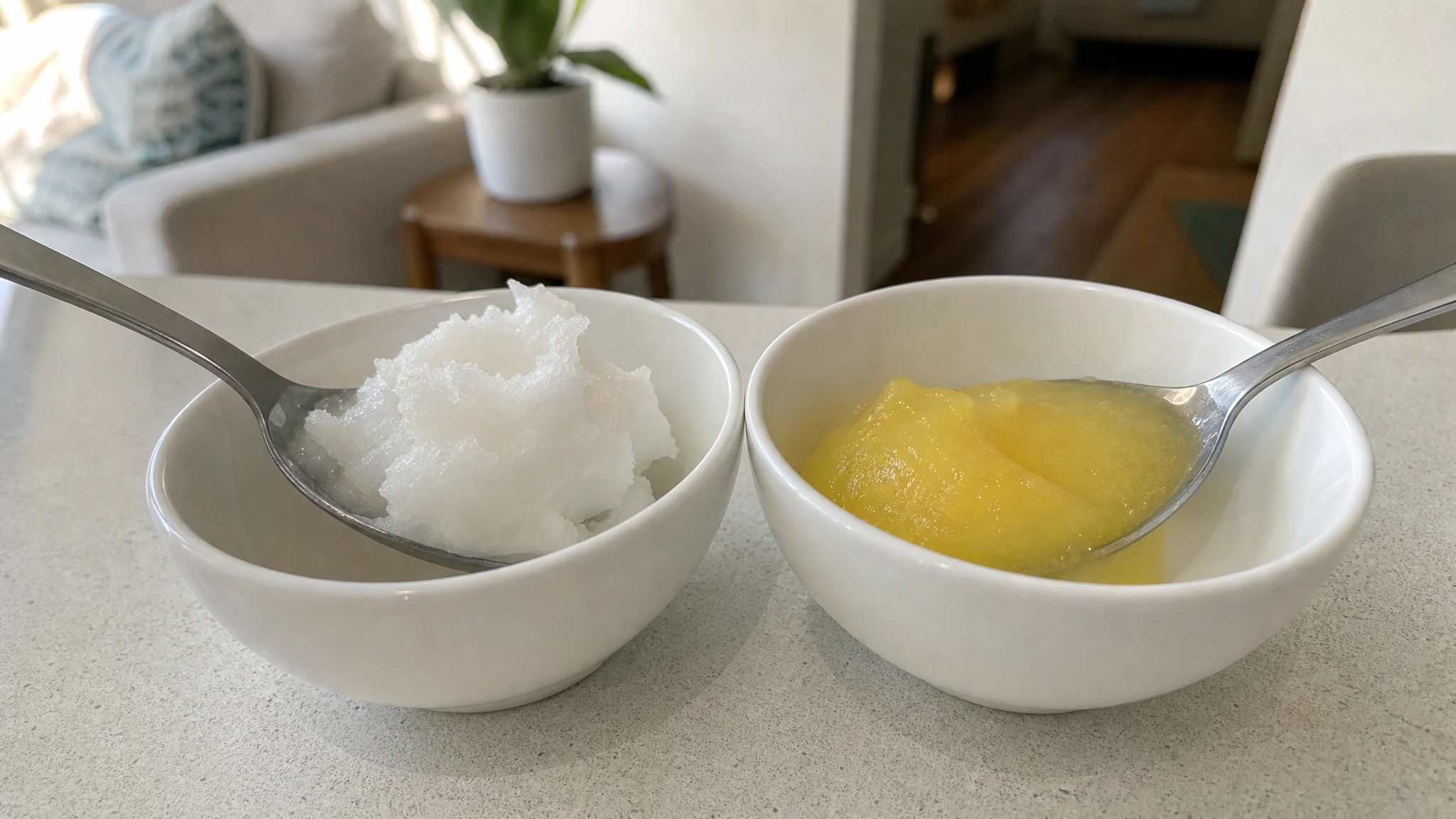
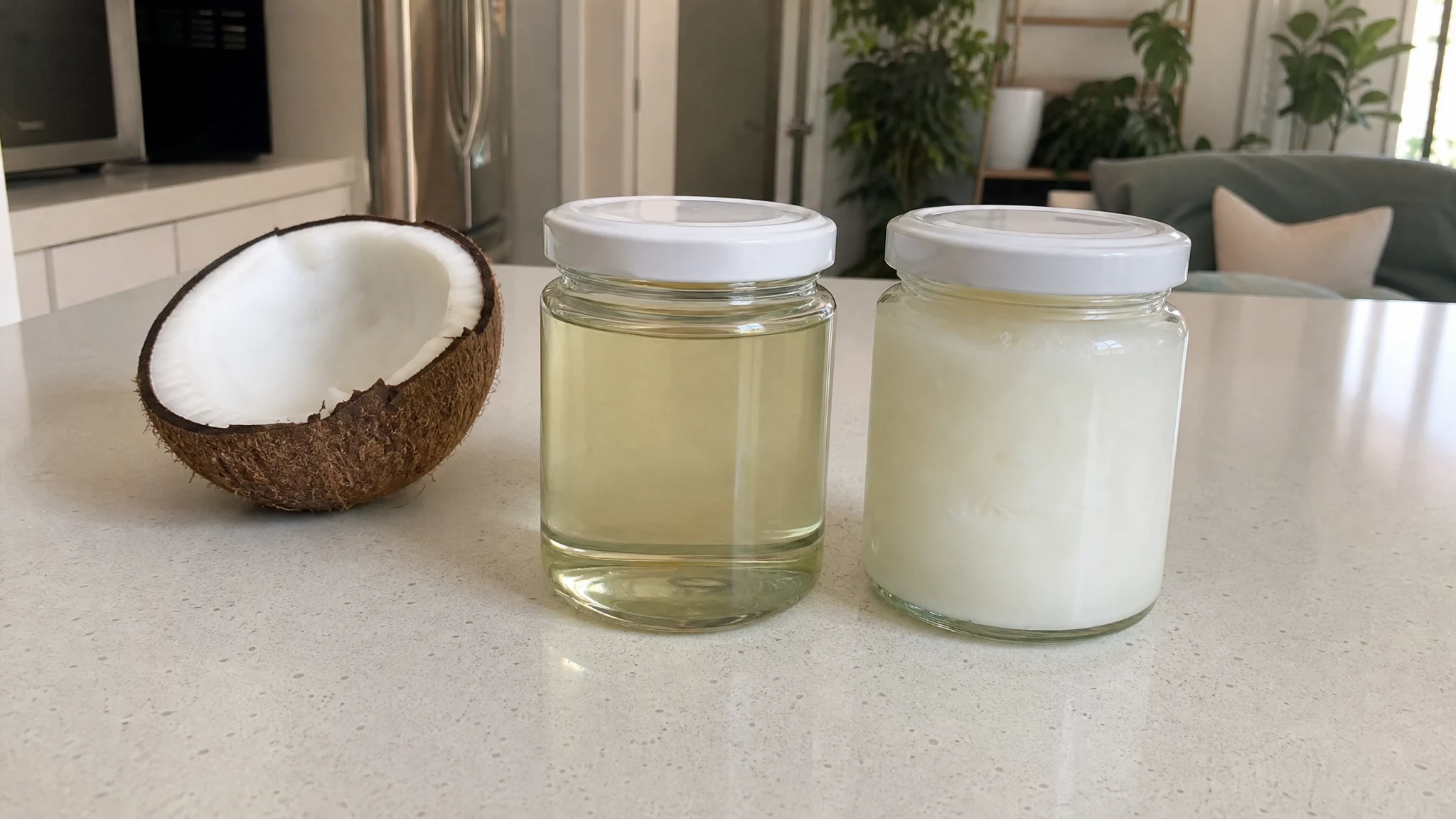
Castor oil is a thick, glossy syrup. Coconut oil is light, and in its fractionated form it pours like water. Those two bottles turn up in nearly every hair-oil conversation, usually framed as a contest over growth, but the more useful question is what each one does for the hair you already have. On that, the research has a bit more to say.

Fractionated Coconut Oil
Our own Fractionated Coconut Oil, in sizes from 0.5 oz to bulk.
From $9.99
Shop Now →What the reviews found
A 2022 systematic review of 22 articles on coconut, castor and argan oil for hair, written with patients who have skin of color in mind, found clinical evidence for coconut oil on brittle hair and only limited evidence for growth. Castor oil's evidence was weaker and mainly concerned luster (Phong et al., 2022). A 2023 review of hair oils in androgenetic alopecia found that most supporting studies were in mice and called for work in people (Dinkins et al., 2023).
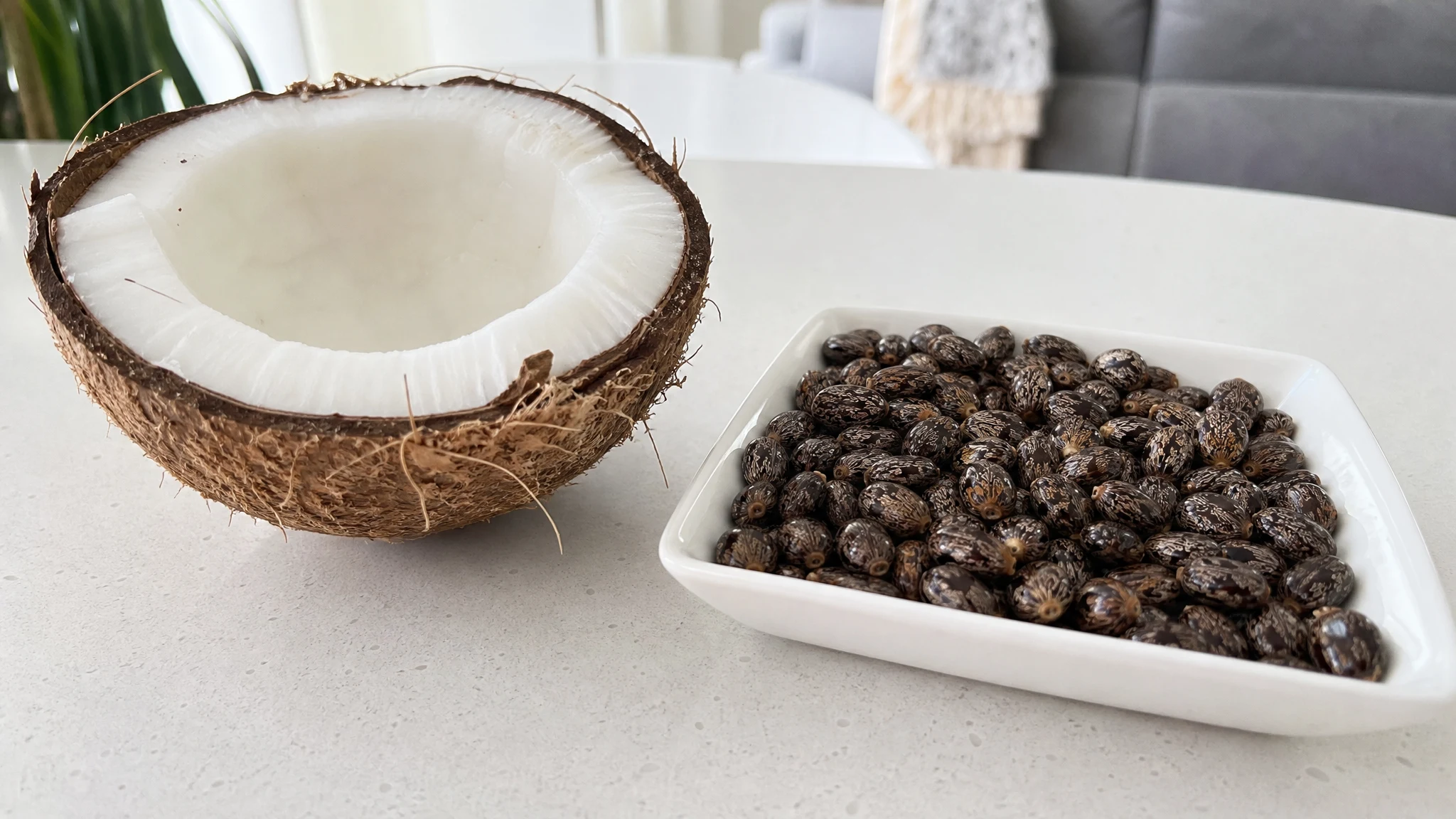
A 2026 review of castor oil in dermatology holds a pleasant surprise. Most of the folk claims, such as moisture, scalp comfort and manageability, have not been studied clinically. The measurement it does describe is a goniophotometer study in which castor oil increased the contrast between strands, which is exactly what a shinier-looking head of hair looks like to an instrument. The review also explains that ricinoleic acid, about 90% of castor oil's fatty acids, interacts in the lab with an enzyme in a pathway tied to hair loss, yet a drug aimed at that pathway showed no clinical efficacy for androgenetic alopecia, so nobody has made the jump from lab result to head of hair (Girdler et al., 2026).
Coconut oil and the strand itself
Coconut oil's best-documented talent is about the fiber. Rele and Mohile (2003) found that it reduced protein loss in undamaged and damaged hair tresses, which sunflower and mineral oil did not, and Keis and colleagues (2005) found that it lowered fiber-to-fiber adhesion over time. Both used ordinary coconut oil on hair fibers, and both came from a group linked to a coconut hair oil maker. Hair that breaks less keeps its length, which can read as longer, healthier-looking hair, and that is a very different thing from changing how fast hair emerges from the scalp. We make no claim that either oil affects hair growth, and the FDA treats growth claims as drug claims, because a product's intended use decides whether it is a cosmetic or a drug (FDA).
How they feel in your hands
Ordinary coconut oil is mostly lauric acid, 49% in one published breakdown (Lin and colleagues, 2018). Fractionated coconut oil, the main oil we sell, is described by general sources as mostly caprylic and capric acid with the lauric acid largely removed (Healthline), and the certificate of analysis we publish for one batch lists physical constants rather than a fatty acid profile. Castor sits at the far end of the scale, with ricinoleic acid making up about 90% of its fatty acids.
Reasoning from how thick it is, castor suits people who like a glossy, weighty finish on thick or coarse hair, and it takes patience to spread thin. Coconut oil is easier to distribute. We describe our fractionated coconut oil as fast-absorbing and non-greasy, and since it stays liquid at any temperature it makes a few drops on the ends effortless. Our virgin unrefined coconut oil is the closer match to the type used in the studies, with a coconut aroma and a firm texture in a cool room.
One practical note on castor, since the same review collects it. There are case reports of contact dermatitis, including one person who reacted to undiluted castor oil in an underarm product but not when it was diluted, and one case of hair felting after first use. These are single, uncommon cases, and they make a good argument for a patch test and a modest first amount on part of the head. We sell coconut oils only, so if you go with castor, choose a seller that gives you a proper label and batch information. We ask everyone to patch test for 24 hours, and to talk with a professional first if they have a coconut or tree nut allergy.
How to read a before-and-after photo
Hair oil transformation photos are a big reason this topic stays popular, so here is how we would read one. Hair grows from the follicle, and an oil on the length is a long way from it. A change in apparent length is far more likely to come from less breakage, a different styling method or less tension on a hairline. That is reasoning from the sources, and nobody can confirm it for a single photo. If you want to track your own hair, measure the same section every month in the same way and jot down any change in products or style, because an oil routine usually arrives with several.
Picking one for your routine
Choose by the job. Coconut oil is the better documented option for smoother, less brittle-feeling ends before a wash, and our pre-wash comparison shows how to use it. Castor's measured edge is shine. Combining them is a style choice that nobody has studied. Either way, a small amount goes a long way, and half a teaspoon is about 2.5 ml. For the wider picture, our coconut oil and hair overview goes further.
Thinning, sudden shedding, a widening part or a sore scalp deserve a dermatologist's attention before any oil. Tension is a quiet influence too: traction alopecia is reported to affect about one-third of women of African descent and can become permanent if the pulling continues (Billero and Miteva, 2018), and no oil offsets tight styles. Our type 4 hair guide goes through protective styling.
So choose castor if gloss is what you want, and coconut oil if you want a lighter, better-studied oil for the strand, and enjoy either as a finishing touch. If you are weighing coconut against other oils as well, our argan comparison is the next stop.
Fractionated Coconut Oil
Fractionated Coconut Oil from our own shop, in sizes from 0.5 oz to bulk.
From $9.99
Shop Now →Sources & Further Reading
- Phong C et al., 2022. Coconut, Castor, and Argan Oil for Hair in Skin of Color Patients: A Systematic Review. J Drugs Dermatol 21(7):751-757. europepmc.org/MED/35816075
- Dinkins J et al., 2023. Hair oils in androgenetic alopecia. Int J Dermatol 62(8):980-985. europepmc.org/MED/37017321
- Girdler K et al., 2026. Castor oil in dermatology. Cureus. pmc.ncbi.nlm.nih.gov/PMC12978418
- Rele AS, Mohile RB, 2003. J Cosmet Sci 54(2):175-92. pubmed.ncbi.nlm.nih.gov/12715094
- Keis K et al., 2005. J Cosmet Sci 56(5):283-295. library.scconline.org/v056n05/1
- Lin TK, Zhong L, Santiago JL, 2018. Int J Mol Sci 19(1):70. pmc.ncbi.nlm.nih.gov/PMC5796020
- Healthline. Fractionated coconut oil explainer. healthline.com
- US Food and Drug Administration. Is it a cosmetic, a drug, or both? fda.gov
- Billero V, Miteva M, 2018. Traction alopecia: the root of the problem. Clin Cosmet Investig Dermatol 11:149-159. pubmed.ncbi.nlm.nih.gov/29670386