Coconut Oil for Type 4 Hair: How to Use It Well
Type 4 hair loves a little oil, and coconut oil is the one people reach for first. What helps most is knowing what an oil actually does on coils: it smooths friction and slows water moving in and out of the strand, but it does not add water. Once that clicks, it is much easier to decide where coconut oil belongs in a routine, which of our two coconut oils to pick, and why your protective style matters more than whatever you put on it.

Fractionated Coconut Oil
Our own Fractionated Coconut Oil, in sizes from 0.5 oz to bulk.
From $9.99
Shop Now →What the research behind coconut oil measured
The "coconut oil for hair" idea rests mostly on two bench studies from the same industry group. Rele and Mohile (2003) compared coconut, sunflower and mineral oil and found that only coconut oil reduced protein loss, in undamaged and damaged hair, whether applied before or after washing; the authors credit lauric acid's affinity for hair protein. Keis and colleagues (2005) found that coconut, olive and sunflower oil lowered the cling between fibers over time while mineral oil did not, and read that as the oil entering the fiber.
Neither report breaks results out by curl pattern. A 2022 systematic review of 22 articles on coconut, castor and argan oil for hair in skin of color found some clinical evidence for coconut oil on brittle hair (Phong et al., 2022). So the picture for type 4 hair is a plausible fiber-level mechanism and a small body of evidence, with room for your own preferences on how much, how often, and for 4a, 4b or 4c.
Why oil suits coils
A review in the International Journal of Trichology describes afro-ethnic hair as having an ellipsoid cross-section with a diameter that varies along the strand, and notes that sebaceous glands in people of African descent are frequently less active, so less sebum is available (Gavazzoni Dias, 2015). Sebum is spread down curly fibers by combing and brushing, and conditioners with oils and silicones reduce friction, especially on chemically treated hair.
Reasoning from that, oil has two natural jobs on type 4 hair: easing friction while you detangle and style, and putting a thin film on lengths the scalp's sebum does not reach. A small amount does both nicely. Oil contains no water, though; some oils reduce the water a strand absorbs, which is a different thing. So the order that makes sense is water or a water-based conditioner first, oil second.
Picking the right coconut oil for the job
The lab results belong to ordinary coconut oil, which is mostly lauric acid. One published breakdown lists lauric 49%, myristic 18%, palmitic 8%, caprylic 8%, capric 7%, oleic 6% and linoleic 2% (Lin et al., 2018), and our piece on why fatty acid charts differ shows how much those numbers move. Fractionated coconut oil is described by general sources as mostly caprylic and capric acid with lauric largely removed (Healthline). We sell both, so here is how we would split the work, as reasoning built on those sources.
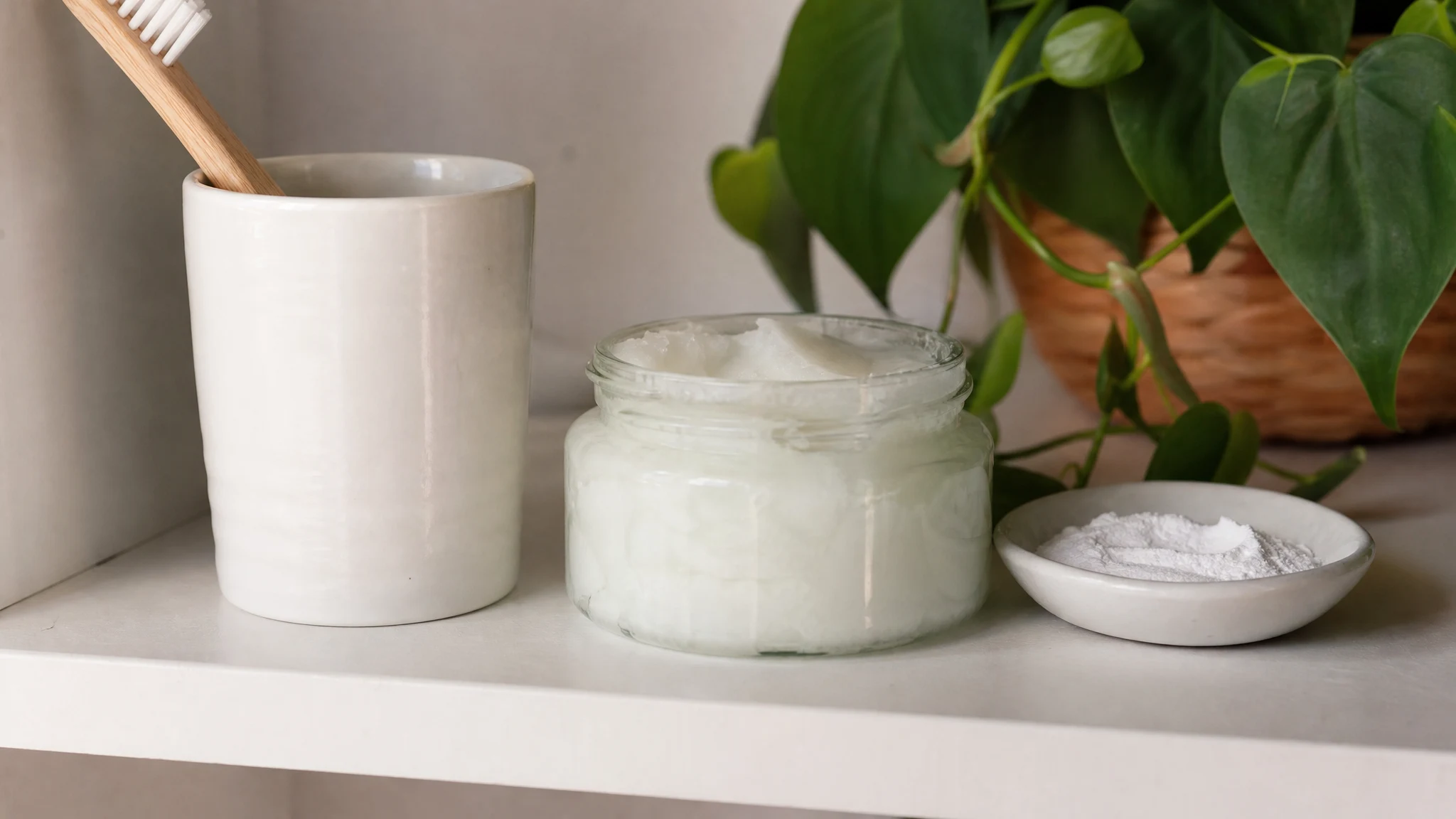
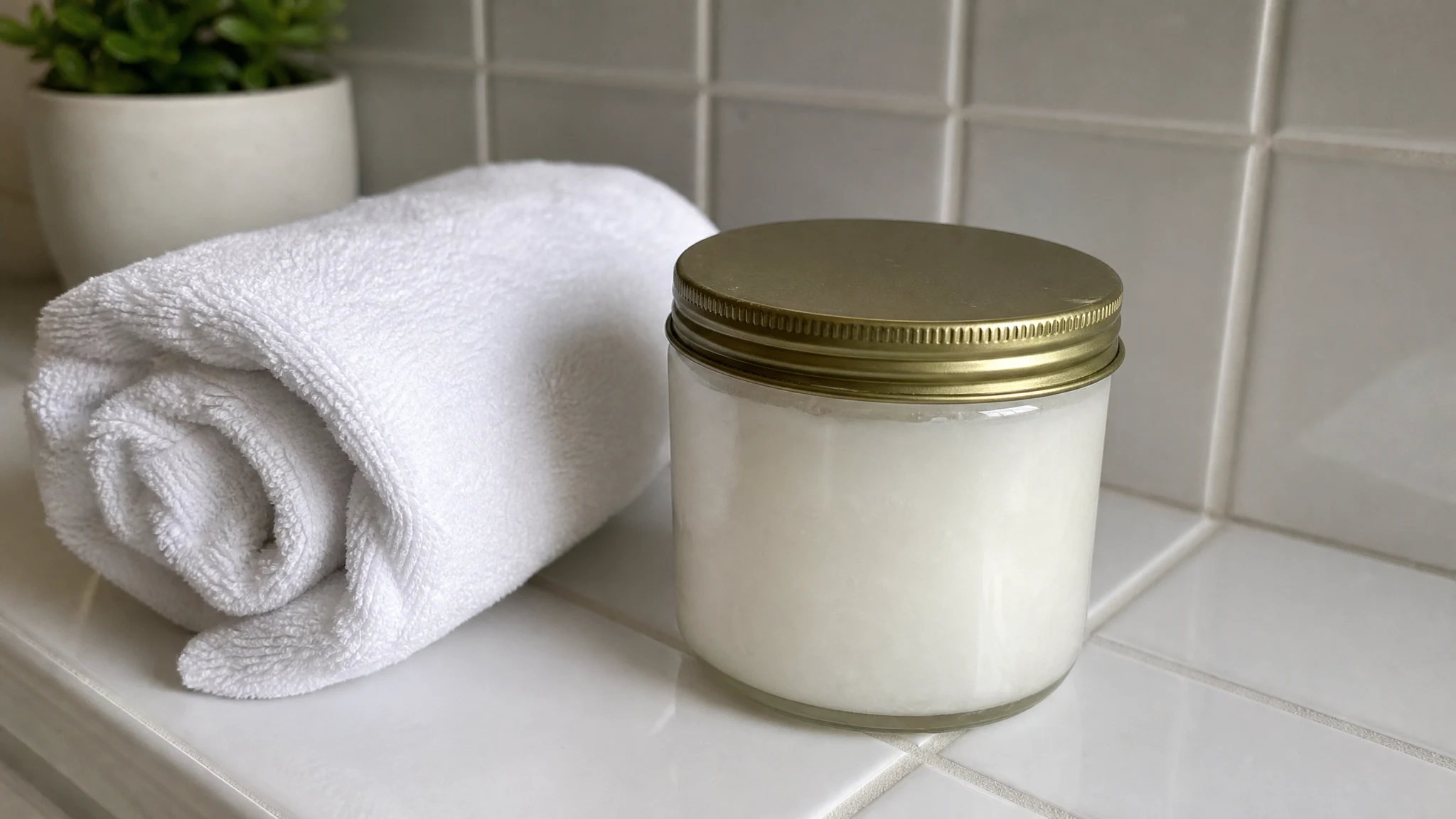
- Pre-shampoo oiling. This is the use the 2003 study came closest to, and our virgin unrefined oil is the closer match. It is firm in a cool room (we put the change at about 76 F), so warm it in your palms. It smells like coconut, which many people love.
- A light finish on damp or dry lengths. Here the question is feel. Our fractionated coconut oil stays liquid at any temperature and we describe it as fast-absorbing and non-greasy, which suits a few drops smoothed over the ends. How that feels on your coils is personal.
- The scalp. We have no study to cite for oiling a scalp. If it itches, flakes or burns, a dermatologist is the right person to ask.
As a starting measure, half a teaspoon is about 2.5 ml, roughly 2.3 g at the 0.948 density on the Certificate of Analysis we publish for one fractionated batch. Use that for a section of hair and add more only if strands still drag. Gavazzoni Dias notes that leave-on oil can make hair look oily and dull when it was not needed.
Protective styles: the style does the protecting
Oiling the edges does not offset tension, and that is where we would gently push back on common advice. A review in Clinical, Cosmetic and Investigational Dermatology reports that traction alopecia affects about one-third of women of African descent, that risk rises with how hard and how long hair is pulled, and that tight braids, weaves, extensions and tight buns or ponytails rank among the highest-risk styles. Relaxers add to the risk, and the loss can become permanent scarring if pulling continues (Billero and Miteva, 2018). A 2024 review of curly-hair disorders links tight, high-tension styles to traction alopecia and ties styling practices to acquired trichorrhexis nodosa, a breakage disorder (Geisler et al., 2024).
The happy lesson is that a style that is slightly loose, not put in on freshly stretched hair and not left in past its time does more for your hair than any oil. If you notice thinning at the hairline or temples, or small bumps or tenderness under a style, take it down and see a dermatologist.
A routine built from the sources
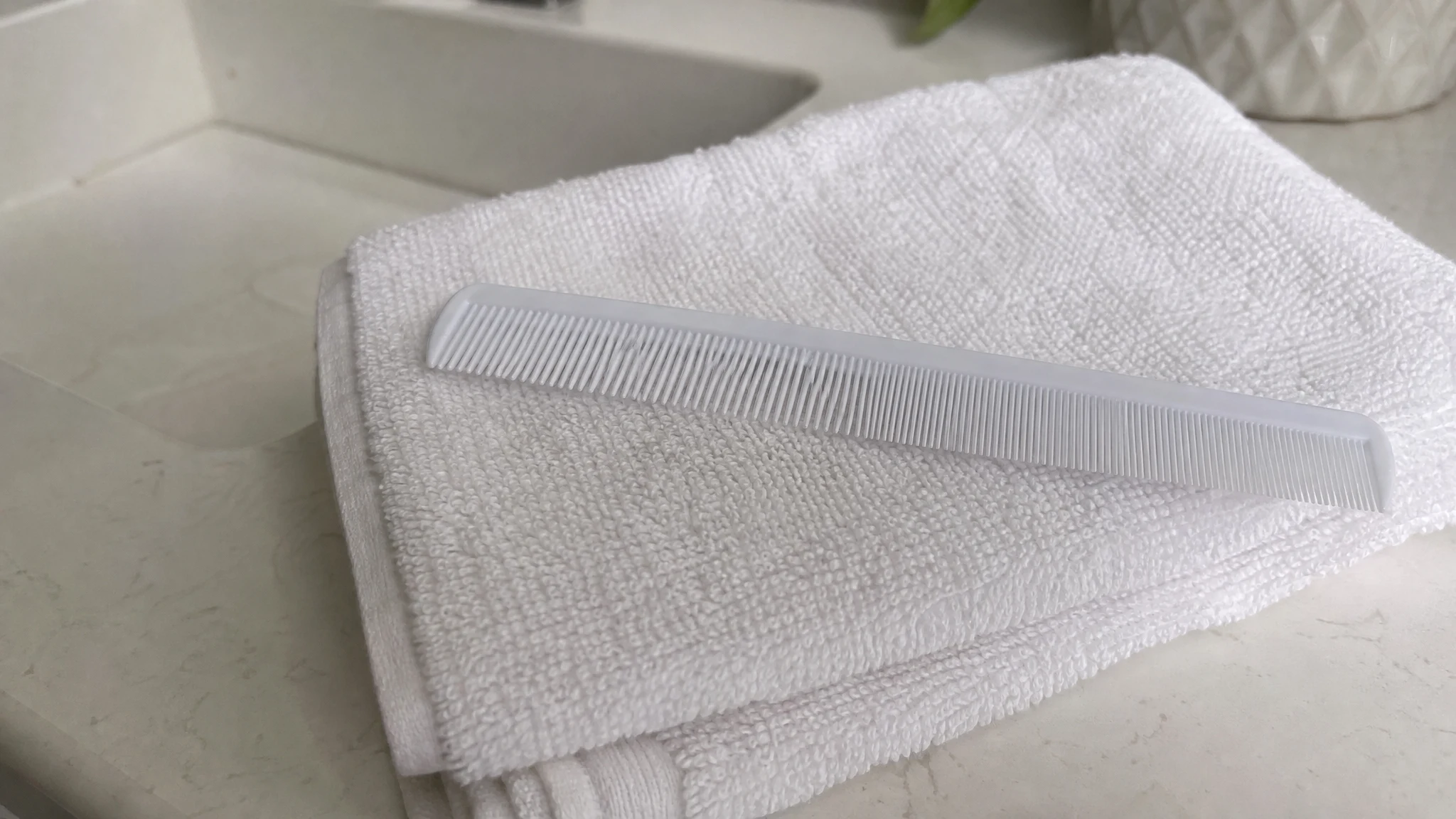
- Detangle on damp hair with a wide-tooth comb. The American Academy of Dermatology says textured hair is best combed damp this way, and advises conditioner after every shampoo and heat tools about once a week or less (AAD). That page does not mention oils.
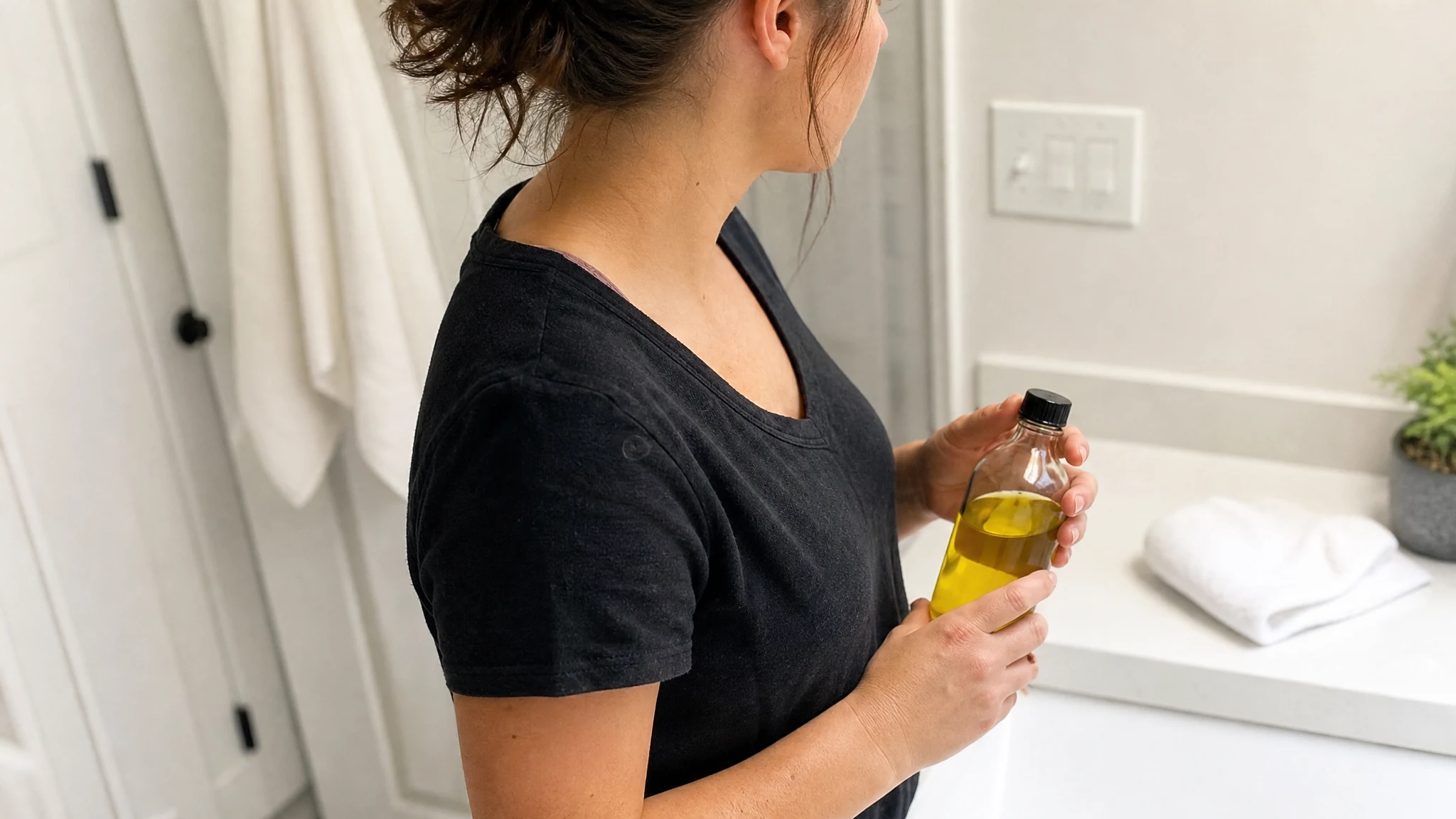
- If you oil before washing, apply to dry lengths and leave it for whatever time you can fit in; the studies do not set a duration. Then shampoo.
- After washing, condition, and if you like a finish, add a few drops of oil on damp lengths.
For more on the research, see our lab studies on coconut oil and hair and the coconut versus castor oil comparison. For a beach-day texture routine, our sea salt spray note applies to coils with care.
Good to know before you start
Our oils are cosmetic carrier oils for external use. If you have a coconut allergy, ask an allergist first, and patch test a small area and wait 24 hours before regular use. Keep oil out of your eyes. Both oils are listed on our shop page. Anyone with an active scalp condition or sudden hair loss should see a dermatologist. If fine, low-porosity strands go limp after oil, use less before reaching for something heavier.
When coconut oil earns a place in your routine, pick the one that matches the job and a size you will finish.
Fractionated Coconut Oil
Fractionated Coconut Oil from our own shop, in sizes from 0.5 oz to bulk.
From $9.99
Shop Now →Sources & Further Reading
- Rele AS, Mohile RB, 2003. Effect of mineral oil, sunflower oil, and coconut oil on prevention of hair damage. J Cosmet Sci 54(2):175-92. pubmed/12715094
- Keis K, Persaud D, Kamath YK, Rele AS, 2005. Investigation of penetration abilities of various oils into human hair fibers. J Cosmet Sci 56(5):283-295. library.scconline.org/v056n05/1
- Phong C et al., 2022. Coconut, castor, and argan oil for hair in skin of color patients: a systematic review. J Drugs Dermatol 21(7):751-757. europepmc.org/MED/35816075
- Gavazzoni Dias MFR, 2015. Hair cosmetics: an overview. Int J Trichology 7(1):2-15. pmc/PMC4387693
- Lin TK, Zhong L, Santiago JL, 2018. Anti-inflammatory and skin barrier repair effects of topical application of some plant oils. Int J Mol Sci 19(1):70. pmc/PMC5796020
- Healthline, 2019. Fractionated coconut oil. healthline.com
- Billero V, Miteva M, 2018. Traction alopecia: the root of the problem. Clin Cosmet Investig Dermatol 11:149-159. pubmed/29670386
- Geisler AN et al., 2024. Curly-hair disorders. Int J Dermatol 63(9):1145-1154. pubmed/38622785
- American Academy of Dermatology, undated. How to stop damaging your hair. aad.org