Coconut Oil Sea Salt Spray: A Two-Step Beach Waves Routine
Beach waves come from a two-step trick: salt water gives hair its grip and texture, and a touch of oil gives it a soft finish. The popular recipe puts both in one spray bottle, which sounds tidy but never quite works, because oil and salt water refuse to stay mixed. The better plan keeps them apart, with salt water first and a drop of coconut oil afterward.

Fractionated Coconut Oil
Our own Fractionated Coconut Oil, in sizes from 0.5 oz to bulk.
From $9.99
Shop Now →Why the oil sits better outside the bottle
Take the usual proportions: a cup of water (about 237 ml) and a tablespoon of oil (about 14.8 ml). That is roughly 6% oil by volume, and nothing in the recipe holds it in the water. Vegetable glycerin is often named as the thing that blends them, but it dissolves in water and does not keep oil suspended. Salt makes the water denser, which nudges oil toward the top (basic physics and not a cited finding). In practice the first sprays after a shake deliver a burst of oil droplets and the last ones are plain salt water. Essential oil drops added on top behave the same way, and the Tisserand Institute publishes dilution ranges of 0.5 to 1.2% for facial cosmetics and 1 to 3% for body products, with nothing specific to hair, so leaving scent out of the bottle is the easy call.
Small and fresh
A spray that is mostly water needs a preservative system, and a kitchen batch has none. The FDA's microbiological safety page (current as of 10/15/2024) lists contaminated water and ineffective preservation among the routes to a harmful cosmetic, and says some microorganisms may grow faster in warm or damp storage, which describes a bathroom. Its homemade cosmetics fact sheet (current as of 11/18/2025) says making cosmetics at home is legal and that the maker is responsible for safety. So the easy habit is to mix only what you will use in one session, from distilled water out of a sealed container, in a clean bottle, and pour out the rest. A spray meant to keep for weeks is a formulation job with a preservative and stability testing.
What coconut oil is good for here
Hair-oil research is about oil applied to hair and not oil in a spray. In a 2003 Journal of Cosmetic Science study by Rele and Mohile, coconut oil was the only one of three oils (coconut, sunflower and mineral oil) that clearly reduced protein loss from both undamaged and damaged hair, which the authors credit to its fatty acids' affinity for hair protein. A 2015 review by Gavazzoni Dias adds that some oils penetrate the hair and cut the water it absorbs, and that repeated swelling and drying, called hygral fatigue, is something to be gentle with.
Those studies used whole coconut oil, and fractionated oil is what remains after most of the lauric acid is removed (the USP 35 medium-chain triglycerides monograph allows no more than 3.0% C12 for that class of oil), so whether the Rele result carries over to our fractionated oil is an inference we do not claim. What we can say is practical: we describe our fractionated oil as fast-absorbing and non-greasy, which is the right profile for a drop on the ends. Salt stays on the strand as the water evaporates, which is the point of the product, and it is why rinsing it out matters. The American Academy of Dermatology's hair guidance says to use conditioner after every shampoo, a sound habit after a salt day.
The two-step routine
This is a formulation reasoned from the usual ratio of 2 tablespoons of salt to a cup of water, scaled down.
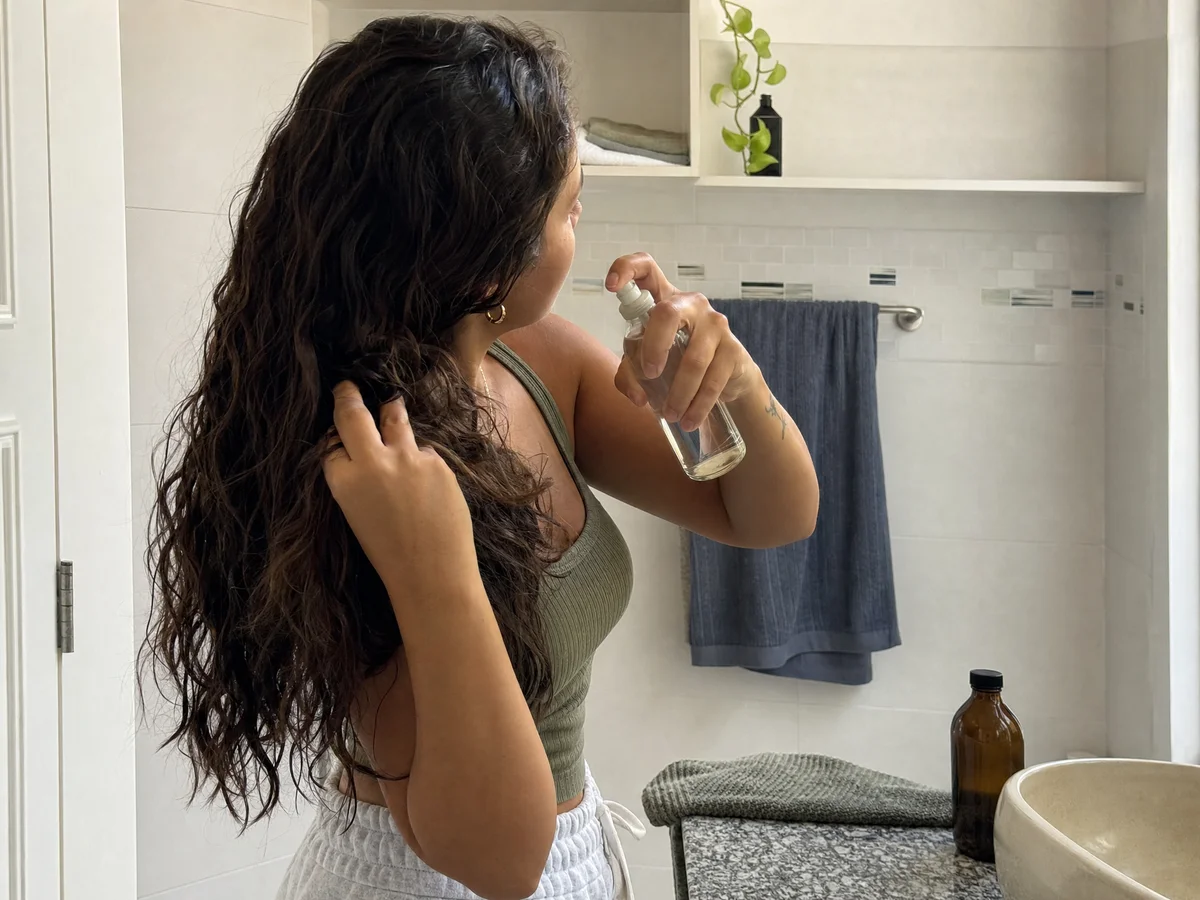
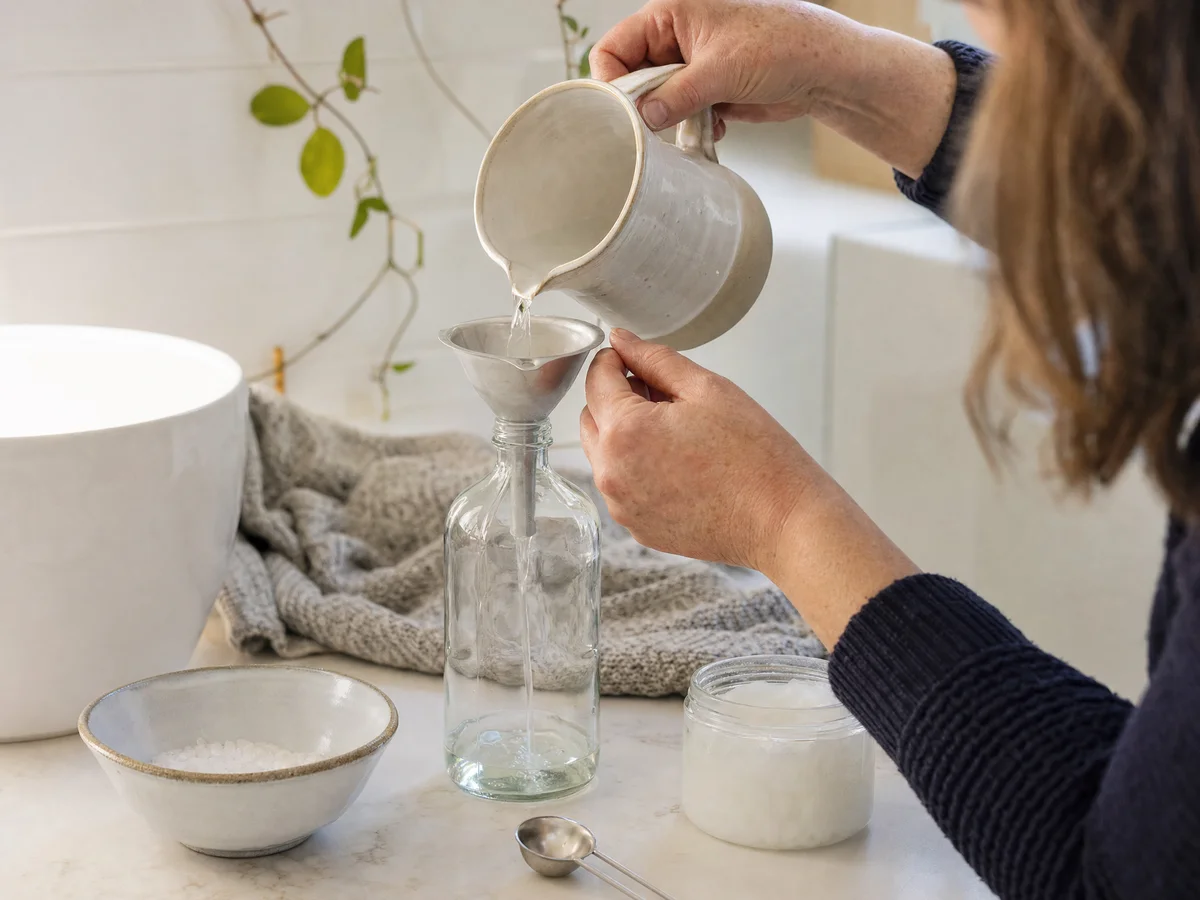
- Salt water for one use. Shake 1/4 cup (about 59 ml) of distilled water with 1.5 teaspoons of fine sea salt in a clean bottle until it dissolves. Spray onto damp hair, scrunch and let it air dry, which the AAD recommends where you can. Discard what is left.
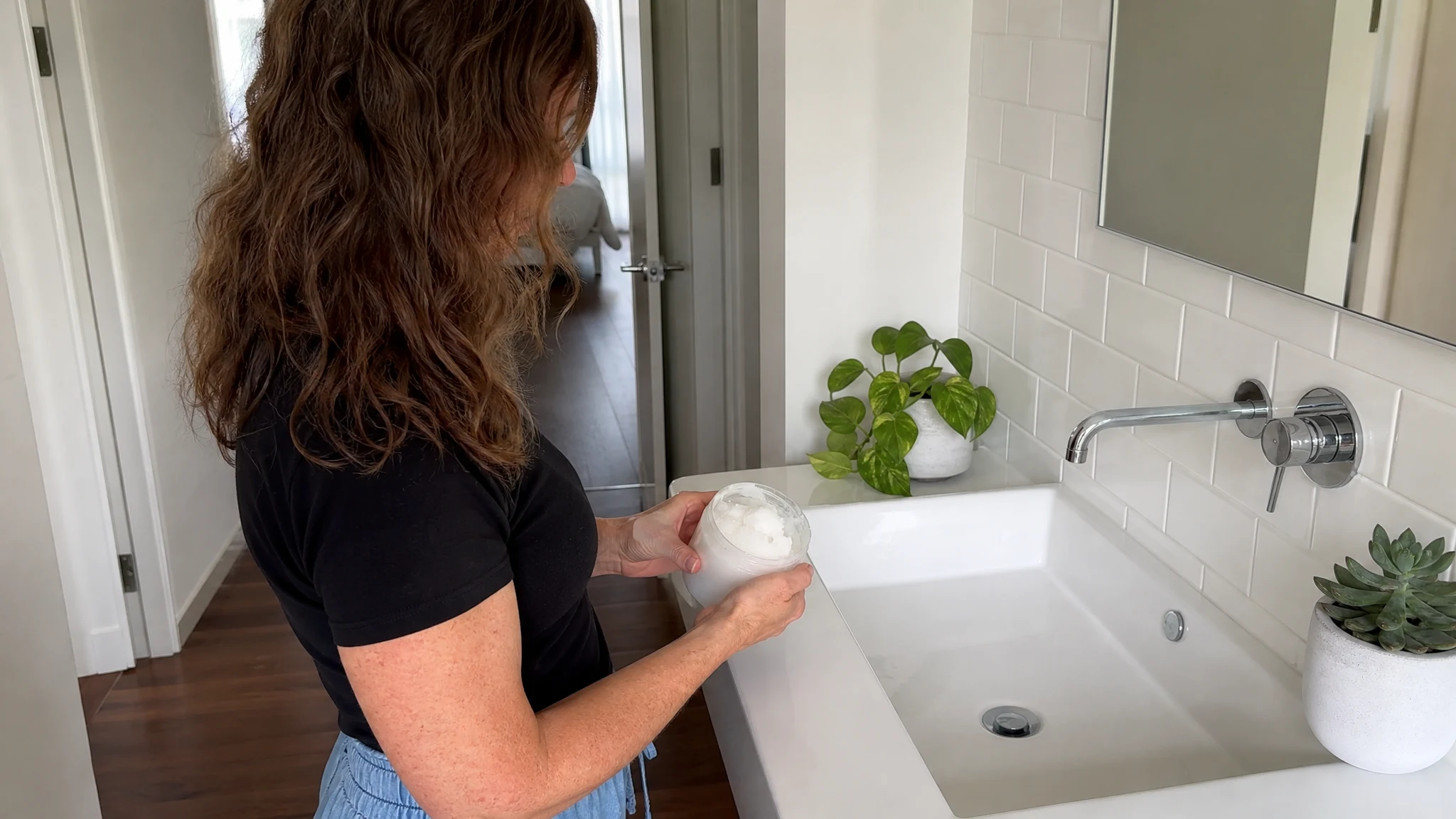
- Oil after, on dry hair. Rub 2 or 3 drops of fractionated coconut oil between your palms and run them over the ends. A quarter teaspoon is about 1.2 ml, roughly 1.2 g at the 0.948 density on our one published Certificate of Analysis. Start with less, and if the waves flatten, you used a little too much.
The oil goes on afterward because that is when it can do its one job, smoothing the surface, without competing with the salt for the texture job. Our virgin unrefined listing smells of coconut and is firm in a cool room (about 76 F), so warm it in your hands, and choose it if you love the scent.
Waves like a little patience. Spray the salt water through damp hair in sections, scrunch upward toward the roots, and then leave it alone rather than touching it as it dries; hands in wet hair are what turn waves into frizz. When the hair is dry, you will feel the texture, a slightly gritty, grippy feel, and that is the moment the drop of oil goes on. Warm it in your palms first, and keep it to the ends.
Good to know before you spray
- Coconut or tree nut allergy. Our product pages say to patch test first and check with a professional before use if you have either.
- Bleached, relaxed or color-treated hair. Gavazzoni Dias notes chemically treated hair is more porous, so a licensed stylist is the right person to ask about a salt product.
- An itchy, flaking or sore scalp. That is a question for a dermatologist, and the spray stays off the scalp until you have asked.
- Tight curls and coils. Our type 4 hair guide takes a moisture-first approach that suits them well.
Waves at the beach itself
If the aim is a beach look, you may be standing on one. Gavazzoni Dias notes that sunlight can weaken hair, and the AAD suggests a wide-brimmed hat and rinsing, then shampooing and conditioning, after a swim. Coconut oil is not a sun product; our post on coconut oil and SPF explains. For more on oils and hair, read the hair guide, and for an overnight treatment, hair oiling.
Fractionated Coconut Oil
Fractionated Coconut Oil from our own shop, in sizes from 0.5 oz to bulk.
From $9.99
Shop Now →Sources & Further Reading
- Tisserand Institute, undated. Essential oil dilution. tisserandinstitute.org/safety/dilution
- U.S. FDA, 2024. Microbiological Safety and Cosmetics. fda.gov/microbiological-safety-and-cosmetics
- U.S. FDA, 2025. Small Businesses and Homemade Cosmetics Fact Sheet. fda.gov/homemade-cosmetics-fact-sheet
- Rele AS, Mohile RB, 2003. Effect of mineral oil, sunflower oil, and coconut oil on prevention of hair damage. J Cosmet Sci 54(2):175-92. pubmed/12715094
- Gavazzoni Dias MFR, 2015. Hair cosmetics: an overview. Int J Trichology 7(1):2-15. pmc/PMC4387693
- USP 35, 2012. Medium-Chain Triglycerides monograph. drugfuture.com/USP35 MCT
- American Academy of Dermatology, undated. How to stop damaging your hair. aad.org/stop-damage