Coconut Oil Chocolate Bark: How Much Is Enough?
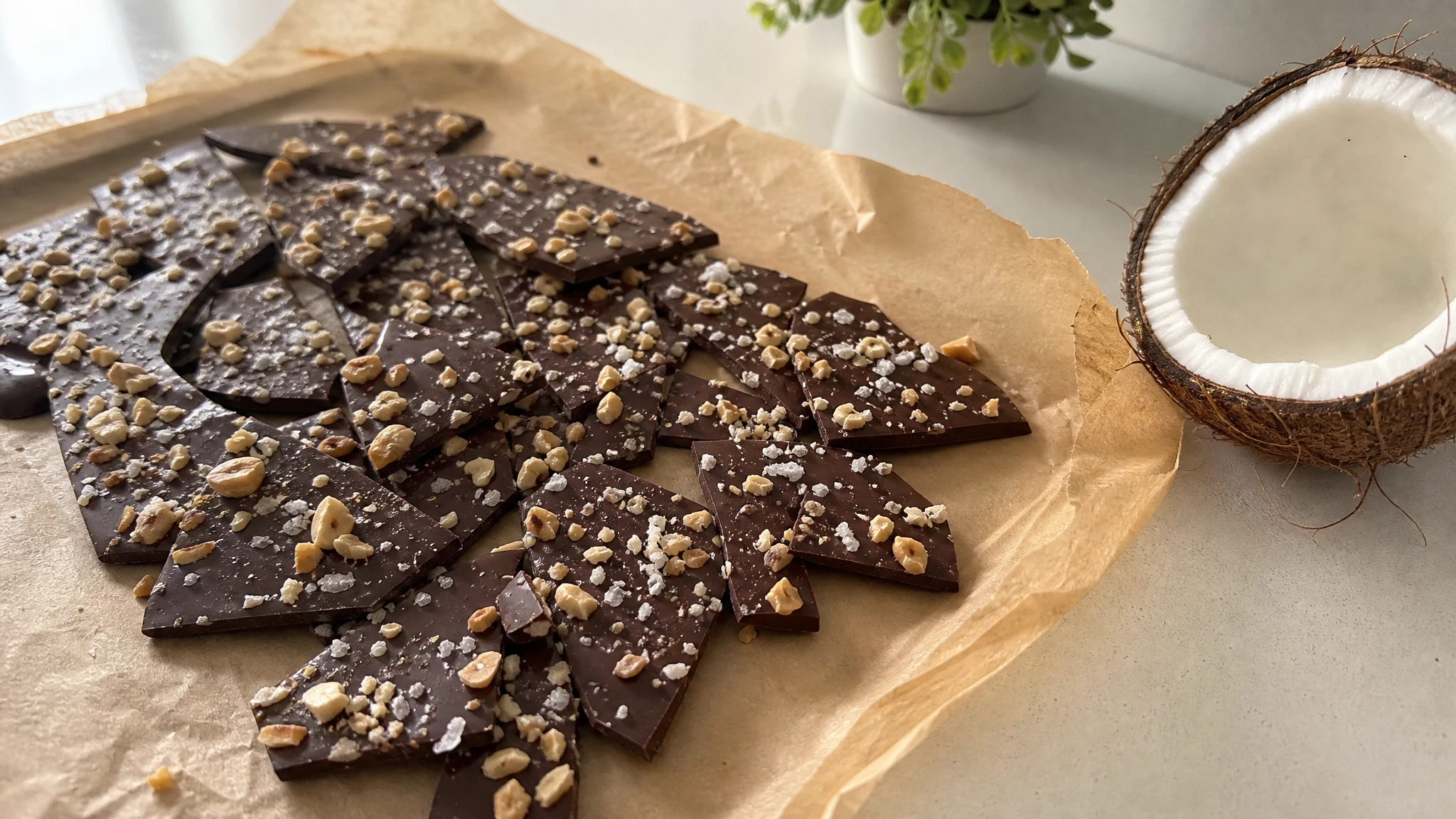
Chocolate bark is the friendliest candy there is: melt, spread, scatter, chill, break. A spoonful of coconut oil is what makes the shortcut work, thinning melted chocolate so it spreads into a smooth, even sheet without any tempering. The one thing to plan around is the amount, because coconut oil is a soft fat and the quantity decides whether your bark snaps or sags.

Fractionated Coconut Oil
Our own Fractionated Coconut Oil, in sizes from 0.5 oz to bulk.
From $9.99
Shop Now →Why a little coconut oil helps and a lot changes the candy
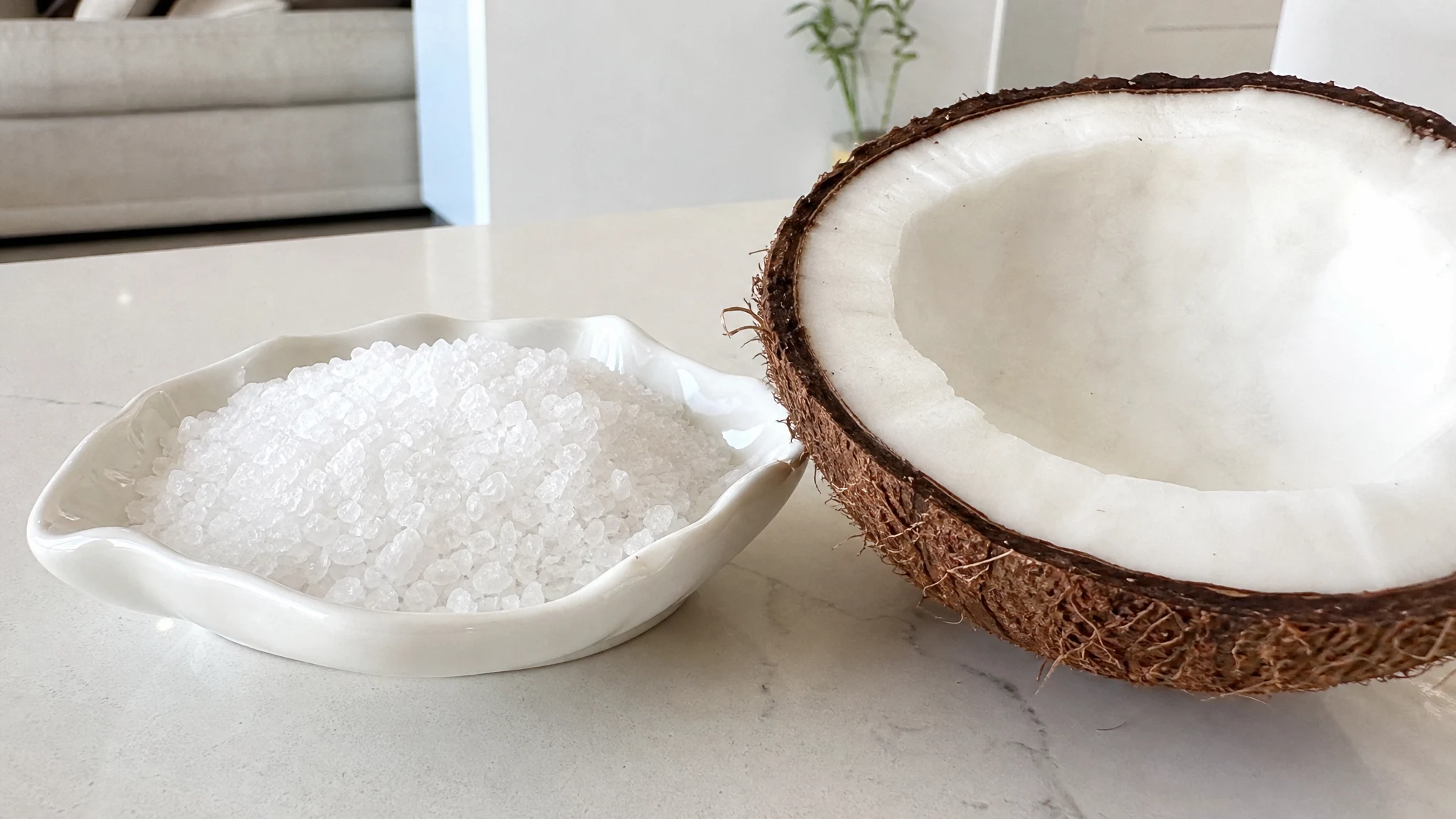
Real chocolate gets its snap from cocoa butter that has been tempered into a stable crystal form. Chocolate Alchemy, a chocolate-making supplier, explains that coconut oil melts at about 76 F, that chocolate should be solid anywhere under 79 F, and that coconut oil pulls the overall melting point down. It also describes coconut oil as a lauric fat that is not compatible with cocoa butter, although it can be mixed in at a low percentage, and notes that lauric fat can, under the right moisture and temperature, give a soapy note when cocoa's lipase enzyme is present (Ask the Alchemist #120). That is one practitioner's explanation rather than a peer-reviewed study, so we read it as a good reason to keep the amount modest. The melting-point logic is easy to see in our own virgin listing, which solidifies below about seventy-six degrees Fahrenheit.
The practical takeaway is that a little coconut oil is a convenience, and a lot makes a different candy. Bark with plenty of it will be soft above about 76 F, will not have the gloss and snap of tempered chocolate, and is happiest living in the fridge.
A starting ratio, worked out by weight
The source gives no number, only the advice to keep the percentage low, so this ratio is our own starting point: up to 1 tablespoon (13.6 g) of coconut oil per 100 g of chocolate, about 12% by weight. Go lower if the bark softens too easily at room temperature, and higher only if your melted chocolate is too thick to spread.
- Chop 200 g of the chocolate you like and measure up to 2 tablespoons (27.2 g) of coconut oil.
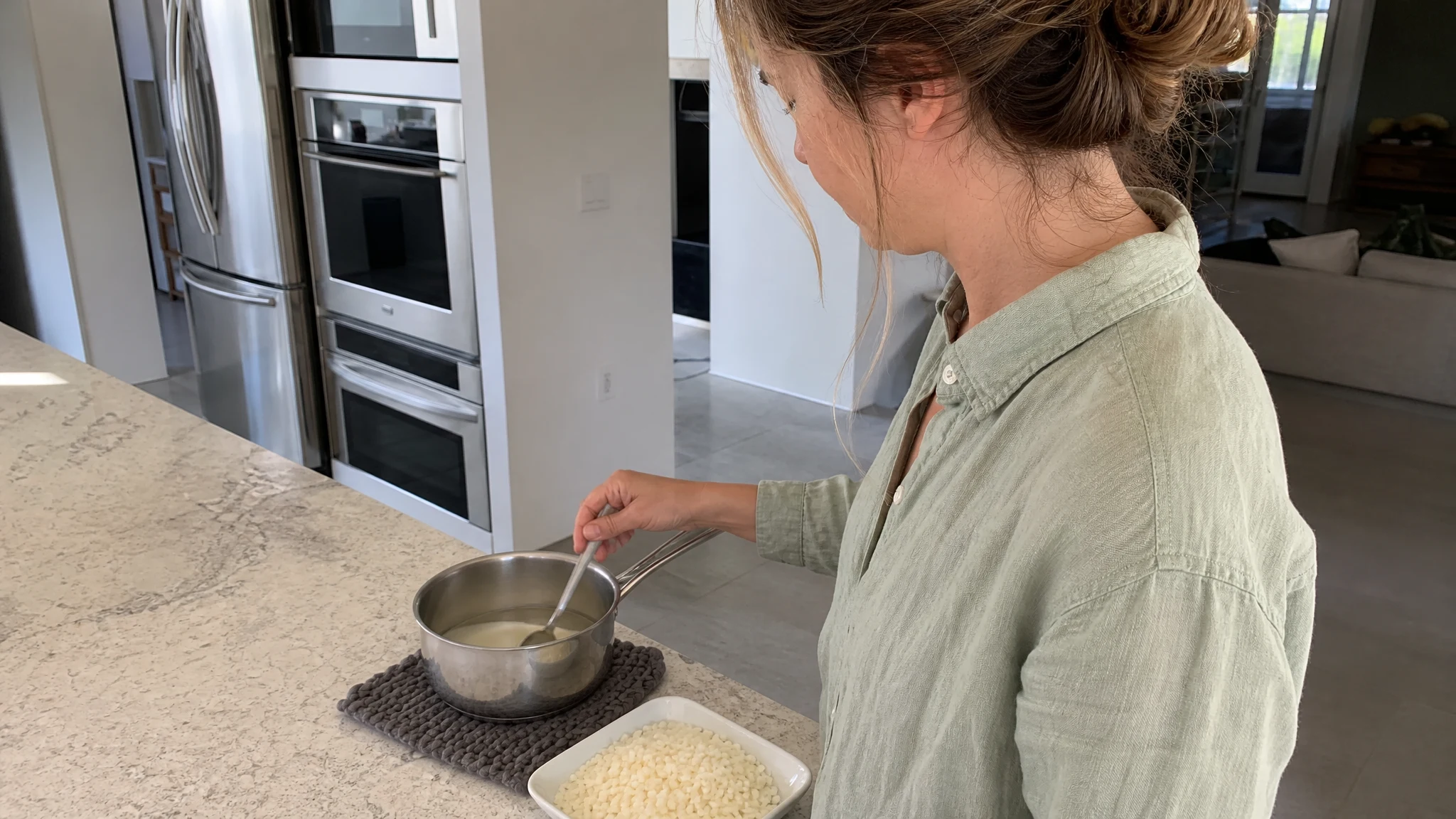
- Melt gently, stirring until smooth. Keep every drop of water away from the bowl, since a little can make chocolate seize.
- Spread onto a lined tray to about 5 mm.
- Press nuts and a light scatter of sea salt into the surface while it is wet.
- Chill until firm, break into pieces, and keep cold until serving.
Toppings are pure taste. Toasted almonds, pistachios or hazelnuts all suit dark chocolate, and dried fruit or crushed freeze-dried berries make a brighter milk or white chocolate bark. Whether the bark fits a keto plan depends on your chocolate and sweetener, so read the label, and see our keto article for how that diet treats coconut oil.
Which coconut oil to use
This choice is about flavor. Virgin coconut oil carries a coconut aroma that flatters dark chocolate and toasted nuts, while refined is sold as the neutral option and lets the nuts lead in a milk chocolate bark. Both are sold under varying labels, so read the maker's description of how each was made. Our virgin versus refined article compares them, and keep the bowl warm rather than hot, since chocolate needs far less heat than frying does.
A word about our own bottles: our fractionated and virgin unrefined coconut oils are sold for external cosmetic use only, so for bark you want an oil labeled for food from the grocery aisle. Ours are for skin, hair and blending, and you will find them on the fractionated page when that is the project.
What the oil adds, in numbers
USDA FoodData Central lists coconut oil at 82.475 g of saturated fat per 100 g, and a tablespoon at 13.6 g (USDA, SR Legacy). A tablespoon therefore carries about 11.2 g of saturated fat, so the 2 tablespoons in the 200 g plan contribute about 22.4 g, or roughly 1.1 g per piece if you cut 20. The chocolate and any dairy in it add their own, depending on the brand.
For scale, the Dietary Guidelines cap saturated fat at 10% of calories, about 22 g on a 2,000 calorie diet (Harvard Nutrition Source, 2026). Bark is a treat, so a piece or two fits easily into that picture, and if you are managing cholesterol, a physician or dietitian is the right person to ask. Our saturated fat article goes into the wider debate. Thinner spreading and smaller pieces stretch a batch further, and the nuts add their own fat and calories on top.
A little patience pays off at the toppings stage. Press the nuts in gently while the chocolate is still glossy, then give the tray a light tap on the counter so the surface settles flat. When you break the sheet, listen for a clean crack; a soft bend tells you the next batch wants a touch less oil.
Keeping bark crisp
Serve it on a chilled plate and refill from the fridge, because a warm kitchen softens it in minutes. If a batch never firms up or sweats a greasy film, use less oil next time. And if you want a glossy snap, start with chocolate that is already tempered and skip the oil entirely.
Allergens and guests
Nut bark is a classic source of allergen surprises. The FDA lists the major food allergens as milk, egg, fish, crustacean shellfish, tree nuts, wheat, peanuts, soybeans and sesame, and chocolate often contains milk or soy, so tell guests what is in it. The FDA's January 2025 guidance says it no longer considers coconut a major food allergen, which is a labeling rule only. If someone has reacted to coconut, an allergist should advise them (FDA allergen FAQ).
When the bark tray is empty and you want more sweet treats built on the same weigh-it-first habit, try our granola bars and energy balls.
Fractionated Coconut Oil
Fractionated Coconut Oil from our own shop, in sizes from 0.5 oz to bulk.
From $9.99
Shop Now →Sources & Further Reading
- Chocolate Alchemy. Ask the Alchemist #120 (hobbyist supplier, not peer reviewed). chocolatealchemy.com
- USDA, SR Legacy. Oil, coconut (FDC ID 171412). api.nal.usda.gov/fdc/v1/food/171412
- Harvard T.H. Chan School of Public Health, Nutrition Source, 9 January 2026. Dietary Guidelines for Americans 2025-2030. nutritionsource.hsph.harvard.edu
- FDA, page current as of 10/29/2026. Frequently asked questions: food allergen labeling guidance (5th edition, 6 January 2025). fda.gov