Homemade Dog Biscuits With Coconut Oil: A Simple Recipe
One tablespoon of coconut oil sounds like a lot until you divide it by two dozen biscuits. Then it is about half a gram each, just enough to help the oats bind and give the crust a little richness. That small number is the reason homemade dog biscuits are such a gentle way to use the oil, and it is also why the rest of the ingredient list deserves more of your attention than the oil does.
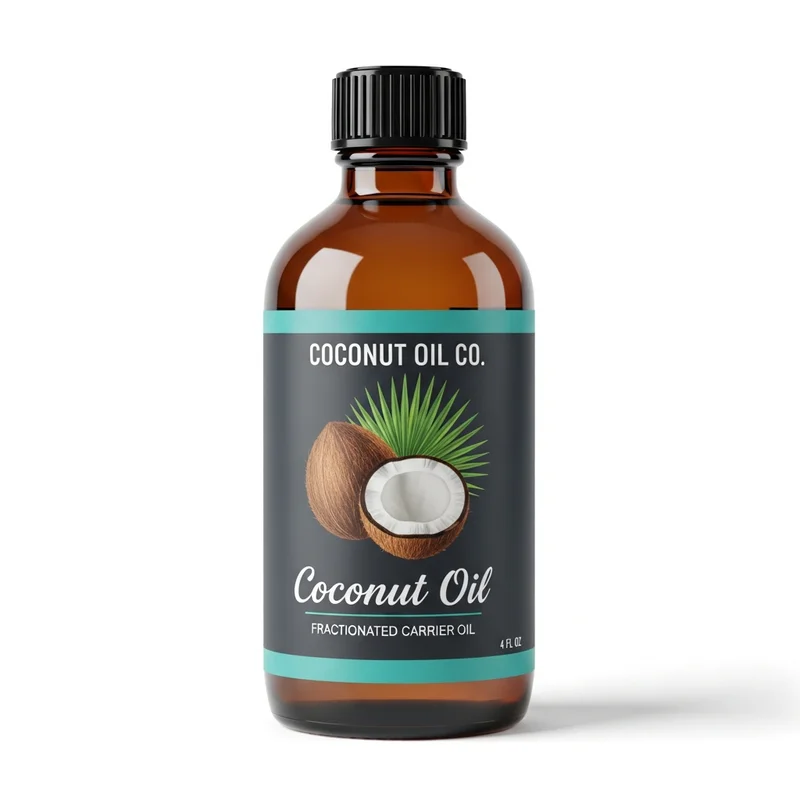
Fractionated Coconut Oil
Our own Fractionated Coconut Oil, in sizes from 0.5 oz to bulk.
From $9.99
Shop Now →Which jar goes in the dough
We sell fractionated coconut oil and a virgin unrefined listing, both for skin, hair and blending, and both for external cosmetic use only. For anything your dog will eat, reach for a coconut oil labeled for food and keep ours for the bathroom shelf. If you are choosing between virgin and refined for the kitchen, our virgin versus refined breakdown explains how they differ.

Count the oil per biscuit
Most recipes tell you how much oil goes into the bowl and stop there. The useful number is how much lands in each piece, and it is simple division. USDA data lists a tablespoon of coconut oil at about 13.6 g and 892 kcal per 100 g (USDA FoodData Central), which works out to roughly 121 kcal per tablespoon.
| Oil in the batch | Pieces | Oil per piece | Energy from the oil |
|---|---|---|---|
| 1 teaspoon (about 4.5 g) | 24 | 0.2 g | about 2 kcal |
| 1 tablespoon (about 13.6 g) | 24 | 0.6 g | about 5 kcal |
| 1 tablespoon (about 13.6 g) | 12 | 1.1 g | about 10 kcal |
| 2 tablespoons (about 27 g) | 12 | 2.3 g | about 20 kcal |
Double the oil without doubling the pieces and every biscuit doubles. Cutting the same dough into bigger biscuits does the same thing, so a dozen large ones carry twice the oil of two dozen small ones.
Treat budgets matter because treats are meant to be a small slice of the day. Cornell's Riney Canine Health Center reports that many veterinary nutritionists aim for treats at about 10% of daily calories, with one of its experts allowing up to 15% (Cornell University College of Veterinary Medicine). What that means in biscuits depends on the dog's size, weight and diet, so your veterinarian is the right person to set it.
Where the real care goes
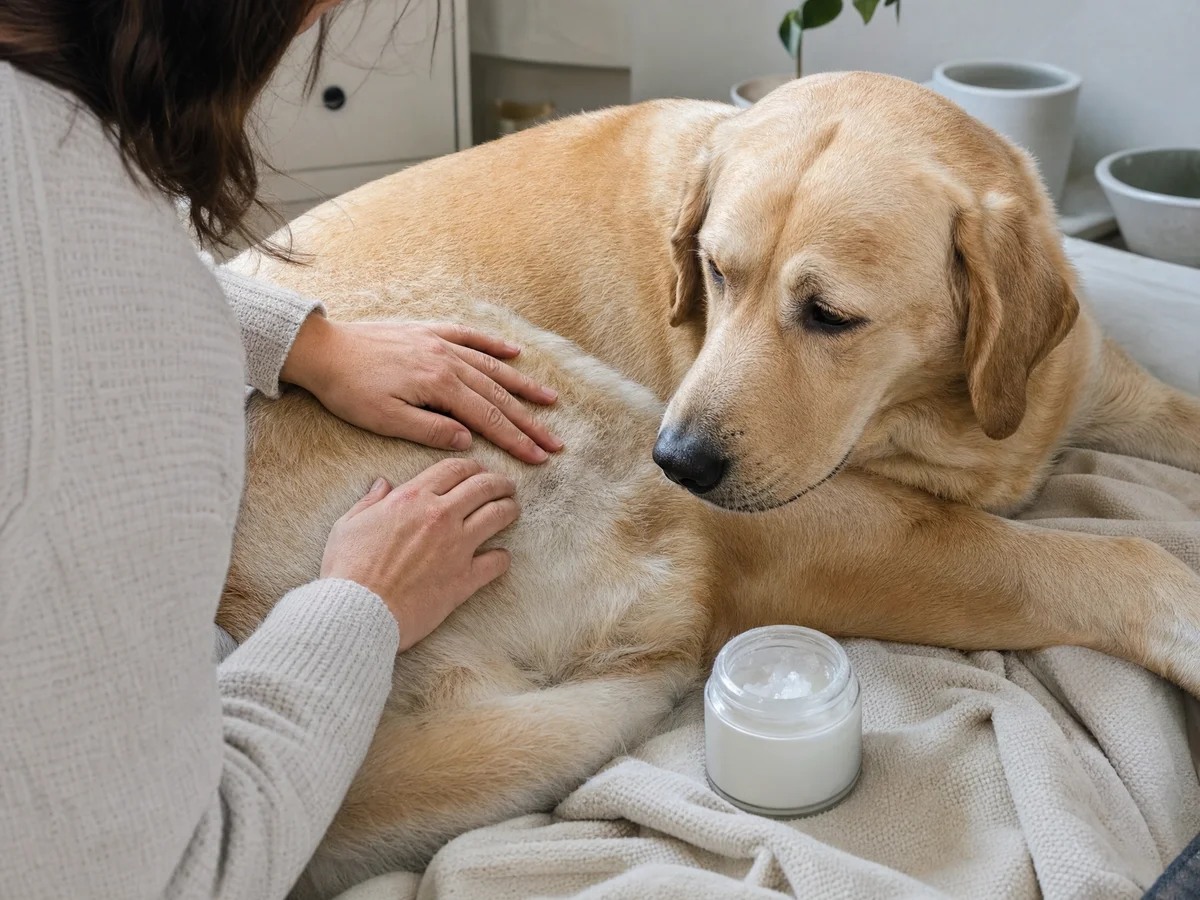
Coconut is the easygoing member of the cast. The ASPCA says coconut and coconut-based products are not likely to cause serious harm in small amounts, though fresh flesh and milk contain oils that can upset a stomach. The ingredients people stir in beside it are what to read carefully.
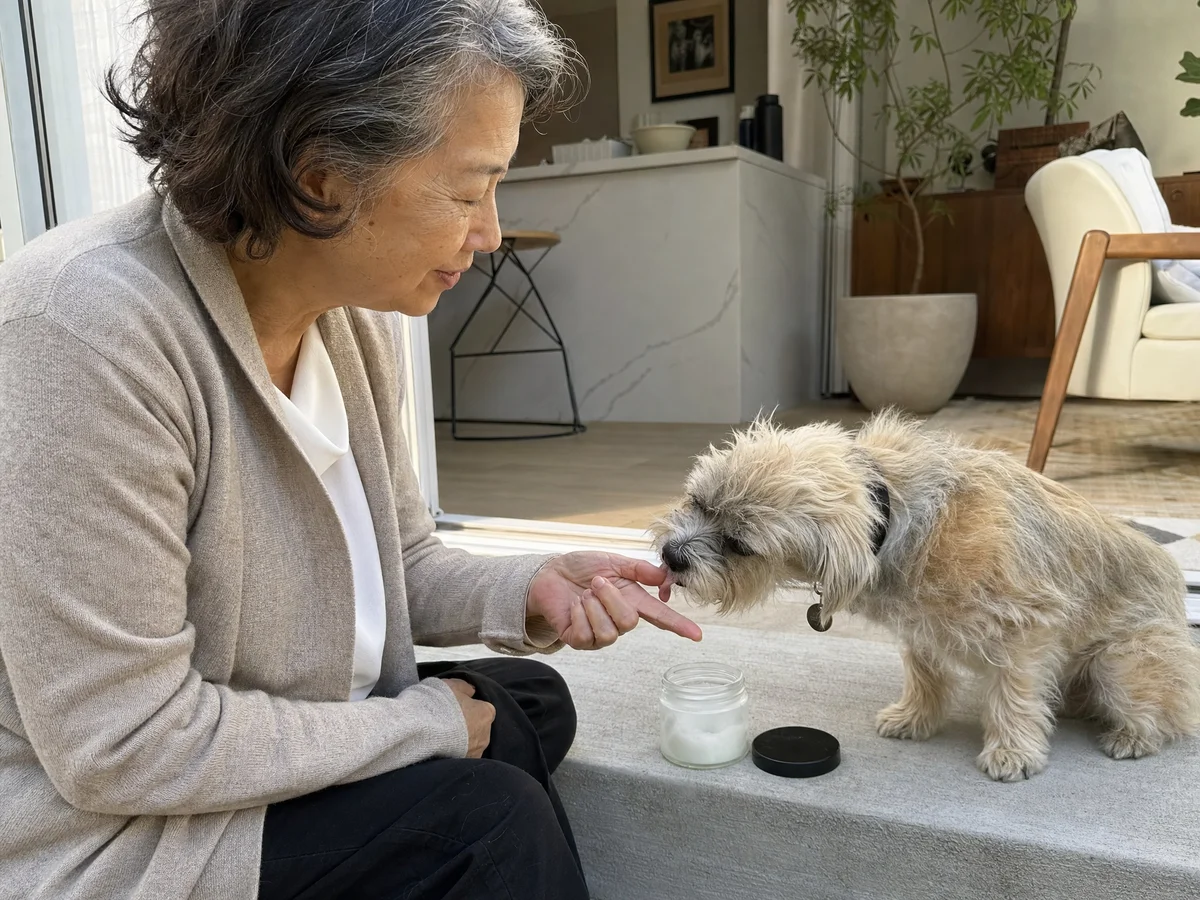
Peanut butter is the classic binder, and the label is everything. The FDA's consumer update on xylitol lists some peanut and nut butters among products that may contain it. In dogs, xylitol is absorbed quickly and can cause a sharp insulin release and a fast drop in blood sugar, sometimes within 10 to 60 minutes, with other serious effects up to 12 to 24 hours later (FDA). A jar that lists only peanuts, or peanuts and salt, keeps things simple.
Human cookie add-ins are the next thing to leave out. The ASPCA says the darker the chocolate, the greater the toxicity risk, and it lists macadamia nuts as able to cause weakness, tremors and vomiting. If you are adapting a people recipe, check it against those two lines first.
Fat in general gets a little more nuance than the old kitchen rule. The ASPCA notes that fatty foods can bring on vomiting and diarrhea and, in some pets, pancreatitis. A 2026 narrative review in the Journal of the American Veterinary Medical Association concluded that recent studies have not confirmed a consistent link between dietary fat and the disease, though several of its authors work with pet food companies (Yamka et al., 2026). The sensible reading is that a dog with a pancreatitis history, or one on a prescription diet, gets any new treat cleared first.
What the oil is doing in there
Mostly it is binder and flavor. The dog studies people quote for coconut-type fats used medium-chain triglyceride supplements at a much bigger scale. In one randomized crossover trial, 28 dogs with epilepsy received an MCT supplement providing 9% of their metabolic energy for three months (Berk et al., 2020). A biscuit supplies a few kilocalories, so nothing from that trial carries over to a treat. Our MCT versus coconut oil comparison explains why those are different oils, and our dog guide covers the wider claims. Let the oil make the dough bake nicely and let the biscuit be a biscuit.
A simple oat and peanut butter biscuit
This formulation is built from the arithmetic above and uses no more than it needs.
- 1 cup rolled oats (about 90 g), blitzed in a blender for smaller crumbs if you like
- 1/2 cup peanut butter with no xylitol on the label
- 1 tablespoon food-labeled coconut oil, melted
- About 1/4 cup water, added a spoonful at a time until the dough holds together
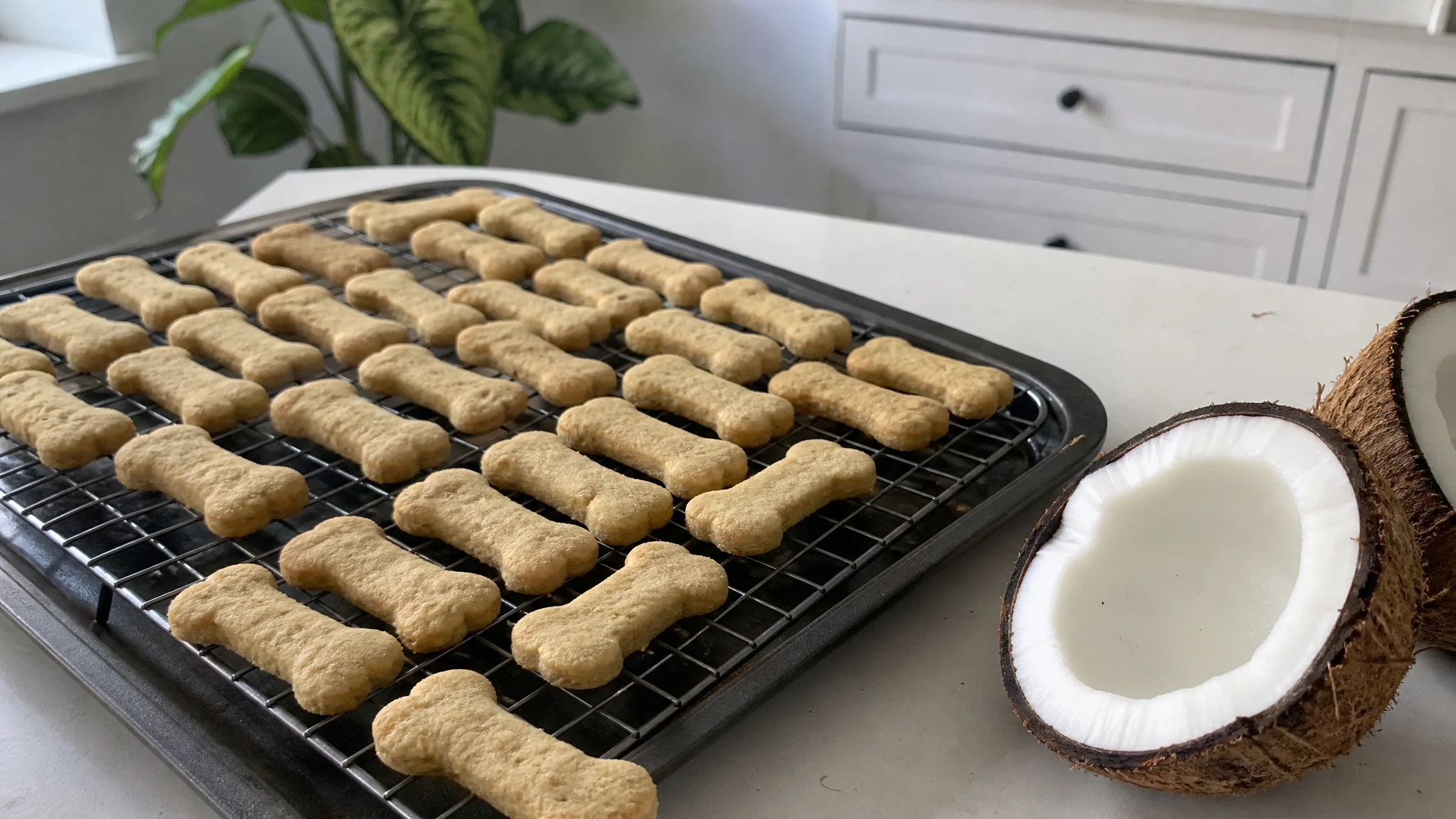
Roll the dough to about 1 cm, cut it into 24 pieces and bake in a moderate oven until the biscuits feel firm and dry outside. Ovens and thicknesses vary, so go by feel and not by the clock. Each piece carries about 0.6 g of coconut oil plus whatever fat the peanut butter brings. Cool them completely, keep them somewhere cool, and bin a batch that smells off.
Biscuits are a lovely rainy-afternoon project. Cut them small, because a small treat feels like a reward to a dog and takes less out of the daily food allowance. Let the tray cool completely before you taste-test the smell; a good biscuit smells of toasted oats and peanut butter, not oil.
Check with your vet first if
Your dog has had pancreatitis, is overweight, eats a prescription diet or takes seizure medication. If your dog's mouth is what sent you searching for coconut oil in the first place, read what the sources say about coconut oil and dog teeth before you buy anything.
For everyone else, the plan is easy: a food-grade jar, a peanut butter label read twice, and one division problem before the oven goes on.
Fractionated Coconut Oil
Fractionated Coconut Oil from our own shop, in sizes from 0.5 oz to bulk.
From $9.99
Shop Now →Sources & Further Reading
- USDA, 2019. FoodData Central: Oil, coconut (171412). fdc.nal.usda.gov/171412
- Cornell University College of Veterinary Medicine, Riney Canine Health Center. Re-evaluating your dog's diet. vet.cornell.edu
- ASPCA, undated. People foods to avoid feeding your pets. aspca.org
- FDA, 2025. Paws off xylitol; it's dangerous for dogs (content current as of 17 Dec 2025). fda.gov
- Yamka R et al., 2026. High fat, high risk? Evaluating the strength of evidence linking dietary fat and pancreatitis in dogs. J Am Vet Med Assoc. PubMed 41707322
- Berk BA et al., 2020. A multicenter randomized controlled trial of medium-chain triglyceride dietary supplementation on epilepsy in dogs. J Vet Intern Med 34(3):1248. PubMed 32293065