Coconut Oil SPF: Where the Famous Number 8 Came From
Somewhere along the way, "coconut oil has an SPF of about 8" became one of the most repeated lines in natural skin care. It is a fun one to trace, because the number is real and the story behind it is more interesting than the myth. It came from a quick laboratory screen, and it grew a life of its own once it left the lab. We love coconut oil, and we sell it, so we would like you to have the full picture before it goes anywhere near a beach bag.

Fractionated Coconut Oil
Our own Fractionated Coconut Oil, in sizes from 0.5 oz to bulk.
From $9.99
Shop Now →Where "around 8" came from
Most blog posts trace back to Kaur and Saraf (Pharmacognosy Research, 2010). They dissolved oils in a mix of 40% ethanol and 60% water, read how much light the solution absorbed between 290 and 320 nm, and turned that into an SPF with the Mansur equation. Coconut oil came out "around 8," level with olive oil, and the fixed oils as a group landed between 2 and 8.
Three details travel with that figure. First, it is an in vitro screening number, which the authors describe as a supplement to testing on skin during product development, not a replacement. Second, 290 to 320 nm is the UVB band, so UVA (320 to 400 nm) was not measured, even though the authors note a sunscreen should absorb it too. Third, the oils were diluted in ethanol, which is not how anyone wears an oil. It is a good paper for what it set out to do, and it simply was not built to tell you how a bottle of oil behaves on a sunny afternoon.
What a closer look found
A later team set up a sturdier test. Acsova and colleagues (Photochemical and Photobiological Sciences, 2021) looked at 14 virgin vegetable oils, including the five most promoted ones (carrot seed, coconut, raspberry seed, rosehip seed and wheat germ), alongside six commercial sunscreen oils. One lab used the Mansur method and another used the ISO in vivo method on skin. For the five promoted oils, the Mansur method gave 0.0 to 0.4, and on skin they scored 1.2 to 2.8. The commercial sunscreen oils behaved as expected, with in vitro to in vivo ratios of about 0.94 to 1.14, which the authors take as a sign the testing was sound.
Their conclusion is the part to remember: the higher values reported for these oils in earlier papers came from work that did not strictly follow Mansur's original method, and most vegetable oils give little or no meaningful UVB protection. The range covers the group of five oils rather than coconut alone, so we do not quote a single "true" figure for coconut. The order of magnitude is the takeaway, single digits at best and closer to 1 to 3 on skin. A 2026 laboratory study by Popiol-Adamska and colleagues in the same journal looked at eleven plant oils, coconut among them, plus nine "natural" cosmetic products, found negligible SPF and UVA protection in most of the oils, and concluded plant oils cannot replace conventional UV filters.
What a sunscreen is asked to do
The FDA's sunscreen page (current as of 16 October 2026) recommends broad spectrum products with an SPF of 15 or higher, explains that broad spectrum means protection against both UVA and UVB, and notes that sunscreens in the United States are regulated as drugs. No sunscreen is fully waterproof, so "water resistant" labels must say whether protection lasts 40 or 80 minutes. The American Academy of Dermatology (sunscreen page, updated 11 February 2025) asks for broad-spectrum, water-resistant and SPF 30 or higher, reapplied about every two hours outdoors and after swimming or sweating.
Line the figures up. Coconut oil sits near 1 to 3 in the sturdier test, with no demonstrated UVA coverage and no regulatory status as a sunscreen, while the FDA and AAD ask for a floor of 15 and 30 with UVA coverage. Reasoning from that gap, a thicker layer of oil does not close it, because what a sunscreen has and an oil lacks is the UV filter itself.
Why the idea has such staying power
This is our reading, not a survey. The claim comes with a real number attached, and the number was real for the method used. Oil also leaves a visible film, and a film feels like protection. Sunburn is the only feedback most of us get, and it arrives hours later. A screening result simply escaped its context, which is an easy thing to forgive.
What works for the beach, and what coconut oil is lovely for
Follow the dermatologists. The AAD's application page (updated 15 August 2025) says most adults need about 1 ounce, roughly a shot glass, to cover exposed skin and at least 1 teaspoon for the face, applied about 15 minutes before going outside and reapplied every two hours and right after swimming or sweating. It also suggests sunscreen on a thinning scalp, or a wide-brimmed hat. The FDA adds that sunscreen works best alongside other measures, so shade and clothing belong in the plan.
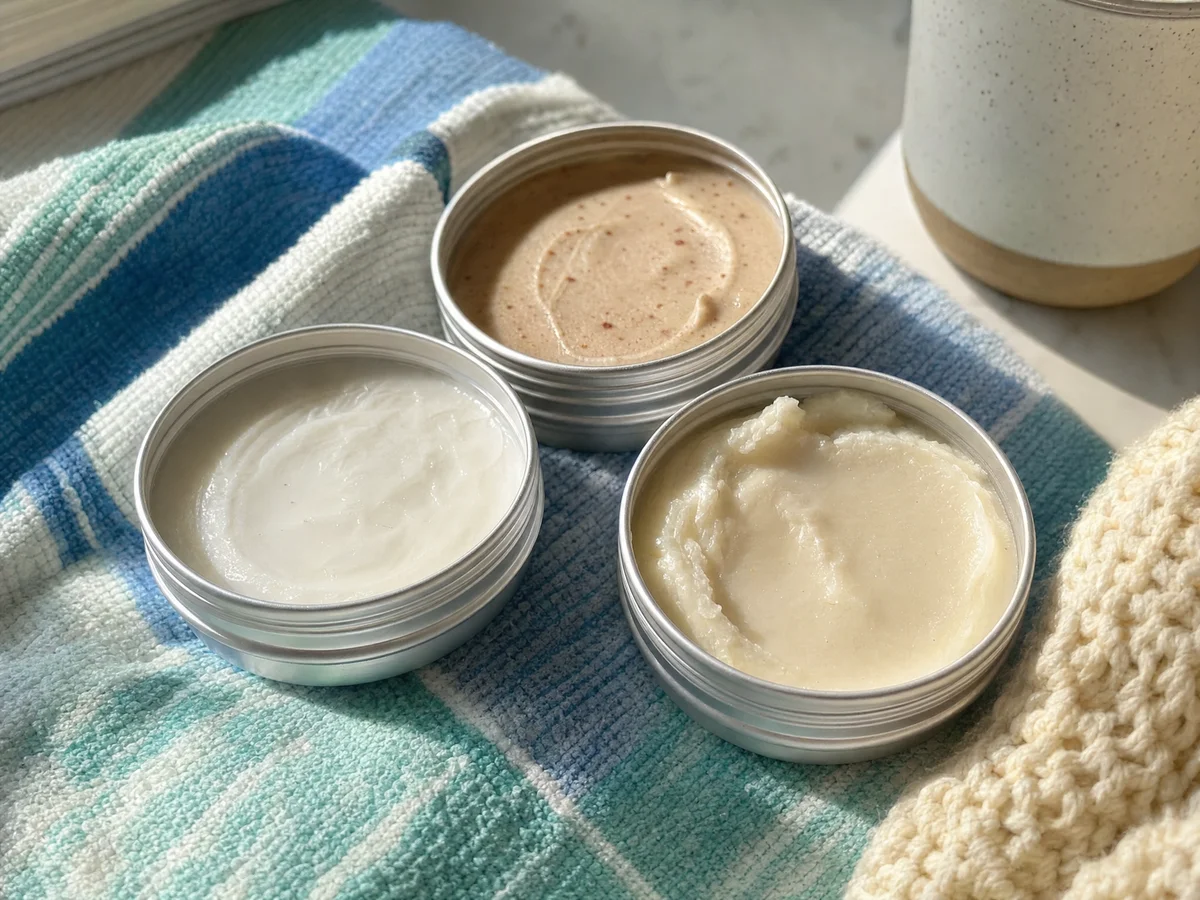
Coconut oil has its own job, and it is a nice one: a soft, fragrant finishing oil for after the day outdoors. Our summer skin care article shows how it fits, and what the AAD advises for sunburn explains why oil is not the answer there. The sources above do not test an oil layered over a sunscreen, so if you use a prescription product or have a skin condition, a dermatologist or pharmacist can say what suits you.
Where our oils fit
We sell fractionated coconut oil and a virgin unrefined listing, neat, for external cosmetic use, and we make no sun protection claim for either. They are carrier oils, the sort of thing that goes into a body oil or a blend for later, not into the beach bag. Kaur and Saraf tied coconut and olive at around 8, so the olive oil comparison is a better place to weigh the two as moisturizers. We also ask anyone with a tree nut or coconut allergy to check with a professional first, and our allergy guide goes into that. For the wider picture, start with coconut oil on skin.
Fractionated Coconut Oil
Fractionated Coconut Oil from our own shop, in sizes from 0.5 oz to bulk.
From $9.99
Shop Now →Sources & Further Reading
- Kaur CD, Saraf S, 2010. In vitro sun protection factor determination of herbal oils used in cosmetics. Pharmacognosy Res 2(1):22-25. PMC3140123
- Acsova A et al., 2021. The real UVB photoprotective efficacy of vegetable oils: in vitro and in vivo studies. Photochem Photobiol Sci. PubMed 33721242
- Popiol-Adamska J et al., 2026. Natural photoprotection under scrutiny: an in vitro evaluation. Photochem Photobiol Sci. PubMed 42084842
- FDA. Sunscreen: How to Help Protect Your Skin from the Sun. fda.gov sunscreen
- American Academy of Dermatology, 2025. Sunscreen recommendations. aad.org/media/stats-sunscreen
- American Academy of Dermatology, 2025. How to apply sunscreen. aad.org how-to-apply-sunscreen