Coconut Oil for Winter Skin: Where It Goes in Layers
Cold air outside, dry heat inside, and long hot showers in between: winter is hard on skin. Coconut oil has a lovely place in a cold-weather routine, and that place is the last step. Think of it as the silky finish that goes over the hard-working moisturizer, the way a good coat goes over a sweater. Here is how we would layer it, from shower to bedtime.

Fractionated Coconut Oil
Our own Fractionated Coconut Oil, in sizes from 0.5 oz to bulk.
From $9.99
Shop Now →Start with what dermatologists reach for
The American Academy of Dermatology's dry skin advice is refreshingly simple. Keep baths and showers to five to ten minutes in warm water, pat skin dry rather than rubbing, and moisturize several times a day, especially while skin is still damp. Choose an ointment or cream over a lotion because they add more moisture, and look for products labeled fragrance-free. Its list of helpful ingredients includes jojoba oil, glycerin, hyaluronic acid, lanolin, mineral oil, petrolatum and shea butter (American Academy of Dermatology).
Coconut oil is not on that list, and that tells us how to use it. A plain oil is an emollient, which means it softens and smooths, but it carries no water and none of the water-attracting ingredients such as glycerin or hyaluronic acid that a cream has. From that it follows that an oil's best role is the top layer, spread over damp skin or over your cream to give the whole routine more staying power. That is our recommendation, and it comes from reasoning about what each layer does.
The layering order, step by step
A little goes a long way in any of these steps. Start with just a few drops warmed between your palms, press them over the skin, and add more only if you want it. A thin film feels silky and lets you get dressed straight away, while a heavy coat is better saved for bedtime.
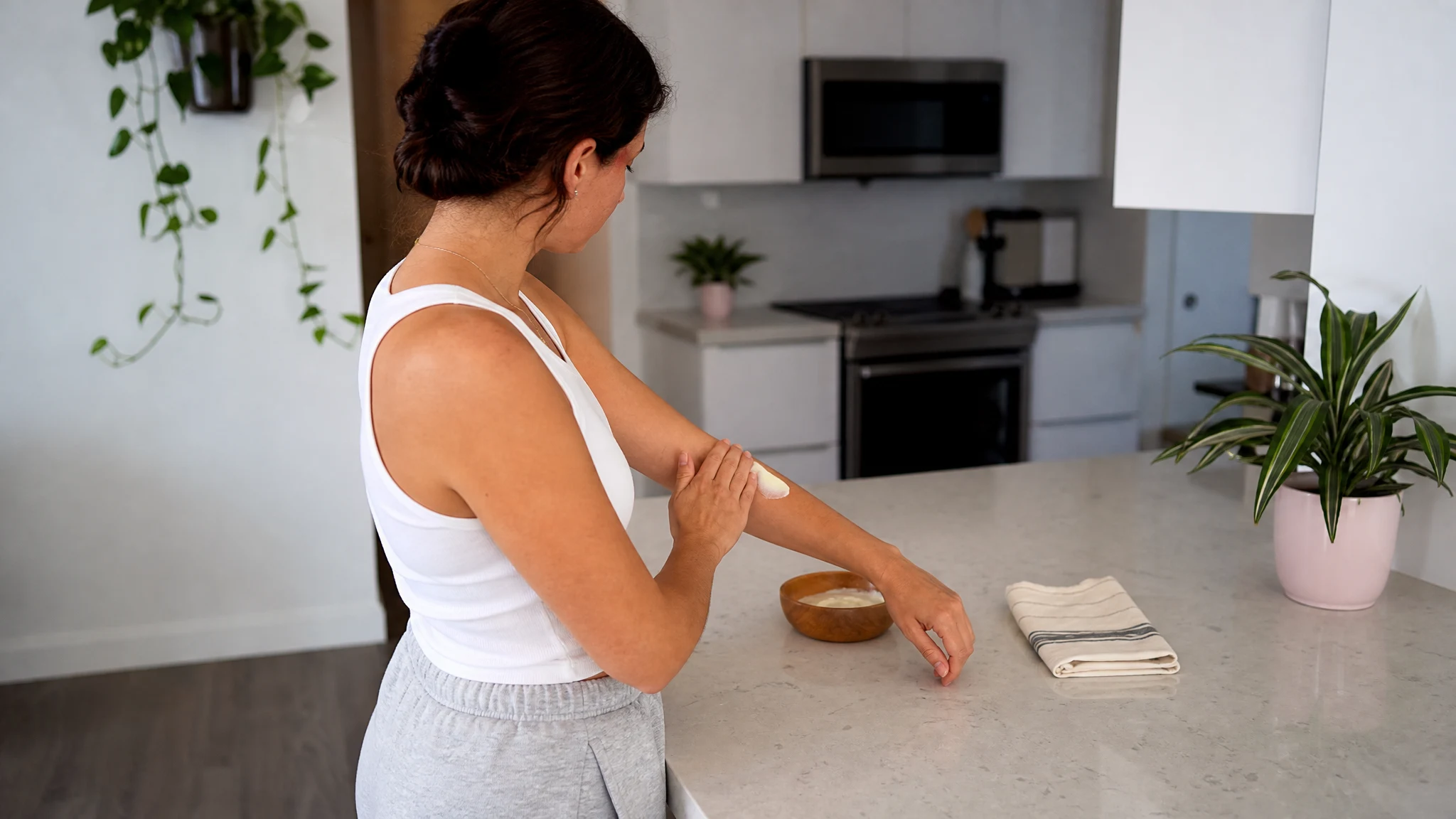
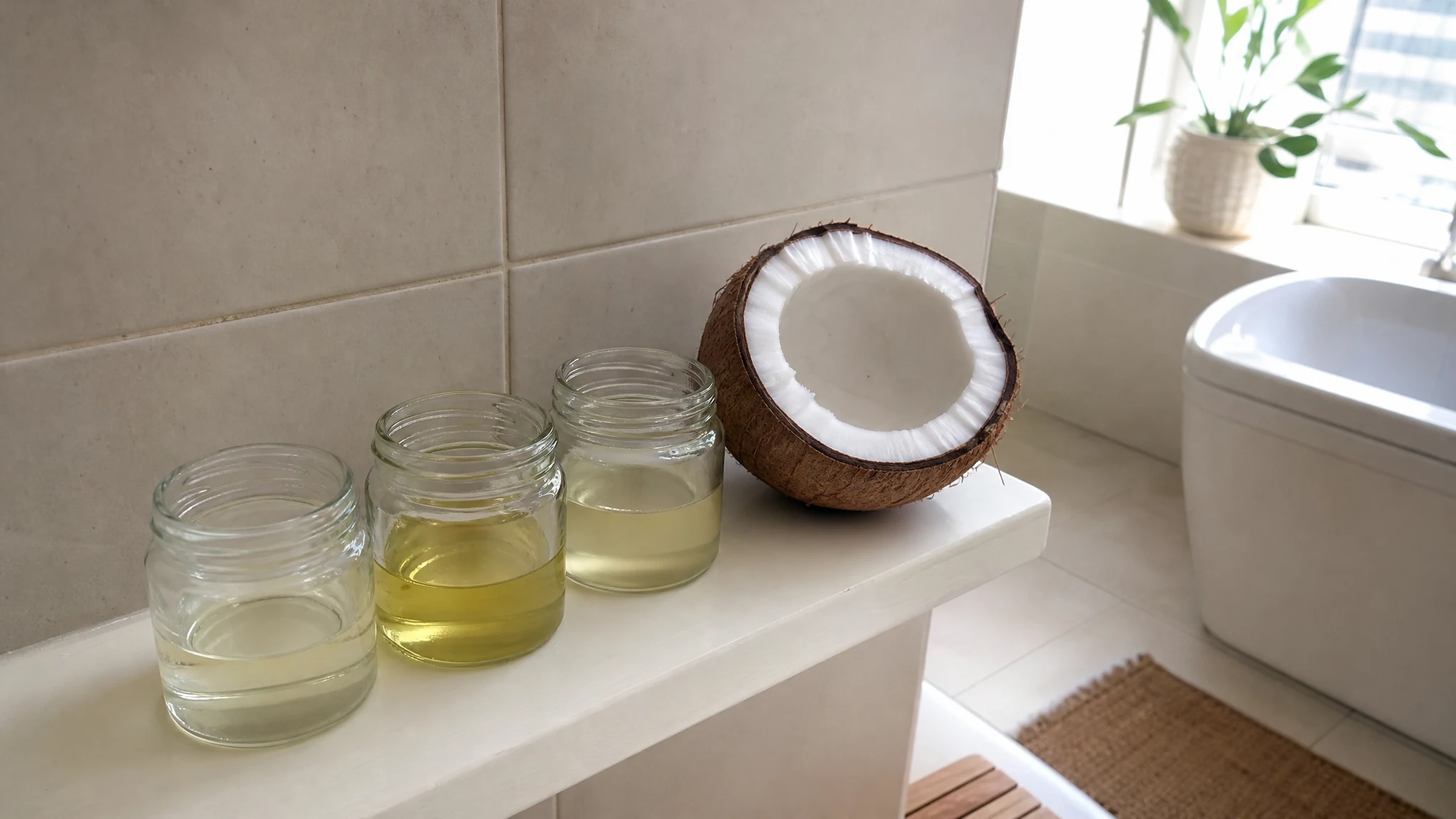
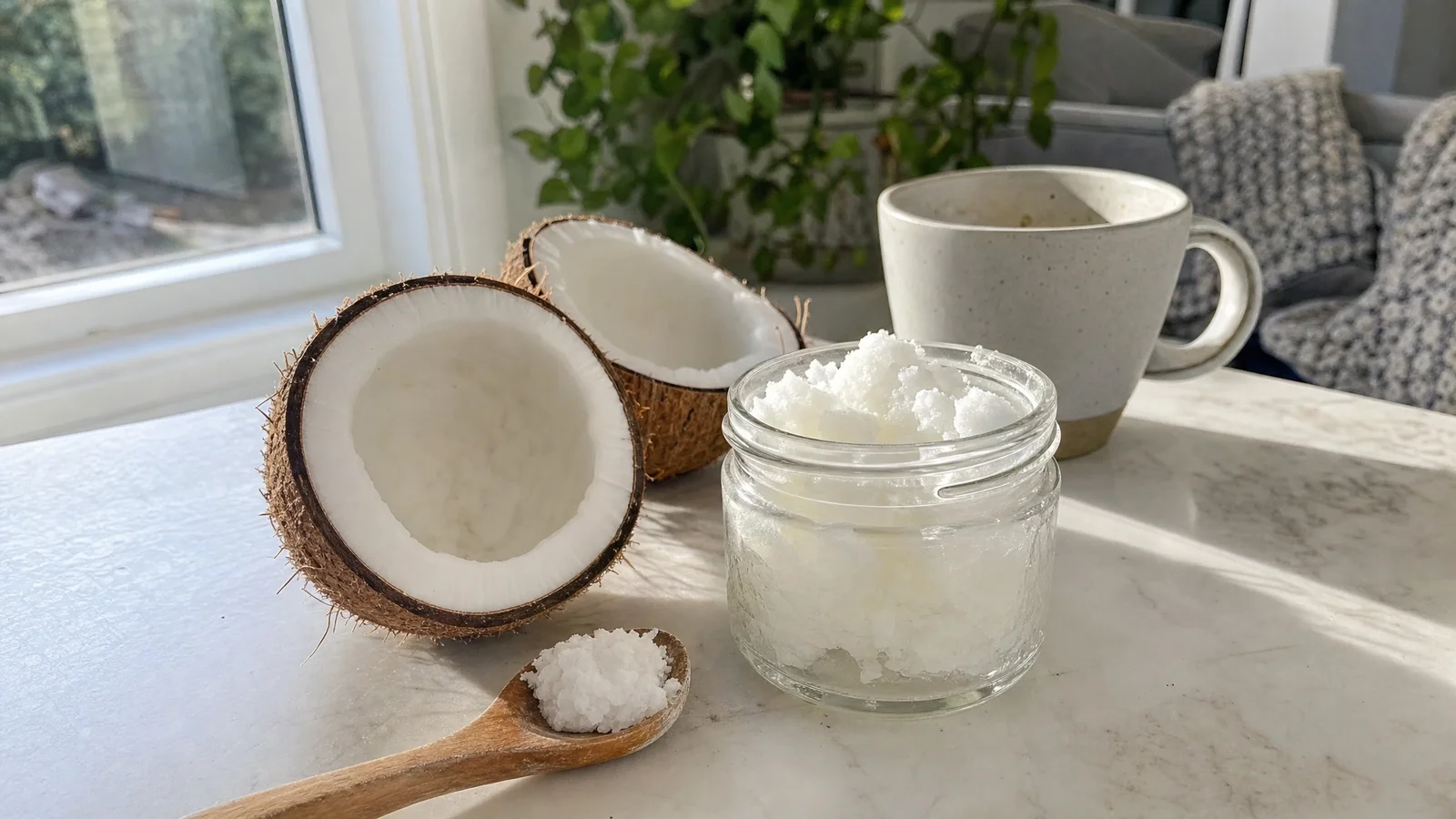
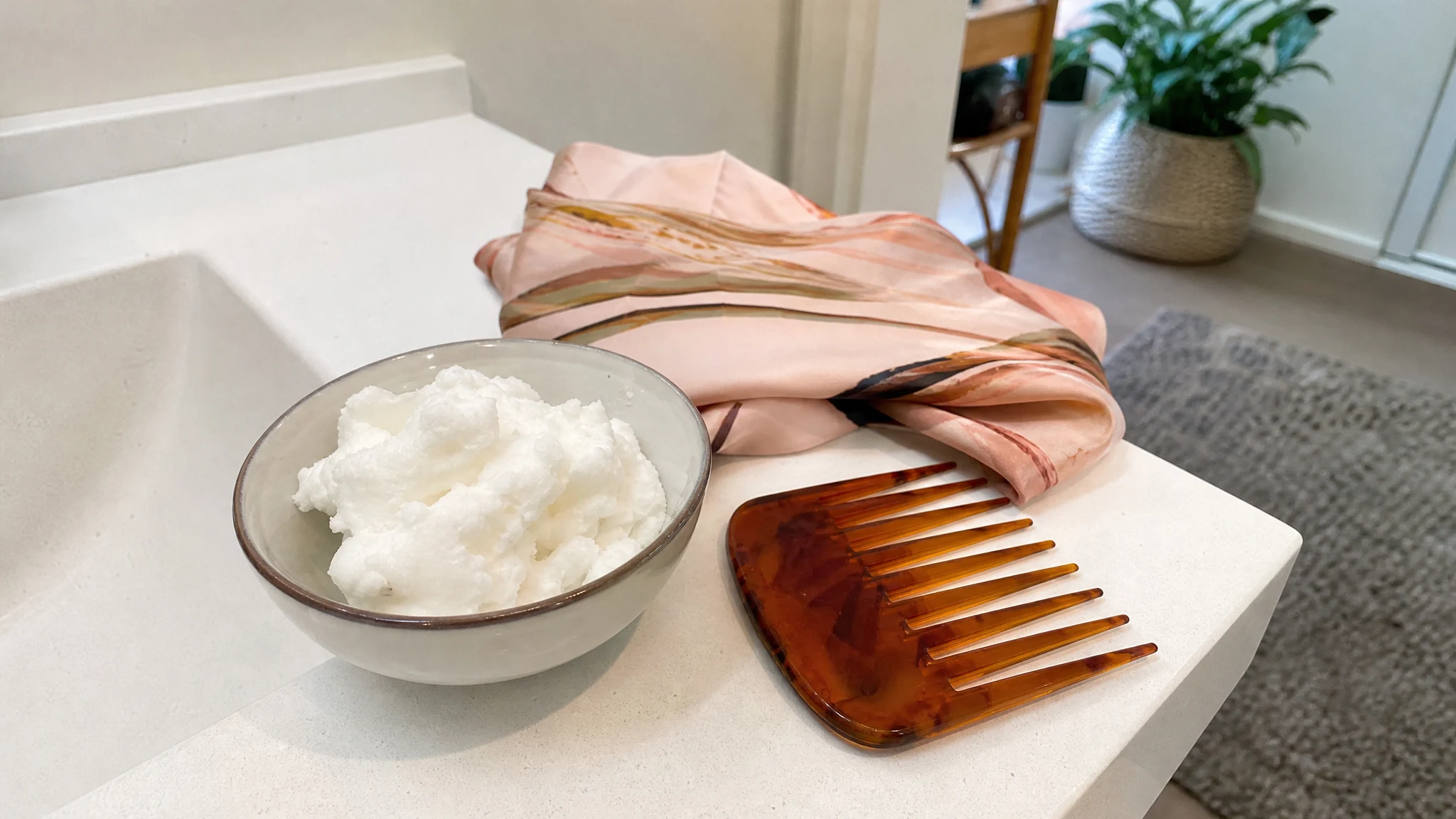
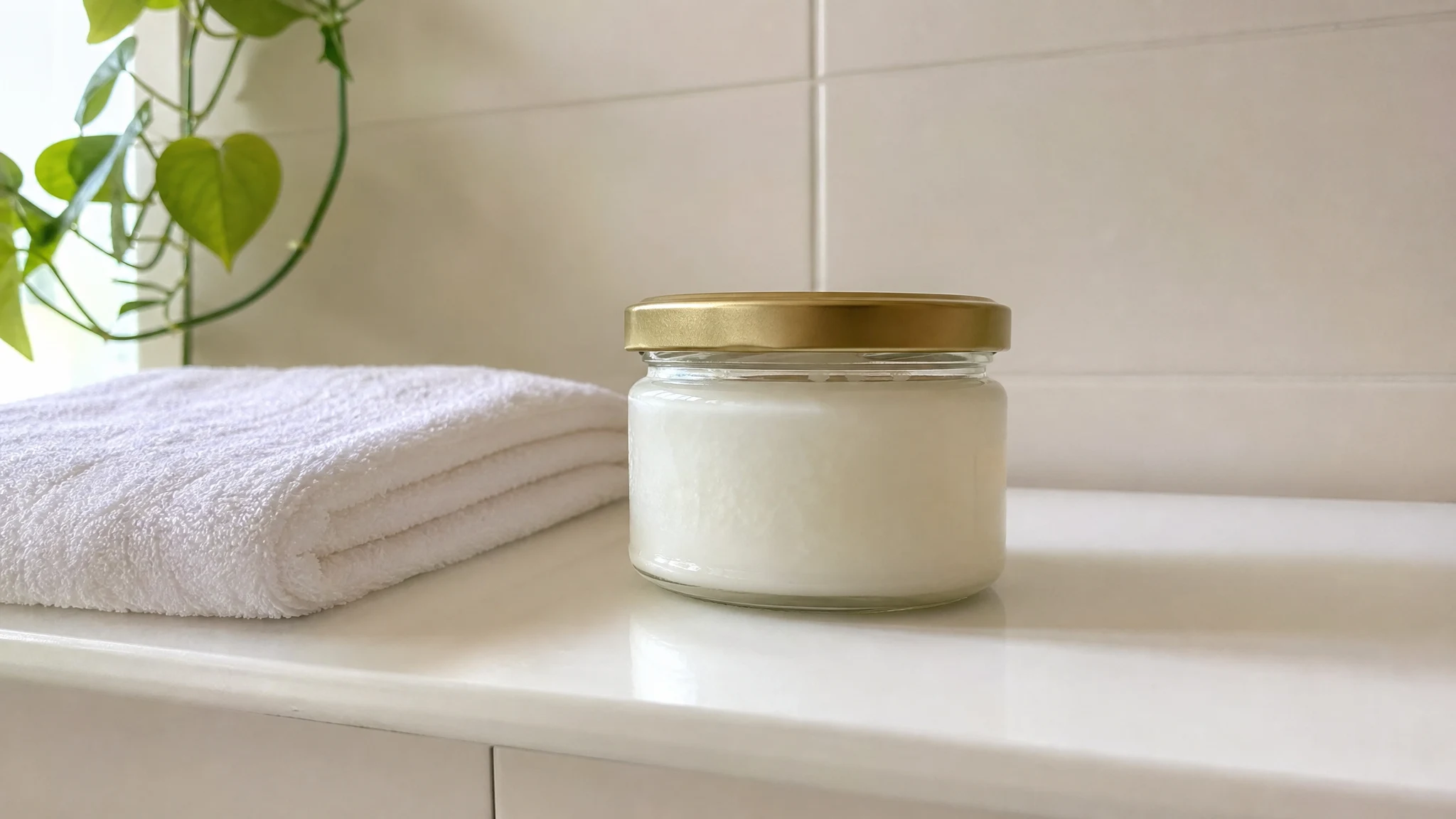
After the shower. This is where oil shines. Pat dry, leave skin a touch damp, and smooth on your fragrance-free cream or ointment. If you like the slip and shine of oil, add a thin film on top and give it a minute before you dress. For this step our fractionated coconut oil is the easy choice: it stays liquid at any temperature, so it still pours in a cold bathroom, and we describe it as fast-absorbing and virtually odorless. If you love the scent of coconut in winter, our virgin unrefined oil is firm in a cool room (it softens at about 76°F), so scoop a little and warm it between your palms first. This comparison of virgin and refined explains why the two feel so different.
Hands. The AAD suggests a non-greasy hand cream, reapplied after every wash, plus gloves for dishes and cold weather. Oil on its own is too slippery for daytime, since it ends up on your phone and your steering wheel. Overnight is its moment: cream first, a few drops of oil over it, and cotton gloves on. That pairing is our own idea, built from the AAD's hand advice.
Cuticles. One drop of oil, rubbed in after washing up, is about the easiest winter habit there is. If you would like a tidy applicator, this cuticle oil pen shows how to put one together.
Lips. The AAD points to lip balm or petroleum jelly, and suggests switching if a balm stings or tingles. A liquid oil tends to run off lips, so a solid balm suits better. Making your own appeals to some people, and the lip balm recipe gives a solid base. Lips that crack and bleed, or a sore that will not clear, deserve a clinician.
Face. Winter faces vary a great deal. You may have seen coconut oil rated as pore-clogging, but those ratings trace back to the rabbit ear test, which a 1982 review found had no reliable correlation with human experience (Frank, Journal of the American Academy of Dermatology, 1982). So no single number can decide it for you. If you want to try oil on your face, patch test a small area first (we suggest waiting a full 24 hours), keep it away from your eyes, and stop at the first sign of a breakout. Our coconut oil for face guide goes through it.
Bath. Oil poured straight into the tub leaves a slippery floor. Smoothing it on damp skin as you step out gives the same softness with no hazard.
Hair. Winter hair is a topic of its own, and our hair guide picks it up.
Do not forget the air
Much of winter dryness comes from the room, not the routine. The AAD recommends a humidifier, a portable one running in the bedroom overnight, cleaned regularly to prevent mold. An oil slows water loss from skin but cannot add moisture to the air, so the humidifier and the oil do different jobs and work well side by side.
When it is more than weather
Trials of coconut oil have mostly used virgin oil and have often looked at eczema, which is a medical question, so we leave that to our eczema and psoriasis article and to your clinician. If dryness lasts after these steps, the AAD says to see a board-certified dermatologist, because it can be linked to conditions such as atopic dermatitis, psoriasis or kidney disease. Itch that keeps you awake, cracked and bleeding skin, or patches that look infected are not jobs for an oil. Our oils are for external cosmetic use only, and anyone with a coconut allergy should check with a professional before using them.
To keep it simple: short warm showers, a fragrance-free cream, a thin layer of oil on top where you enjoy it, and a humidifier if the air is dry. For most winter days the fractionated oil is the lighter, more practical choice, and the virgin is there for the evenings you want a little coconut in the room. Our dry elbows and knees routine is a good next stop.
Fractionated Coconut Oil
Fractionated Coconut Oil from our own shop, in sizes from 0.5 oz to bulk.
From $9.99
Shop Now →Sources & Further Reading
- American Academy of Dermatology. Dermatologists' top tips for relieving dry skin. aad.org
- Frank SB, 1982. Is the rabbit ear model, in its present state, prophetic of acnegenicity? J Am Acad Dermatol 6(3):373-377. em-consulte.com/1148639