Rough Elbows and Knees: A Simple Coconut Oil Routine
Elbows and knees are the hardest-working patches of skin you own. They fold, stretch, lean on desks and rub against sleeves all day, so it is no wonder they turn dry and rough. The good news is that a soft finish is mostly about timing and texture, and a plain oil can play a lovely part in it.
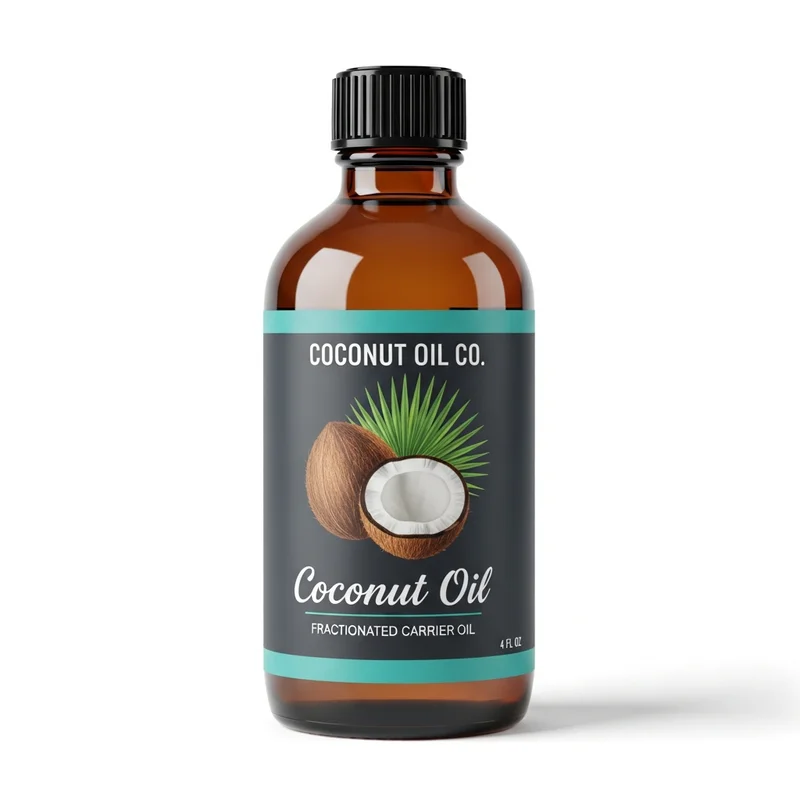
Fractionated Coconut Oil
Our own Fractionated Coconut Oil, in sizes from 0.5 oz to bulk.
From $9.99
Shop Now →Start by confirming it is simply dry skin
Elbows and knees are also where plaque psoriasis tends to appear. The NHS notes it shows up mostly on the forearms and elbows and on the lower legs and knees, and advises seeing a GP if you suspect psoriasis, if treatment is not working, or if joints become painful, stiff or swollen (NHS, psoriasis, reviewed 10 March 2026). The American Academy of Dermatology says that if dry skin lasts after its tips, it is time to see a board-certified dermatologist (AAD, dry skin tips, updated 1/2/26).
Our rule of thumb is simple. If the roughness is new, patchy, itchy, sharply bordered, or back within days of moisturizing, book the appointment before buying another bottle. If it is plain winter roughness that has built up over months, read on.
What the coconut oil research covers
The study most often cited is Agero and Verallo-Rowell, Dermatitis, 2004. Thirty-four people with mild to moderate dry skin, all with negative patch tests, applied virgin coconut oil or mineral oil to their legs twice daily for two weeks. Both raised skin hydration and surface lipids, and neither changed water loss or pH significantly. Symptom ratings leaned toward coconut oil without reaching significance, and no adverse reactions were reported. The authors concluded that coconut oil is as effective and safe as mineral oil as a moisturizer.
That is a nice result for an everyday oil. Keep three details in view: the test site was the leg, not a joint; the oil was virgin coconut oil, while our main product is fractionated, so carrying the result across to it is an inference; and two weeks is a short window. Taken for what it is, the trial says a plain oil can moisturize dry skin about as well as another plain oil.
Why texture matters on a joint
Here is some reasoning rather than a finding. A bending joint rubs against fabric constantly, so a thin liquid film tends to wear off within hours. The AAD says ointments and creams add more moisture than lotions, and lists ingredients such as glycerin, dimethicone, petrolatum and shea butter to look for. Coconut oil is not on that page, so there is no society endorsement to quote either way.
That shapes how we would match our two oils to the job. Our fractionated coconut oil stays liquid at any temperature, and we describe it as fast-absorbing and non-greasy, which is delightful on forearms and as an everyday body oil. Our virgin unrefined oil is firm in a cool room and melts in warm hands (we put the change at about 76 degrees Fahrenheit), so it behaves much more like a body butter on a joint, with a creamy coconut aroma. For a spot that wants a lasting film, we would reach for the virgin unrefined oil first. Both are sold for external cosmetic use only, and if you prefer a petrolatum ointment, a pharmacy is where to find one.
A routine, and the reason for each step
- Keep the bath short. The AAD suggests five to ten minutes in warm water. Long, hot water strips the very surface you are trying to build.
- Apply while skin is still damp. The AAD advises moisturizing while skin is damp after bathing, and an oil seals in the water already there.
- Use a little. About a quarter teaspoon is our suggestion for both elbows and knees together, roughly 1.2 ml or about 1.2 g at the density measured on the one batch our Certificate of Analysis covers. Rub it in until it stops looking wet.
- Repeat at night. The trial used twice-daily application, so the evening bath is the natural second round.
- Go easy on scrubbing. The AAD warns that scrubbing irritates bumpy skin on the arms and thighs. Elbows are a different spot, but the logic carries: sanding thick skin daily tends to invite more roughness.
Patch test, then give it two weeks
The trial screened out anyone who reacted, and we would do the same: test a small area, wait 24 hours, keep oil away from your eyes, and check with a professional first if you have a coconut or tree nut allergy. In January 2025 the FDA removed coconut from its tree nut list for food labeling and says it no longer considers coconut a major food allergen (FDA, food allergen labeling FAQ). That is a labeling rule, not a statement about skin, so an allergist is the right person to ask.
Then judge by the trial's own clock. If two weeks of twice-daily use with short baths has not changed how the patches feel, try a thicker product, and if that does not help, see a dermatologist.
Bumps instead of dryness?
If the roughness is tiny bumps rather than flaking, it may be keratosis pilaris. The AAD says it is most common on the upper arms and thighs and recommends a thick, oil-free cream or ointment with urea or lactic acid, applied within five minutes of bathing (AAD, keratosis pilaris self-care). That advice is oil-free on purpose, so a straight oil is not the match for bumps.
For the wider picture of what coconut oil has been studied for, see our evidence summary on skin. If you are weighing options for the same dry patches, compare mineral oil and shea butter; for heels, the foot balm post is the one to read, and the eczema and psoriasis post covers the medical side. To compare our two oils, the shop page and our oil page say what each one is.
Our position in a line: a plain oil on damp skin after a short bath is a pleasant way to soften elbows and knees, and the virgin unrefined oil is the more natural fit for a joint.
Fractionated Coconut Oil
Fractionated Coconut Oil from our own shop, in sizes from 0.5 oz to bulk.
From $9.99
Shop Now →Sources & Further Reading
- NHS, 2026. Psoriasis. nhs.uk/conditions/psoriasis
- American Academy of Dermatology, 2026. Dermatologists' tips to relieve dry skin. aad.org dry skin tips
- Agero AL, Verallo-Rowell VM, 2004. A randomized double-blind controlled trial comparing extra virgin coconut oil with mineral oil as a moisturizer for mild to moderate xerosis. Dermatitis 15(3):109-116. pubmed.ncbi.nlm.nih.gov/15724344
- FDA. Food allergen labeling guidance FAQ. fda.gov food allergen labeling FAQ
- American Academy of Dermatology. Keratosis pilaris: self-care. aad.org keratosis pilaris self-care