Shea Butter vs Coconut Oil: Which Should You Use?
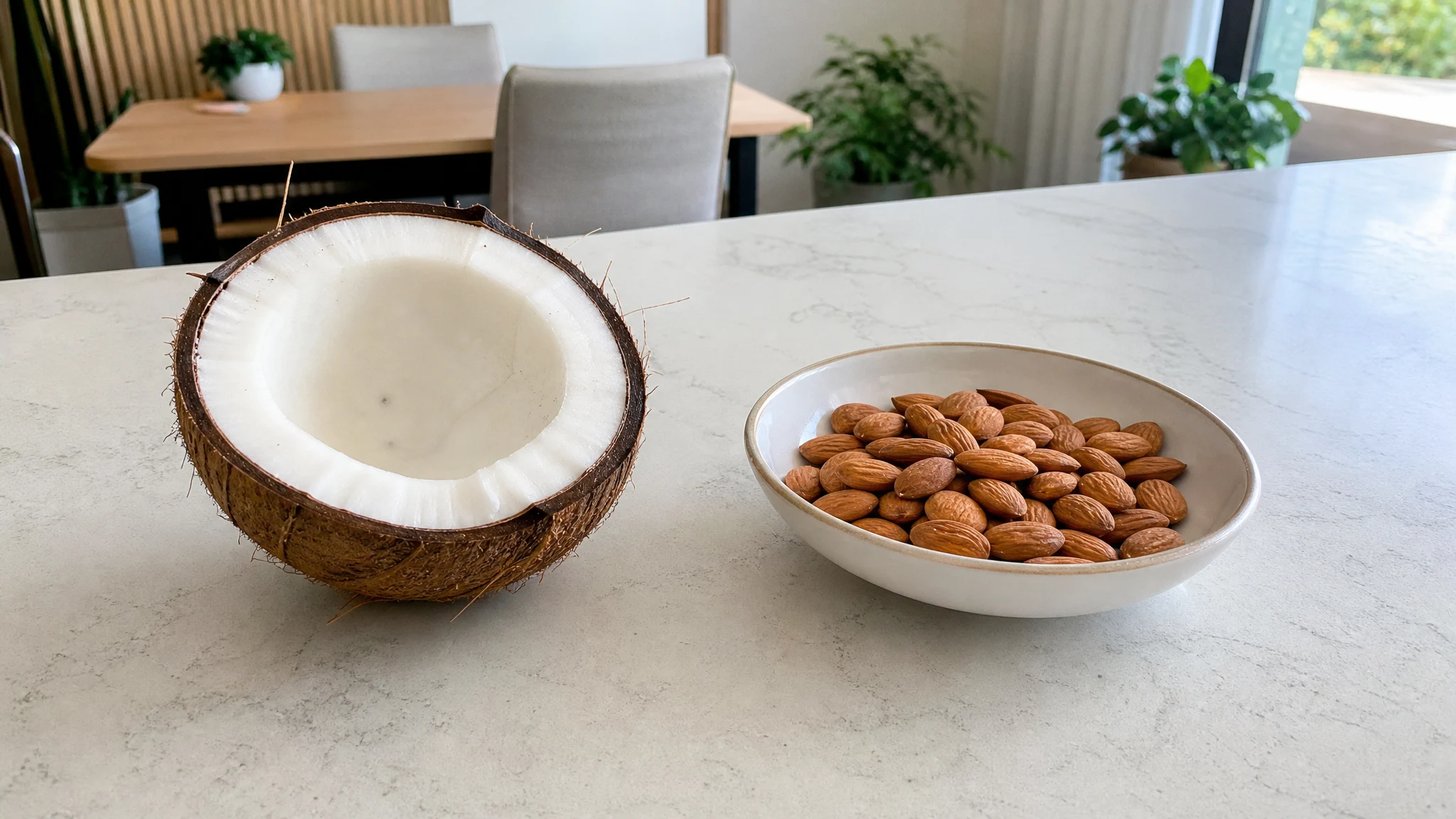
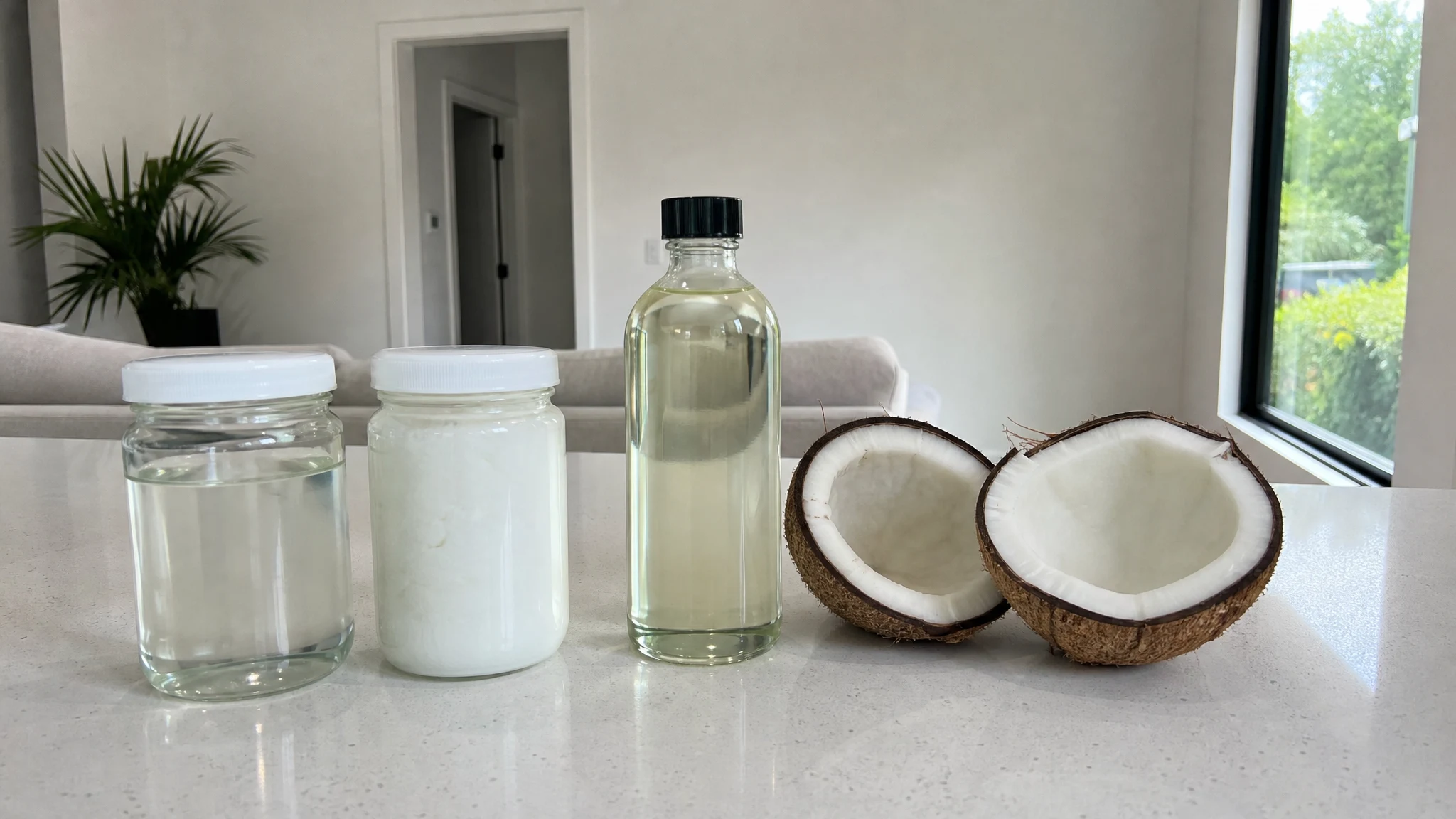
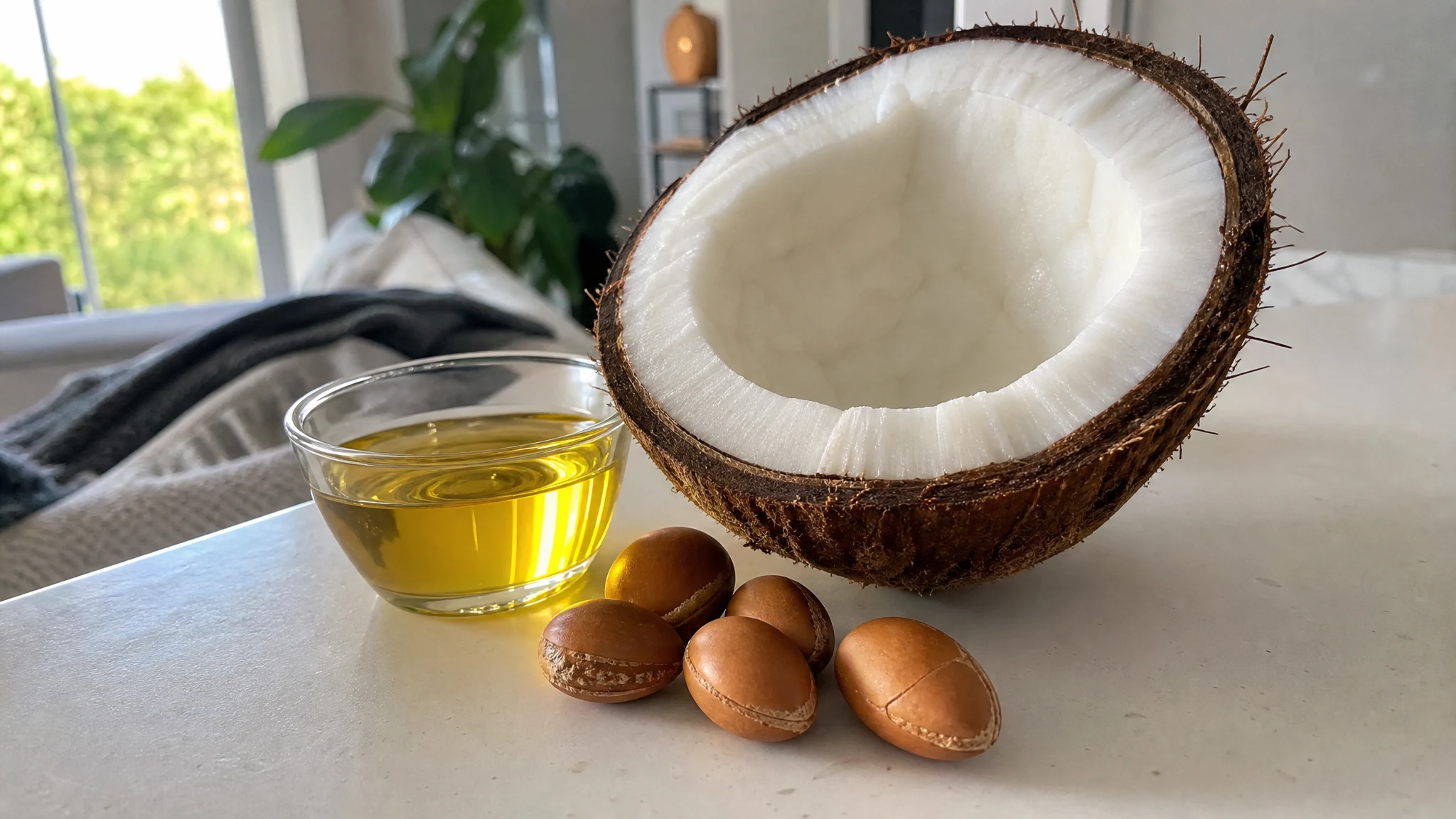
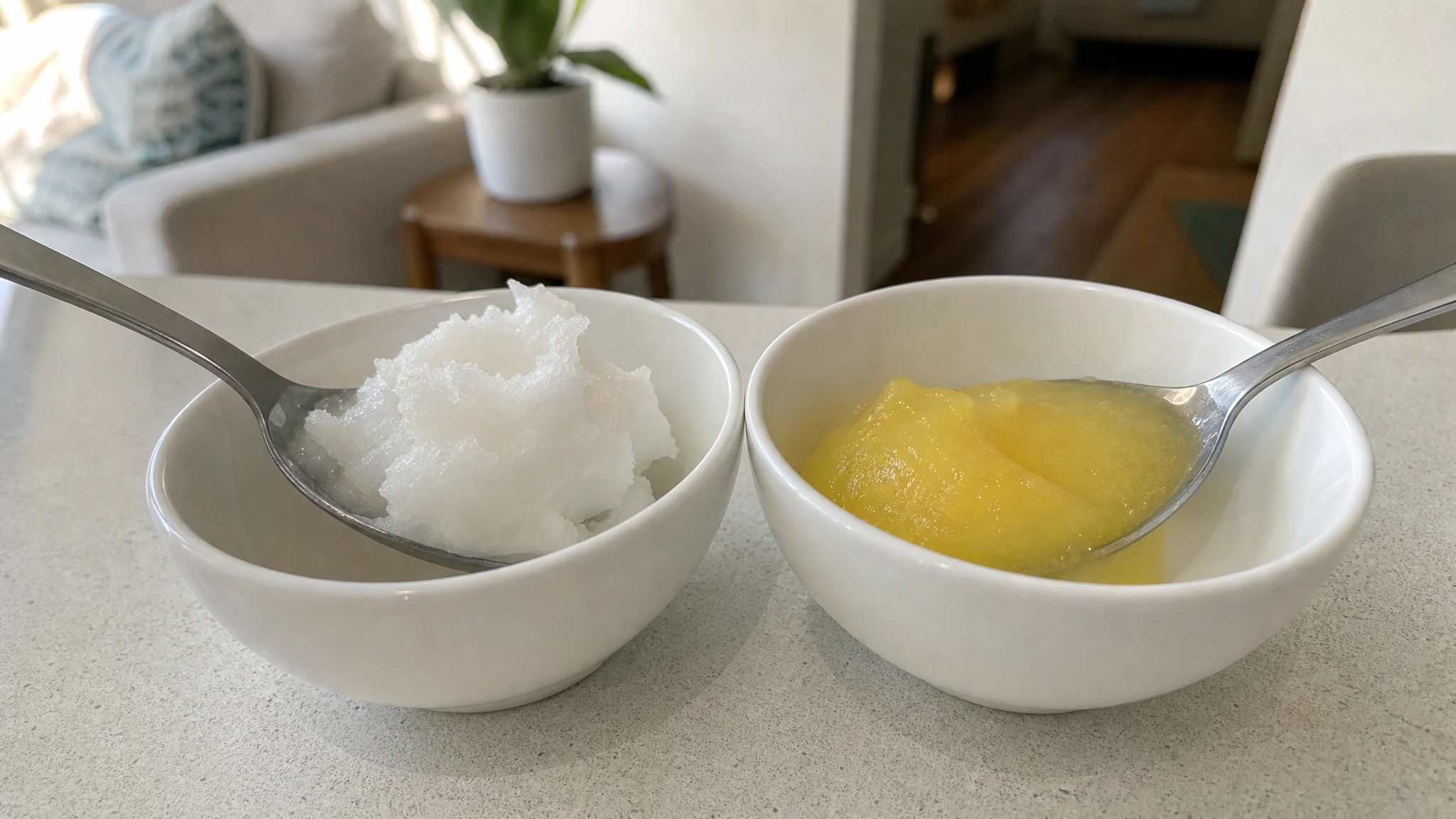
Set a jar of shea butter next to a bottle of fractionated coconut oil and you will barely believe they belong to the same aisle. One is a soft, creamy solid you scoop with a fingertip. The other pours like water and never sets. That single difference decides most real-world choices before skin type even enters the conversation, so it is the place to begin: do you want to scoop, or do you want to pour?

Fractionated Coconut Oil
Our own Fractionated Coconut Oil, in sizes from 0.5 oz to bulk.
From $9.99
Shop Now →What each one is like in the jar
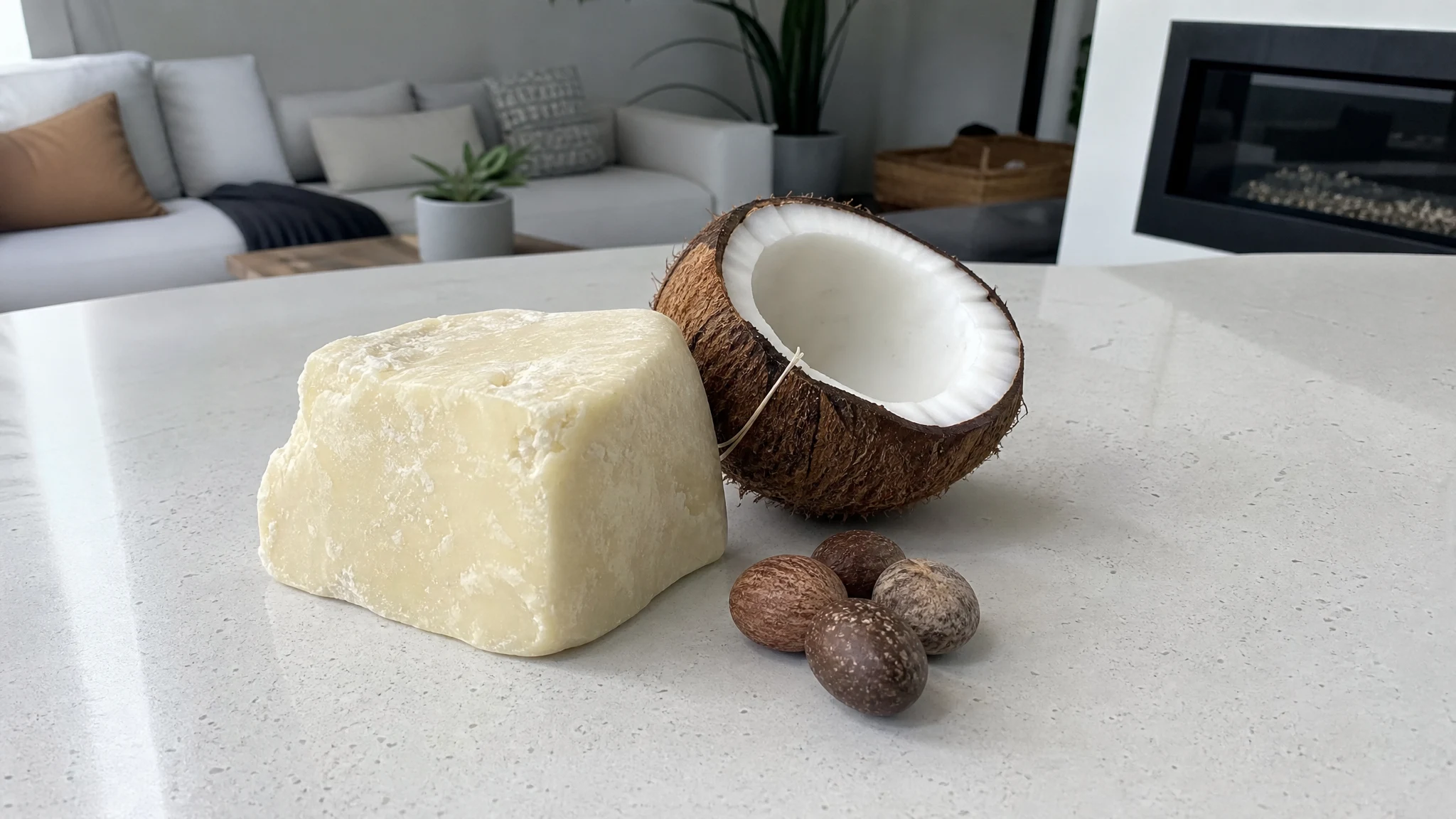
In one set of shea samples, the crude butter melted at 32 C (about 90 F), a refined stearin fraction at 36 C and a refined olein fraction at 25 C (Abdel-Razek et al., 2023). So shea is firm in a cool room and softens right around body temperature, and "shea butter" can mean quite different things depending on how it was refined. The crude sample was mostly stearic acid (43.5%) and oleic acid (45.8%).
Coconut oil is a different kind of fat: about 49% lauric acid, 18% myristic, 8% palmitic, 8% caprylic and only 6% oleic as a general figure for the oil (Lin, Zhong and Santiago, 2018). Our virgin unrefined is firm below about seventy-six degrees Fahrenheit, melts in warm hands and carries a rich coconut aroma. Our fractionated coconut oil stays liquid at any temperature because only the medium-chain triglycerides remain. Those fatty-acid figures describe the papers' samples, not ours, and another supplier's shea will differ.
What the skin research covers
For shea, the skin literature leans on lab work. The Lin review ties shea butter's anti-inflammatory and antioxidant properties to its unsaponifiable fraction, based on work in activated macrophage cells, and mentions a cream containing shea butter extract that matched a ceramide-precursor product in eczema research. A cream with an extract is not the same as butter on skin, so we would not lean hard on that.
For coconut oil, the human trials used virgin oil. In the best known, 34 people with mild to moderate dry skin were randomly assigned to virgin coconut oil or mineral oil on the legs for two weeks, and both raised hydration (Agero and Verallo-Rowell, 2004). We did not find a controlled trial of coconut oil against shea butter, so nobody can honestly put a number on which moisturizes better.
A review of botanical skin oils groups shea with stearic-rich butters whose fats give a semisolid consistency and suggests highly saturated butters and oils as sealing layers. It has no shea-specific data on breakouts or allergy, and it links coconut oil to breakouts on skin that is not very dry (Moore, Wagner and Komarnytsky, 2020). If your skin is breakout-prone, our post on pores explains why comedogenic number scales deserve some skepticism.
How they feel in the hand
Pick up a little shea and you will notice it takes a moment to soften; rub it between your fingers until it gives way. Coconut oil behaves differently. Our fractionated pours onto your palm and spreads at once, while our virgin unrefined starts firm and turns to oil as soon as your hands warm it. Neither feel is right or wrong, so think about which one you will actually enjoy reaching for at the end of a long day.
Choosing by the job
This is where the two really part ways, and it is our honest take rather than a trial result.
- A thick balm or body butter: a solid fat holds the shape, and shea is built for that. We do not sell balms or butters, so this one goes to shea.
- A pourable base for massage, roll-ons, hair and beard oil or DIY skincare: a liquid is easier to work with, and these are the jobs we have in mind for fractionated coconut oil.
- Whipped or soft-set mixtures: combining a solid butter with a liquid oil is a formulation question, and the ratio depends on the butter you buy. Our whipped coconut body butter shows a worked recipe.
- Coconut scent: virgin unrefined smells of coconut, and we describe fractionated as virtually odorless.
- Thinking of cocoa butter instead? It has its own comparison in coconut oil versus cocoa butter.
Keeping them fresh
We say about 2 years unopened for fractionated, and 18 to 24 months for virgin unrefined when kept tightly closed in a cool, dark place. We have no shea figure to quote, since it depends on how the butter was refined. Reasoning from composition, a butter that is nearly half oleic acid is a different storage story from a mostly saturated coconut oil, though that is an inference and not a measured comparison. With either one, keep the lid on, store it cool and out of light, and give it a sniff before use.
Who should ask first
Patch test either material on a small area before wider use (we ask for a 24-hour wait with fractionated). If you have a tree nut or coconut allergy, check with an allergist or another professional before using ours. If you have eczema, rosacea or inflamed skin, a dermatologist is the right person to ask, because studies describe trial groups and not you. Our oils are for external cosmetic use only, and we make no medical claims.
The short version: reach for shea when you want a solid butter, and for liquid coconut oil when you want something you can pour, blend and spread thin. Our skin type guide is a good next stop for matching oil to skin, and the essential oil blending guide covers scenting a liquid base.
Fractionated Coconut Oil
Fractionated Coconut Oil from our own shop, in sizes from 0.5 oz to bulk.
From $9.99
Shop Now →Sources & Further Reading
- Abdel-Razek AG et al., 2023. Effect of refining and fractionation processes on minor components, fatty acids, antioxidant and antimicrobial activities of shea butter. Foods. pmc.ncbi.nlm.nih.gov/articles/PMC10137687
- Lin TK, Zhong L, Santiago JL, 2018. Anti-inflammatory and skin barrier repair effects of topical application of some plant oils. Int J Mol Sci 19(1):70. pmc.ncbi.nlm.nih.gov/articles/PMC5796020
- Agero AL, Verallo-Rowell VM, 2004. Coconut oil versus mineral oil as a moisturizer for mild to moderate xerosis. Dermatitis 15(3):109-16. pubmed.ncbi.nlm.nih.gov/15724344
- Moore EM, Wagner C, Komarnytsky S, 2020. The enigma of bioactivity and toxicity of botanical oils for skin care. Front Pharmacol. pmc.ncbi.nlm.nih.gov/articles/PMC7272663