Coconut Oil vs Ghee: Dairy, Flavor and Heat
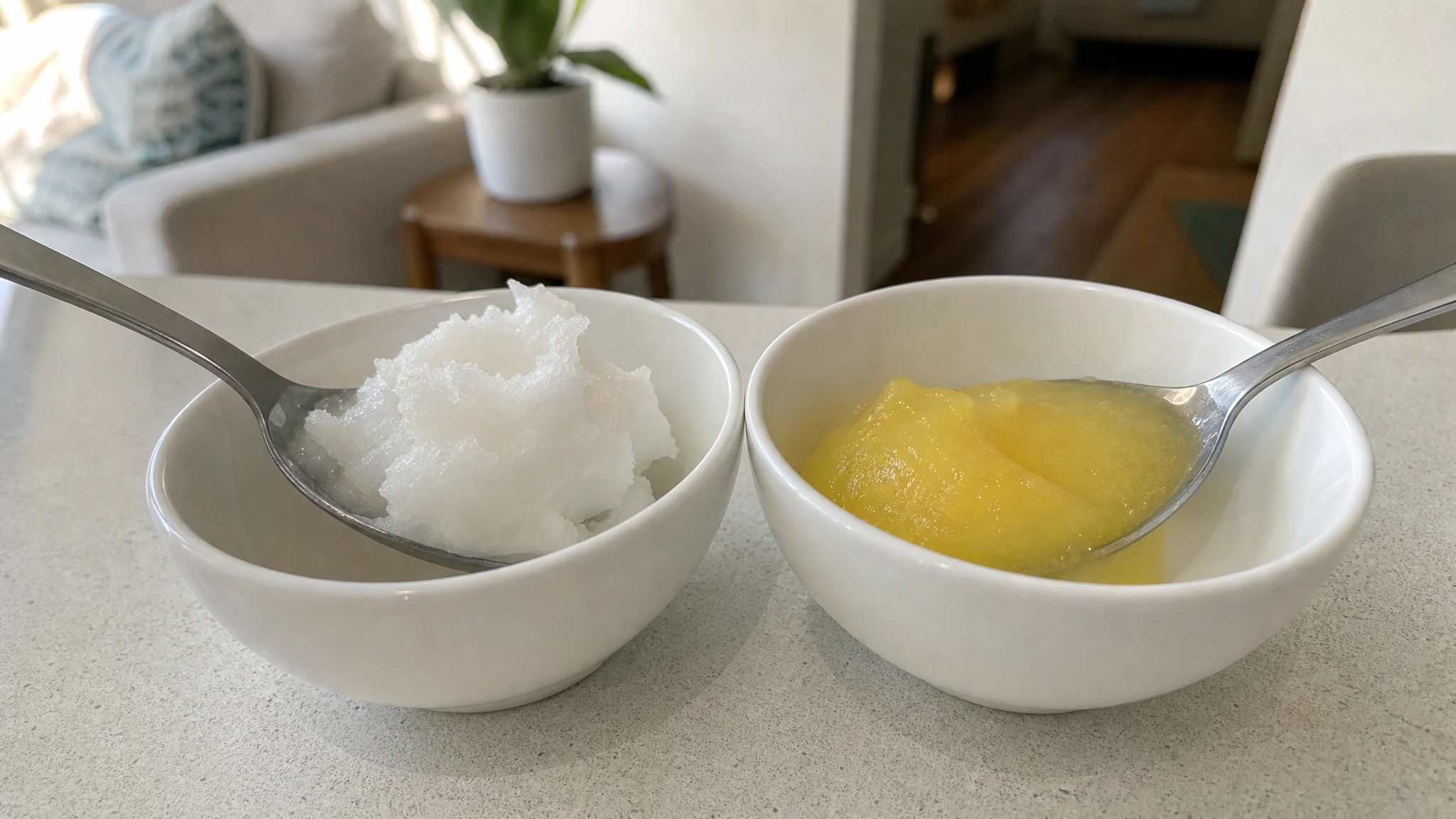
Here is a small surprise to start with: weight for weight, ghee and coconut oil carry almost exactly the same concentration of fat. Both melt into a clear, glossy pool in a warm pan, both are lovely for blooming spices, and cooks often reach for them for the same reasons. Underneath, they are quite different, and the choice usually comes down to who is eating, what flavor you want and what the dish is going to do.

Fractionated Coconut Oil
Our own Fractionated Coconut Oil, in sizes from 0.5 oz to bulk.
From $9.99
Shop Now →The arithmetic most pages skip
The Codex standard for ghee sets a floor of 99.6% milk fat, and USDA lists coconut oil at 99.1 g of fat per 100 g (FoodData Central). With fat concentrations that close, swapping one for the other in a recipe works out to about 1:1 by weight. Butter is a different story. U.S. law requires only "not less than 80 per centum" milk fat (21 U.S.C. 321a), which is why trading coconut oil for butter takes a little math, worked through in our baking swap guide. Whichever fat you use, measure by weight, because a cup of solid and a cup of melted do not hold the same amount.
Where ghee gets its nutty character
The traditional method is beautifully simple. A 2024 review describes heating butter slowly until the water boils off, at which point the milk solids settle out and are filtered away, leaving a clear liquid that partly sets as it cools (Kataria and Singh, 2024). The Tetra Pak Dairy Processing Handbook describes ghee's flavor as especially developed, and reasoning from the method, that long, gentle cooking of butter is the likely source of the warm, nutty, caramel edge people choose it for. The review also notes ghee's long history as a frying fat and repeats a smoke point of about 250 C from earlier work. That figure is quoted from other papers rather than measured there, so treat it as a traditional benchmark and not a spec.
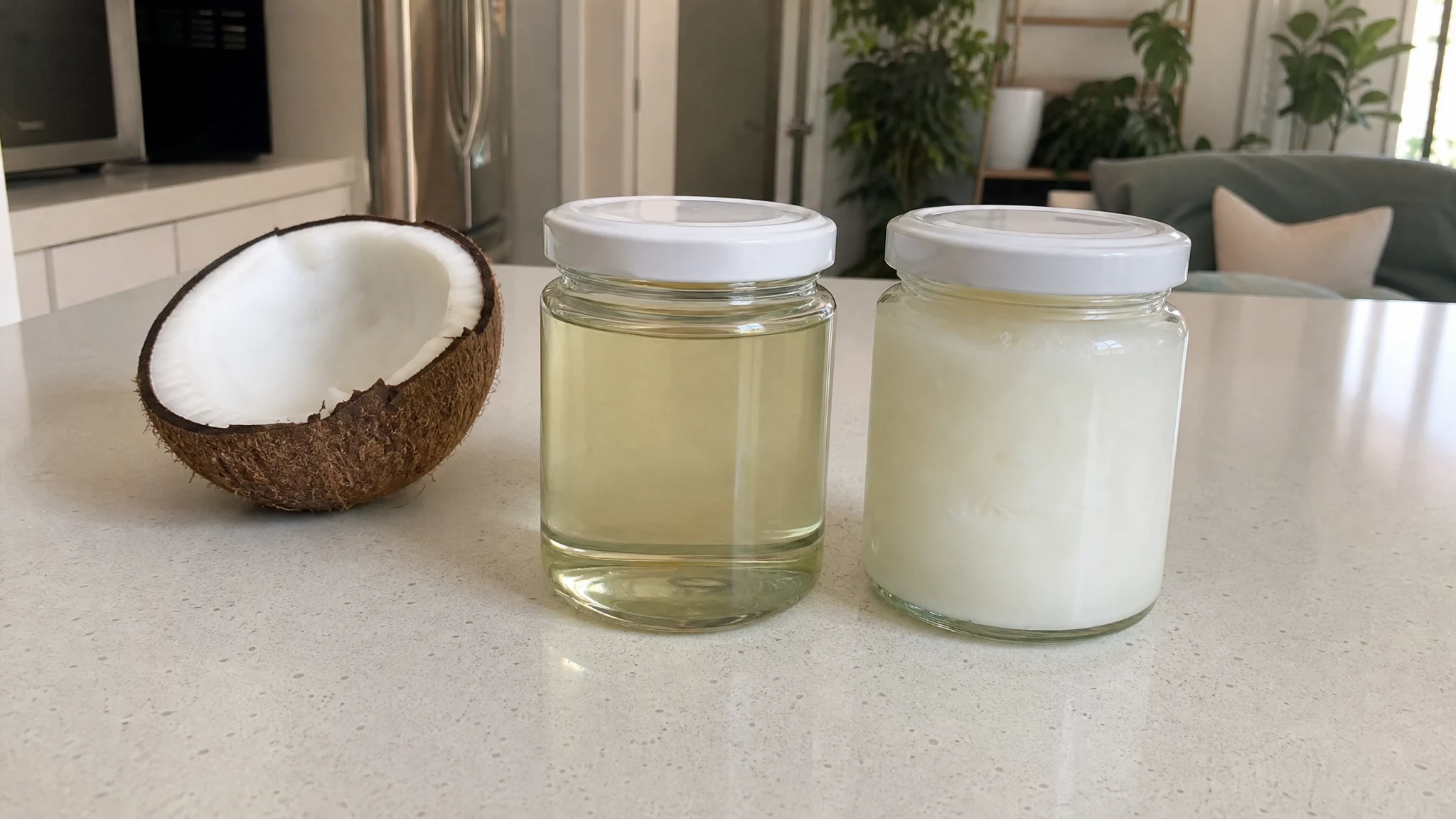
Coconut oil's flavor depends on what you buy. Virgin coconut oil is rich and creamy and unmistakably coconut (that is how we describe our own virgin listing), and refined versions are made to be neutral. In a dal, a curry or a pan of fried plantains, either could belong. In a delicate sauté, neither is neutral by default, so flavor is a better deciding factor than any health slogan.
Start with who is at the table
If anyone is avoiding dairy, the decision is quick. The Codex milkfat standard (STAN 280-1973), as tabulated in the Tetra Pak Dairy Processing Handbook, describes ghee as milk fat with almost all the water and non-fat solids removed, and the same chapter notes that ghee carries more protein than anhydrous milk fat. Milk is one of the nine major food allergens the FDA lists (FDA, food allergies).
Because ghee keeps some protein, "clarified" does not automatically mean "milk-free," so anyone with a milk allergy should ask their allergist and read the manufacturer's label. Coconut oil is not a dairy product at all. Coconut allergies are a separate matter, and our product pages ask anyone who has one to check with a professional before use.
Heat and the pan
Both are good pan fats for everyday cooking, and the published numbers for each vary with the method used. In a 2018 skillet test of highly refined oils, Milk Street measured refined coconut oil at 423 F; ghee and butter were not in that test (Milk Street, 2018). Reasoning from the Codex definition, ghee has shed most of the water and milk solids that make butter spatter and brown, which fits its traditional reputation as a robust frying fat. For coconut oil, refined stands up to more heat than unrefined, and our smoke point guide shows why the published numbers disagree. Either way, take the pan off the heat when you see smoke.
The health headlines
Both fats are mostly saturated, and the large reviews address saturated fat in general. The 2017 American Heart Association advisory reported about 30% lower cardiovascular disease in trials that replaced saturated fat with polyunsaturated vegetable oil (Sacks et al., 2017), and a 16-trial meta-analysis found coconut oil raised LDL cholesterol by 10.47 mg/dL (95% CI 3.01 to 17.94) compared with nontropical vegetable oils (Neelakantan et al., 2020). For scale, the table in the Kataria and Singh review puts cow milk fat at 65.4% saturated fatty acids, while a 2015 survey measured coconut oil at 92.1% (Orsavova et al., 2015). Milk fat is a mixed bag of fatty acids and coconut oil is a more concentrated source of saturates, though neither paper ran ghee against coconut oil in people.
You will also see online claims that ghee is protective, or that heating it creates harmful oxidized cholesterol. The 2024 review discusses both lines of thought and cites older and animal studies for each, so neither is settled in people. If your cholesterol is a concern, a cardiologist or registered dietitian is the right person to help choose your cooking fat.
Choosing between them
Choose ghee when you want that toasted-butter flavor and nobody at the table avoids dairy. Choose a food-labelled coconut oil when you need a dairy-free fat that sets firm, with the coconut note if you like it or a refined, neutral one if you do not. For another everyday-fat matchup that follows the same approach, try coconut oil against olive oil for baking.
A note about our own shelves: we sell fractionated coconut oil and a virgin unrefined coconut oil, both for external cosmetic use only, and we do not sell ghee or any food oil. So for the stove, buy a food-labelled product. For skin, hair or massage, our fractionated coconut oil stays liquid at any temperature, and our virgin and refined comparison explains how the coconut oil types differ.
Either one can make a fine dinner. Let the people at your table and the dish in the pan decide.
Fractionated Coconut Oil
Fractionated Coconut Oil from our own shop, in sizes from 0.5 oz to bulk.
From $9.99
Shop Now →Sources & Further Reading
- Tetra Pak. Dairy Processing Handbook, anhydrous milk fat and butteroil chapter (tabulating Codex STAN 280-1973). dairyprocessinghandbook.tetrapak.com
- FDA, 2026. Food allergies (page current as of 03/11/2026). fda.gov/food-allergies
- Kataria and Singh, 2024. Health benefits of ghee: review of Ayurveda and modern science perspectives. J Ayurveda Integr Med 15:100819. PMID 38181707
- USDA, FoodData Central. Oil, coconut (fdcId 330458). fdc.nal.usda.gov/330458
- U.S. Code, Title 21, section 321a. Butter defined. law.cornell.edu/uscode/text/21/321a
- Milk Street, 2018. The most durable oils for high-heat cooking. 177milkstreet.com
- Sacks et al., 2017. Dietary fats and cardiovascular disease: AHA presidential advisory. Circulation 136(3):e1-e23. PMID 28620111
- Neelakantan et al., 2020. Effect of coconut oil consumption on cardiovascular risk factors. Circulation 141(10):803-814. PMID 31928080
- Orsavova et al., 2015. Fatty acids composition of vegetable oils. Int J Mol Sci 16(6):12871-90. PMC4490476