Coconut Oil vs Canola Oil: What the Numbers Say
Coconut oil wears a halo. It sounds natural, tropical and wholesome, so plenty of people assume it must outrank the plain bottle of canola in the cupboard. When you line up the numbers, the story is more interesting than that. Canola has the stronger record on fat chemistry and cholesterol, and coconut oil holds two genuine culinary trump cards that canola cannot match.
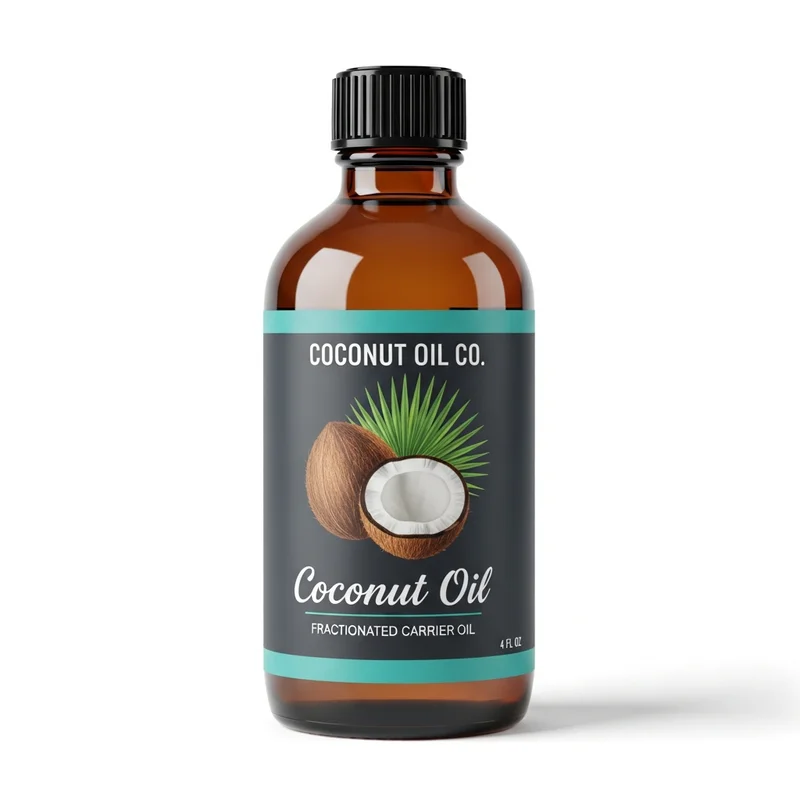
Fractionated Coconut Oil
Our own Fractionated Coconut Oil, in sizes from 0.5 oz to bulk.
From $9.99
Shop Now →What is in the bottle
A 2015 gas-chromatography paper profiled fourteen vegetable oils, reporting each oil's fatty acids as a share of the total. Its closest match to canola was a cold-drawn rapeseed oil (Brassica napus). The paper does not use the word canola, so read the match as close rather than exact (Orsavova et al., 2015).
| Share of fatty acids | Coconut oil | Rapeseed oil |
|---|---|---|
| Saturated | 92.1% | 6.3% |
| Monounsaturated | 6.2% | 72.8% |
| Polyunsaturated | 1.6% | 20.9% (omega-3 1.2%) |
That is a gap of roughly fifteen to one in saturated fat. The USDA entry for coconut oil paints the same picture: 99.1 g of fat per 100 g, 82.5 g of it saturated (FoodData Central). The percentages differ only because USDA counts grams per 100 g of oil while the paper counts a share of the fatty acids.
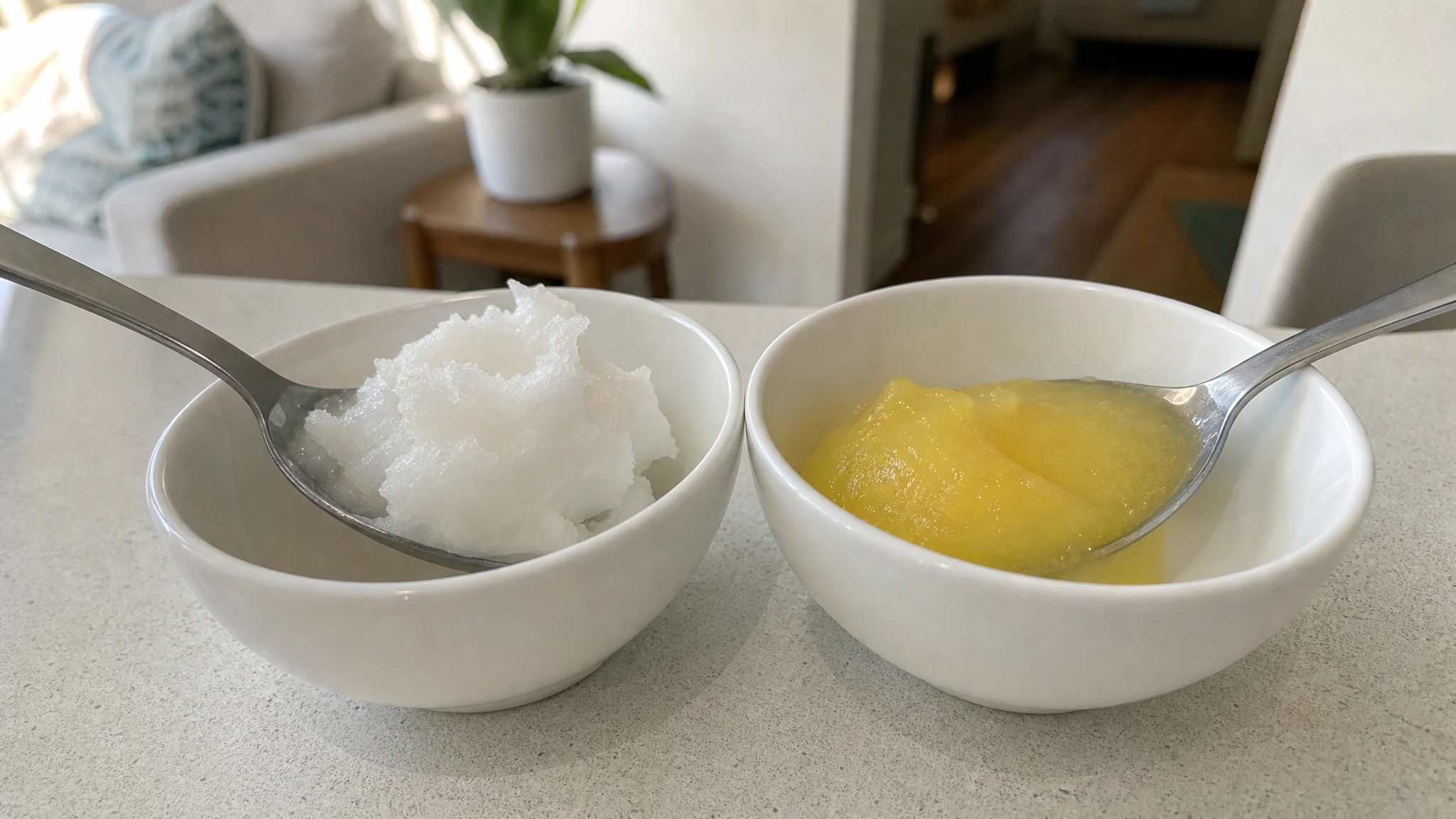
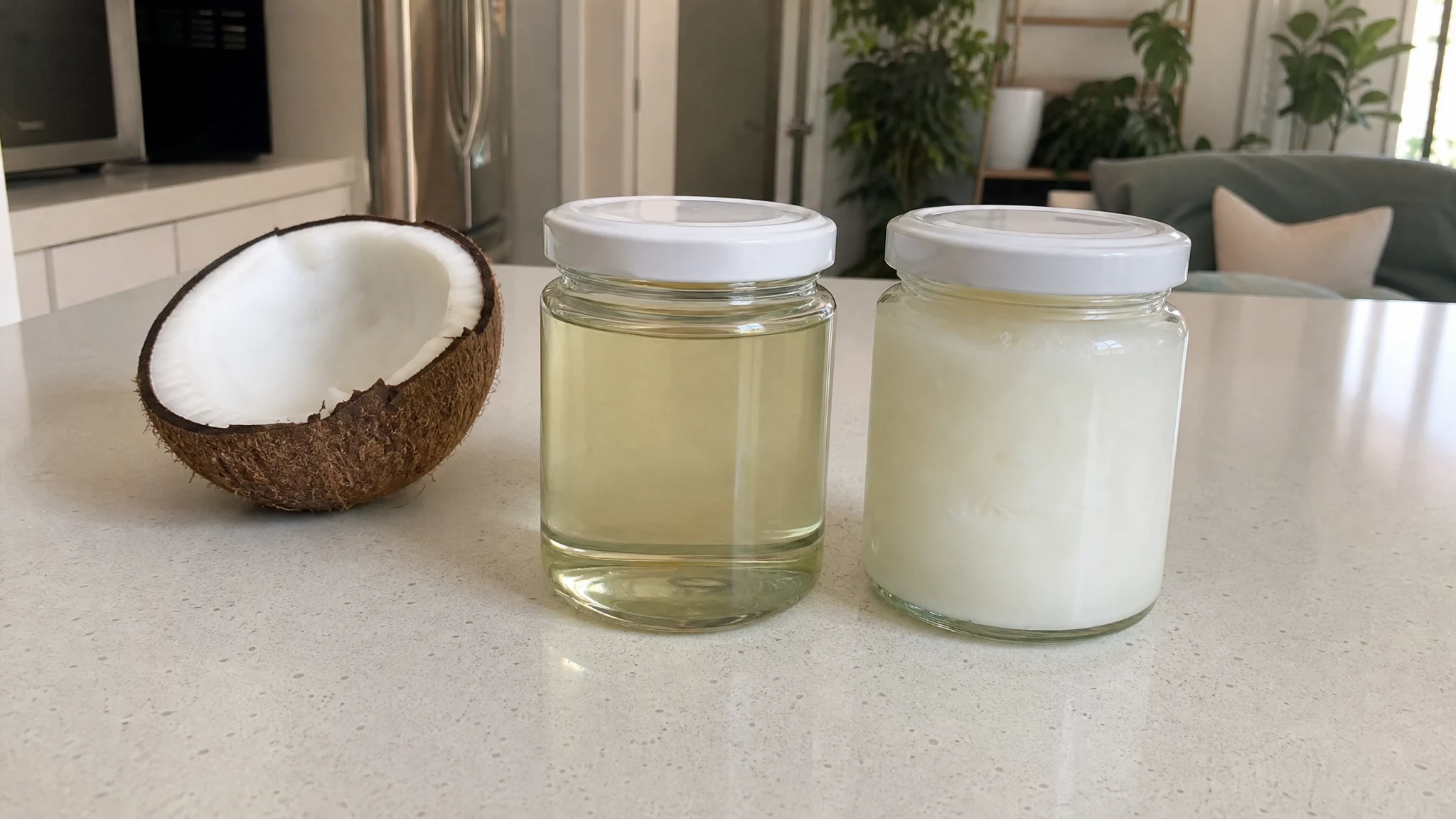
It also explains why the two behave so differently on the counter. Saturated-heavy coconut oil sets firm in a cool kitchen (our virgin listing firms up below about 76 F), while canola stays liquid even in the fridge.
What trials say about cholesterol
A fat profile on paper is one thing, and what happens when people eat it is another. A 2020 meta-analysis pooled 16 trials comparing coconut oil with nontropical vegetable oils. LDL cholesterol was 10.47 mg/dL higher on coconut oil (95% CI 3.01 to 17.94) and HDL was 4.00 mg/dL higher, with plenty of variation between trials (Neelakantan et al., 2020). The abstract does not break out the comparator oils, so no single number belongs to canola.
For outcomes rather than lab values, the 2017 American Heart Association advisory reported that in randomized trials, swapping saturated fat for polyunsaturated vegetable oil lowered cardiovascular disease by about 30% (Sacks et al., 2017). A Cochrane review of 15 trials and roughly 56,675 people found that cutting saturated fat for at least two years went with fewer combined cardiovascular events (risk ratio 0.83, 95% CI 0.70 to 0.98), and called the effect of swapping in monounsaturated fat unclear (Hooper et al., 2020). Canola is mostly monounsaturated, so the strongest trial signal belongs to polyunsaturated oils.
The FDA also lists a qualified health claim for canola oil and coronary heart disease, dated October 6, 2006, on its qualified health claims index. "Qualified" signals that the agency saw supporting but limited evidence. Reasoning from these sources, if you are asking which of the two is better supported for LDL, canola is. How that plays out for you is a conversation for a physician or registered dietitian who has your lipid panel in hand.
In the pan
Smoke points start arguments, and the data do not hand either oil a clear win. In 2018 Milk Street heated highly refined oils in a skillet and recorded the temperature at first smoke, three runs each: canola averaged 453 F and refined coconut oil 423 F. They left unrefined coconut oil out because it smokes lower, and note that published smoke points often differ from their own readings (Milk Street, 2018). Both are comfortable at ordinary sauté and roasting temperatures if you buy refined and keep the pan under the smoke. Our smoke point guide shows why the published numbers scatter, and deep frying with coconut oil goes further on holding a steady temperature.
Where coconut oil takes the lead
There are two places. The first is texture. Pie crust, shortbread, streusel and no-bake bars want a fat that is solid at room temperature so it can be cut into flour or creamed with sugar, and a liquid oil like canola cannot do that. If that is your project, our swap guide works out the arithmetic.
The second is flavor on purpose. Canola is the quiet one in the kitchen, while virgin coconut oil brings a rich, creamy coconut aroma (that is how we describe our virgin listing). It sings in a curry or a tropical cake and stands out in a plain stir-fry. Refined versions are the neutral ones, and our virgin and refined comparison explains the label words.
One easy way to feel the difference is to stand in your own kitchen. Pour a little canola into a spoon and it runs straight off, clear and nearly scentless. A coconut oil from the grocery aisle may be a white block in a cool room, so you scoop it, and a virgin one carries a gentle coconut smell as it melts. Neither is better in the abstract, but those two first impressions tell you which one belongs in the dish you are about to make.
Choosing without overthinking it
For everyday cooking, dressings, quick breads and roasting, canola is the better-supported pick on fat profile and LDL, and an easy one to live with. For anything that has to set firm, or any dish where coconut flavor is the point, reach for coconut oil. If you enjoy these showdowns, there is also coconut against olive oil for frying.
A word about our own shelves. We sell fractionated coconut oil and a virgin unrefined coconut oil, both for external cosmetic use only, and neither is a food oil. We do not sell canola oil. If you came shopping for the stove, a food-labelled bottle from the grocery aisle is what you want. If you are after a skin, hair or massage oil, our fractionated coconut oil stays liquid at any temperature and is sold neat.
Whichever bottle ends up beside your stove, a little curiosity about what is in it goes a long way.
Fractionated Coconut Oil
Fractionated Coconut Oil from our own shop, in sizes from 0.5 oz to bulk.
From $9.99
Shop Now →Sources & Further Reading
- Orsavova et al., 2015. Fatty acids composition of vegetable oils. Int J Mol Sci 16(6):12871-90. PMC4490476
- USDA, FoodData Central. Oil, coconut (fdcId 330458). fdc.nal.usda.gov/330458
- Neelakantan et al., 2020. Effect of coconut oil consumption on cardiovascular risk factors. Circulation 141(10):803-814. PMID 31928080
- Sacks et al., 2017. Dietary fats and cardiovascular disease: AHA presidential advisory. Circulation 136(3):e1-e23. PMID 28620111
- Hooper et al., 2020. Reduction in saturated fat intake for cardiovascular disease. Cochrane Database Syst Rev. PMID 32827219
- FDA. Qualified health claims: letters of enforcement discretion (index). fda.gov/qualified-health-claims
- Milk Street, 2018. The most durable oils for high-heat cooking. 177milkstreet.com