Can You Deep Fry With Coconut Oil? Refined Wins
Coconut oil has fried food in tropical kitchens for generations, and the lab work backs up the habit. In controlled fryers it holds together at 180 C better than you might expect, because it is so rich in saturated fat. What matters for a home cook is mostly in your hands: which type of coconut oil you pour in, how steady you keep the heat, and how long you keep reusing it. Settle those three and you get crisp, clean-tasting fried food.
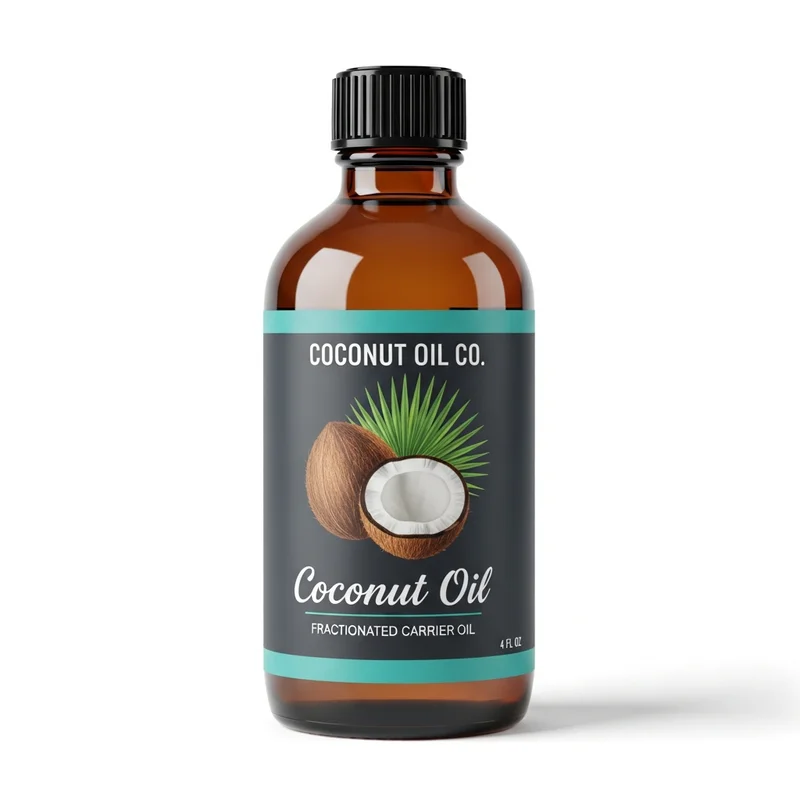
Fractionated Coconut Oil
Our own Fractionated Coconut Oil, in sizes from 0.5 oz to bulk.
From $9.99
Shop Now →Refined is the right pot for the job
Deep frying happens in a fairly narrow band, usually somewhere around 160 to 180 C (320 to 356 F). You want an oil whose smoke point sits comfortably above the top of that band. Here coconut oil splits into two personalities. A review of coconut oil extraction and use puts the smoke point of virgin (unrefined) oil at about 170 C and refined oil at about 232 C (Ng et al., 2021). Other published tables give lower figures for both, so treat the numbers as a guide. What every source agrees on is the order: virgin sits right at the edge of frying temperature, and refined has room to spare.
So our recommendation is simple. For a deep fryer, buy a refined coconut oil that is sold as food. Save the virgin bottle for gentler jobs, like sauteing over medium heat or baking, where its coconut scent is a feature and not something you are trying to hide. If it is the flavor you are trying to avoid, our guide to neutral-tasting coconut oil explains how refining changes it.
What the frying experiments showed
Two laboratory studies are worth knowing about, both done on instrumented fryers and not a stockpot on a stove.
In the first, researchers fried batch after batch of potato chips at 180 C, 80 batches in all, in refined coconut oil, refined soybean oil, olive oil and shortening. Coconut oil finished with the lowest level of one early oxidation marker, and every oil stayed well short of the limit at which frying oil is normally thrown away. The authors tie coconut oil's staying power to its high saturated fat content (Yu, Cho and Hwang, 2018).
In the second, a team fried soaked chickpeas in a 4 liter bath of virgin coconut oil at 180 C for eight hours, 48 frying cycles in all, without topping the oil up. Free fatty acids, a measure of breakdown, crept up over the day, and the authors still judged the oil acceptable at the end. They also noticed the oil temperature fell to around 150 C every time food went in (Srivastava and Semwal, 2015).
Put together, the lesson is that coconut oil stays steady under frying heat. These are single-lab experiments with particular foods, so read them as encouragement about the oil and not as a promise about your doughnuts.
One more study, and what it adds
A different heating study looked at fumes instead of breakdown. It heated coconut, safflower, canola and extra-virgin olive oils and measured the volatile compounds they gave off. Emissions rose with temperature and jumped once an oil passed its smoke point, and the authors judged coconut a poor choice for deep frying because of its comparatively low smoke point. The abstract does not say which type of coconut oil they used. It also found acrolein even at low heat, so its broader message applies to every oil: run the extractor fan or open a window (Katragadda et al., 2010). Read next to the other two studies, it points to the same plan, refined oil kept well below its smoke point, with fresh air moving through the kitchen.
A thermometer is the best fryer accessory
Those experiments held 180 C on thermostat-controlled equipment. At home, a clip-on thermometer does the same job for a few dollars. Dropping cold food into the pot pulls the temperature down, and it is tempting to crank the burner, which sends it overshooting. Fry in small batches and give the oil a minute to recover between them. The National Park Service's deep-frying fire safety page makes the same points: watch the oil with a thermometer, remember that oil without a thermostat can keep heating toward its combustion point, and turn the heat off if the oil begins to smoke (NPS, Fire Prevention 52). Treat the first wisp of smoke as your ceiling.
Reusing the oil
As oil is used again, free fatty acids and tiny food particles build up and the smoke point slides downward. In the eight-hour chickpea study, free fatty acids rose nearly ninefold. From that it follows that a used pot of coconut oil has less headroom than a fresh one, and used virgin oil has the least. We did not find a published discard rule for home cooks, so go by your senses: if the oil smokes below your usual frying temperature, or smells sharp, its job is done. Strain it through a fine sieve between uses and keep it covered.
Dry pot, lid in reach
Make sure the pot and the food are dry before they meet hot oil. The NPS page warns that water turns to scalding steam on contact. If oil ever does catch fire, a summary of NFPA data advises smothering it with a lid and never throwing water on it, and it noted that over half of non-fatal cooking-fire injuries reported for 1999 happened while people were trying to fight the fire themselves (Fire Engineering, 2003). Keep the lid within reach before you start.
Frying and cholesterol, in a sentence or two
How an oil behaves in the fryer is a separate question from what eating it does in the body. A 16-trial meta-analysis found coconut oil raised LDL cholesterol more than non-tropical vegetable oils did (Neelakantan et al., 2020), and the 2017 American Heart Association advisory favors replacing saturated fat with polyunsaturated vegetable oil (Sacks et al., 2017). If you fry often, it is reasonable to keep coconut oil for the dishes where its flavor or stability is the point. A physician or registered dietitian is the right person for a personal plan, and our heart health article goes deeper.
Where our oils fit
We sell fractionated coconut oil and a virgin unrefined coconut oil, and both are for external cosmetic use only, so neither belongs in a fryer. Pick up a food-labelled bottle for the stove, and bring ours home for skin, hair and blending. If you are still weighing oils for the pan, virgin versus refined explains the label terms, coconut versus olive oil for frying covers the usual rival, and our smoke point guide shows why the charts disagree. Popcorn fans will enjoy popping corn in coconut oil too.
Fractionated Coconut Oil
Fractionated Coconut Oil from our own shop, in sizes from 0.5 oz to bulk.
From $9.99
Shop Now →Sources & Further Reading
- Ng et al., 2021. A comprehensive review on the techniques for coconut oil extraction and its application. Bioprocess Biosyst Eng 44(9):1807-1818. PMC8132276
- Yu, Cho and Hwang, 2018. Physicochemical properties and oxidative stability of frying oils during repeated frying of potato chips. Food Sci Biotechnol 27(3):651-659. PMC6049663
- Srivastava and Semwal, 2015. A study on monitoring of frying performance and oxidative stability of virgin coconut oil during continuous/prolonged deep fat frying. J Food Sci Technol 52(2):984-991. PMC4325013
- Katragadda et al., 2010. Emissions of volatile aldehydes from heated cooking oils. Food Chem 120(1):59-65. doi.org/10.1016/j.foodchem.2009.09.070
- National Park Service. Fire Prevention 52: Deep Fried Danger. nps.gov/articles/p52-deep-fried-turkey-fire-safety.htm
- Fire Engineering, 2003. Cooking remains leading cause of home fires, NFPA data show. fireengineering.com
- Neelakantan et al., 2020. Effect of coconut oil consumption on cardiovascular risk factors. Circulation 141(10):803-814. PMID 31928080
- Sacks et al., 2017. Dietary fats and cardiovascular disease: AHA presidential advisory. Circulation 136(3):e1-e23. PMID 28620111