Can You Season Cast Iron With Coconut Oil?
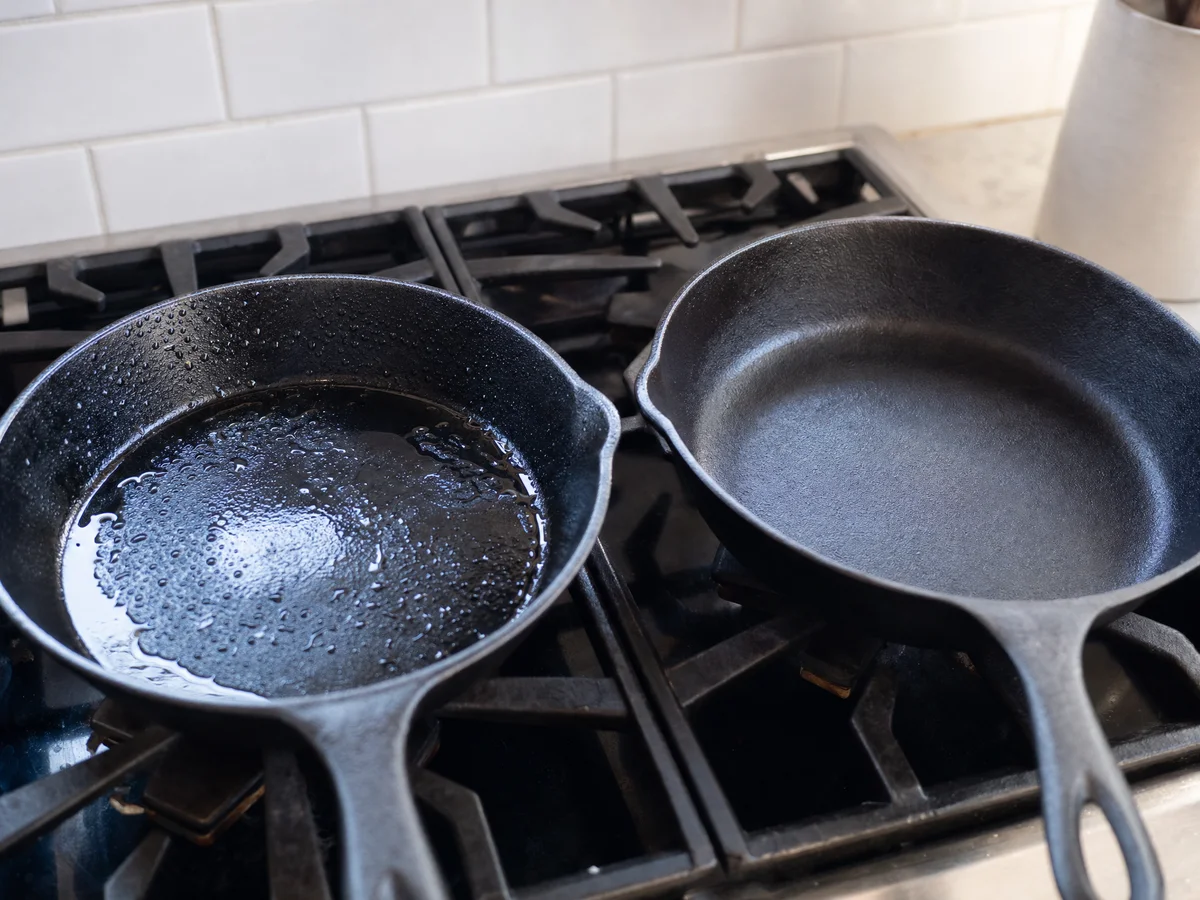
A well-seasoned cast iron skillet has a deep, glossy black finish that lets an egg slide right out, and half the joy of owning one is building that surface yourself. Coconut oil is a pantry favorite, so it is natural to wonder whether it can do the building. Here is our take: coconut oil is wonderful for cooking in a seasoned pan, while the seasoning step goes better with a different kind of oil, and the reason is a satisfying bit of kitchen chemistry.

Fractionated Coconut Oil
Our own Fractionated Coconut Oil, in sizes from 0.5 oz to bulk.
From $9.99
Shop Now →What the pan's maker does
Lodge, the best-known US cast iron maker, publishes its method on its how-to-season page. It describes seasoning as oil baked onto the iron until it polymerizes into a layer bonded to the metal. For re-seasoning, Lodge recommends an oil with a high smoke point and names vegetable oil, melted shortening or canola oil in its own test kitchen. Its factory seasoning, the page adds, uses soybean oil. Coconut oil is not on the list (Lodge, how to season).
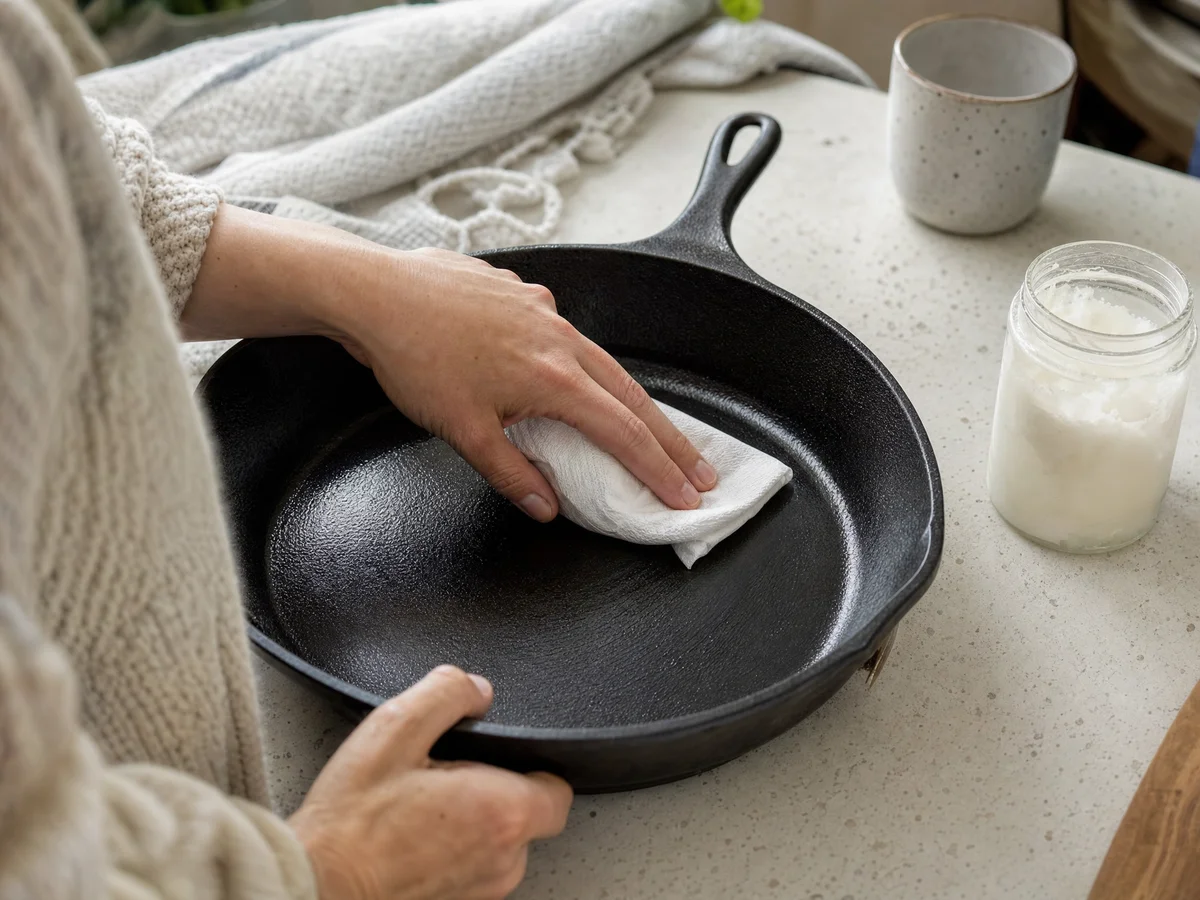
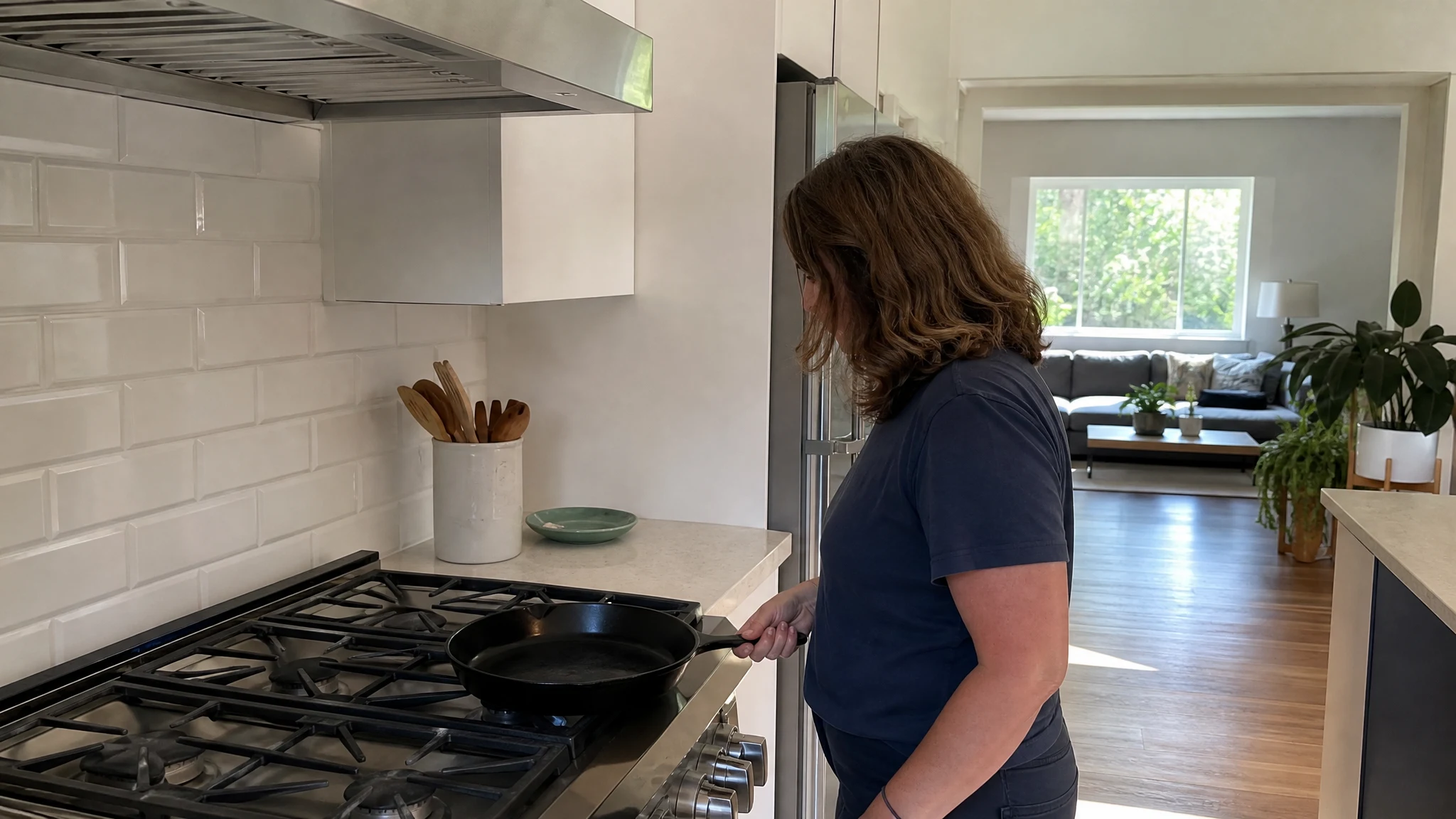
The steps are refreshingly clear. Wipe on a very thin layer of oil, inside and out, with a cloth or lint-free paper towel, thin enough that nothing drips or runs when you tilt the pan. Heat the oven to 450-500 F, put foil on the bottom rack to catch drips, and bake the pan upside down on the center rack for an hour. Then switch the oven off and let the pan cool inside, which Lodge says helps the seasoning bond. Day-to-day cooking is how you maintain the finish afterward, and a pan that flakes can simply be seasoned again.
Seasoning is a bit of chemistry
Here is the part we find fun. When an oil is heated in air, its fatty acid chains link together into a hard, plastic-like film, and the more double bonds a fat carries, the more places that linking can happen. Chemists call oils rich in those bonds drying oils, and flaxseed oil is the classic example. Canola sits in the middle, which is part of why it works well on a pan, a point cooking writer Sheryl Canter makes in her well-known guide to the science of seasoning (Canter, 2010).
Coconut oil sits at the other end. A 2018 paper on plant oils lists its fatty acids as mostly lauric and myristic, with saturated fats adding up to roughly nine tenths of the total and only a sliver of the double-bonded kind (Lin et al., 2018). From that makeup we would expect it to form a much thinner film than the oils Lodge lists. A February 2026 Tasting Table interview with cast iron specialist Jordan de Geus of Cookware Care makes the same point about saturated fats such as bacon grease (Tasting Table, 2026). It does not name coconut oil, so we read it as support for the principle, not a ruling on this one oil.
What about smoke point?
Lodge mentions smoke point, so it is fair to ask whether refined coconut oil clears the bar. The oven range of 450-500 F is 232-260 C. A 2021 review lists refined coconut oil at 232 C and virgin at 170 C, which puts refined right at the bottom edge of the seasoning range and virgin well under it (Ng et al., 2021). Published figures vary from source to source, so we would not lean on any one of them. More to the point, smoke point tells you when an oil starts to smoke, not whether it leaves a cured film on iron. The double bonds answer that question. Our smoke point article and deep frying guide cover the heat side in more depth.
A friendly plan for your pan
- New or stripped pan: follow Lodge. A thin layer of vegetable oil, shortening or canola, an hour at 450-500 F, and a slow cool in the oven.
- Coconut oil lover: cook with it in a pan that is already seasoned, and save the seasoning step for one of Lodge's oils. That is our suggestion, built on the reasoning above. To choose the right coconut oil for the stove, see virgin versus refined and coconut oil without the coconut taste.
- Sticky pan after seasoning: Lodge's instruction is a layer thin enough not to drip, so a lighter coat next time is the first adjustment, in our reading.
- Oily cloths: rags soaked in drying oils can heat up and ignite on their own, so spread them out to dry rather than leaving them in a heap (Wikipedia, drying oil).
If you already have a pan seasoned with coconut oil that cooks well, there is nothing wrong with it. The only expectation to set is that the layer will not build the way it does with Lodge's oils.
One small pleasure of cast iron is how the pan tells you what it needs. A dull, patchy surface asks for another thin coat, and a glossy one just wants you to cook. Wipe the pan while it is still warm after washing and you will notice how little effort it takes to keep it happy.
Where our oils fit
Neither of our coconut oils is for the kitchen. We sell fractionated coconut oil and a virgin unrefined listing, both for external cosmetic use only, and fractionated oil stays liquid at any temperature, which suits massage blends and skin rather than ovens. Keep them for skin and hair and use a food oil on the stove. If you are curious how fractionated oil differs from the one in your pantry, our explainer is a good start.

Fractionated Coconut Oil
Fractionated Coconut Oil from our own shop, in sizes from 0.5 oz to bulk.
From $9.99
Shop Now →Sources & Further Reading
- Lodge Cast Iron, accessed 2026. How to season cast iron. lodgecastiron.com/pages/how-to-season
- Canter S, 2010. A science-based technique for seasoning cast iron. sherylcanter.com
- Lin TK, Zhong L, Santiago JL, 2018. Anti-inflammatory and skin barrier repair effects of topical application of some plant oils. Int J Mol Sci 19(1):70. PMC5796020
- Tasting Table, 2026. The old-school cast iron seasoning method that doesn't actually work. tastingtable.com/2091798
- Ng et al., 2021. A comprehensive review on the techniques for coconut oil extraction and its application. Bioprocess Biosyst Eng. PMC8132276
- Wikipedia, accessed 2026. Drying oil (rag combustion). en.wikipedia.org/wiki/Drying_oil