Coconut Oil and Latex Condoms: What Health Agencies Say
Coconut oil shows up in a lot of bathroom cabinets, and in a lot of search histories under "natural lubricant". We sell coconut oil, so you might expect a cheerful yes. The more helpful answer comes from the health agencies that have looked at this: oil and latex condoms do not go together, they name coconut oil when they say so, and our oils are cosmetic oils for external use sold and labeled as cosmetic oils, not as a personal lubricant.
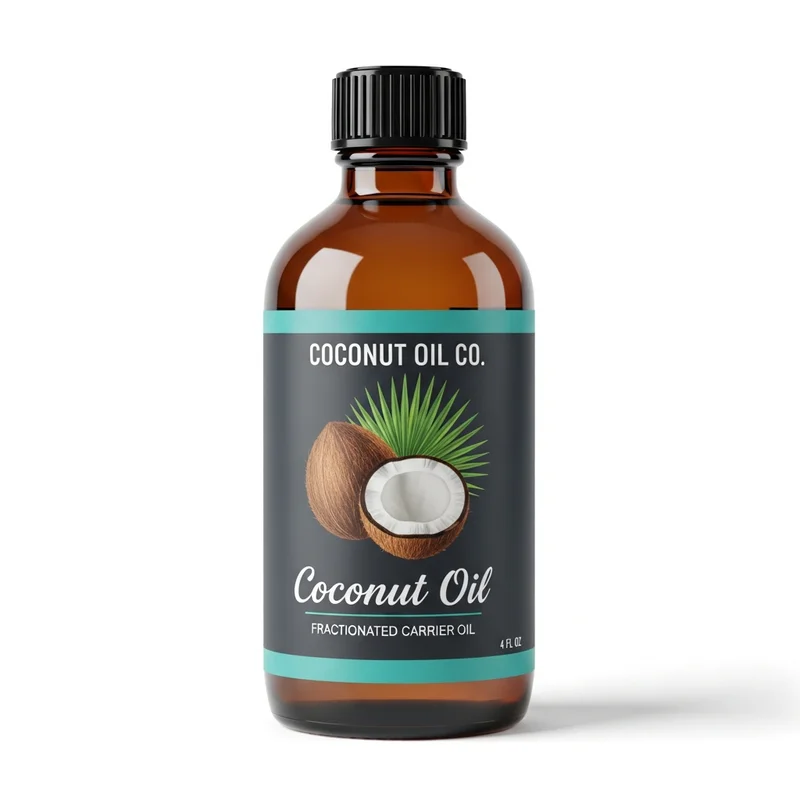
Fractionated Coconut Oil
Our own Fractionated Coconut Oil, in sizes from 0.5 oz to bulk.
From $9.99
Shop Now →If a condom is part of the picture
The NHS page on male condoms (reviewed 26 January 2024) says not to use oil-based lubricant with latex condoms and to use water-based or silicone-based lubricant instead. A 2012 advisory note from the WHO, UNFPA and FHI 360 goes further and lists household products that should not be used with latex condoms. The list includes baby oil, mineral oil, cooking oil, petroleum jelly, body and hand lotions and, by name, "palm or coconut oil". The note explains that latex condoms rapidly lose strength when exposed to oil-based lubricants, and that polyisoprene condoms are just as sensitive. Condoms made from polyurethane are the exception it describes, which is why the packet matters.
That is the clear, well-sourced heart of this topic, and it applies to our fractionated oil and our virgin oil alike, since both are oil. Condoms exist for contraception and infection protection, so a lubricant that can weaken one works against the purpose. Read the condom packet, then choose a lubricant made for the job.
If the question is about dryness
Dryness that keeps coming back deserves a better answer than a kitchen-cupboard oil. The NHS page on vaginal dryness (reviewed 24 July 2025) suggests water-based lubricants before sex, used in and around the vagina, on a partner's penis or fingers, or on a sex toy. It also says not to use creams, lotions or moisturisers that are not meant for the vagina, because they can cause irritation or an infection. It advises seeing a GP if dryness has lasted a few weeks despite home measures, affects daily life, comes with unusual discharge, or comes with bleeding after sex, between periods or after the menopause. Persistent dryness, pain or bleeding is something an OB/GYN, midwife or GP will want to hear about.
What the research says about coconut oil in particular
We searched for a study of coconut oil used as a personal lubricant and found none we could read, so we leave out figures on infection risk, pH, vaginal flora, sperm or irritation. Most coconut oil research looks at eating it or putting it on skin, and neither answers a question about mucous membranes. When you see a list of "benefits" from a page with no study behind it, it helps to ask what was tested, in whom, by what route and with which oil.
Why "natural" and "compatible" are different questions
People choose coconut oil because it is one recognizable ingredient, and that is a fair instinct when you read ingredient lists. Compatibility with a condom, though, depends on whether a product is oil-based, not on how simple it is. A plant oil is still an oil. In the same way, the fact that our fractionated oil stays liquid and that we describe it as fast-absorbing tells you how it feels on skin and says nothing about condoms or mucous membranes.
What our oils are made for
Our fractionated coconut oil is sold for external cosmetic use: massage blending, hair and beard oil, a base for skincare blends. Our virgin unrefined oil, with its coconut aroma, suits hair and body care, balm and soap making and crafts. Our product pages say to patch test a small area first, keep the oil away from the eyes, and check with a professional if you have a tree nut or coconut allergy. That guidance is for skin, and there is no equivalent patch test for mucous membranes. The FDA's allergen FAQ says it no longer considers coconut a major food allergen, which is a food labeling decision and not a promise about your reaction; our allergy guide goes through it.
If you want documentation for a sensitive use, the only certificate of analysis we publish covers one fractionated batch and gives density, refractive index and optical rotation, with nothing on microbial counts, peroxide value or fatty acids. No certificate is published for the virgin listing. In that situation, ask us in writing before you buy.
Questions worth bringing to a pharmacist or clinician
- Which lubricant types work with the condoms or devices I use?
- Does any medicine or treatment I use, including antifungal products, change that choice? (The NHS says not to use latex condoms with antifungal medicine on or around the genitals or anus.)
- Could my dryness be tied to a medicine, to the menopause or to something that needs examining?
- With my allergy history, is a coconut-based product sensible for me?
It is easy to feel awkward asking about this at a pharmacy counter, but pharmacists hear these questions every day and are glad to be asked. A quick, plain question gets you a straight answer, and it is a better place to start than a guess from a search result.
The short version
With a latex or polyisoprene condom, choose a water-based or silicone-based product instead of oil. For occasional dryness, a pharmacist can point you to the water-based products the NHS names, and for dryness, pain or bleeding that persists, see a clinician. If you are exploring what our oils are for, what fractionated coconut oil is, virgin versus refined and coconut oil for massage are good places to go next.
Fractionated Coconut Oil
Fractionated Coconut Oil from our own shop, in sizes from 0.5 oz to bulk.
From $9.99
Shop Now →Sources & Further Reading
- NHS, reviewed 26 January 2024. Male condoms. nhs.uk
- NHS, reviewed 24 July 2025. Vaginal dryness. nhs.uk
- WHO, UNFPA, FHI 360, 2012. Use and procurement of additional lubricants for male and female condoms: advisory note (WHO/RHR/12.33). e-lactancia.org/Lubricants-WHO2012.pdf
- US FDA, current 2026. Frequently asked questions: food allergen labeling guidance. fda.gov