Coconut vs Almond Oil: Which Carrier Suits You?
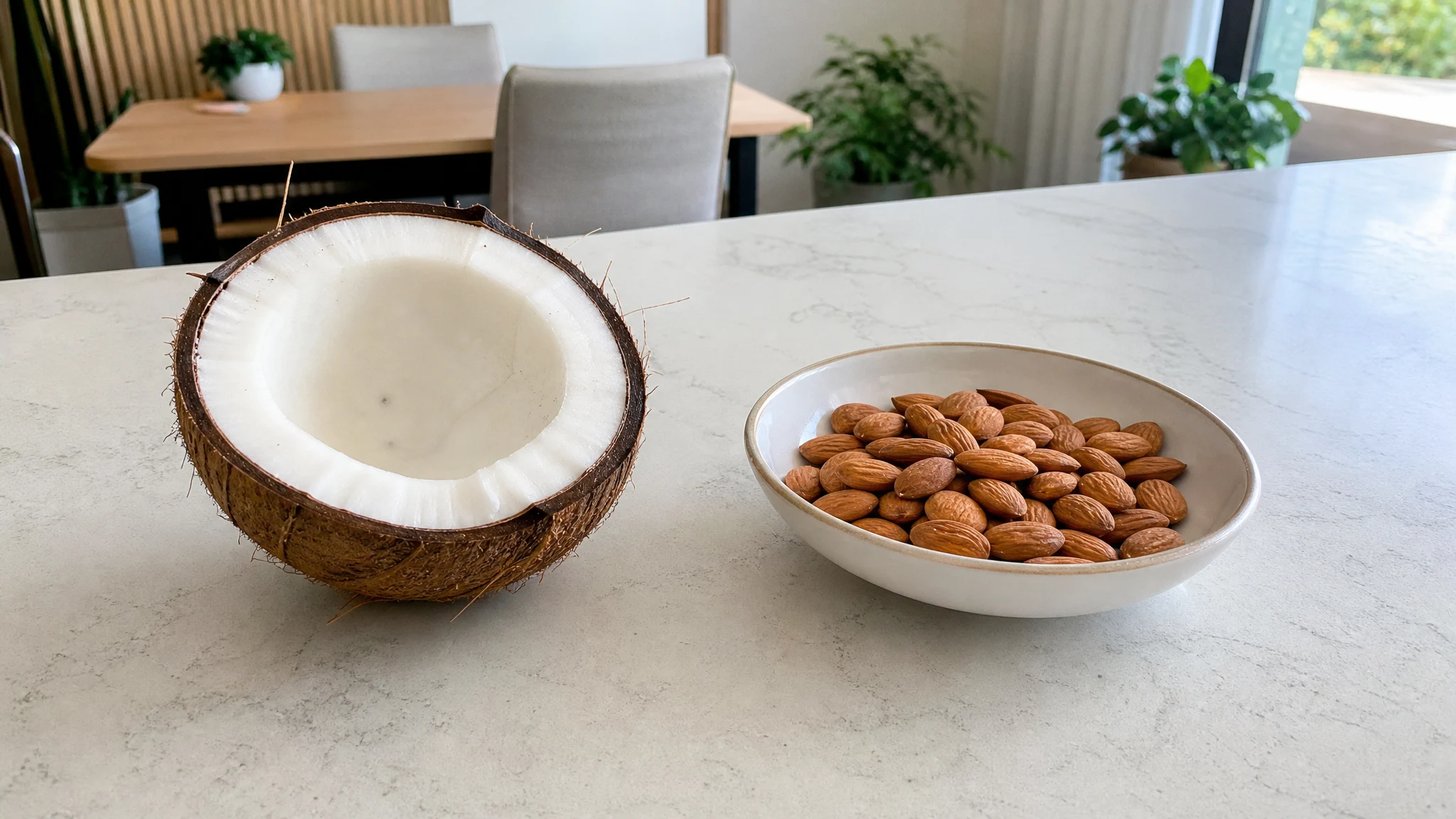
Open a shelf of carrier oils and you will usually find sweet almond oil and coconut oil sitting side by side. They look alike in the bottle and behave nothing alike: almond is a silky oil that pours all year, while virgin coconut oil sets firm in a cool room and smells like a tropical holiday. Before skin feel enters the picture, though, there is one question that can make the decision for you, and it is about allergies.
Fractionated Coconut Oil
Our own Fractionated Coconut Oil, in sizes from 0.5 oz to bulk.
From $9.99
Shop Now →The allergy question comes first
Almond is a tree nut. The FDA lists tree nuts among the nine major food allergens and names almonds as an example that must be declared on a food label (FDA, Food Allergies). That rule is about food, but it shows how seriously the allergy is classed.
Coconut has moved in the other direction. The FDA's allergen labeling FAQ says it no longer considers coconut a major food allergen, and that coconut is off the Tree Nut List in the January 2025 edition of its guidance (FDA). That too is a food-labeling decision. The American Academy of Allergy, Asthma & Immunology calls coconut allergy reasonably rare, while noting that cross-reacting allergens between coconut and tree nuts have been shown and that coconut oil is known to cause contact dermatitis in some people (AAAAI). So we ask anyone with a tree nut or coconut allergy to check with a professional before using our oils, and an allergist is the person who can settle it. Our coconut allergy article goes further.
Almond oil has a documented skin route as well. A French case report described a 5-month-old with atopic dermatitis who developed contact dermatitis to almond after roughly two months of almond oil on the cheeks and bottom, confirmed by patch and prick tests and a blood test, in a baby who had never eaten almonds (Guillet and Guillet, 2000). One report is not a rate, but it is a good reason to ask a pediatrician or allergist before choosing any oil for an infant with eczema.
Two very different oils underneath
Coconut oil is mostly saturated fat, roughly 49% lauric acid plus myristic, palmitic, caprylic and capric acids, and only about 8% unsaturated (Lin, Zhong and Santiago, 2018). Almond is close to the reverse. In a two-year study of almond cultivars and breeding lines, the kernel oil ran 63% to 78% oleic acid and 12% to 27% linoleic (Kodad and Socias i Company, 2008). That range describes kernels, and a bottle of cosmetic almond oil could be any blend.
One practical result follows from the chemistry. Fats with more double bonds tend to go off sooner, so a mostly unsaturated oil has more to lose on a warm shelf than a mostly saturated one. That is reasoning from the profiles rather than a shelf-life figure. With any almond oil, ask the seller for a best-by date and give it a sniff before use. For our fractionated oil we say about 2 years unopened.
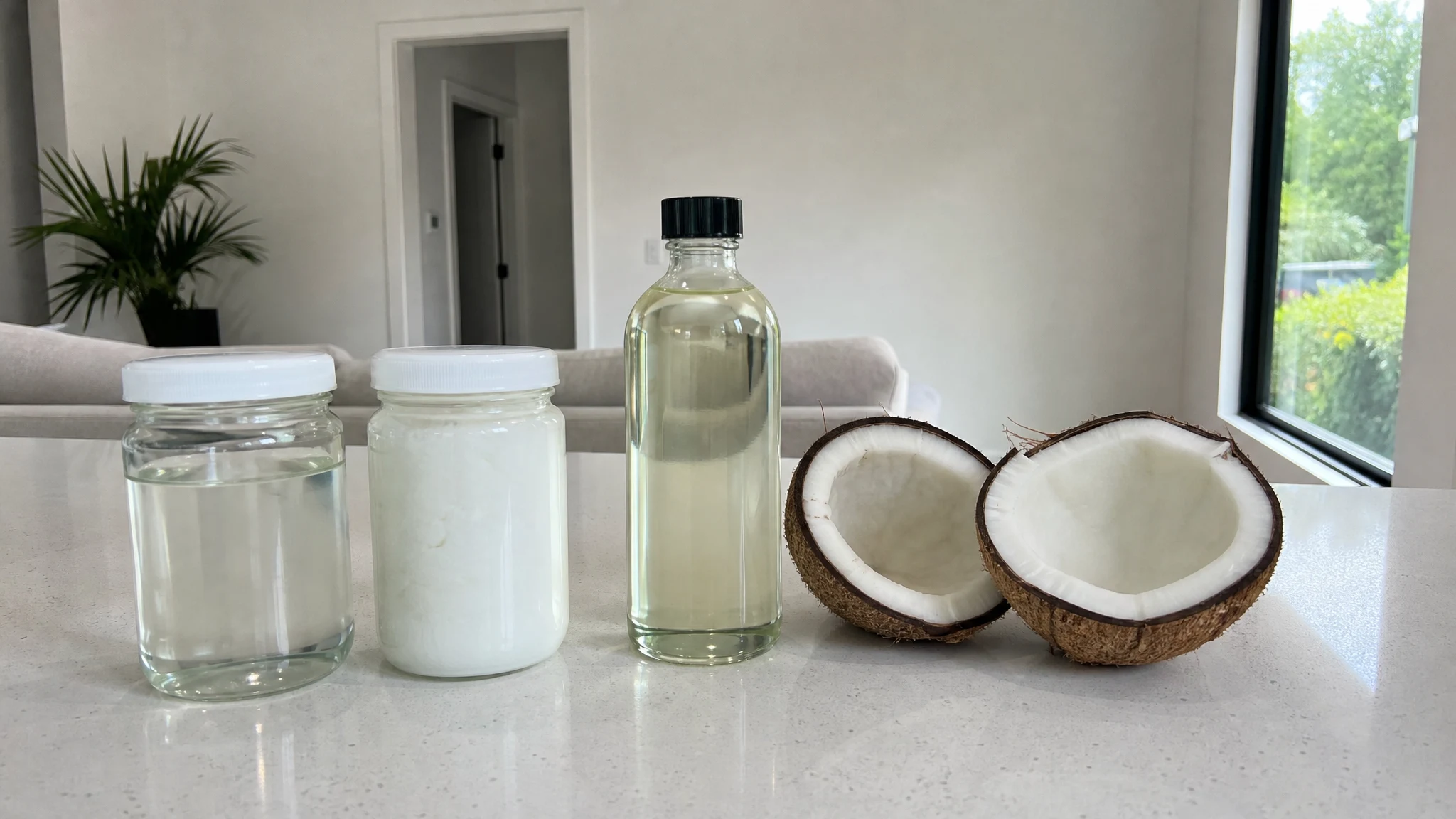
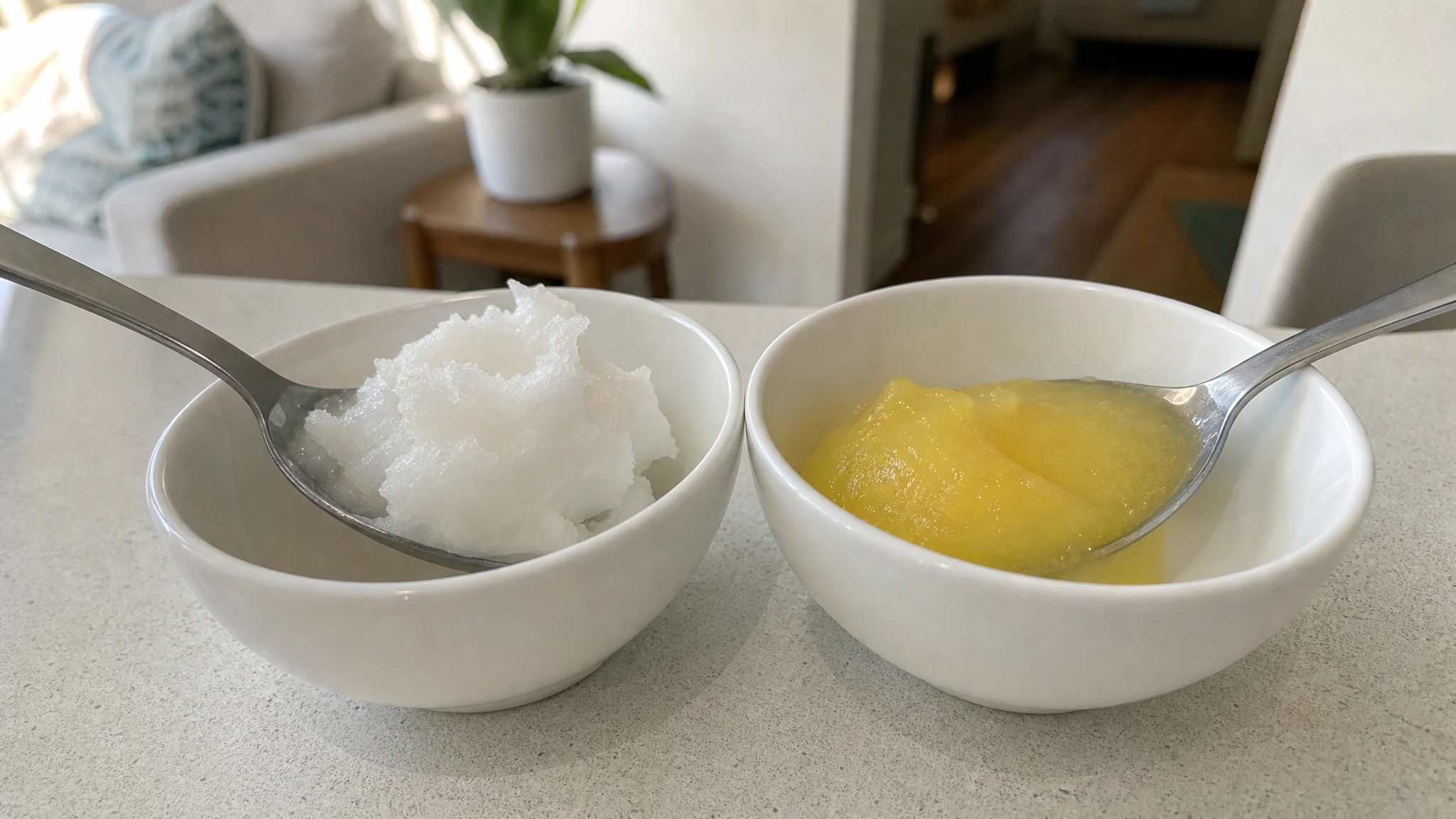
Our two coconut oils are themselves quite different. The virgin unrefined listing keeps the coconut aroma and is firm below roughly 76 degrees Fahrenheit. The fractionated oil has only the medium-chain triglycerides left and stays liquid at any temperature. Our virgin versus refined breakdown explains the distinction, and it matters here because almond pours in a cool room and virgin coconut does not.
How they feel, and what was studied
The best-known trial of coconut oil as a moisturizer used extra virgin oil. Thirty-four people with mild to moderate dry skin applied either coconut oil or mineral oil to their legs twice daily for two weeks. Both improved skin hydration and surface lipids to a similar degree, with no adverse reactions (Agero and Verallo-Rowell, 2004). Because the fatty acid mix differs, carrying that over to a fractionated oil is an inference.
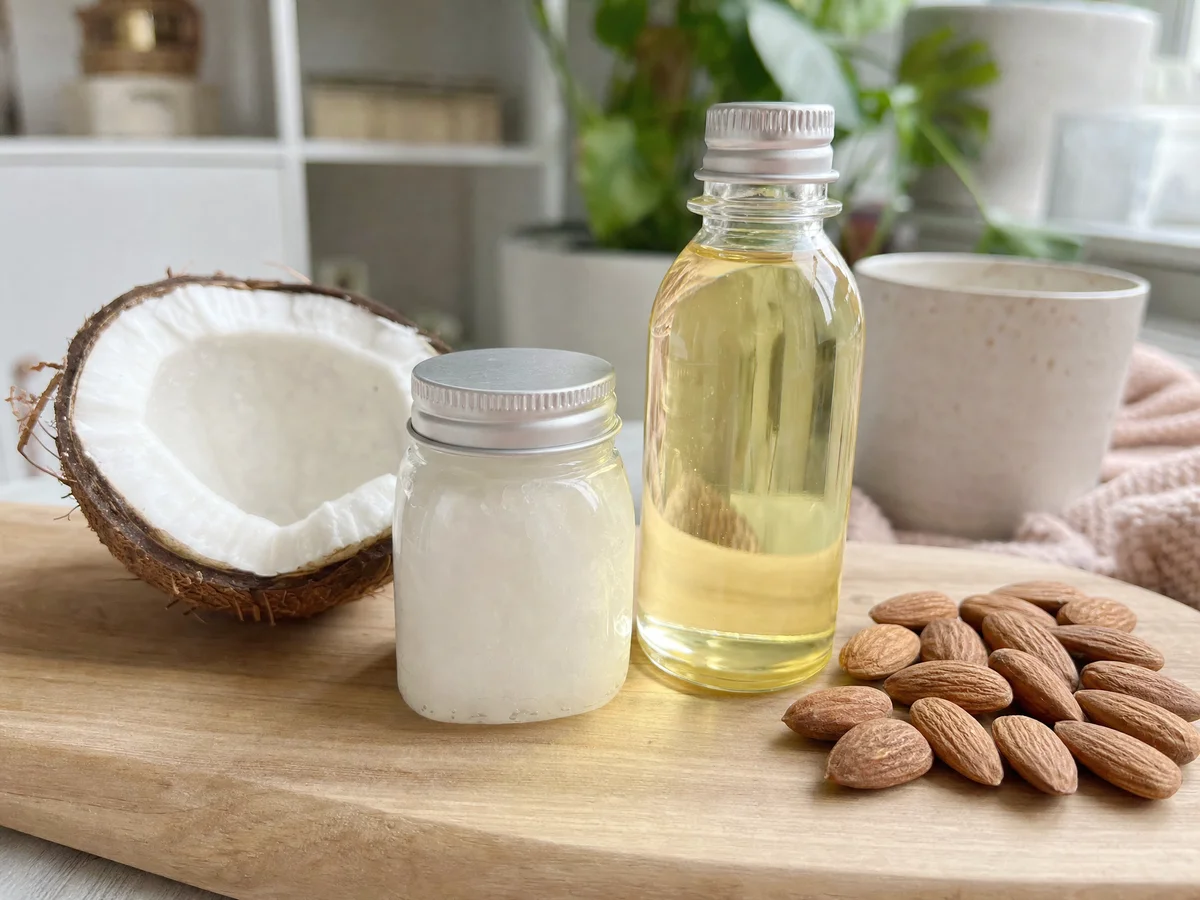
The same review describes almond oil as an emollient and mentions a report of a cream with sweet almond oil easing stretch mark itch more than the plain cream. It makes no comparison with coconut oil, and we know of no head-to-head skin trial of the two, so we are not going to crown a winner. What you can compare is feel. A high-oleic oil tends to sit on the surface a little longer, which many people enjoy for a long, slow massage. Our fractionated coconut oil is fast-absorbing and non-greasy, which suits blending with essential oils and leaves less behind on sheets. We go through the handling differences in our massage article.
Hair: coconut has a study, almond was not in it
The study most people cite compared mineral oil, sunflower oil and coconut oil as pre-wash and post-wash treatments. Only coconut oil reduced protein loss, in both undamaged and damaged hair, and the authors credited lauric acid triglyceride (Rele and Mohile, 2003). Almond was not among the three, so all we can say is that coconut has a study behind it. Since lauric acid is the star of that explanation, the virgin listing is the closer match in kind than the fractionated one. Our hair article has the full picture.
A quick way to choose
- A tree nut history, or a baby with eczema: skip almond as a starting point and ask an allergist or pediatrician which oil, if any.
- A light oil that stays liquid for blends and massage: our fractionated coconut oil, with a 24-hour patch test first.
- The coconut aroma and an oil that firms up in the cool: our virgin unrefined listing.
- Long glide from a higher-oleic oil, with no nut allergy in the picture: almond, from a seller who gives a best-by date.
Both of our oils are cosmetic carriers for external use only, so for the kitchen buy a food-labeled oil, and take cholesterol questions to a physician or registered dietitian. If you are still comparing carriers, coconut versus jojoba and coconut versus grapeseed make good next reads.
Pick the oil that fits your skin, your hair and your habits, and enjoy it.
Fractionated Coconut Oil
Fractionated Coconut Oil from our own shop, in sizes from 0.5 oz to bulk.
From $9.99
Shop Now →Sources & Further Reading
- US FDA. Food Allergies. fda.gov/food-allergies
- US FDA. Frequently asked questions: food allergen labeling guidance. fda.gov
- AAAAI, Lieberman P. Ask the Expert: reaction to coconut. aaaai.org
- Guillet G, Guillet MH, 2000. Percutaneous sensitization to almond oil in infancy. Allerg Immunol (Paris) 32(8):309-311. PMID 11244925
- Lin TK, Zhong L, Santiago JL, 2018. Anti-inflammatory and skin barrier repair effects of topical application of some plant oils. Int J Mol Sci 19(1):70. PMC5796020
- Kodad O, Socias i Company R, 2008. Variability of oil content and of major fatty acid composition in almond. J Agric Food Chem 56(11):4096-4101. PMID 18461963
- Agero AL, Verallo-Rowell VM, 2004. Extra virgin coconut oil vs mineral oil for mild to moderate xerosis. Dermatitis 15(3):109-116. doi.org/10.2310/6620.2004.04006
- Rele AS, Mohile RB, 2003. Effect of mineral oil, sunflower oil, and coconut oil on prevention of hair damage. J Cosmet Sci 54(2):175-192. PMID 12715094