Coconut Oil vs Cocoa Butter: Feel, Scent, Stretch Marks
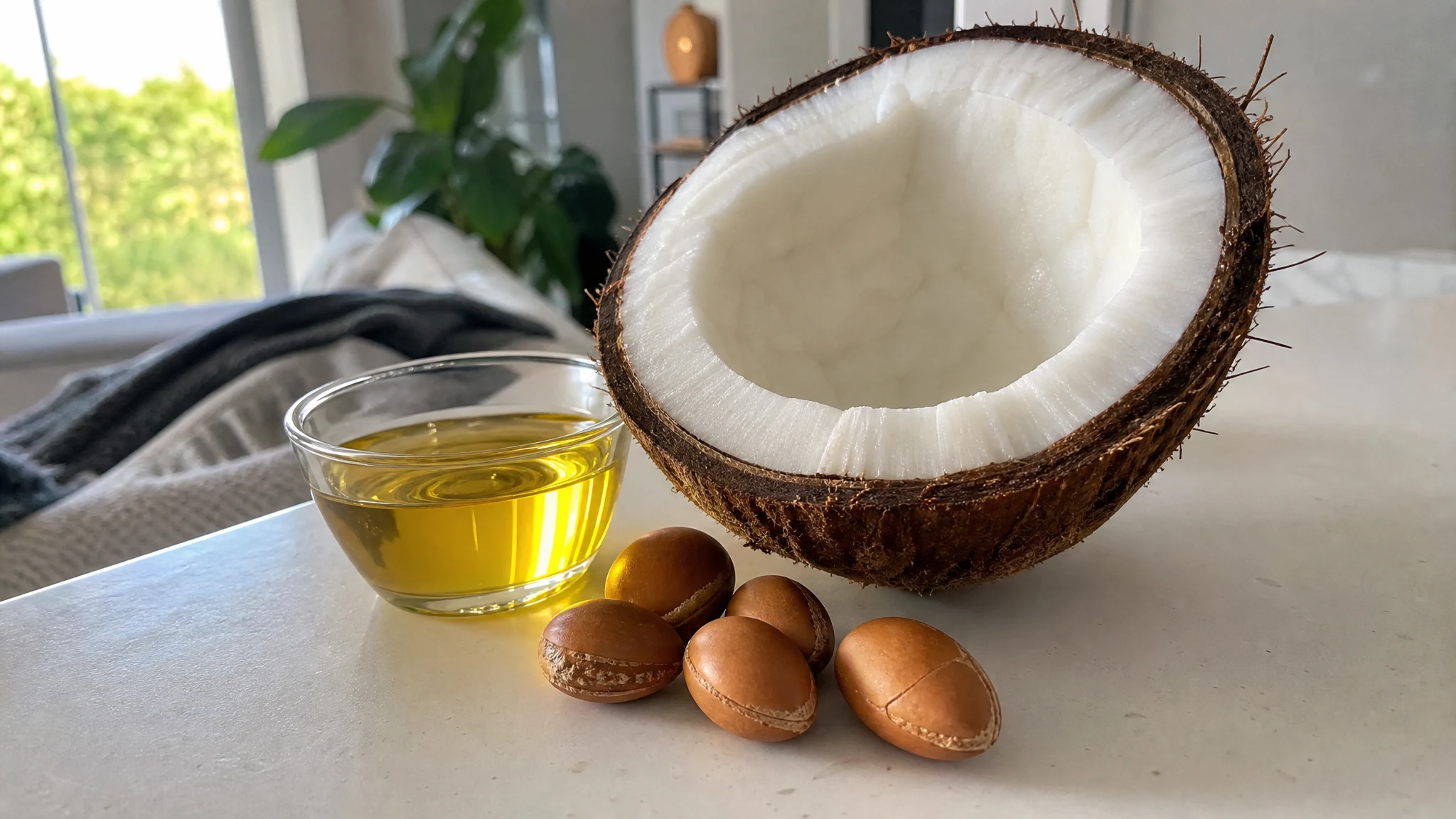
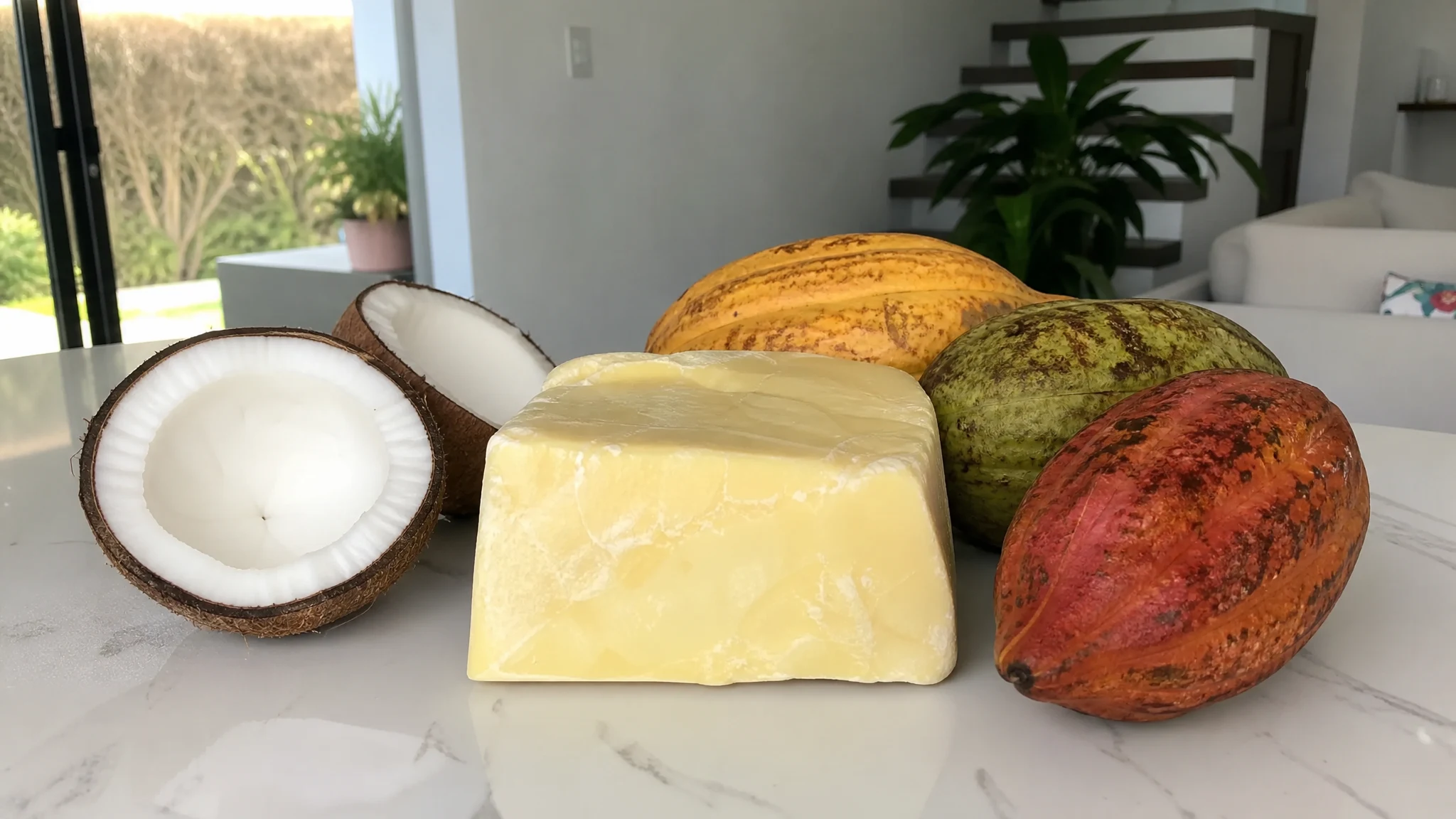
Cocoa butter smells like a chocolate shop and sits on skin like a firm balm. Coconut oil is lighter and glossier, and it melts the moment it touches your hands. Both are loved by people looking after their skin during pregnancy, and both come wrapped in a stretch mark promise that the research does not back. The good news is that each is a pleasure to massage in for other reasons, and choosing between them is mostly about how you like your skin to feel.
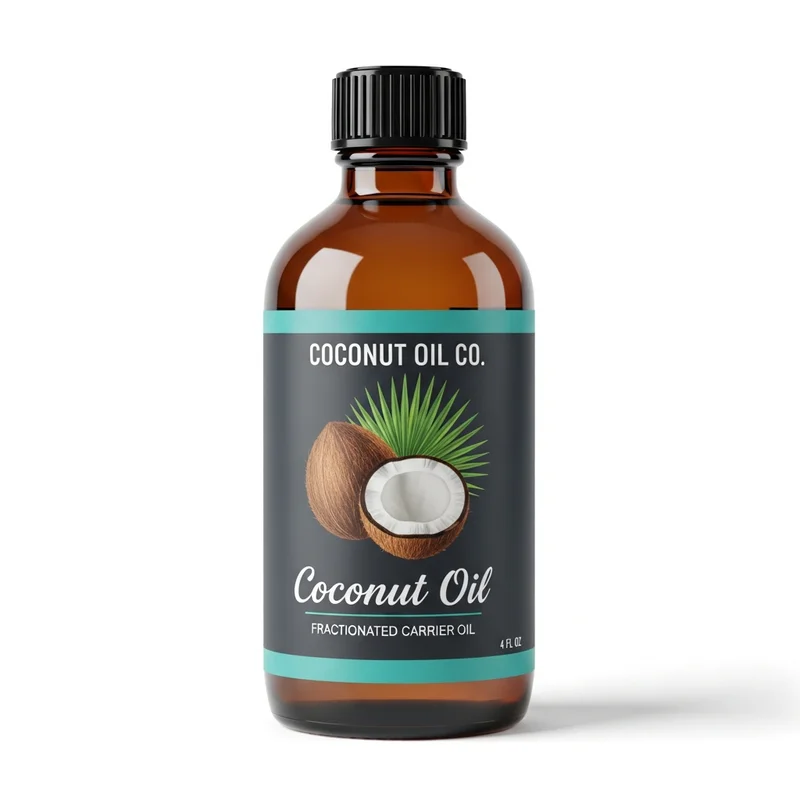
Fractionated Coconut Oil
Our own Fractionated Coconut Oil, in sizes from 0.5 oz to bulk.
From $9.99
Shop Now →What the stretch mark studies found
A Cochrane review of topical products for preventing stretch marks in pregnancy pooled six trials with 800 women, four of them with fewer than 100 participants. The products were three branded creams, olive oil and cocoa butter. Stretch marks developed a little less often in the treated groups, but not by a margin that could be told apart from chance (risk ratio 0.74, 95% confidence interval 0.53 to 1.03, five trials, 474 women), and severity showed no clear difference. The reviewers found no high-quality evidence for any product (Brennan, Young and Devane, Cochrane CD000066).
A British Journal of Dermatology review reached the same view: cocoa butter and olive oil were not effective for preventing stretch marks or lessening their severity, while centella and bitter almond oil massage had limited evidence and hyaluronic acid weak evidence (Korgavkar and Wang, 2015). The American Academy of Dermatology says plainly that in studies neither almond oil, cocoa butter, olive oil nor vitamin E prevented stretch marks, and it describes centella, hyaluronic acid and prescription tretinoin as the options with some study support (AAD, stretch marks).
Coconut oil is missing from those trials. A Europe PMC search we ran on 5 November 2026 for coconut oil together with striae or stretch marks returned 49 records, and none of the titles was a trial of coconut oil on stretch marks. That was a quick scan of titles, so the careful reading is "none seen" rather than "none exist." Absence of evidence is not evidence of no effect, and it would be just as fair to say nobody has shown cocoa butter works either.
Why the habit is so common, and why it can stay
In a survey of 753 women late in pregnancy, 589 (78.2%) had used a product to prevent or reduce stretch marks, and more than a third of users had tried two or more (Brennan, Clarke and Devane, BMC Pregnancy Childbirth, 2016). That makes perfect sense. A daily bit of oil on a growing belly is a lovely ritual, and nothing here says you have to give it up. Just choose it for the feel and the scent. The NHS says there is very little evidence that creams and lotions prevent or remove stretch marks, that they usually fade with time, and that retinoid creams should not be used in pregnancy. It also lists a few signs, such as large stretch marks with more fat on the chest and tummy but slim arms and legs, as a reason to see a GP (NHS, stretch marks, reviewed April 2024).
Dry skin is where the two truly differ
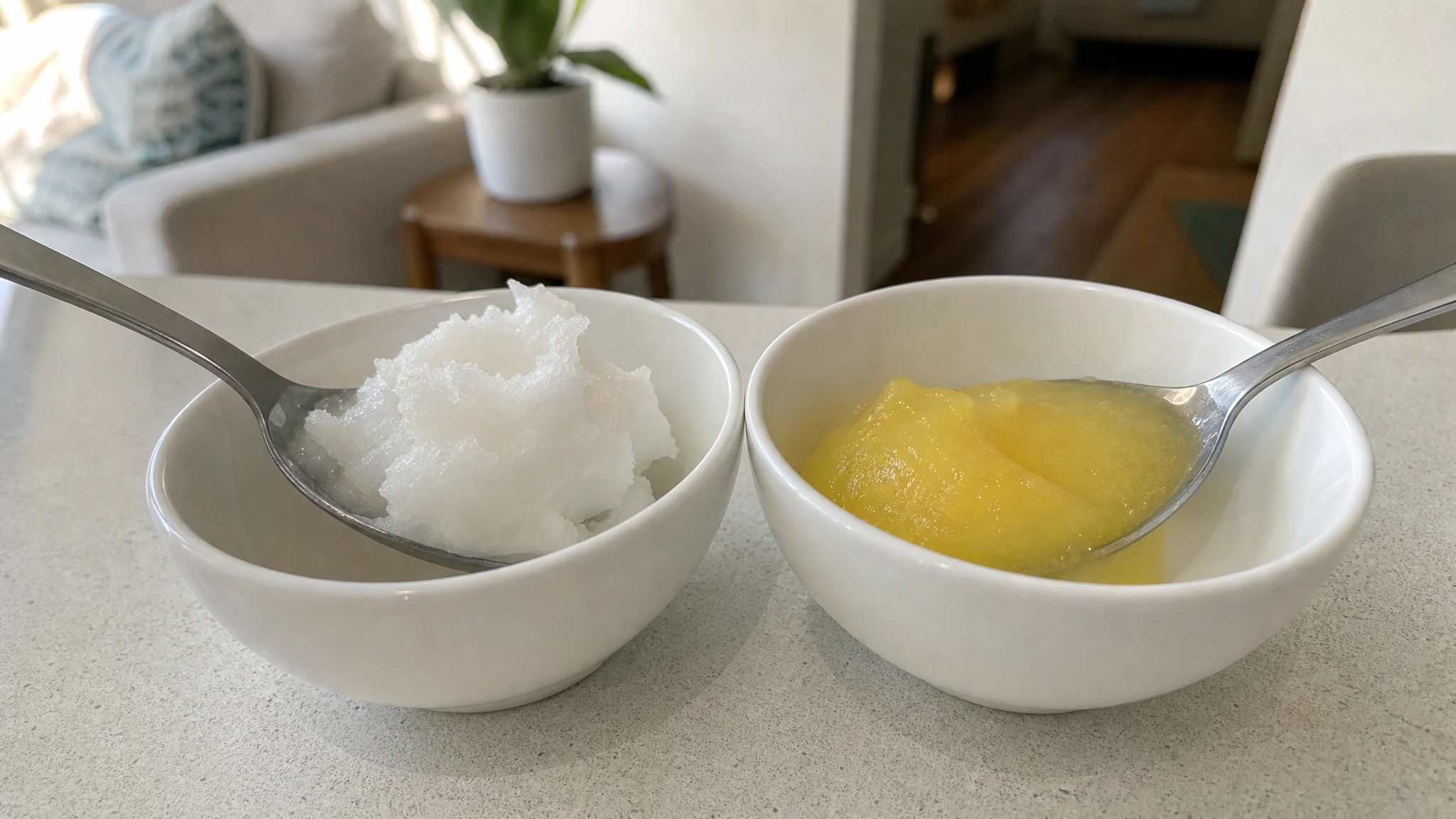
For plain dryness the evidence is thin on both sides, but the textures could hardly be more different. One double-blind trial had 34 people with mild to moderate dry skin apply virgin coconut oil or mineral oil to the legs twice a day for two weeks, and both raised skin hydration (Agero and Verallo-Rowell, 2004). No trial pitting coconut oil against cocoa butter turned up, so what follows is opinion. A butter is firmer and stays where you put it, which suits elbows, heels and a sealed-in finish. A liquid oil spreads further with less effort, which suits a light layer over damp skin. The AAD adds that creams and ointments add more moisture than lotions, and that moisturizer works best on damp skin after a short warm bath (AAD, dry skin tips, updated January 2026).
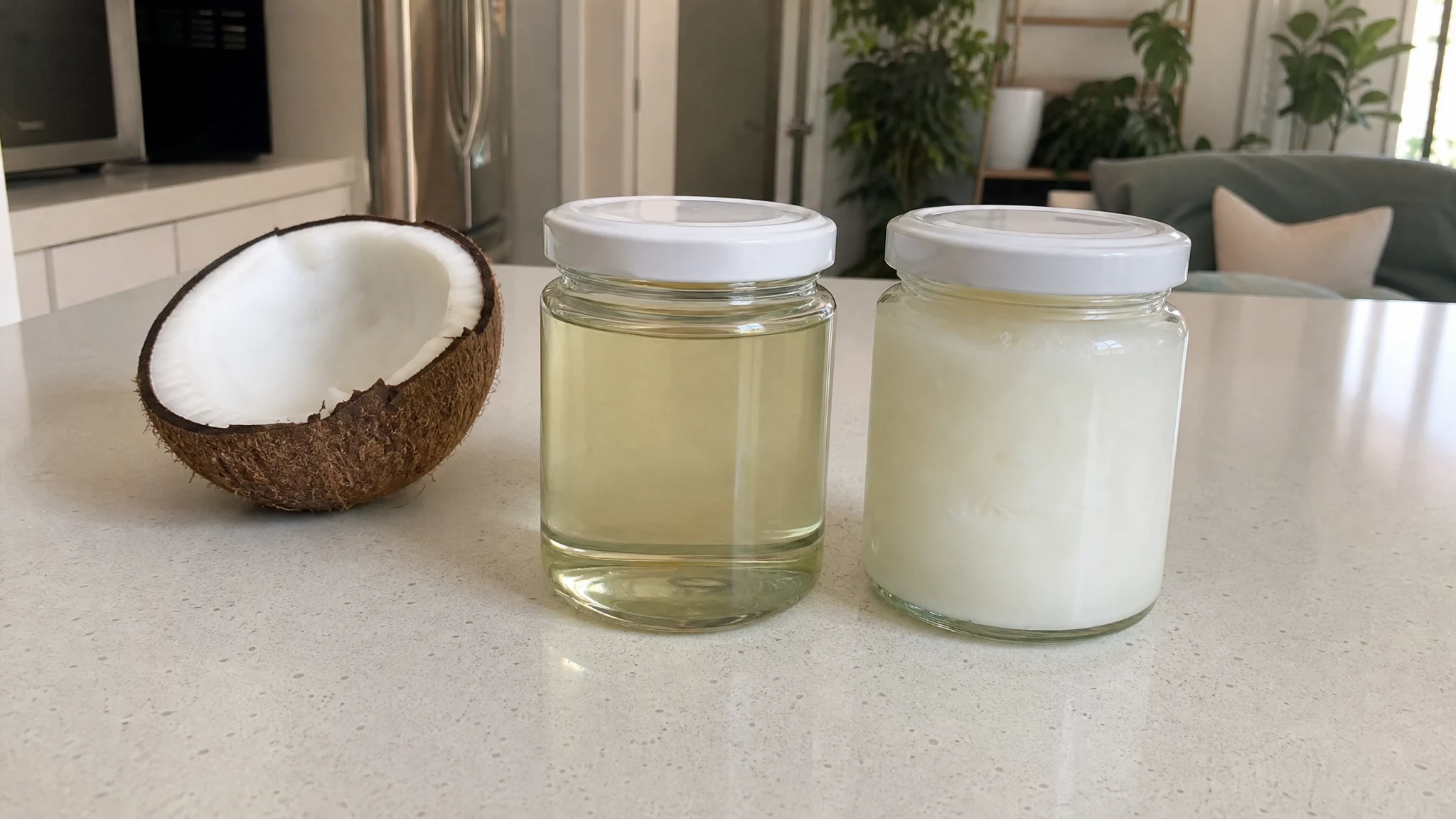
We do not sell cocoa butter, so if the butter feel is what you are after, you will find it elsewhere. What we do sell are two coconut oils. Our fractionated coconut oil stays liquid at any temperature, and we describe it as fast-absorbing, non-greasy and virtually odorless, which makes it the one to reach for if you dislike heavy layers or scent. Our virgin unrefined coconut oil is the closer cousin to a butter: firm in a cool room, melting in warm hands, with an unmistakable coconut aroma. The trial above used virgin coconut oil, so if you are following the research, that is the match. Both are for external cosmetic use only.
If you are pregnant
Tell your OB/GYN or midwife what you plan to put on your skin, and read the label of any product with added ingredients. The AAD advises checking with your doctor before using products for stretch marks if you are pregnant or breastfeeding, because some contain ingredients such as retinol that can harm a baby. Keep essential oils out of a belly oil unless your provider says otherwise. And if you or a relative has a coconut or tree nut allergy, we recommend checking with a professional first, then patch testing a small area and waiting 24 hours before regular use.
How we would choose
Pick the one you enjoy on your skin. If you want a rich, scented, balm-like finish, cocoa butter is lovely. If you want something light that you can spread quickly or blend with a favorite scent, coconut oil is the more flexible of the two. If early marks bother you, ask a dermatologist about the options the AAD names, and be patient with older ones, since the NHS says they fade over time.
For more, our overview of what skin studies have tested covers the wider evidence, our stretch marks article goes into that topic directly, and coconut oil against shea butter compares the other popular butter. Rough patches on joints get their own treatment in the elbows and knees routine.
Fractionated Coconut Oil
Fractionated Coconut Oil from our own shop, in sizes from 0.5 oz to bulk.
From $9.99
Shop Now →Sources & Further Reading
- Brennan M, Young G, Devane D. Topical preparations for preventing stretch marks in pregnancy. Cochrane Database Syst Rev CD000066. cochrane.org/evidence/CD000066
- Korgavkar K, Wang F, 2015. Stretch marks during pregnancy: a review of topical prevention. Br J Dermatol. pubmed.ncbi.nlm.nih.gov/25255817
- Brennan M, Clarke M, Devane D, 2016. The use of anti stretch marks' products by women in pregnancy: a descriptive, cross-sectional survey. BMC Pregnancy Childbirth. pubmed.ncbi.nlm.nih.gov/27654661
- American Academy of Dermatology. Stretch marks: why they appear and how to get rid of them. aad.org
- American Academy of Dermatology, updated 2026. Dermatologists' top tips for relieving dry skin. aad.org
- NHS, reviewed April 2024. Stretch marks. nhs.uk/conditions/stretch-marks
- Agero AL, Verallo-Rowell VM, 2004. Coconut oil versus mineral oil as a moisturizer for xerosis. Dermatitis 15(3):109-16. pubmed.ncbi.nlm.nih.gov/15724344