Coconut Oil for Stretch Marks: What the Evidence Says
A daily belly massage with a good oil is one of the sweet rituals of pregnancy, and it is easy to see how it became tied to stretch marks. Here is the part worth knowing before you spend a cent: studies have not shown that any cream, butter or oil stops stretch marks from forming, coconut oil included. What a lovely oil can do is leave skin feeling soft and comfortable while you take a few quiet minutes for yourself, and that is reason enough to enjoy one.

Fractionated Coconut Oil
Our own Fractionated Coconut Oil, in sizes from 0.5 oz to bulk.
From $9.99
Shop Now →What the trials looked at
The best summary is the Cochrane review of topical preparations for preventing stretch marks in pregnancy (Brennan, Young and Devane, 2022). It gathered six trials with 800 women, testing products such as Alphastria, Trofolastin, Verum, olive oil and cocoa butter. Applying a skin preparation did not prevent stretch marks, and the three trials that looked at severity, with 461 women, showed no clear difference. The authors found no high-quality evidence for any topical product and asked for larger, better trials.
Coconut oil was not among the products studied, so there is no coconut result either way. The nearest comparisons, olive oil and cocoa butter, did not stand apart from the rest, and from that we would reason that a plain coconut oil is unlikely to behave differently, though that is an inference and not a finding.
The NHS stretch marks page says much the same in plain words: many creams and lotions claim to prevent, reduce or remove stretch marks, there is very little evidence that they work, and the marks usually fade over time without always disappearing. It lists pregnancy, puberty and quick weight change among the common causes, along with having a family member who gets them. Skin stretching and family history do the heavy lifting, which is good news for your shelf space.
Why a daily oil is still a nice idea
Stretching skin can feel tight, and a smooth oil makes massage easy. That is a cosmetic pleasure, and it works best when the expectation is soft, comfortable skin. It is also why we sell our oils as cosmetic carrier oils and make no claim about stretch marks: the FDA explains that whether a product is a cosmetic or a drug depends on its intended use, shown by its labeling, advertising and other claims.
Choosing and using an oil
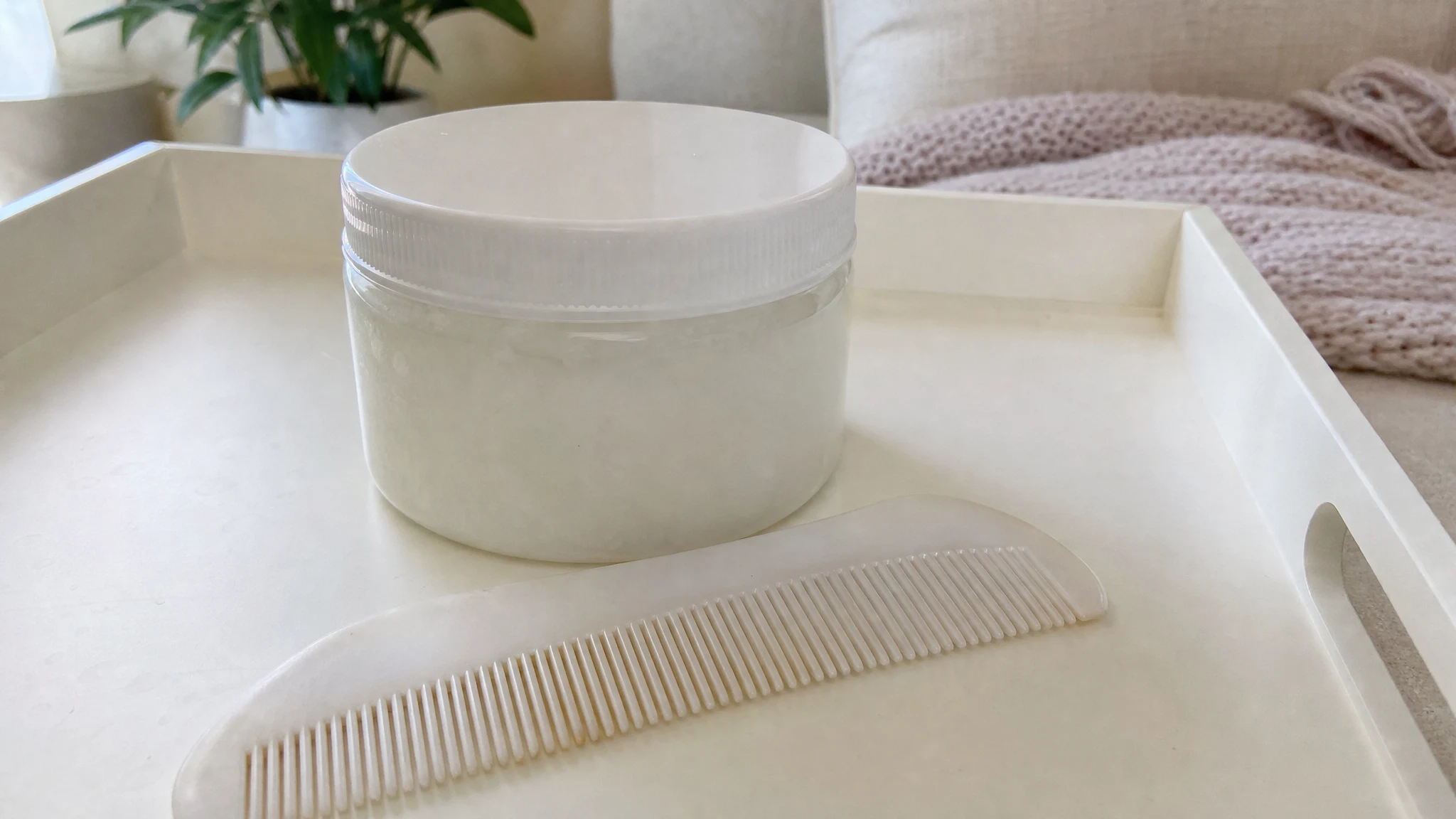
Pick the one you will look forward to. Our fractionated coconut oil stays liquid, and we describe it as virtually odorless and fast-absorbing, which suits anyone who finds strong scents tiresome during pregnancy. Our virgin unrefined coconut oil smells of coconut, is firm in a cool room and melts in warm hands, which is lovely if the aroma is part of the pleasure. Both are for external cosmetic use.
A teaspoon is about 4.9 ml, roughly 4.7 g at the density of the one batch on our published Certificate of Analysis, and that is generous for a whole abdomen. At a teaspoon a day, a 2 oz bottle (about 59 ml) lasts around twelve days, a handy way to size an order to your habit. The American Academy of Dermatology's dry skin tips suggest moisturizing right after a bath or shower while skin is still damp, and a minute or two of gentle circular massage is plenty.
A single-ingredient oil keeps the ingredient list short. We advise a patch test on a small area with a 24-hour wait, and a check with a professional before use if you have a coconut or tree nut allergy. We do not sell essential oils, and what belongs on your belly during pregnancy, if anything beyond a plain moisturizer, is a question for your obstetrician or midwife.
Reading the label on ready-made products
The same FDA page gives examples of claims, such as reducing cellulite, that move a product from cosmetic to drug territory. Reasoning from that and from the Cochrane findings, a bottle promising to prevent or remove stretch marks is promising more than the evidence supports. Turn it over and read the ingredients instead. The AAD suggests choosing "fragrance-free" rather than "unscented", since unscented products can still contain masking fragrance, which matters for something going on a large area every day.
Comparing oils and butters
If you are weighing options, we line up coconut oil against cocoa butter and against shea butter. On the evidence none of them prevents stretch marks, so the choice comes down to texture, scent and how your skin feels about it. Our guide to choosing a coconut oil for your skin helps with that last part.
After the baby arrives
The NHS notes that stretch marks usually fade over time, and that prescription retinoid creams, light or laser treatment and microdermabrasion may help them look better but will not remove them. It adds that retinoid creams should not be used in pregnancy. A board-certified dermatologist can tell you what is realistic for your skin. For anything that touches the breast or a baby's mouth, ask your midwife or a lactation consultant, since our oils are not sold for use around infants.
The NHS also says to see a GP if you have large stretch marks together with extra fat on the chest and tummy but slim arms and legs, fat at the back of the neck and shoulders, or a red, puffy, rounded face, as these could be signs of Cushing's syndrome. Any other worry about your skin in pregnancy, such as severe itching, is a call to your midwife or obstetrician.
So enjoy the ritual, keep it simple, and let the oil be what it is: a soft, pleasant few minutes. Be kind to your skin, and let the evening massage be a small treat.
Fractionated Coconut Oil
Fractionated Coconut Oil from our own shop, in sizes from 0.5 oz to bulk.
From $9.99
Shop Now →Sources & Further Reading
- Brennan M, Young G, Devane D, 2022. Topical preparations for preventing stretch marks in pregnancy. Cochrane Database Syst Rev CD000066. cochrane.org/CD000066
- NHS, reviewed 30 April 2024. Stretch marks. nhs.uk/stretch-marks
- US FDA. Is it a cosmetic, a drug, or both? fda.gov
- American Academy of Dermatology, accessed 2026. Dermatologists' top tips for relieving dry skin. aad.org