Cradle Cap and Coconut Oil: What Pediatric Advice Says
Around 70 percent of three-month-olds have cradle cap, according to the American Academy of Pediatrics, which makes those greasy, yellowish scales one of the most ordinary things a new parent will spot on a baby's head. They look more dramatic than they are. Coconut oil comes up in nearly every conversation about it, and the pediatric advice on it is calm and short, which is a comfort in itself.

Fractionated Coconut Oil
Our own Fractionated Coconut Oil, in sizes from 0.5 oz to bulk.
From $9.99
Shop Now →A harmless, common visitor
The AAP's HealthyChildren page, written by pediatric dermatologist Sarah Stein, explains that nobody knows exactly what causes cradle cap. One theory points to a common skin yeast, another to maternal hormones nudging a baby's oil glands, but it is not an allergy, not an infection and not a sign of poor hygiene. It is rarely itchy or bothersome, and it is not contagious. Treatment is optional, and it usually fades on its own within weeks or months, mostly by a baby's first birthday (AAP, updated October 2023). The NHS describes it the same way: harmless, not itchy or painful, usually clear within a few months.
So the first step is often just ordinary washing. If you would like to do a little more, or you want a pediatrician to confirm the scaling really is cradle cap, that is a conversation for the next checkup.
Where coconut oil appears in the advice
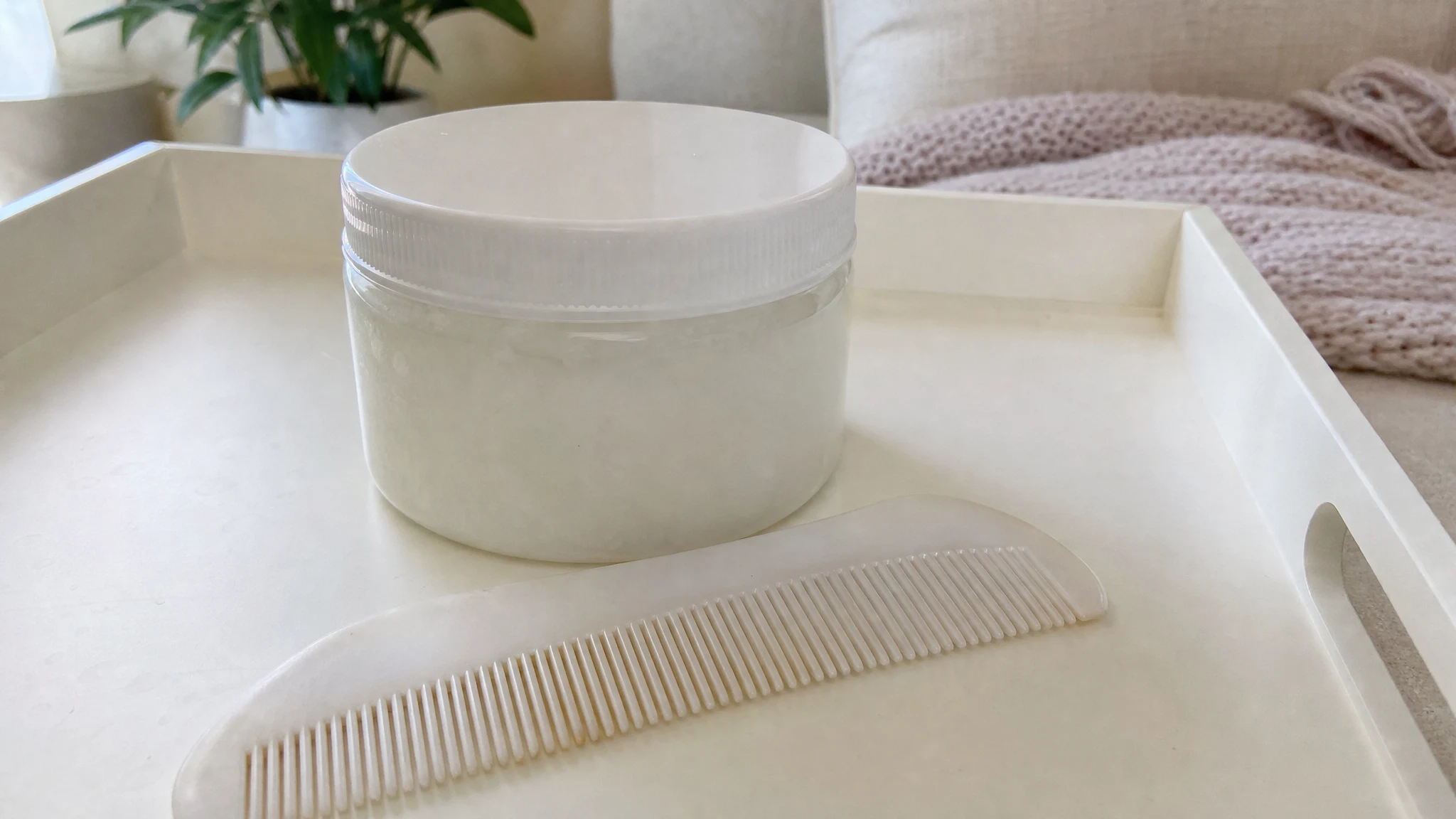
For parents who want scales to come away more easily, the AAP suggests washing the baby's hair more often (every other day suits most babies), using a mild baby shampoo, and loosening scales during the shampoo with gentle massage, a soft brush or a baby comb. For stubborn patches it says to apply a little mineral oil, coconut oil or petroleum jelly, leave it overnight to soften the scales, then wash and brush as usual. It also asks parents not to scratch or pick, and reassures them that hair lost with the scales grows back.
The NHS version is a little shorter. It suggests lightly massaging an emollient or coconut oil onto the scalp to help loosen scales, brushing gently with a soft brush, then washing with baby shampoo. Its list of things to avoid is specific: olive oil, peanut oil, soap, adult shampoo, anything with fragrance or perfume, and picking at the crusts. A pharmacist can help with choosing an emollient or shampoo.
What stands out when you read the two side by side is how much they agree. Coconut oil is one of several oils named together, always as a helper that softens scales before a wash, and neither authority says which type of coconut oil to choose. If the olive oil in your kitchen was tempting you, our coconut versus olive oil on skin article explains why the NHS steers away from it.
What the research adds
The most useful systematic review is a Cochrane review of treatments for infantile seborrhoeic dermatitis, the medical name for cradle cap. It found six randomized trials with 310 infants, most under seven months old. Those trials tested oral biotin, creams, gels and topical steroids; none tested mineral or vegetable oils. Nearly every group improved, differences between treatments were small, and the certainty of the evidence was very low. The authors concluded that the condition usually resolves within weeks to months regardless, and called for larger trials of common products such as emollients (Victoire et al., 2019).
Putting the three sources together, our reading is that coconut oil has earned a spot in respected pediatric advice as a practical softener for a condition that tends to clear unaided, and that the advice rests on practice rather than trials. The steps both authorities emphasize are the gentle ones: regular washing, a soft brush, and leaving the scales alone.
Choosing an oil
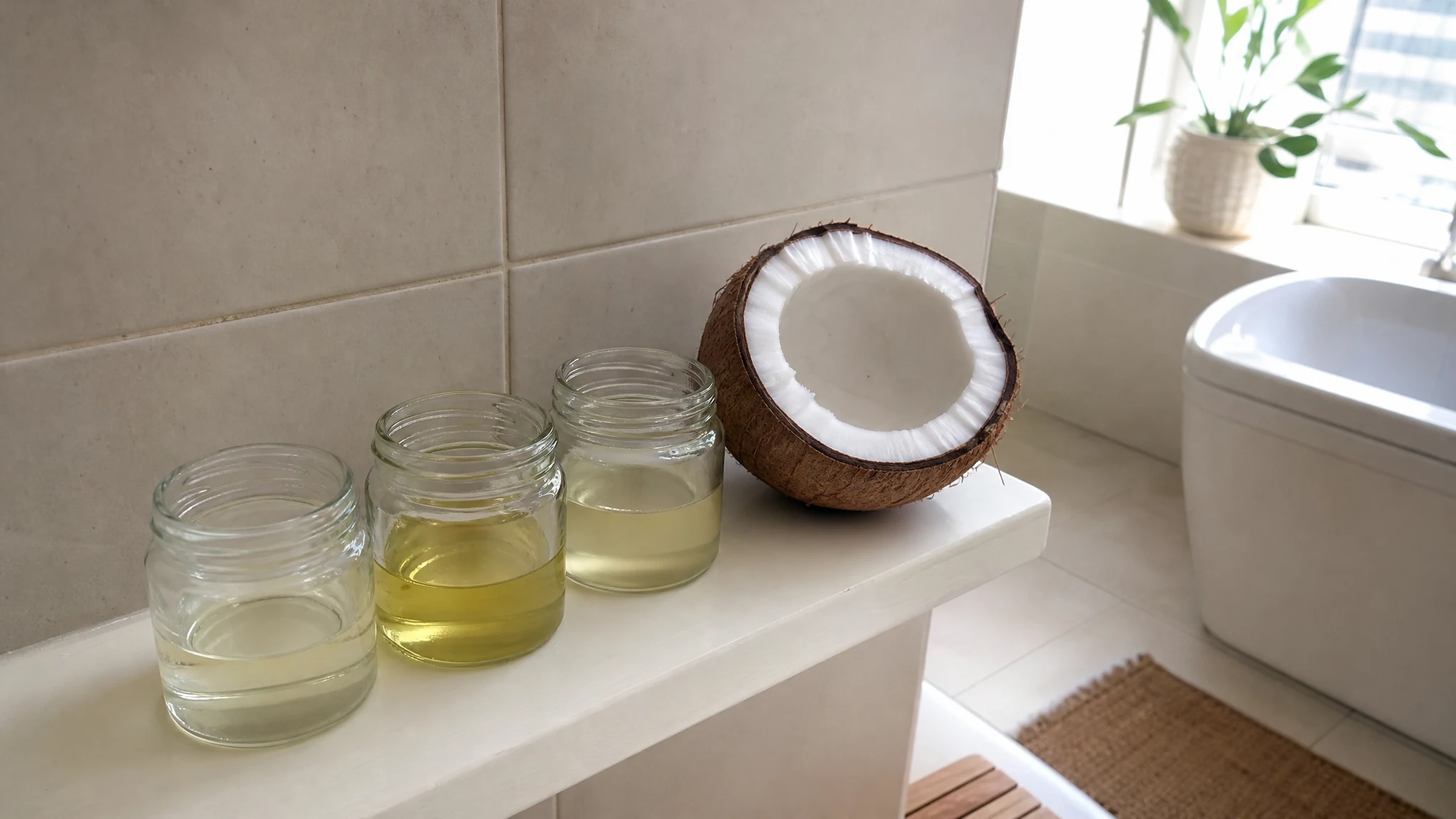
We sell two coconut oils for external cosmetic use. Our fractionated coconut oil stays liquid at any temperature and we describe it as virtually odorless; our virgin unrefined listing is firm in a cool room, with a creamy coconut aroma. We do not make baby products, so which oil, if any, suits a particular infant is a question for your pediatrician. The one Certificate of Analysis we publish covers a single fractionated batch and lists appearance, smell, density, refractive index and optical rotation, without microbial or contaminant data, which is worth knowing about any oil you are weighing for a baby. For our oils, we advise a small patch test with a 24-hour wait, and a check with a professional first if there is a coconut or tree nut allergy in the family.
On allergy more broadly, the FDA stopped treating coconut as a tree nut for food labeling in January 2025, yet the food allergy group FARE points out that this does not mean nobody is allergic to coconut (FARE, 2025). Essential oils are best left off a baby's scalp altogether: Poison Control notes that children have thin skin and immature livers, which might make them more susceptible to toxic effects than adults (poison.org).
When to bring in the pediatrician
The AAP asks you to call if the area becomes crusted, weepy or has pus bumps, or if there is a rash beyond the scalp, a rash with an odor, signs of pain, oozing or bleeding, or swollen skin. The NHS suggests seeing a GP if home care has not helped after a few weeks or the rash spreads over the body. Premature babies, babies with eczema and babies with a family history of allergies deserve the pediatrician's say-so before anything goes on.
If you are curious about oils and babies more widely, our baby skin article looks at the infant studies, and the eczema article covers what trials of coconut oil on eczema measured. For cradle cap itself, a gentle routine, a photo for the next checkup and a little patience carry most families through, because for most babies it simply fades.
Fractionated Coconut Oil
Fractionated Coconut Oil from our own shop, in sizes from 0.5 oz to bulk.
From $9.99
Shop Now →Sources & Further Reading
- American Academy of Pediatrics (HealthyChildren.org), 2023. Cradle cap (S. Stein, MD, updated 19 Oct 2023). healthychildren.org
- NHS. Cradle cap. nhs.uk/conditions/cradle-cap
- Victoire A, Magin P, Coughlan J, van Driel ML, 2019. Interventions for infantile seborrhoeic dermatitis (including cradle cap). Cochrane Database Syst Rev 3:CD011380. pmc/PMC6397947
- FARE, 2025. Update: FDA guidance on food allergen labeling (7 Feb 2025). foodallergy.org
- Poison Control (poison.org). Essential oils. poison.org/articles/essential-oils