Olive Oil vs Coconut Oil in Baking: Pick by Batter
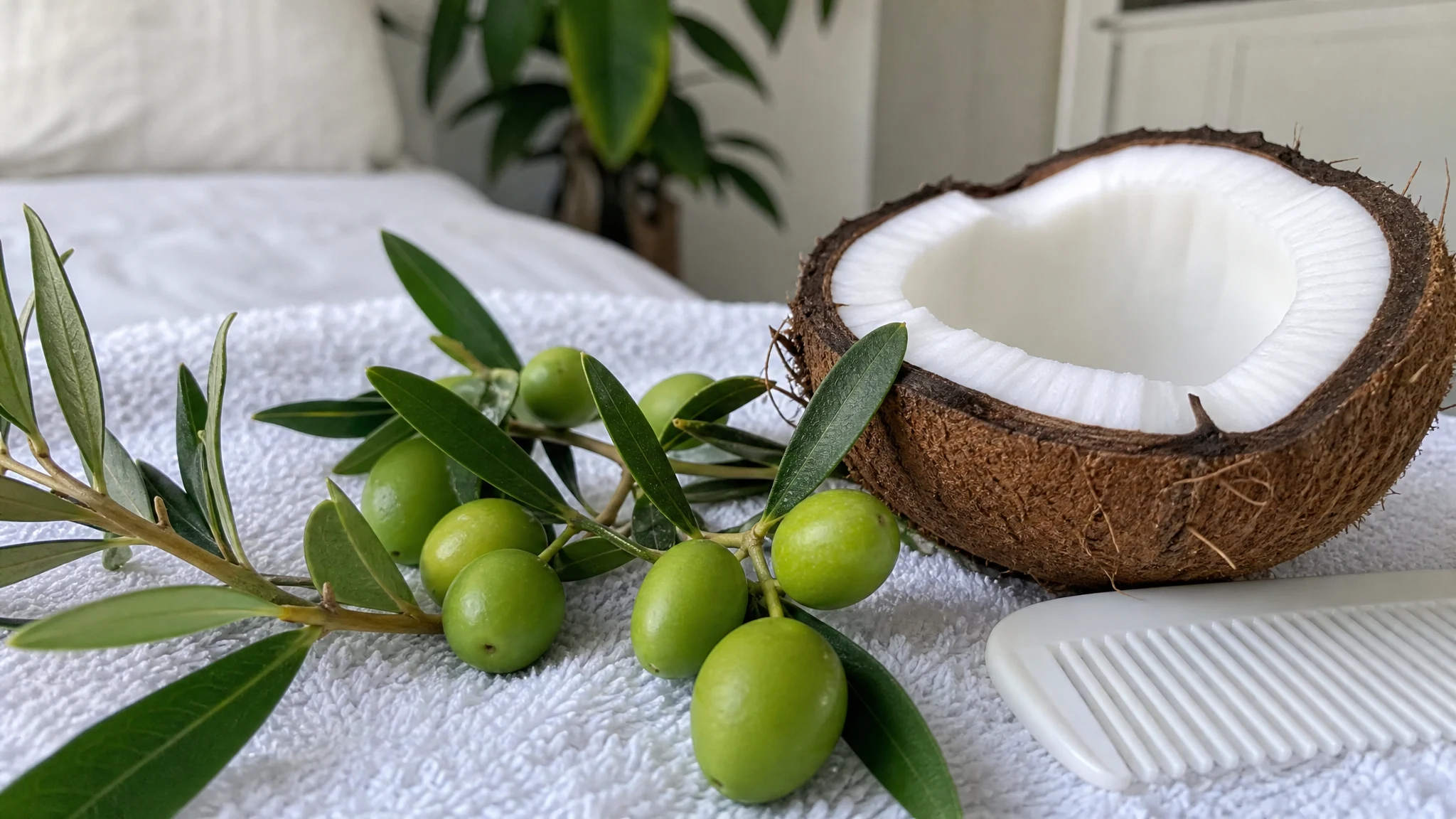
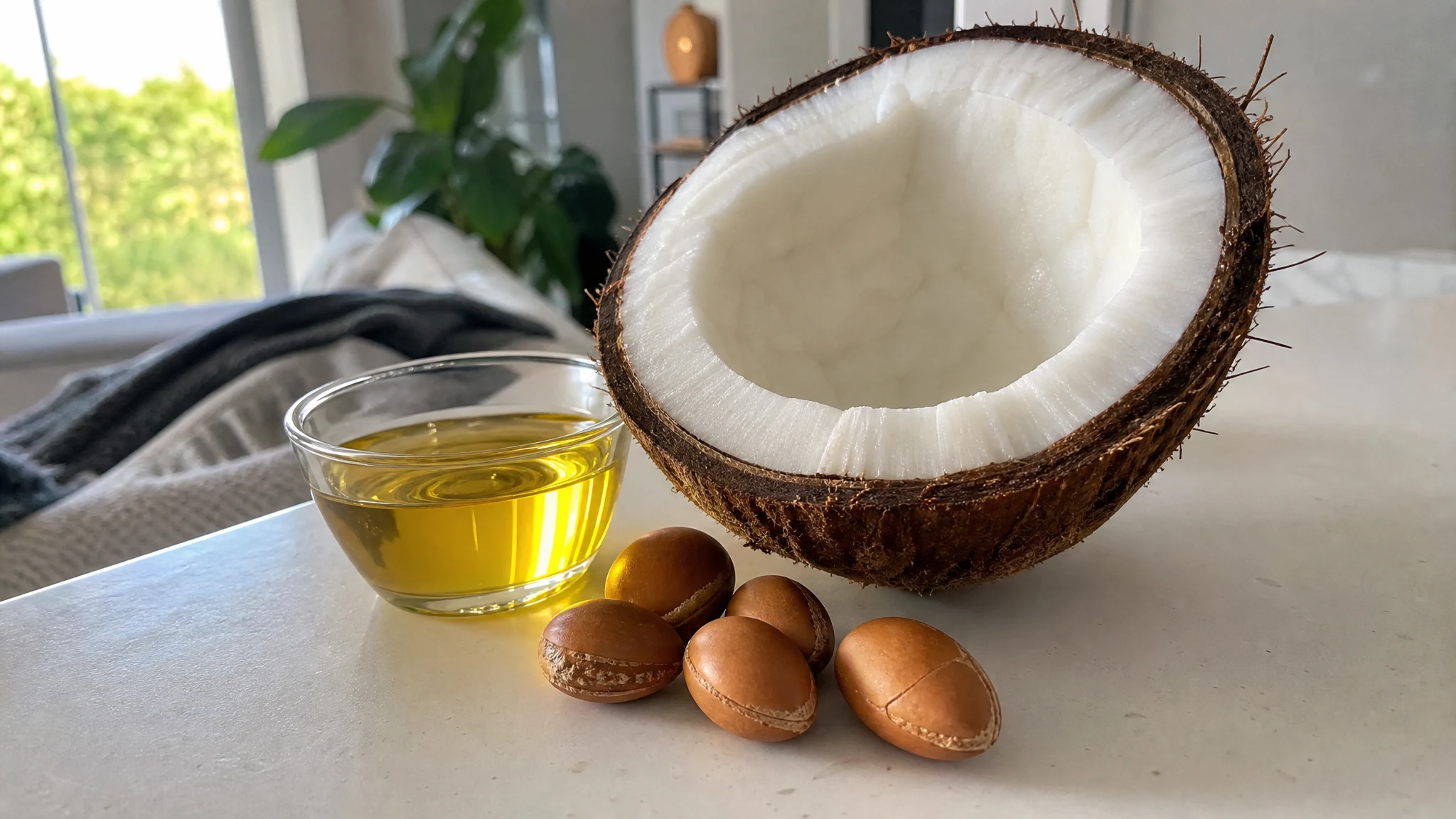
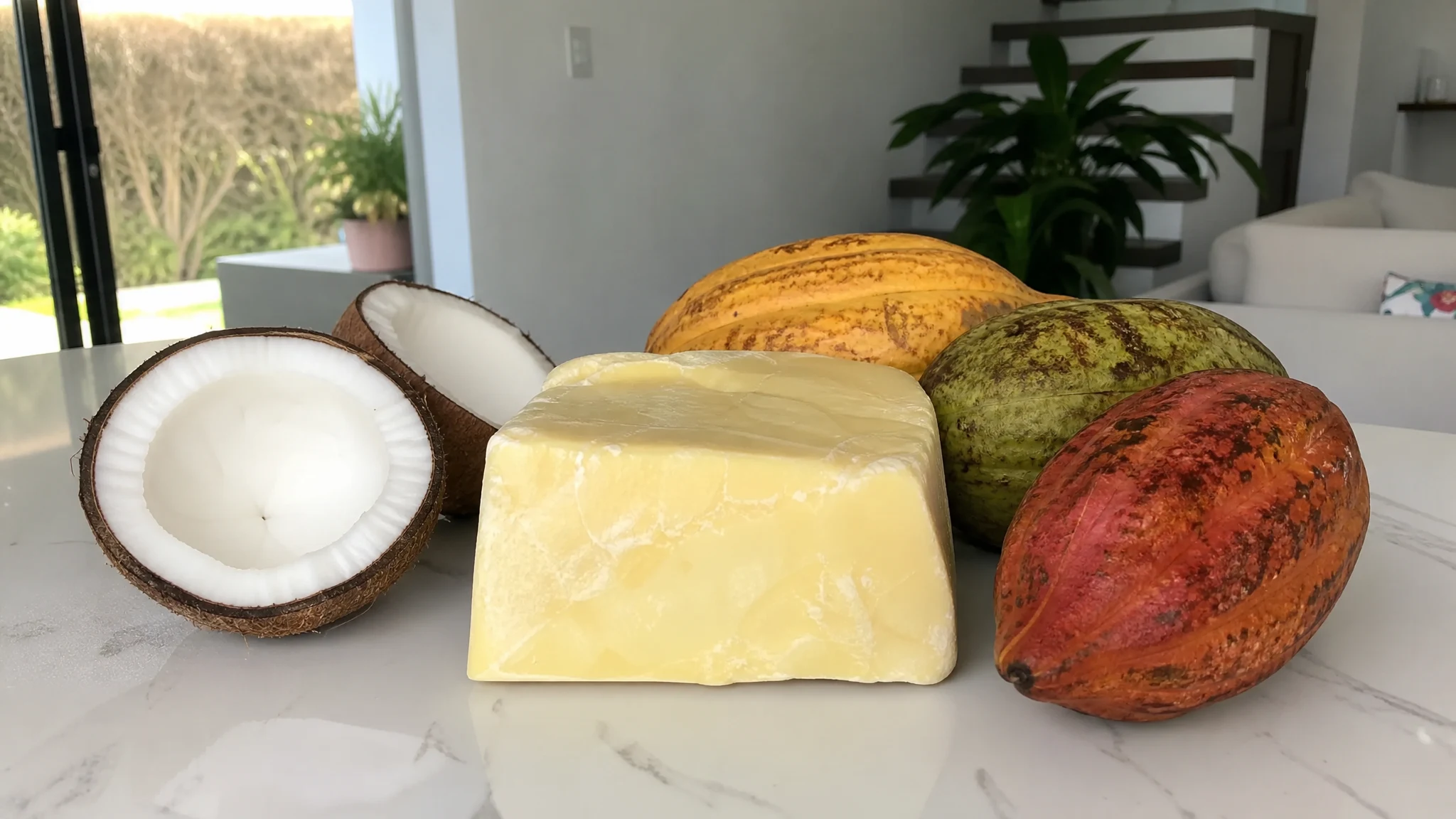
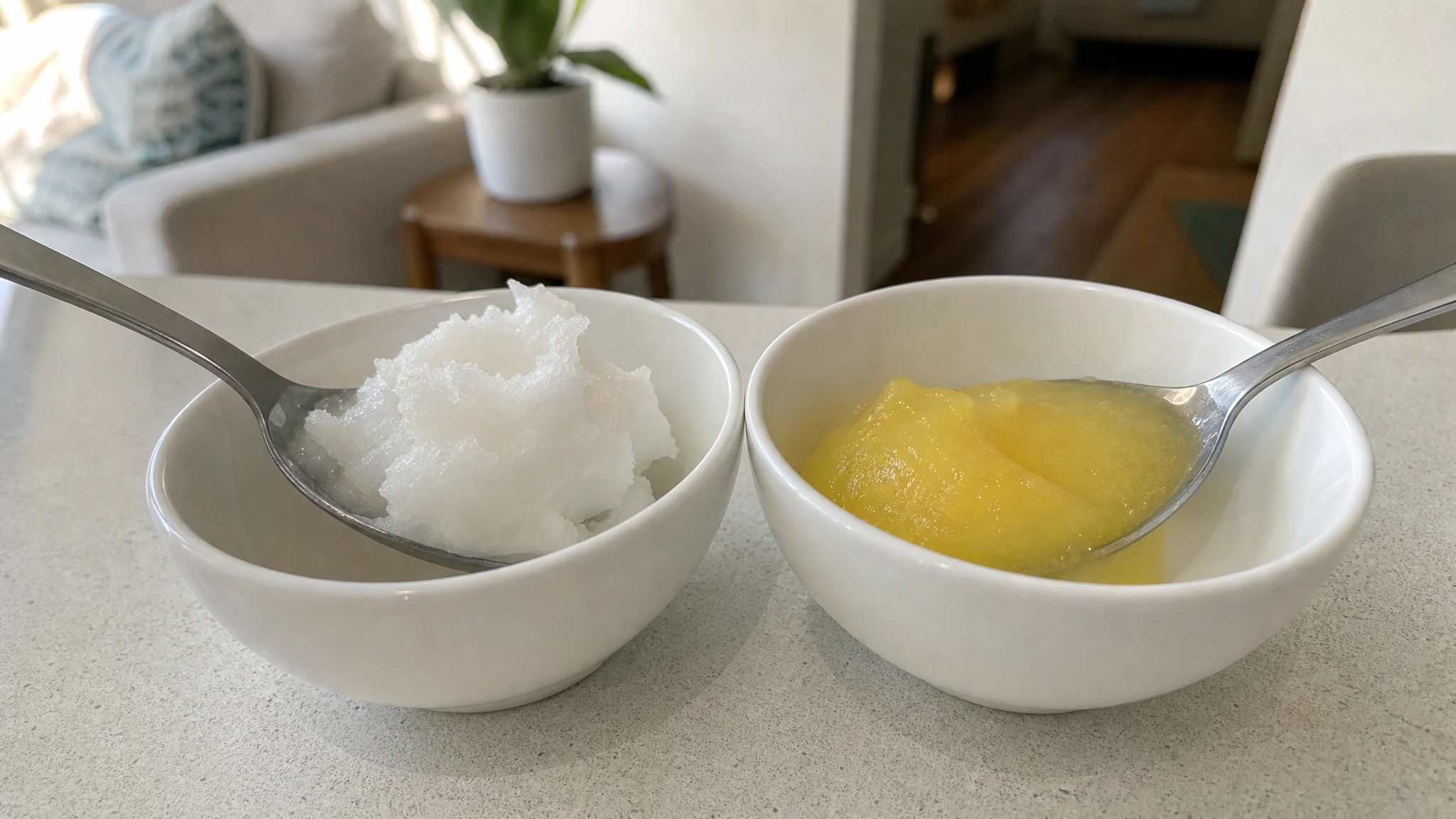
Every cake quietly asks its oil two questions: how should the crumb feel, and what should the slice smell like? Olive oil and coconut oil answer them in completely different voices. One is a pourable green-gold liquid whose flavor depends entirely on the bottle. The other is a pale solid that melts in a warm kitchen and may or may not taste of coconut. Picking between them has very little to do with oven temperature and a lot to do with those two traits.
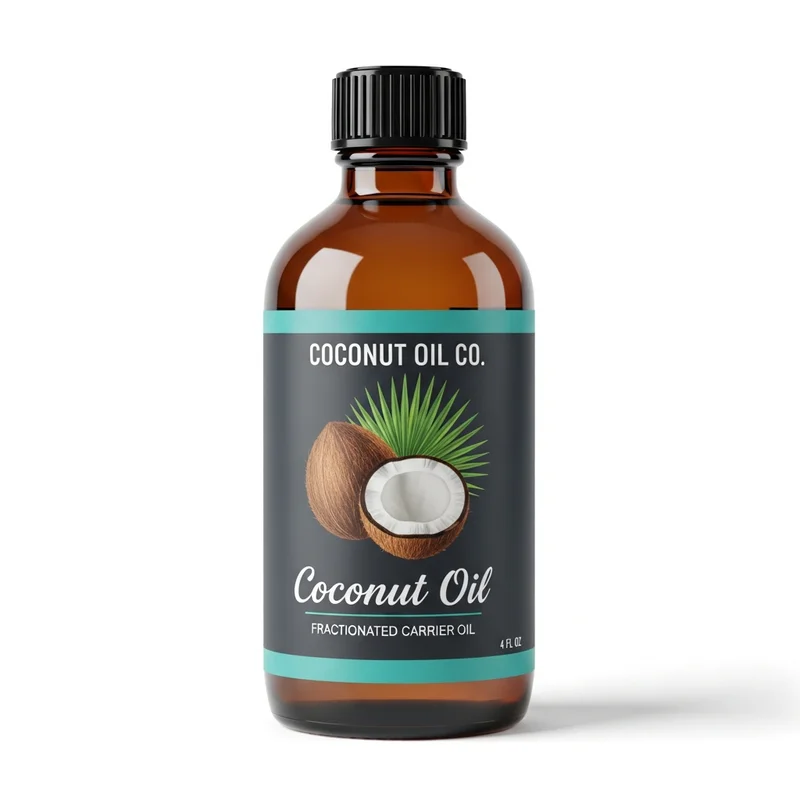
Fractionated Coconut Oil
Our own Fractionated Coconut Oil, in sizes from 0.5 oz to bulk.
From $9.99
Shop Now →Is the fat solid, and what does it taste like?
Start with texture. Olive oil is built mostly from oleic acid (66.4% in a survey of vegetable oils), while coconut oil is 92.1% saturated, with lauric acid at 47.7% (Orsavova et al., 2015). You can see that chemistry on your counter. A review of coconut oil processing describes it as a clear liquid at 30 C and above that sets around 25 C (Ng et al., 2021), and our virgin unrefined listing firms below about 76 F. Olive oil stays pourable in the pantry year round.
Then flavor. Olive oil can be grassy, peppery, fruity or barely there. Coconut oil runs from a full coconut aroma (that is how we describe our virgin unrefined) to nearly neutral when refined. The fun part is pairing: olive oil loves citrus, chocolate, rosemary and almond, and coconut oil leans toward lime, banana, pineapple and anything tropical.
Start with a sniff
Before you pour anything into the bowl, open the bottle and smell it. An olive oil that smells grassy and bright will show up in a lemon cake, and one that smells flat will simply disappear. A coconut oil that smells like a tropical vacation will announce itself in a plain vanilla muffin. Thirty seconds with your nose saves a whole batch from surprising you, and it is the easiest habit in the baking kitchen.
Why oven heat barely matters here
A cake bakes around 350 F, but the batter is full of water, so the crumb stays far cooler than an empty skillet would. For reference, Milk Street's skillet test caught refined olive oil smoking at 449 F and refined coconut oil at 423 F; they left out extra-virgin olive oil and unrefined coconut oil, both of which smoke lower (Milk Street, 2018). The practical takeaway is that smoke is worth a thought only when oil touches a hot pan or tray directly, like a heavily greased sheet or a preheated pizza stone. Our frying comparison covers the stovetop side.
Bake by bake
What follows is how those two traits play out in the recipes you are most likely to make. It is reasoning from how each fat behaves, so treat it as a plan rather than a promise.
Oil cakes, quick breads and muffins
These batters expect a liquid fat, so either oil can work. Olive oil is the easy one. Melted coconut oil has a small quirk: poured into cold eggs or milk, it cools below its setting point and can firm into tiny flecks. Bring the wet ingredients to room temperature first, or stir the coconut oil in last and mix briefly. After that, choose on flavor.
Cookies and bars
Here coconut oil is at home. A cookie that starts by creaming butter and sugar depends on a solid fat to hold air, and liquid oil will not whip the same way, so a creamed cookie made with olive oil tends to spread. Cool, firm coconut oil can stand in for butter, and our swap guide has the weights. Bars and no-bake sweets that need to set, like our granola bars, are coconut oil territory too.
Pie crust, biscuits and scones
Flaky pastry depends on cold, solid pieces of fat cut into flour. Chilled coconut oil does that job nicely. Olive oil cannot, which makes an olive oil crust a different recipe altogether, one that is mixed and pressed rather than cut and rolled.
Yeast bread and pizza dough
This is where you get the most freedom. A 2024 study baked bread with butter, shortening and coconut oil, and a sensory panel found no significant differences among them (Nemoto et al., 2024). Olive oil is the traditional choice for focaccia and pizza because its flavor is part of the deal. Coconut oil is a handy dairy-free alternative when you want a softer, more neutral loaf.
Brownies
Melted-fat brownies welcome either one. Olive oil brings a savory edge that dark chocolate hides beautifully. Coconut oil firms as it cools, which should give a denser, fudgier slice, though that is our reading of how the fat behaves.
Small habits that help either way
- Measure the oil in a liquid measuring cup, set on the counter, and read it at eye level. Coconut oil that has just melted pours like water, so scrape the cup clean.
- Mix the batter only until the flour disappears. Oil batters are forgiving, but a gentle hand always gives a softer slice.
- Let the cake cool before you cut it. Warm slices can look gummy, and the flavor of the oil settles in as it cools.
A word about our oils
We make fractionated coconut oil and a virgin unrefined coconut oil for external cosmetic use, so neither is meant for your mixing bowl, and we do not sell olive oil. For the oven, reach for a food-labeled bottle, and our virgin versus refined guide decodes the label words. If your project is a skin or hair oil instead, take a look at olive oil versus coconut oil on skin and our fractionated coconut oil, and patch test a small area first.
The one-line rule we would give a friend: olive oil when the batter wants a liquid fat and a little personality, coconut oil when the dough needs a solid fat or a dairy-free, olive-free base.
Fractionated Coconut Oil
Fractionated Coconut Oil from our own shop, in sizes from 0.5 oz to bulk.
From $9.99
Shop Now →Sources & Further Reading
- Orsavova et al., 2015. Fatty acids composition of vegetable oils. Int J Mol Sci 16(6):12871-90. PMC4490476
- Ng et al., 2021. A comprehensive review on the techniques for coconut oil extraction and its application. Bioprocess Biosyst Eng 44(9):1807-1818. PMC8132276
- Milk Street, 2018. The most durable oils for high-heat cooking. 177milkstreet.com
- Nemoto, Kobayashi and Odake, 2024. Coconut oil as an alternative to butter and shortening in bread making. J Food Sci 89:913-924. PMID 38221799