Coconut Oil or Olive Oil for Hair: What the Studies Tested
Search for the best oil for hair and you will find confident answers pointing in both directions. The research behind them is quieter and a bit more interesting. The study everyone cites for coconut oil never tested olive oil at all, and the one study that did include olive oil measured something narrower than the word "repair" suggests. Once you know what each paper really did, choosing between the two bottles in your cupboard gets a lot easier.
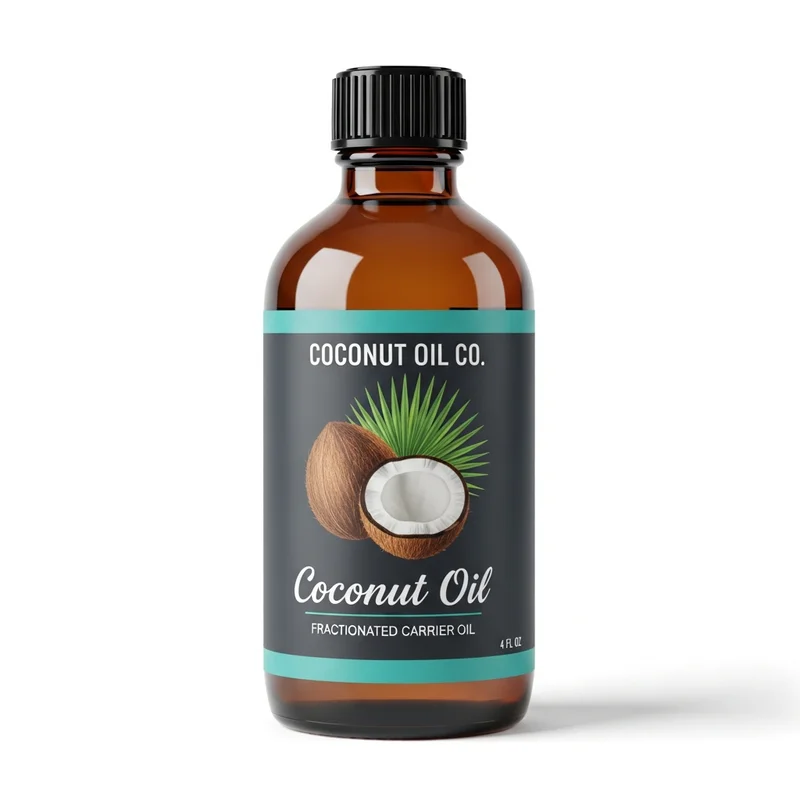
Fractionated Coconut Oil
Our own Fractionated Coconut Oil, in sizes from 0.5 oz to bulk.
From $9.99
Shop Now →The famous coconut study left olive oil out
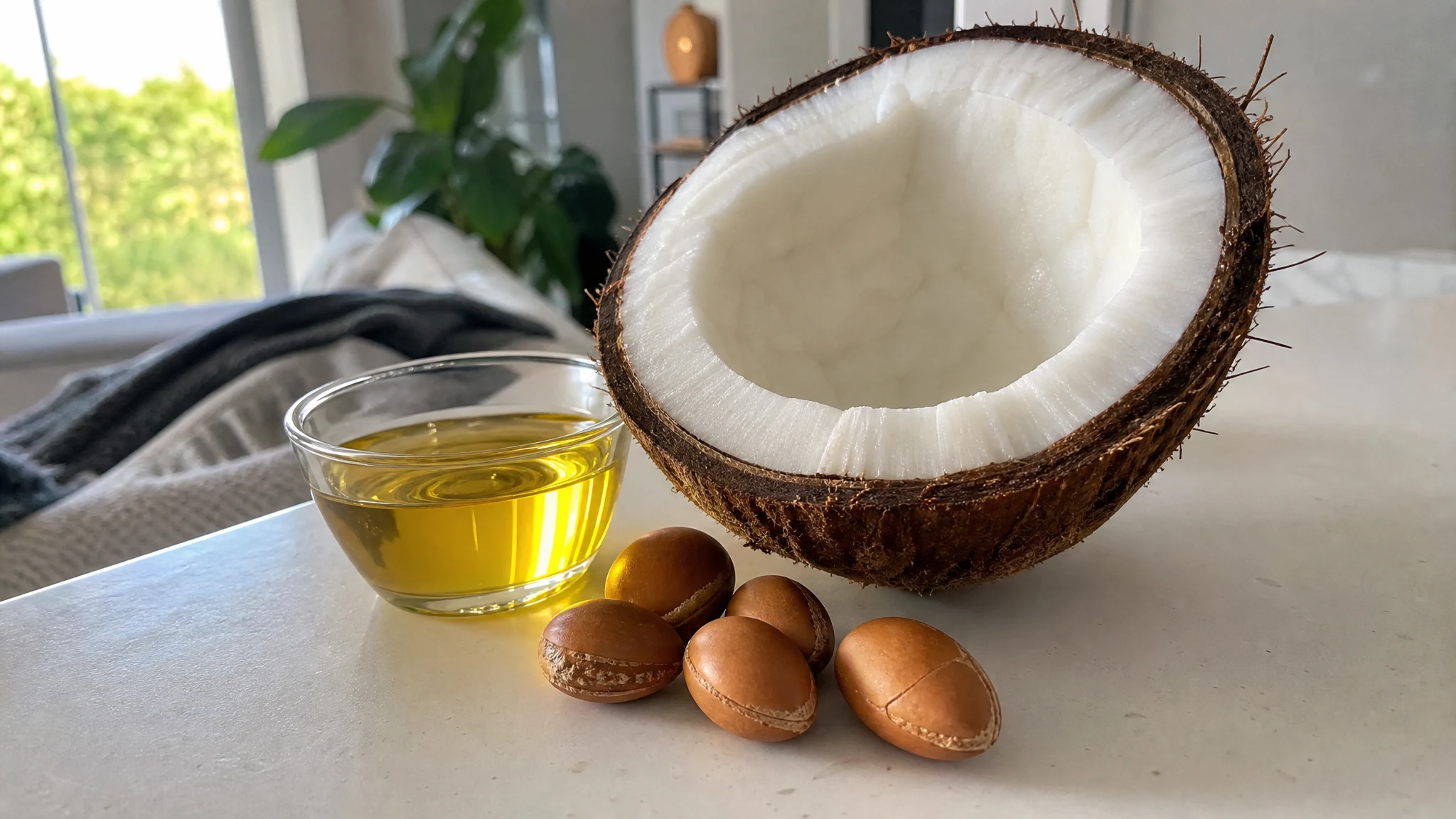
When people say coconut oil is good for hair, they usually mean Rele and Mohile's 2003 paper in the Journal of Cosmetic Science. It tested mineral oil, sunflower oil and coconut oil on undamaged and damaged hair, applied before or after washing. Coconut oil was the only one to clearly reduce protein loss, and the authors tied that to the affinity of its lauric acid triglyceride for hair protein (Rele and Mohile, 2003). Olive oil was not in that lineup, so a headline claiming coconut beat olive jumps a step the paper never took.
The study that did include olive oil comes from the same journal. Keis and colleagues (2005) measured how strongly treated hair fibers cling to one another over time. Coconut, olive and sunflower oils all reduced that cling, and mineral oil did not. The authors read it as the oils soaking into the fiber and leaving a thinner film on the surface. On that measure, olive oil keeps very good company with coconut oil. It tells you how oil behaves between fibers. It does not tell you the hair came out stronger.
A review in the International Journal of Trichology pulls the threads together: some oils enter the hair and reduce the water it takes up, saturated and monounsaturated oils diffuse in more readily than polyunsaturated ones, and coconut oil is the one shown in the Rele paper to cut protein loss (Gavazzoni Dias, 2015). We did not find an olive oil protein-loss result in the pages we read, so there is no head-to-head on that measure to point to.
What "damaged" usually comes from
The same review notes that bleached and chemically treated hair is more porous than untouched hair. The American Academy of Dermatology puts most of the wear on habits: heat tools used about once a week or less, one chemical service at a time, color touch-ups spaced 8 to 10 weeks apart, conditioner after every shampoo, and blotting wet hair rather than rubbing it (AAD). That page does not mention oils. If a flat iron gets daily use, the iron is the first decision and the oil is the second.
Our pick, and which coconut oil
If hair is the goal and these are your two options, the published protein-loss result favors coconut oil, so we would reach for coconut. That is a modest claim, which suits the evidence: both findings come from small, older lab studies and neither measures what you see in the mirror.
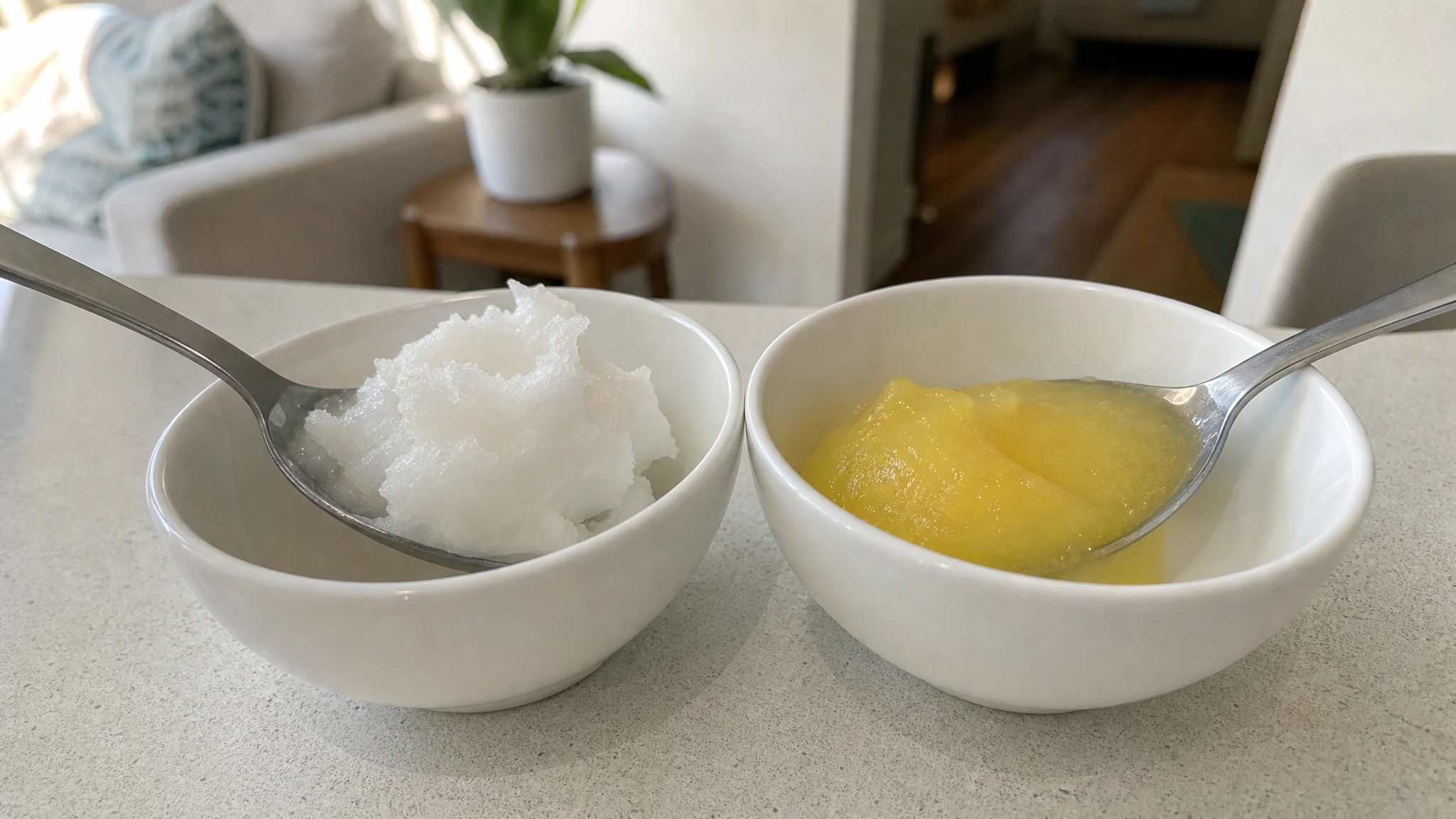
Then comes the question of which coconut oil. The lauric acid explanation in the Rele paper describes ordinary coconut oil. Our fractionated oil has most of its lauric acid removed by design (our guide to fractionated coconut oil explains how), so applying the study to it is an inference. The oil closer to the study's chemistry is our virgin unrefined, which is firm in a cool room and smells of coconut. If you want something that stays liquid and spreads with little scent, our fractionated oil suits that, though we cannot point to a hair-protein study for it.
A quick word on olive oil and skin
A pre-wash oiling touches the scalp too, so it is worth knowing that a small forearm study of 19 adults found daily olive oil over several weeks lowered skin barrier integrity and caused mild redness, while sunflower seed oil did not. Its authors advised against olive oil for dry skin and infant massage (Danby et al., 2013). Leave-on forearm use is not the same as a scalp oiling that gets shampooed out, and the study did not test coconut oil, so treat it as a reason to patch test rather than a verdict. Our olive oil on skin article takes a closer look.
An easy way to start
Pay attention to how your hair feels as it dries. Hair that feels soft and moves freely is a good sign, while hair that feels weighed down, stringy or coated means a little too much oil, so use less next time. Fine hair usually wants only a few drops, and thick hair can take more. If you choose virgin unrefined, expect a warm coconut scent that lingers after you wash, which some people adore and others would rather skip.
Here is a suggestion drawn from the sources. Patch test a small area and wait 24 hours. Use a small amount on the lengths and ends, since that is where the hair studies point. Shampoo it out and condition as the AAD advises. Our hair mask guide has amounts by hair length, and the pre-wash comparison covers timing.
Our oils are cosmetic carrier oils for external use only. If you have a coconut or tree nut allergy, check with a professional before using ours. Scalp redness, weeping, scale or sudden shedding is a dermatologist visit, not an oil question, and our dandruff article covers what dermatology sources say about flaking. Ask a pediatrician before oiling a baby's hair or scalp.
The short version: olive oil looks a lot like coconut oil in the one penetration test that included both, coconut oil holds the only protein-loss result, and your own scalp gets the last word.
Fractionated Coconut Oil
Fractionated Coconut Oil from our own shop, in sizes from 0.5 oz to bulk.
From $9.99
Shop Now →Sources & Further Reading
- Rele AS, Mohile RB, 2003. Effect of mineral oil, sunflower oil, and coconut oil on prevention of hair damage. J Cosmet Sci 54(2):175-92. pubmed.ncbi.nlm.nih.gov/12715094
- Keis K, Persaud D, Kamath YK, Rele AS, 2005. Investigation of penetration abilities of various oils into human hair fibers. J Cosmet Sci 56(5):283-295. library.scconline.org/v056n05
- Gavazzoni Dias MFR, 2015. Hair cosmetics: an overview. Int J Trichology 7(1):2-15. pmc.ncbi.nlm.nih.gov/PMC4387693
- Danby SG et al., 2013. Effect of olive and sunflower seed oil on the adult skin barrier: implications for neonatal skin care. Pediatr Dermatol 30(1):42-50. research.lstmed.ac.uk
- American Academy of Dermatology. How to stop damaging your hair. aad.org