How Much Coconut Oil for a Hair Mask? Starting Amounts
Few beauty rituals are as simple as a coconut oil hair mask: oil, hair, a little time, shampoo. The difference between hair that feels silky afterward and hair that feels weighed down comes down to three things, how much oil you use, where you put it and how thoroughly you rinse. All three are easy to tune, so we have worked out starting amounts for different hair in teaspoons and milliliters, along with a way to choose between our two coconut oils.

Fractionated Coconut Oil
Our own Fractionated Coconut Oil, in sizes from 0.5 oz to bulk.
From $9.99
Shop Now →Why coconut oil and hair have such a long relationship
Most coconut oil hair advice traces back to a 2003 study. Rele and Mohile compared coconut, sunflower and mineral oil and found that coconut oil was the only one to clearly reduce protein loss from both undamaged and damaged hair, whether applied before or after washing. The authors point to the way lauric acid triglyceride is drawn to hair protein. In 2005, Keis and colleagues found that coconut, olive and sunflower oils reduced cling between hair fibers over time, and that warmth reduced it further for coconut and sunflower. A review in the International Journal of Trichology adds that chemically treated and bleached hair is more porous than virgin hair (Gavazzoni Dias, 2015).
Those studies measured protein loss and fiber cling in the lab, not how hair looks from day to day. The lauric acid explanation fits ordinary coconut oil, and fractionated oil has most of it removed. And none of this work sorts hair into the 1A to 4C types people use online, so the amounts below come from arithmetic and sensible judgment.
Which of our oils
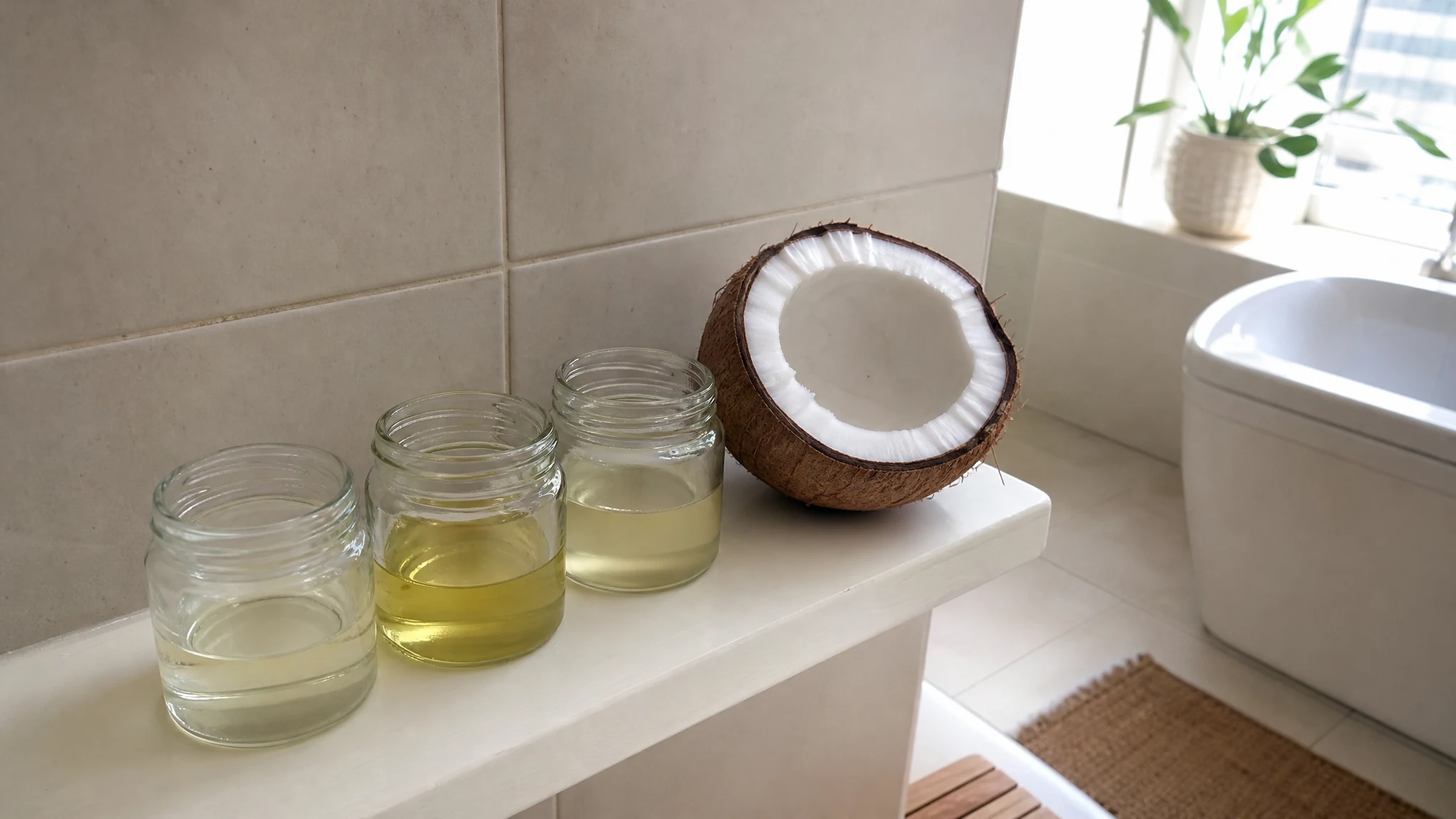
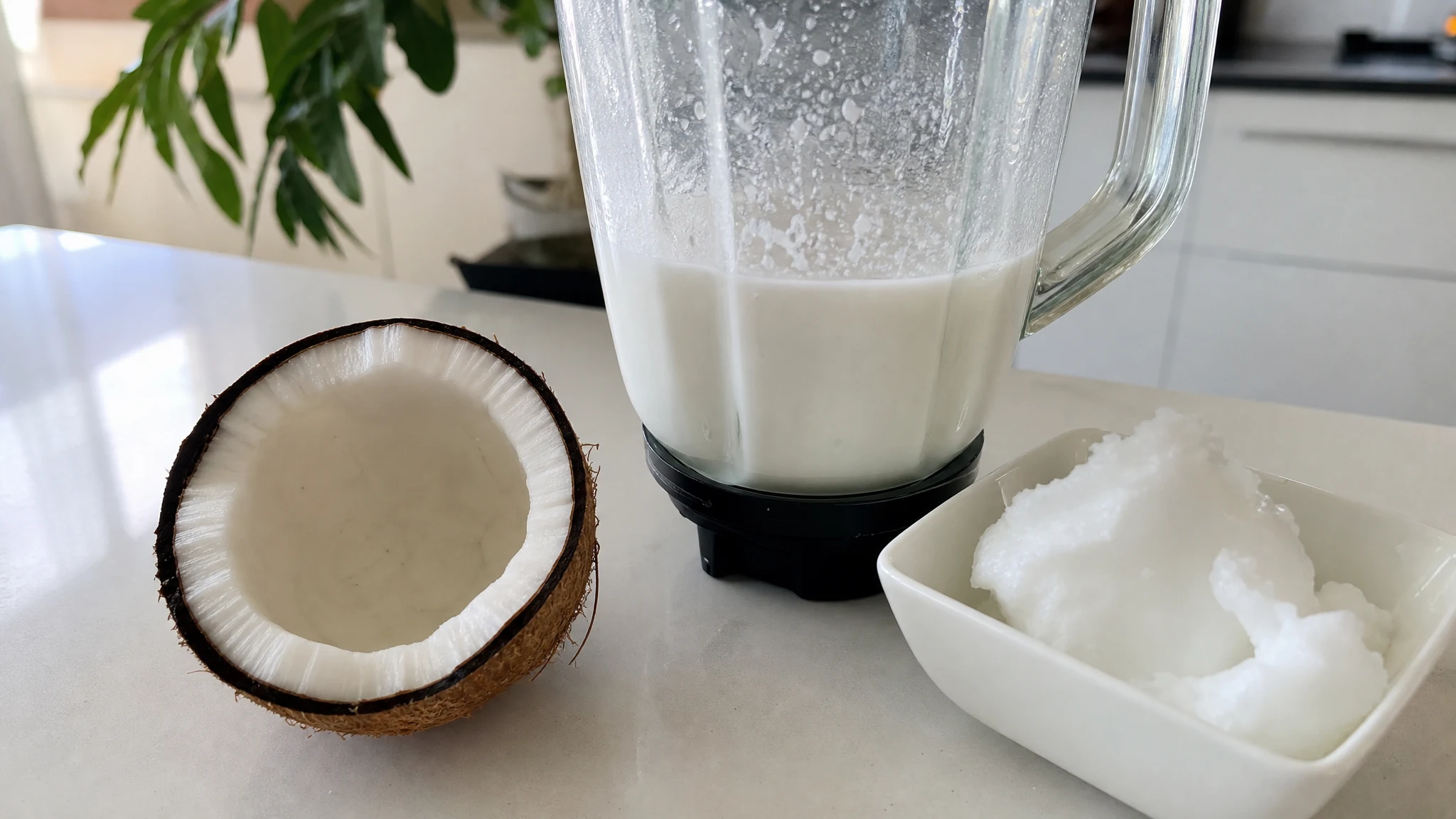
Our virgin unrefined coconut oil is the closer cousin of the oil in those studies. It is firm in a cool room (we put the change at about 76 degrees Fahrenheit), melts in warm hands and smells of coconut, which is half the joy for many people. Our fractionated coconut oil stays liquid at any temperature, and we describe it as fast-absorbing, non-greasy and virtually odorless. Choose virgin when you like the aroma and want the oil nearest to what was studied. Choose fractionated for a thin, scent-free coat that pours straight from the bottle; no hair study has been published on it specifically. Both are sold for external cosmetic use.
Starting amounts
A teaspoon is about 4.93 ml, and at the 0.948 density on the Certificate of Analysis we publish for one fractionated batch, a teaspoon weighs about 4.7 g. Virgin oil will differ a little. Treat these as starting points that scale up or down easily.
| Your hair | Starting amount, lengths and ends | Why |
|---|---|---|
| Fine, short, or oily at the roots | 1/2 to 1 teaspoon (about 2.5 to 5 ml) | Less hair to coat, and fine hair shows buildup quickly. Add a little at a time. |
| Medium thickness, shoulder length | 1 to 2 teaspoons (about 5 to 10 ml) | A middle starting point; adjust by how hair feels after rinsing. |
| Thick, long, or coiled | 1 to 2 tablespoons (about 15 to 30 ml) | More strands and more length to coat. Work in sections. |
| Color-treated or bleached | As above, on mid-lengths and ends | Treated hair is more porous, so the ends are where the oil goes. |
If most of the wear on your hair comes from heat styling or frequent color, the American Academy of Dermatology points first to habits: heat tools about once a week or less, one chemical service at a time, color touch-ups 8 to 10 weeks apart in winter, and conditioner after every shampoo (AAD). A mask is a lovely extra on top of those habits.
The method, step by step
- Patch test first. Put a little on the inside of your forearm and wait 24 hours, as our product page advises. If you have a coconut or tree nut allergy, check with a professional before use.
- Soften the oil if it is firm. Stand the jar in a bowl of warm tap water until it flows.
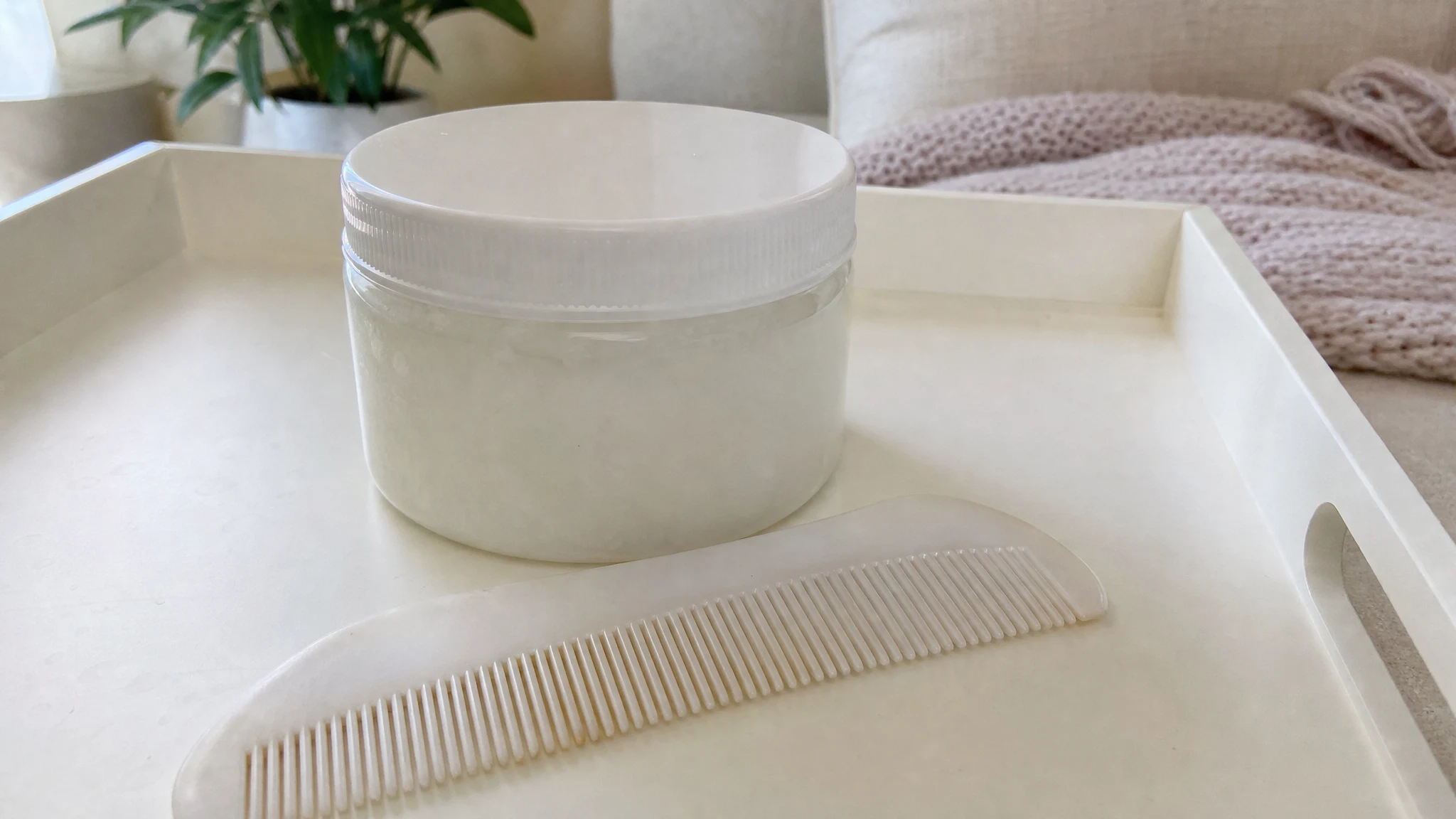
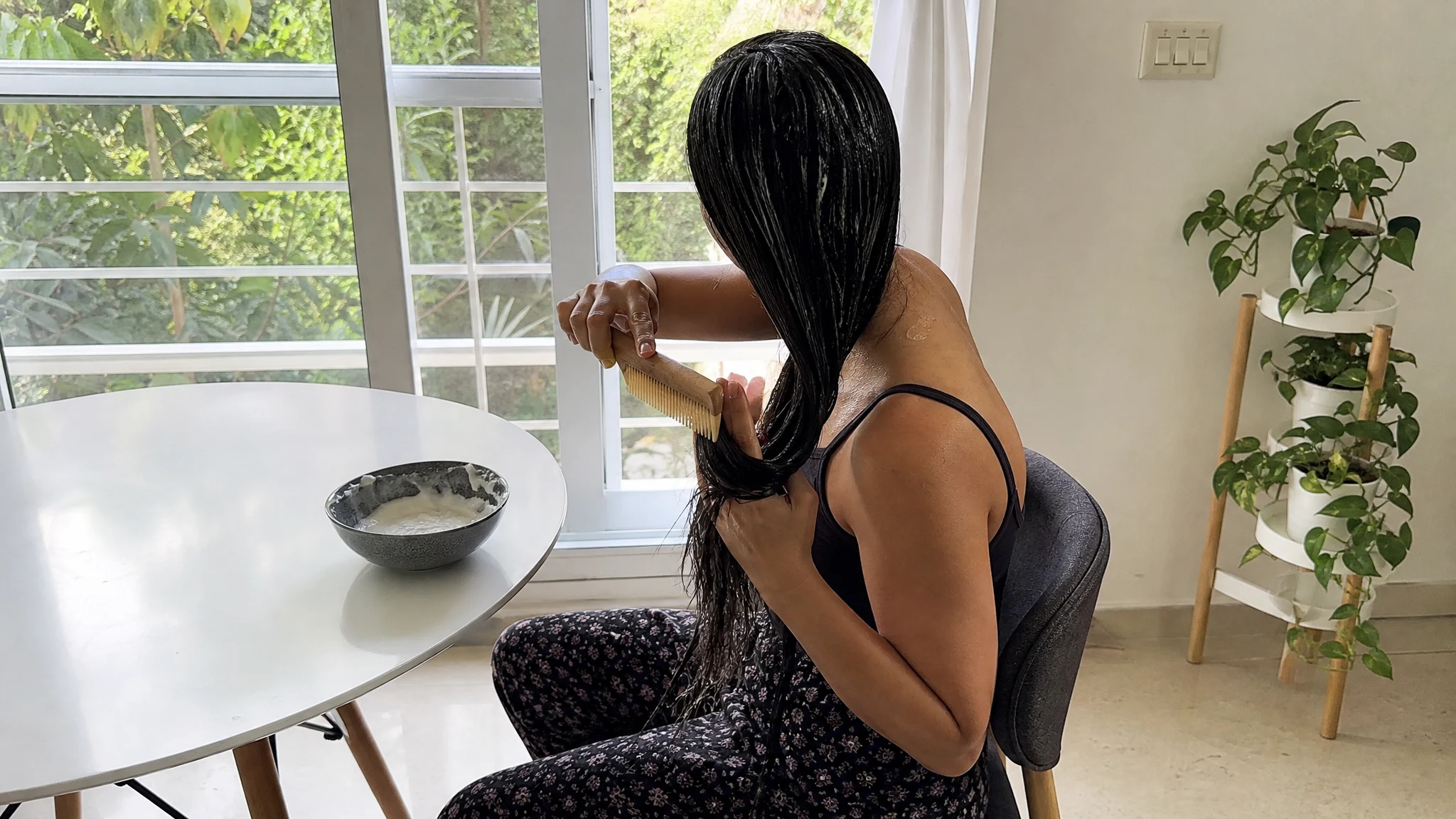
- Apply to damp hair in sections, from the ends upward. The ends are the oldest hair. Comb through gently with a wide-tooth comb, since wet hair tangles easily.
- Leave it on for 20 to 30 minutes. That is a convenient window; the studies do not set a contact time for a home mask.
- Shampoo, then condition. Virgin oil often wants two lathers, and a small amount of fractionated may need one; adjust to your hair. Rinse until hair no longer feels slick, then condition the lengths.
Make it a small ritual
Part of the appeal of a mask is the pause. Pin your hair up, put a towel over your shoulders so the oil stays off your clothes, and use the 20 to 30 minutes for something unhurried. If you are using the virgin oil, you will notice it go from a soft solid to a clear liquid as it warms in your palms, and the coconut scent is part of the fun. With the fractionated oil there is nothing to melt, so it is the quicker of the two on a busy evening.
Judging the result
Check once your hair is fully dry. If it feels coated or flat by the next morning, halve the amount next time; if it feels the same as usual, a mask simply is not adding much for your hair. Keep oil off the scalp if you have flaking, redness or itching, and see a dermatologist if those persist. Our dandruff article explains why a scalp concern calls for a diagnosis more than a mask. Patchy hair loss, sudden shedding and gradual thinning also deserve a dermatologist's assessment, and our hair overview explains what we do and do not say about growth. Please ask a pediatrician before putting any hair mask on a baby or toddler.
For textured hair, our type 4 hair guide adds notes on protective styles. If you love the ritual of warm oil or longer sessions, the pre-wash, hot oil and overnight guide goes deeper, and the olive oil comparison shows how another kitchen-cupboard oil stacks up.
In one line: start with less oil than the internet suggests, aim it at the ends, and judge it on dry hair.
Fractionated Coconut Oil
Fractionated Coconut Oil from our own shop, in sizes from 0.5 oz to bulk.
From $9.99
Shop Now →Sources & Further Reading
- Rele AS, Mohile RB, 2003. Effect of mineral oil, sunflower oil, and coconut oil on prevention of hair damage. J Cosmet Sci 54(2):175-92. pubmed.ncbi.nlm.nih.gov/12715094
- Keis K, Persaud D, Kamath YK, Rele AS, 2005. Investigation of penetration abilities of various oils into human hair fibers. J Cosmet Sci 56(5):283-295. library.scconline.org/v056n05
- Gavazzoni Dias MFR, 2015. Hair cosmetics: an overview. Int J Trichology 7(1):2-15. pmc.ncbi.nlm.nih.gov/PMC4387693
- American Academy of Dermatology. How to stop damaging your hair. aad.org