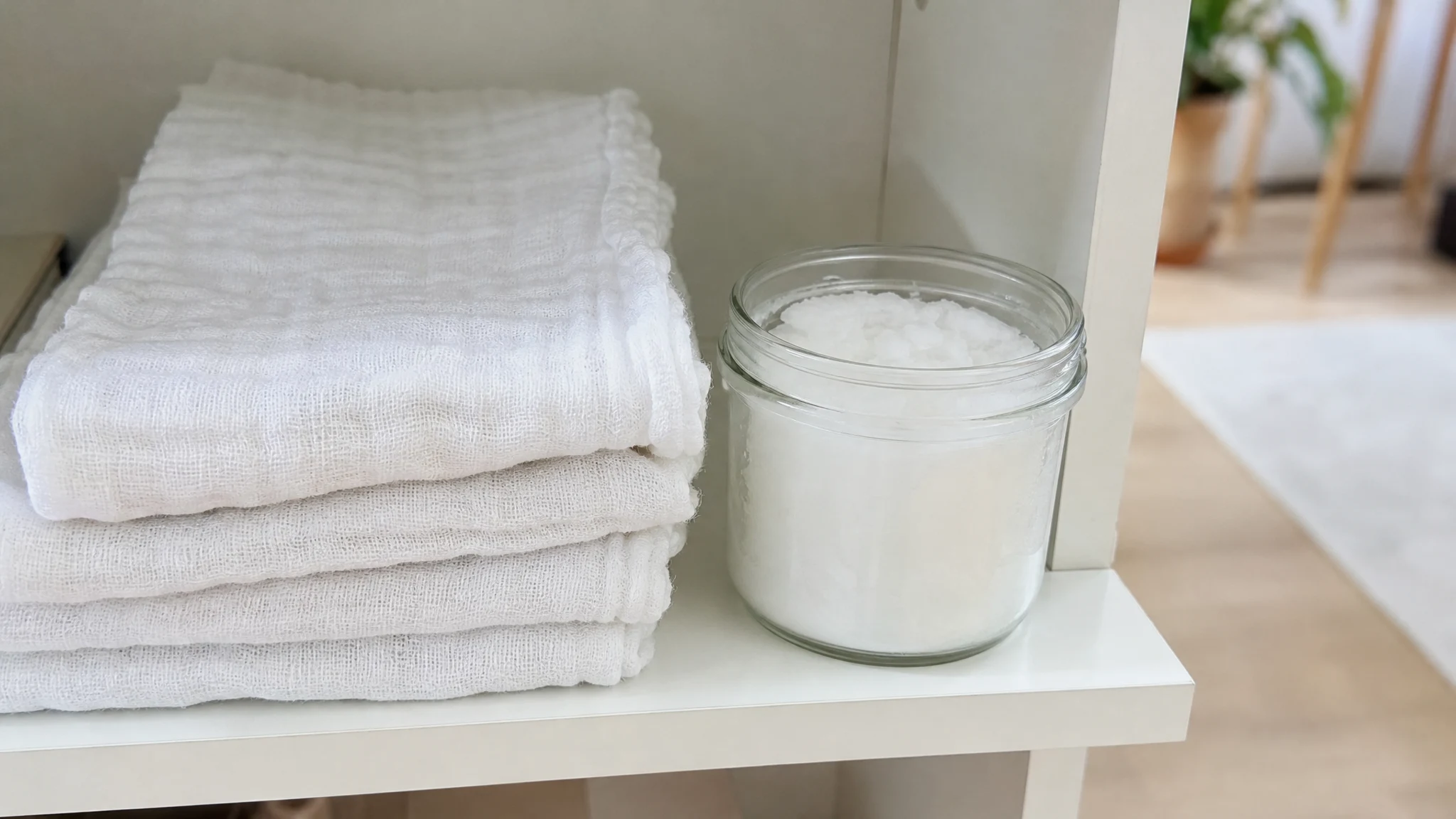
Coconut Oil on Your Face: A Guide by Skin Type
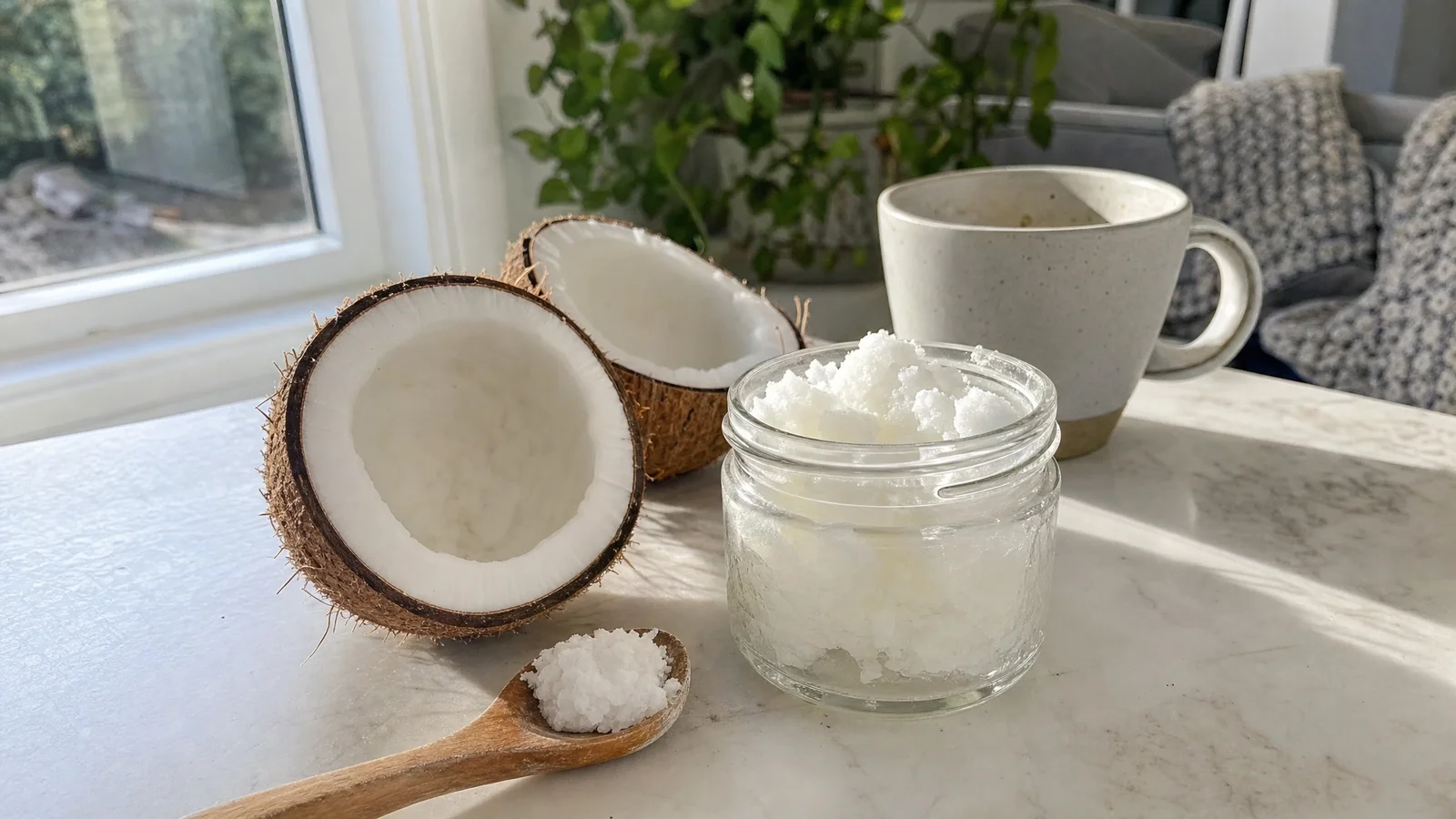
A drop of coconut oil warming between your fingers and melting into your cheeks is a small, lovely ritual, and it explains why so many people want it on their face. Whether it suits your face comes down to two questions: what job you want it to do, and what your skin is like. Here is how we would talk it through if you walked into the shop and asked.
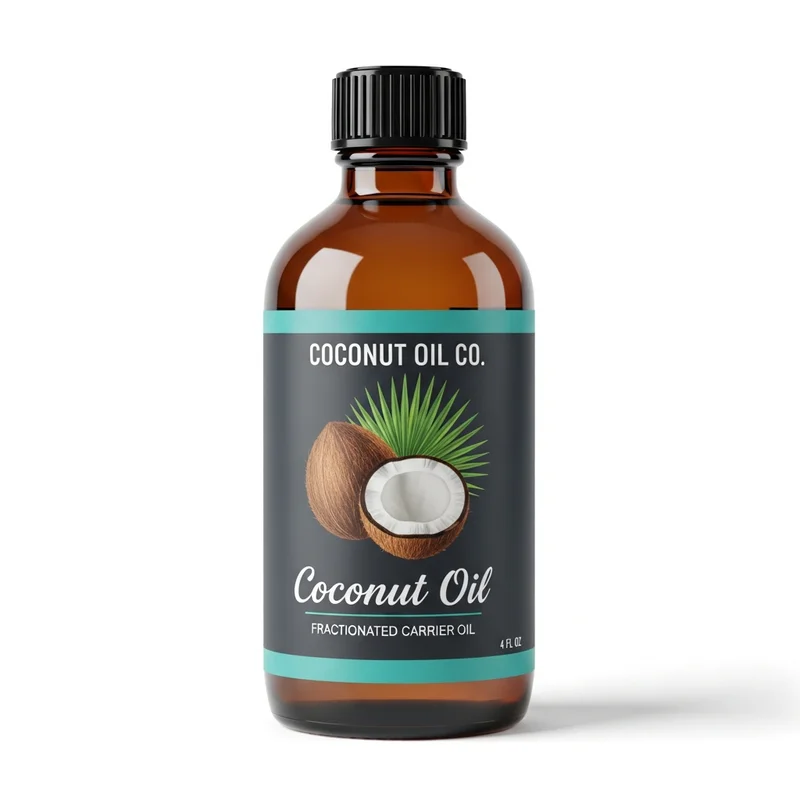
Fractionated Coconut Oil
Our own Fractionated Coconut Oil, in sizes from 0.5 oz to bulk.
From $9.99
Shop Now →Dry skin and a light finishing oil
If your face runs dry and has never fussed over oils, this is where coconut oil makes the most sense. The research behind it comes from the body and not the face, but it is encouraging. In a 2004 trial, 34 people with mild to moderate dry skin put virgin coconut oil or mineral oil on their legs twice a day for two weeks. Both raised skin hydration, and the authors called coconut oil as effective and safe as mineral oil (Agero and Verallo-Rowell, 2004). Since that was virgin oil on legs, applying it to a face with fractionated oil is our reasoning and not a study result.
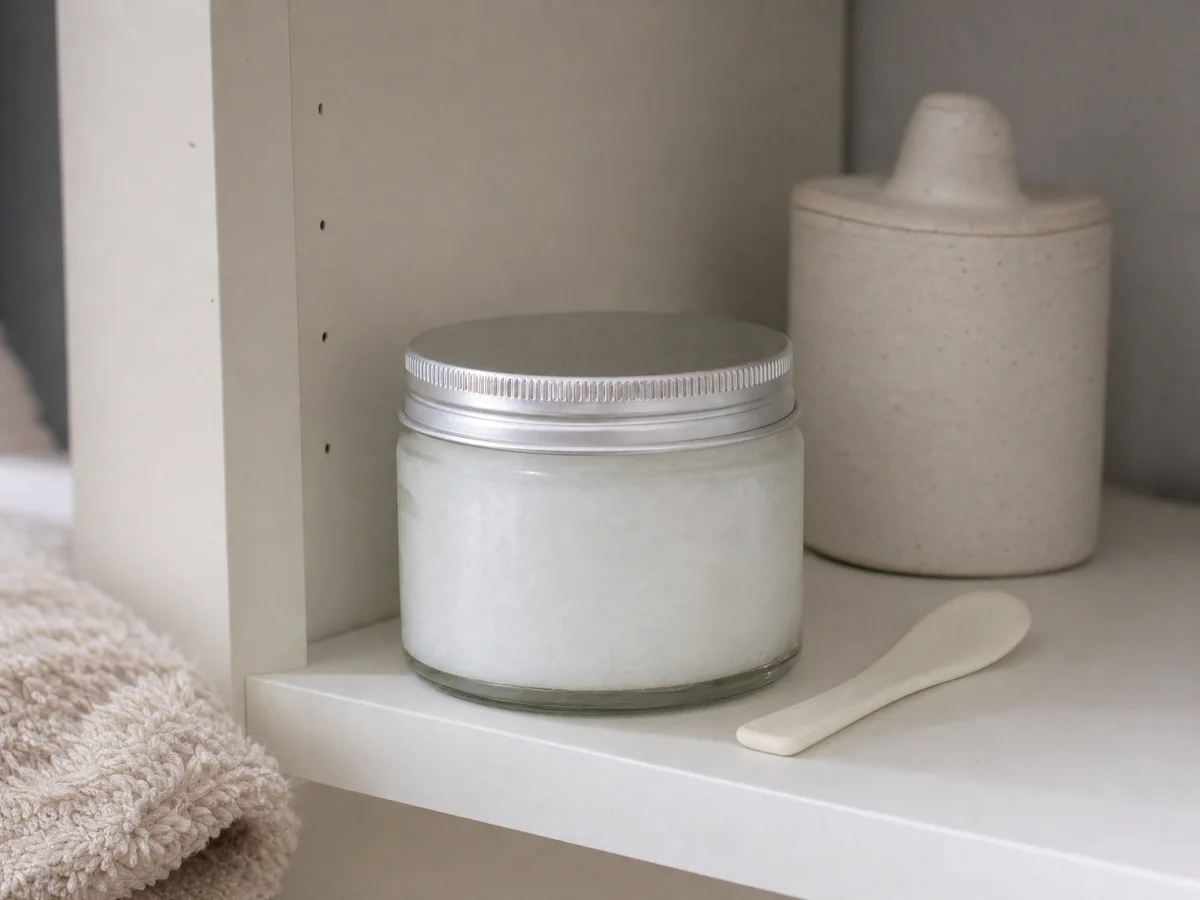
The American Academy of Dermatology notes that ointments and creams add more moisture than lotions (AAD, dry skin tips). A thin oil is lighter than either, so we like it as a finishing touch. Pat a water-based moisturizer on first, then add a drop or two of oil: the moisturizer brings the water, and the oil helps hold it in. The oil is for the final step, a little goes a long way, and the trials ran about two weeks, which is a fair window for judging how your own skin gets on.
If your skin is oily or breakout-prone
The same enthusiasm needs a different plan here. The AAD's oily skin page says to avoid oil-based cleansers for oily skin and to look for products labeled "oil free" and "noncomedogenic" (AAD, oily skin). A review of plant oils for skin also associates coconut oil with breakouts on skin that is not very dry (Moore, Wagner and Komarnytsky, 2020). So with an oily or breakout-prone face, we would follow the dermatology guidance and let a dermatologist lead.

Pore-clogging ratings are less clear-cut than their reputation. A small test put finished products on the upper backs of six comedone-prone people, three times a week for four weeks, and concluded that finished products containing comedogenic ingredients are not necessarily comedogenic (Draelos and DiNardo, 2006). It is a six-person study on back skin, so nobody can promise how a particular face will respond, and that is why we point you to your own skin as the final judge. Our pores article goes deeper on the numbers.
Cleansing and makeup removal
Oil cleansing is the most popular facial use and the one dermatology guidance is warmest about for dry skin only. If you want an oil to lift makeup, our makeup remover guide covers technique, including rinsing well and keeping the oil away from your eyes.
A gentle way to try it
Start small and slow. Patch test on a small area and wait the full 24 hours before it goes near your face. Then, for the first week or two, use it once a day, in the evening, on skin that is still slightly damp, with your usual moisturizer underneath. The AAD's dry skin advice also favors applying moisturizer while skin is damp. A drop is genuinely enough; if your skin feels slick afterward, that is simply more than you need, and you can use less next time.
Seasons matter too. Many faces are drier in cold, windy months and happy with something lighter in summer, so you may find a light oil earns its place in winter and sits out the rest of the year. Our winter skin routine shows where an oil fits among the layers when the weather turns.
Most people overdo it the first time. One drop is often enough for the whole face; warm it in your palms and press, do not rub, and see how your skin looks an hour later. Dry cheeks tend to look softer and a little dewy, while a shiny forehead tells you to use less, or to keep oil for the dry zones only.
Which of our two oils for the face
For most faces we would reach for fractionated coconut oil. We describe it as fast-absorbing, non-greasy and virtually odorless, and it stays liquid at any temperature. Our virgin unrefined coconut oil is firm in a cool room, melts in warm hands and carries a rich coconut aroma that sits right under your nose when it is on your face. It is the oil closer to the one used in the trials, and it shines on hair and body, so choose it if you love that scent. We publish no composition numbers for the fractionated oil, so we do not quote any.

Whichever you pick, patch test a small area for 24 hours first, keep it away from your eyes, and check with a professional beforehand if you have a coconut or tree nut allergy. With eczema, rosacea or reactive skin, ask your clinician before adding any oil.
Where to go next
Coconut oil is not a sunscreen, which our SPF article explains. For the wider picture of what coconut oil has been studied for, see our skin evidence summary, and for help deciding between our two oils, choosing a coconut oil for your skin type is a good read. If you are curious about the popular kitchen face mask, we looked at the turmeric mask too.
A dry face, a patch test and two weeks of paying attention will tell you more about coconut oil than any trend can.
Fractionated Coconut Oil
Fractionated Coconut Oil from our own shop, in sizes from 0.5 oz to bulk.
From $9.99
Shop Now →Sources & Further Reading
- Agero AL, Verallo-Rowell VM, 2004. A randomized double-blind controlled trial comparing extra virgin coconut oil with mineral oil as a moisturizer for mild to moderate xerosis. Dermatitis. pubmed/15724344
- American Academy of Dermatology. Dermatologists' top tips for relieving dry skin. aad.org
- American Academy of Dermatology. Oily skin. aad.org
- Moore EM, Wagner C, Komarnytsky S, 2020. The enigma of bioactivity and toxicity of botanical oils for skin care. Front Pharmacol. pmc/PMC7272663
- Draelos ZD, DiNardo JC, 2006. A re-evaluation of the comedogenicity concept. J Am Acad Dermatol. pubmed/16488305