How Is Coconut Oil Made? Copra, Wet Press, Fractionation
Every bottle of coconut oil starts at the same fork in the road. The white meat of the nut is either dried first or worked fresh, and almost everything you notice later, the color, the aroma, how the oil keeps, traces back to that choice and to how carefully the first few days were handled. Here is the journey the way a plant manager might tell it, with a friendly word on which parts you can check as a buyer.

Fractionated Coconut Oil
Our own Fractionated Coconut Oil, in sizes from 0.5 oz to bulk.
From $9.99
Shop Now →The fork: dry road or wet road
The industry works from two raw materials. India's Central Food Technological Research Institute puts it simply: oil comes from wet coconut or from copra, the dried kernel. In India and Sri Lanka the general practice is copra, and in the Philippines oil is also taken from wet coconut and sold as virgin (Gopala Krishna et al., 2010). Dried copra holds roughly 60 to 65% oil, which is why it has been the workhorse of the trade for so long.
We think the dry road deserves more respect than it gets. It is how most of the world's coconut oil has always been made, and what separates a lovely copra oil from a poor one is the drying and handling, far more than a word on a label.
Road one: copra, then the press
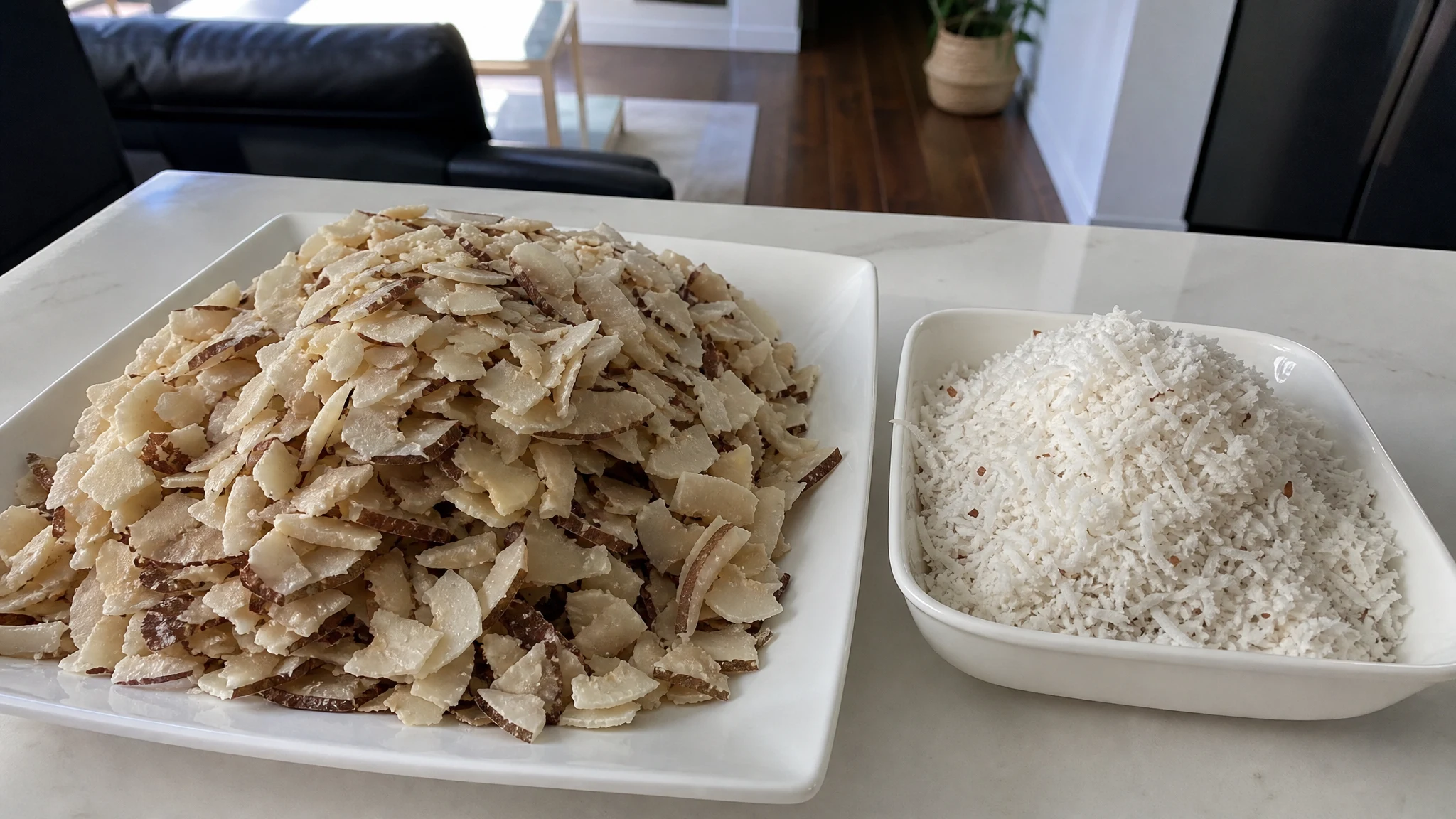
Copra is coconut meat dried in the sun or in mechanical kiln, flatbed or channel dryers. The Philippine Bureau of Agriculture and Fisheries Standards publishes the grading table buyers use, and it shows what quality means at this stage. Top-grade copra is held to 6 to 7.9% moisture, at least 62% oil and no more than 0.5% free fatty acid, with clean white to pale yellow meat. The lower grades allow more moisture, less oil, up to 4 or 5% free fatty acid, and brown to dark brown meat (BAFS, 2021).
The same bulletin explains what those numbers taste and smell like downstream. Good copra gives a clear crude oil, low in free fatty acid and pleasant in aroma, and smoky, burnt or moldy copra gives a dark, cloudy oil with a smell nobody wants. It also notes that poor copra draws a 10 to 15% price deduction on the world market.
Two hazards begin in the drying yard, and both explain why refining exists. Aflatoxins come from molds that thrive when copra dries slowly or sits damp, and the bulletin says they are heat-resistant enough to survive food and feed processing; its advice is to hold copra at 6 to 7% moisture and re-dry anything above 12%. The second is smoke: drying over combustion fumes creates polycyclic aromatic hydrocarbons, so hot-air dryers that keep the flame away from the meat produce the cleanest copra.
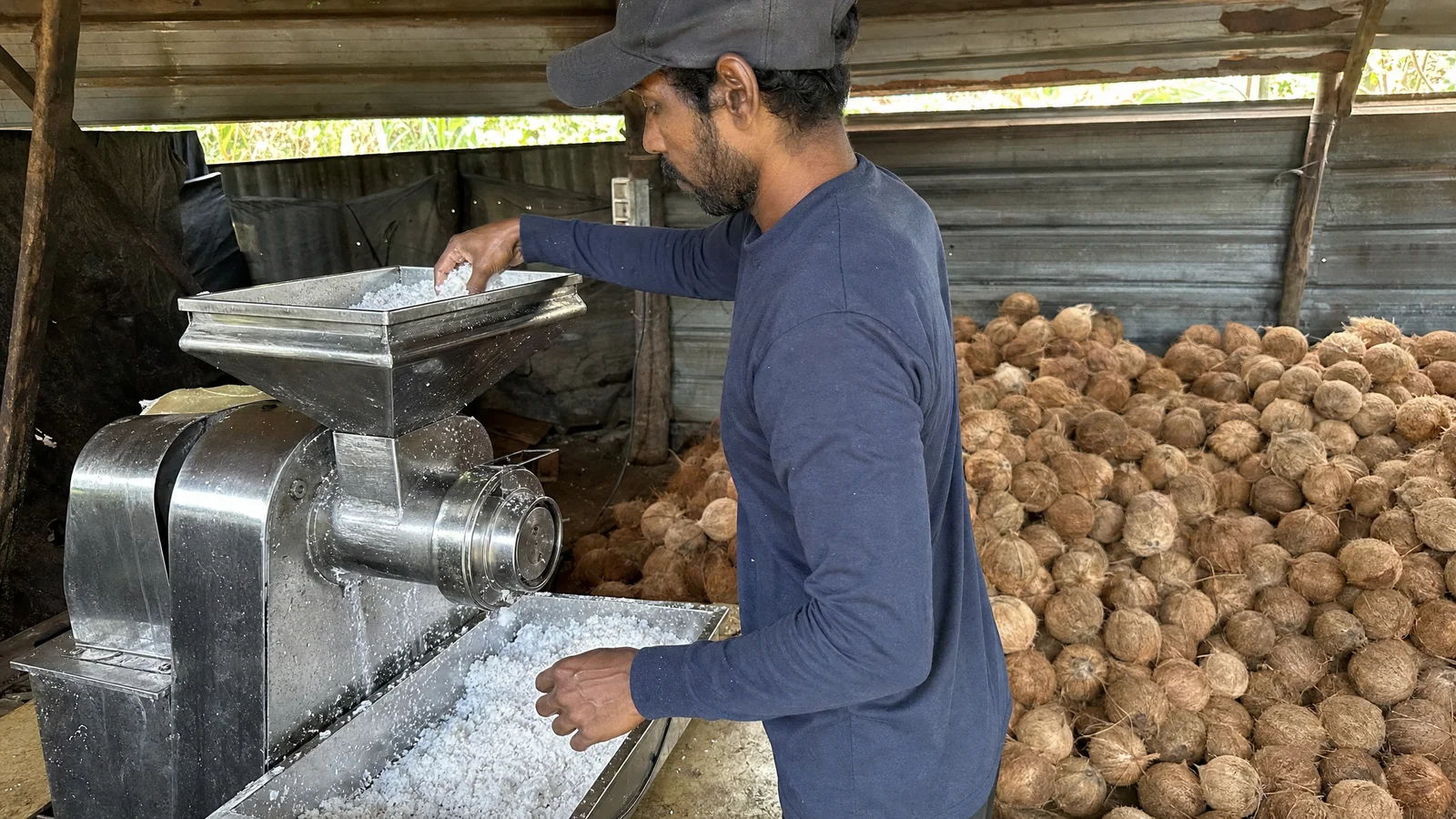
From there the copra goes through an expeller, a mechanical screw press that runs warm. The crude oil is then refined, bleached and deodorized, the sequence called RBD, which strips out free fatty acids, color and odor. The Cosmetic Ingredient Review's safety assessment describes RBD this way and notes that crude copra oil can carry polycyclic aromatic hydrocarbons, especially from smoke-dried copra. It adds that refining is expected to remove both those and any aflatoxin, though it infers the aflatoxin point from work on peanut and corn oils (CIR, 2008).
That is why we do not read "refined" as a warning sign. For a cosmetic oil, refining is a controlled way to remove exactly what the drying yard can introduce, and it leaves a clean, pale oil that behaves predictably in a formula.
Road two: the wet route
The wet road skips drying. Fresh meat is grated and squeezed into coconut milk, and the oil is separated from the water and protein. The traditional way is fermentation, which gives modest recovery and a fermented note that covers the coconut aroma. The modern way is to chill or heat the milk and spin the cream in a centrifuge (Gopala Krishna et al., 2010).
A group in Brunei made virgin oil four ways in the laboratory: chilling and centrifuging, fermenting, oven-drying the grated meat and pressing it, and sun-drying then pressing. They reported that all four oils met the Asian and Pacific Coconut Community standards they checked, with lauric acid making up about 48 to 53% of the fatty acids in every case (Ghani et al., 2018). That is a happy result for anyone wondering which virgin method is the "real" one: several routes can land in the same place on paper.
Where the wet road does differ is aroma and effort. Virgin oils keep more of the fresh coconut character, which is the reason people choose them. If scent and richness are what you are after, our virgin unrefined coconut oil is the one to look at. The virgin versus refined comparison goes deeper, and the antioxidants article covers what cold, hot and refined processing do to the plant compounds.
Road three: fractionation, one more step
Neither road gives you a coconut oil that stays liquid in a cool room. For that you fractionate: the oil is heated past its melting point, cooled so part of it solidifies, and the solid is separated from the liquid. What stays liquid is mostly caprylic and capric acid, with most or all of the lauric acid gone (Healthline, 2019). That is a consumer-level summary, and the basic idea is the standard one. The result is the light, fluid oil so many people love as a massage and blending base. Our guide to what fractionated coconut oil is picks the story up from here.
About our own oil: our process outline lists pressing, fractionation, filtering, lab testing and bottling, and we fill and cap in-house and ship from our US-based facility. We do not publish who presses or fractionates, which coconuts go in, or whether the oil passes through RBD refining. The one certificate of analysis we publish covers a single fractionated batch and reports density, refractive index and optical rotation. If origin, grade or refining history matters to your formula, ask us in writing before you order.
What to take from this when you buy
Ask which road the oil took. "Natural" tells you little, while "refined from dried copra" or "wet-processed virgin" tells you a lot. Be curious about paying extra for the word "cold" on its own: a Sri Lankan comparison found hot-extracted oil held more phenolic compounds and scored higher in antioxidant assays than cold-extracted oil (Seneviratne et al., 2009). Match the type to the job, which our fractionated versus virgin comparison helps with. And prefer numbers to adjectives: peroxide value, free fatty acid and moisture are the figures quality standards use, and our buying checklist lists what to request.
Curious about doing it yourself? The fresh coconut method at home shows how quickly the drying questions above land on your own counter. Our oils are cosmetic carrier oils for external use only, so patch test first and ask a professional before use if you have a coconut or tree nut allergy. For cooking, choose an oil sold as food.
Fractionated Coconut Oil
Fractionated Coconut Oil from our own shop, in sizes from 0.5 oz to bulk.
From $9.99
Shop Now →Sources & Further Reading
- Gopala Krishna AG et al., 2010. Coconut Oil: Chemistry, Production and Its Applications, A Review. Indian Coconut Journal. coconutboard.in
- Philippine Bureau of Agriculture and Fisheries Standards, 2021. Ensuring the Safety and Quality of Copra. bafs.da.gov.ph
- Cosmetic Ingredient Review, 2008. Amended Safety Assessment of Cocos Nucifera (Coconut) Oil and related ingredients. cir-safety.org
- Ghani NAA et al., 2018. Physicochemical properties, antioxidant capacities, and metal contents of virgin coconut oil produced by wet and dry processes. Food Sci Nutr 6(5). PMC6060898
- Healthline, 2019. Fractionated Coconut Oil. healthline.com
- Seneviratne KN, Hapuarachchi CD, Ekanayake S, 2009. Comparison of the phenolic-dependent antioxidant properties of coconut oil extracted under cold and hot conditions. Food Chem 114(4). doi:10.1016/j.foodchem.2008.11.038