Coconut Oil Toothpaste with Baking Soda: What to Know
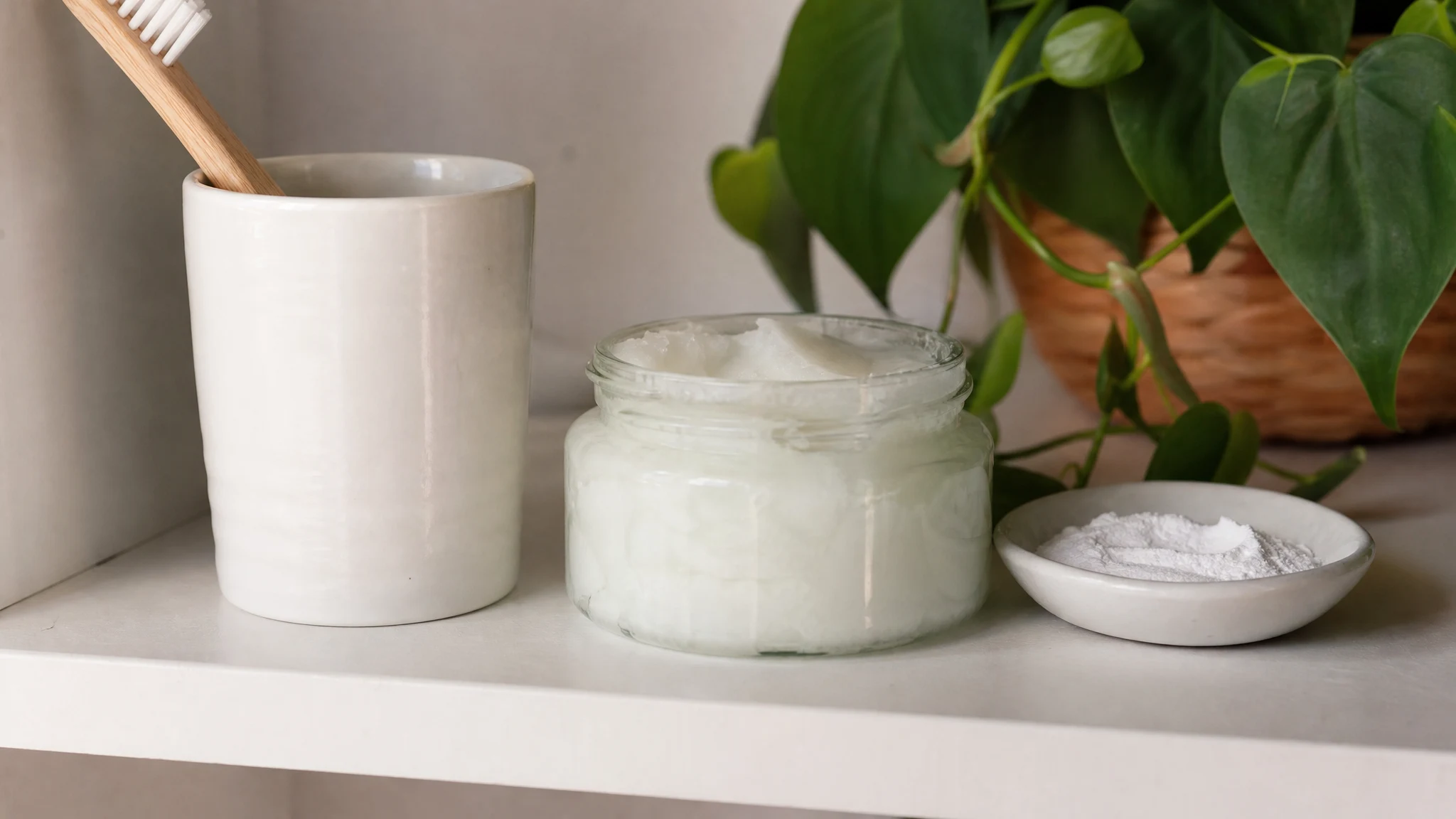
It is easy to see the charm of a coconut oil and baking soda paste: two pantry staples, a minute with a spoon, and something that feels like toothpaste. The jar is really two ideas in one. Baking soda is the gentle grit, and coconut oil is the creamy base that holds it together. Dental researchers have studied the first idea inside manufactured toothpastes, and the second has had far less attention, so this is a short tour of what each ingredient brings.
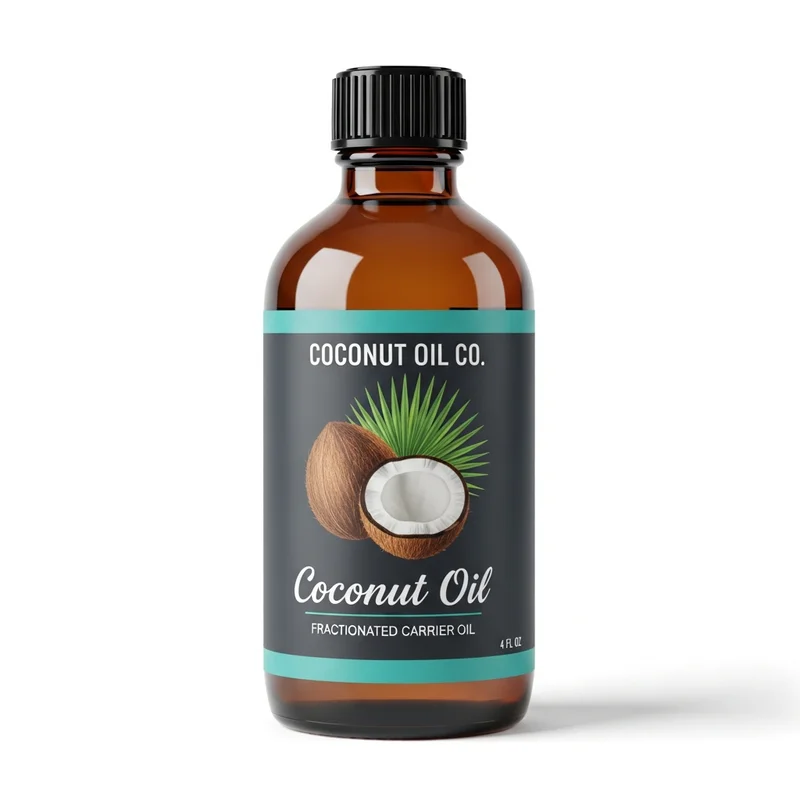
Fractionated Coconut Oil
Our own Fractionated Coconut Oil, in sizes from 0.5 oz to bulk.
From $9.99
Shop Now →What baking soda has been studied for
Baking soda (sodium bicarbonate) has a genuine research record, and it comes from commercial toothpastes, not kitchen mixes. A 2019 systematic review in the International Journal of Dental Hygiene (Valkenburg et al.) pooled 21 publications, 43 comparisons and 2,517 participants. After a single brushing, baking soda pastes left lower plaque scores than the control pastes. In longer follow-up studies the difference against a negative control did not firmly hold, and gum scores showed no difference. The authors concluded that a baking soda toothpaste may be an alternative to other commercial pastes, while noting considerable variation between studies and some risk of bias.
So baking soda is a reasonable ingredient in a toothpaste that was properly made and tested, performing about as well as its comparisons. That tells us about baking soda in a tube, and nothing about coconut oil as the carrier. A Europe PMC search on 5 November 2026 for coconut oil together with baking soda or sodium bicarbonate and toothpaste returned no trial of such a paste, so what follows about that exact mix is reasoning and not a finding.
What a tube has that a jar does not: fluoride
A homemade paste normally contains no fluoride, and that is the biggest difference from a tube on the shelf. The Cochrane review of fluoride toothpaste (Walsh et al., 2019) covered 96 studies and concluded that fluoride toothpaste reduces tooth decay compared with toothpaste without it, in adults at 1000 to 1100 ppm and in children at 1000 to 1250 ppm. The American Dental Association's toothpaste page adds the practical side: toothpastes that carry a cavity-protection claim with the ADA Seal must contain fluoride.
If a coconut and baking soda paste appeals to you, the evidence points to treating it as a talking point with your dentist, about how it would sit beside a fluoride toothpaste and not in place of one.
Grit, measured
Toothpaste abrasiveness is rated on a scale called relative dentin abrasivity, or RDA. The same ADA page says dentifrices at or below 250 RDA are considered safe and effective, and that a toothpaste carrying the Seal must be at 250 or lower. A manufacturer controls particle size and other ingredients and has the value measured. A kitchen mix has no measured number: the fineness of the baking soda, how much goes in and how firmly you brush all change what your enamel and any exposed root surfaces meet. That follows from how the rating works, and we are not aware of a trial that measured it for this recipe, so it is a good reason to check with a dentist before experimenting and not a claim of harm.
And the whitening question
Whitening is often what draws people to this idea. The ADA's whitening page explains that whitening toothpastes mainly rely on abrasives to lift stains from the tooth surface, while stains inside the tooth need a chemical approach. On coconut oil swishing, it notes an absence of documented tooth whitening. Coconut oil is not an abrasive and baking soda is the abrasive in this recipe, which brings the RDA question back. The page also reports that a strawberry and baking soda mixture showed no measurable improvement in one study and that a charcoal and table salt mixture was abrasive and ineffective in another. Those are different mixes, so they do not settle this one, but they show where the ADA is cautious. Our tooth whitening article lays out what has been measured with coconut oil and tooth color, and the oil pulling article covers swishing.
Questions worth bringing to your dentist
Amounts for something that goes in your mouth twice a day, with no fluoride and no abrasivity figure behind it, are advice for a dentist or dental hygienist, so we leave ratios to them. These questions make a good start:
- Is my current fluoride toothpaste doing its job, and would a manufactured baking soda toothpaste suit me?
- Do I have exposed roots, worn enamel or sensitive teeth that call for a gentler product?
- If I want to add something, should it go alongside my fluoride toothpaste?
There is something appealing about a homemade jar on the bathroom shelf, and the appeal is easy to understand: you know every ingredient, it costs little, and it feels a bit like a kitchen project. That curiosity is a good thing. It just belongs with the right projects, such as a hand balm or a hair oil, where an oil does what you hoped.
Where our oils shine
We sell fractionated coconut oil and a virgin unrefined coconut oil, both neat and for external cosmetic use only. Neither is a food, an oral-care product or a toothpaste ingredient, and we do not sell toothpaste. If a coconut oil routine for body care or a DIY project outside the mouth is what appeals, both oils are made for it: fractionated for a light liquid, virgin unrefined for the coconut aroma. Our guide to where fractionated oil fits and the notes on virgin versus refined will help you choose. For your teeth, a product made for the job is the way to go.
In short, baking soda has trial support inside real toothpastes, coconut oil has none as a toothpaste base, and fluoride is the ingredient the jar leaves out. Your dentist can say whether any change suits your own teeth.
Fractionated Coconut Oil
Fractionated Coconut Oil from our own shop, in sizes from 0.5 oz to bulk.
From $9.99
Shop Now →Sources & Further Reading
- Valkenburg C, Kashmour Y, Dao A, Van der Weijden GA, Slot DE, 2019. The efficacy of baking soda dentifrice in controlling plaque and gingivitis: a systematic review. Int J Dent Hyg 17(2):99-116. PMC6850485
- Walsh T et al., 2019. Fluoride toothpastes of different concentrations for preventing dental caries. Cochrane Database Syst Rev. pubmed.ncbi.nlm.nih.gov/30829399
- American Dental Association. Toothpastes (oral health topics). ada.org/resources/ada-library/oral-health-topics/toothpastes
- American Dental Association. Whitening (oral health topics). ada.org/resources/ada-library/oral-health-topics/whitening