Coconut Oil as a Vapor Rub: What the Jar Really Does
The blue jar in the medicine cabinet has a smell everyone recognizes, and it is natural to wonder whether a spoonful of coconut oil with a few minty drops could do the same job. It is a charming idea, and it is worth looking at what makes the famous jar tick, because the answer shows which part of a vapor rub is the base and which part does the talking.

Fractionated Coconut Oil
Our own Fractionated Coconut Oil, in sizes from 0.5 oz to bulk.
From $9.99
Shop Now →Read the label first
The DailyMed label for Children's Vicks VapoRub lists three active ingredients: camphor (synthetic) at 4.8%, eucalyptus oil at 1.2% and menthol at 2.6%. Its inactive ingredients include petrolatum, cedarleaf oil, nutmeg oil, thymol and turpentine oil. The directions are for external use only, applied thickly to the throat and chest, with a plain statement that children under 2 should not use it. It also says to keep it away from the eyes and nostrils, wounds and tight bandages, and never to heat or microwave it (NLM DailyMed, label updated October 2026).
Three details stand out. The actives are specified to a tenth of a percent, which a drops-in-a-jar approach cannot match. The base is petrolatum, not a plant oil. And there is an age floor printed right on the box.
What the one well-known trial measured
The study people usually point to comes from Penn State. It enrolled 144 children aged 2 to 11 with colds, and 138 finished. Parents applied a vapor rub with those same three actives, plain petrolatum, or nothing to the child's chest and neck before bed, one time, and then answered a survey the next day. The rub scored best on cough, congestion and sleep, and it beat petrolatum on cough severity and on child and parent sleep difficulty. Petrolatum on its own was not significantly better than no treatment on any outcome. Irritation was more common in the rub group: 20 of 44 children had at least one irritant effect, mostly a burning feel on the skin, in the eyes or in the nose (Paul et al., Pediatrics, 2010).
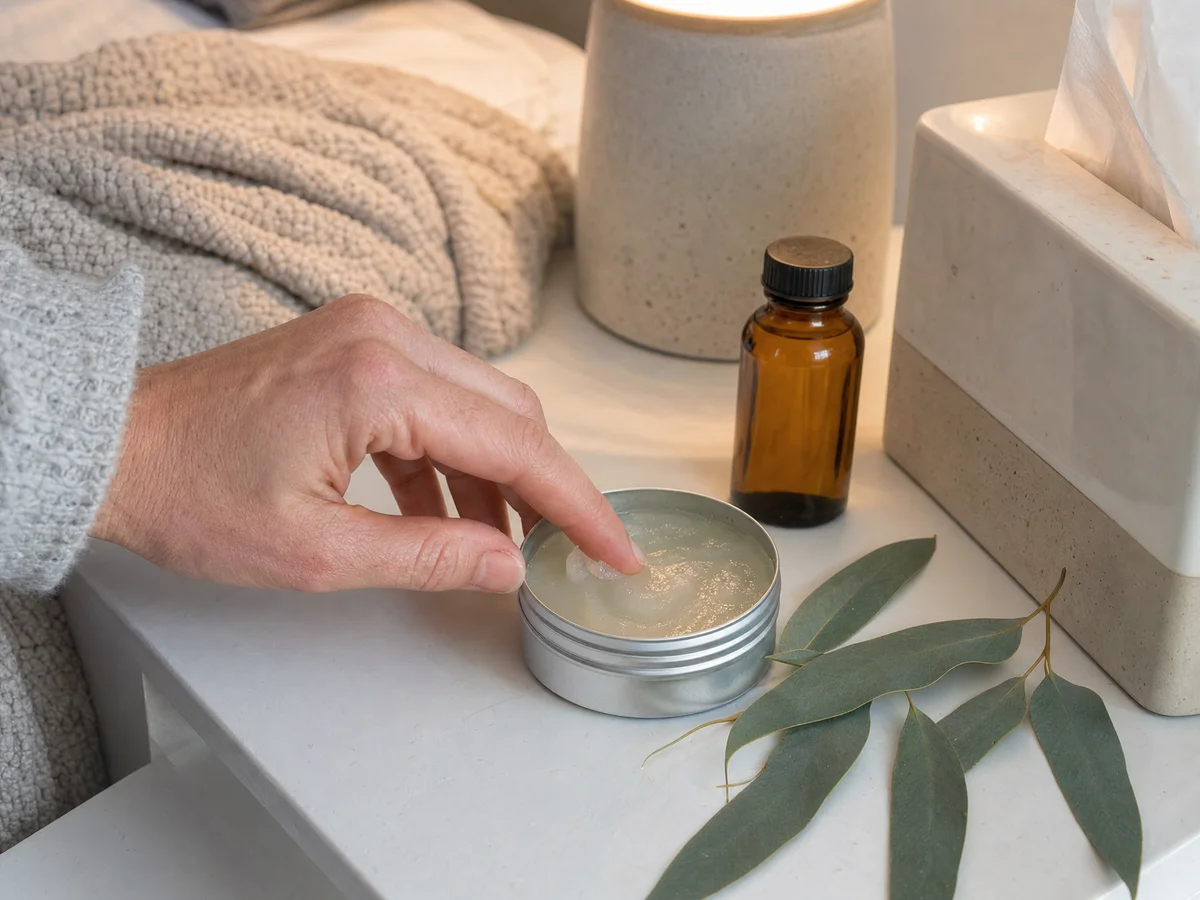
Here is how we read it, and it is reasoning, not a coconut oil study. A plain, greasy base on the chest did not clearly beat doing nothing, so a coconut oil rub with no actives is a base without the part that scored. Meanwhile the actives are also what caused the burning, which is why the label fixes their strength so carefully. A home blend has no fixed strength: a few extra drops make it stronger than intended and a few fewer take it toward plain oil, with no way to tell which you made. That is why we do not print a ratio here.
Where coconut oil really shines in cold season
Cold season is hard on skin. All those tissues leave noses and lips chapped, and winter air adds to it. That is everyday dry-skin care, exactly the job a cosmetic oil is made for: a small dab on dry skin outside the nostrils helps it feel soft and smooth. Our fractionated coconut oil is the light, fast-absorbing choice, and our virgin unrefined coconut oil is the richer one with the coconut scent. Both are sold for external cosmetic use only, and neither is a cough or cold product.
Our winter skin routine shows where the oil fits among cold-weather layers, and the nasal dryness article explains why we stop at the nostrils. Patch test a small area and wait 24 hours with any new oil. If you or the person you are caring for has a coconut or tree nut allergy, check with a professional first (our allergy article has the details). For a child, the pediatrician is the person to ask, and our baby skin article covers what studies have looked at on infant skin.
A small, comforting routine for chapped skin
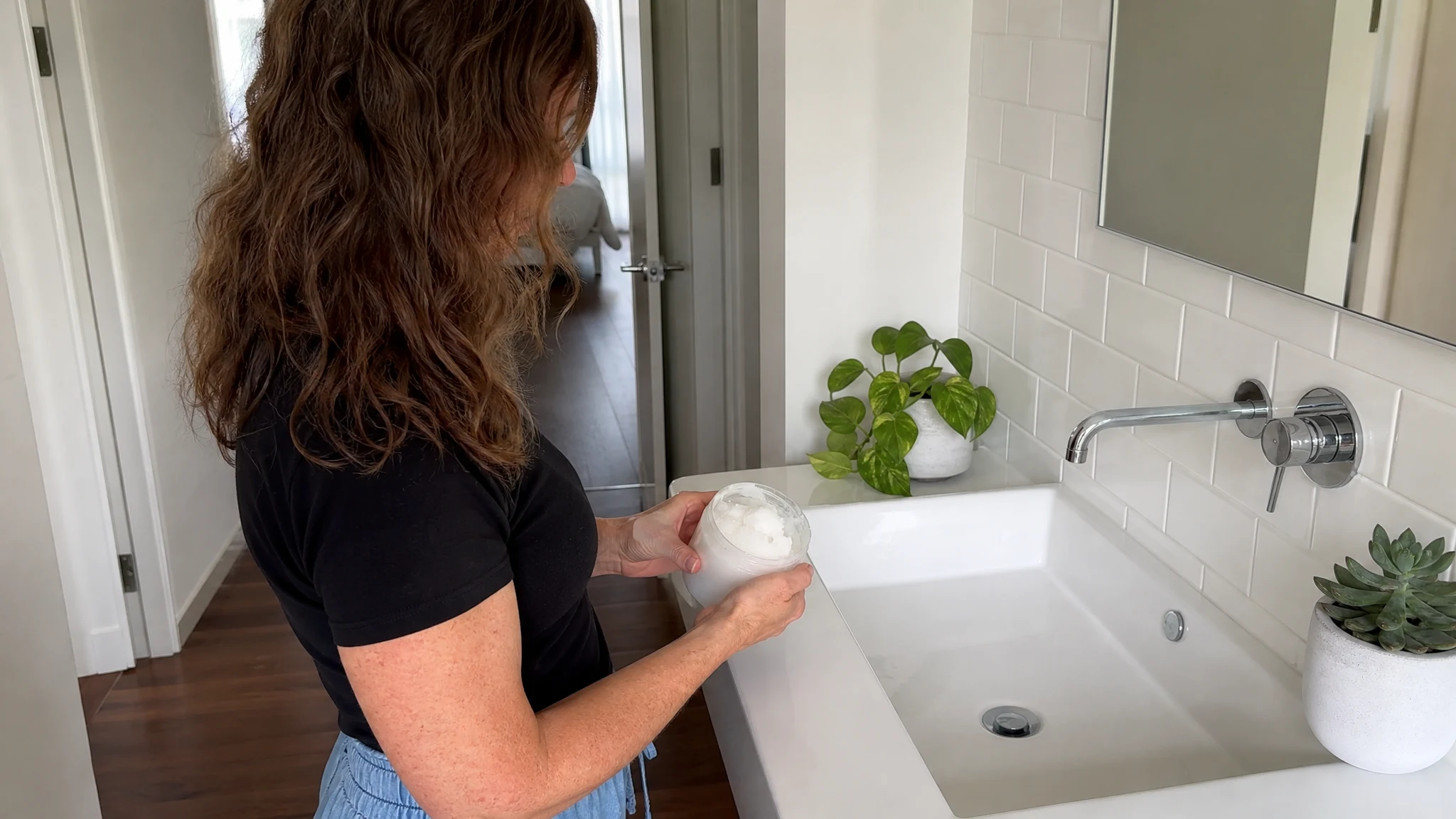
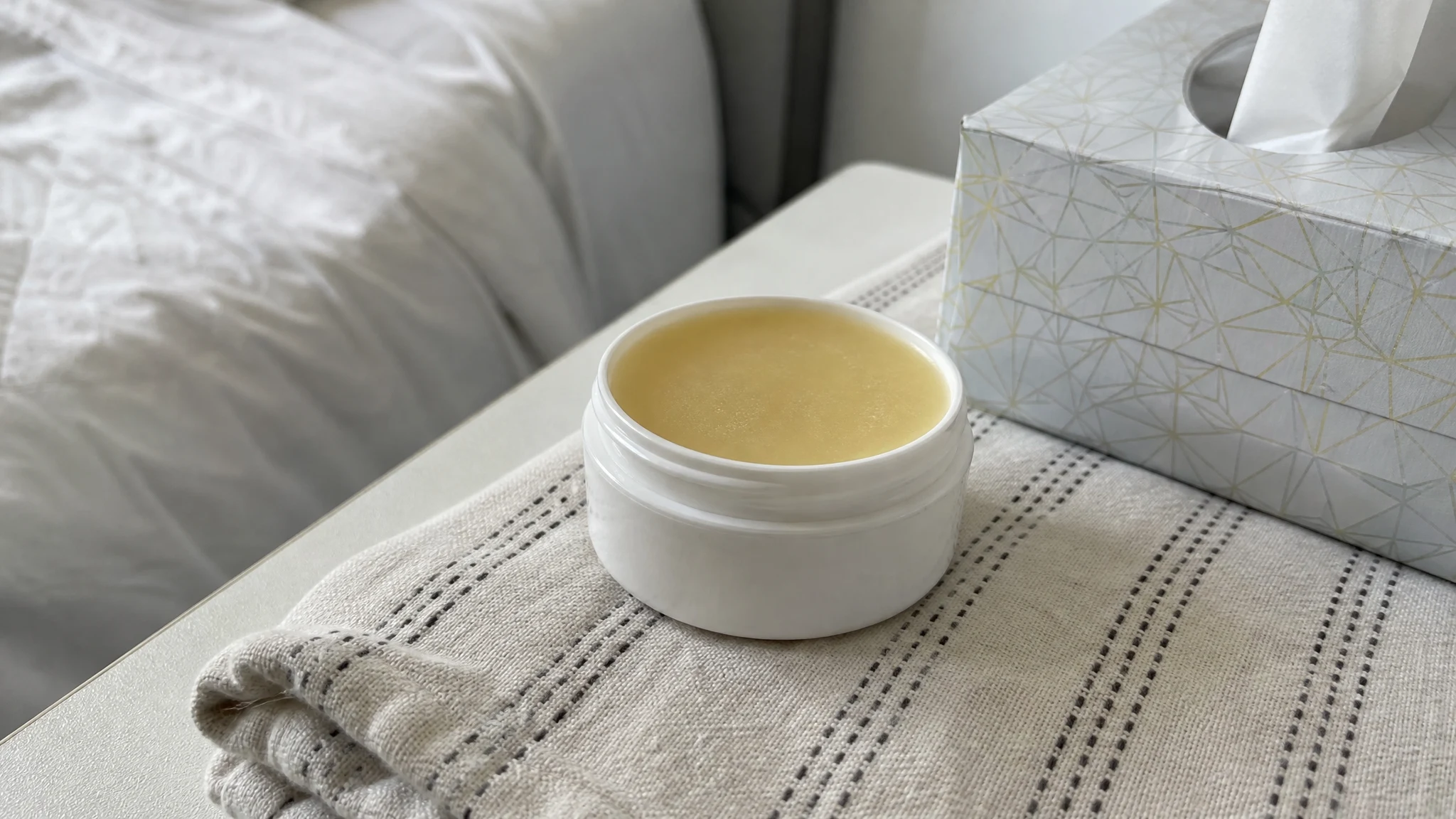
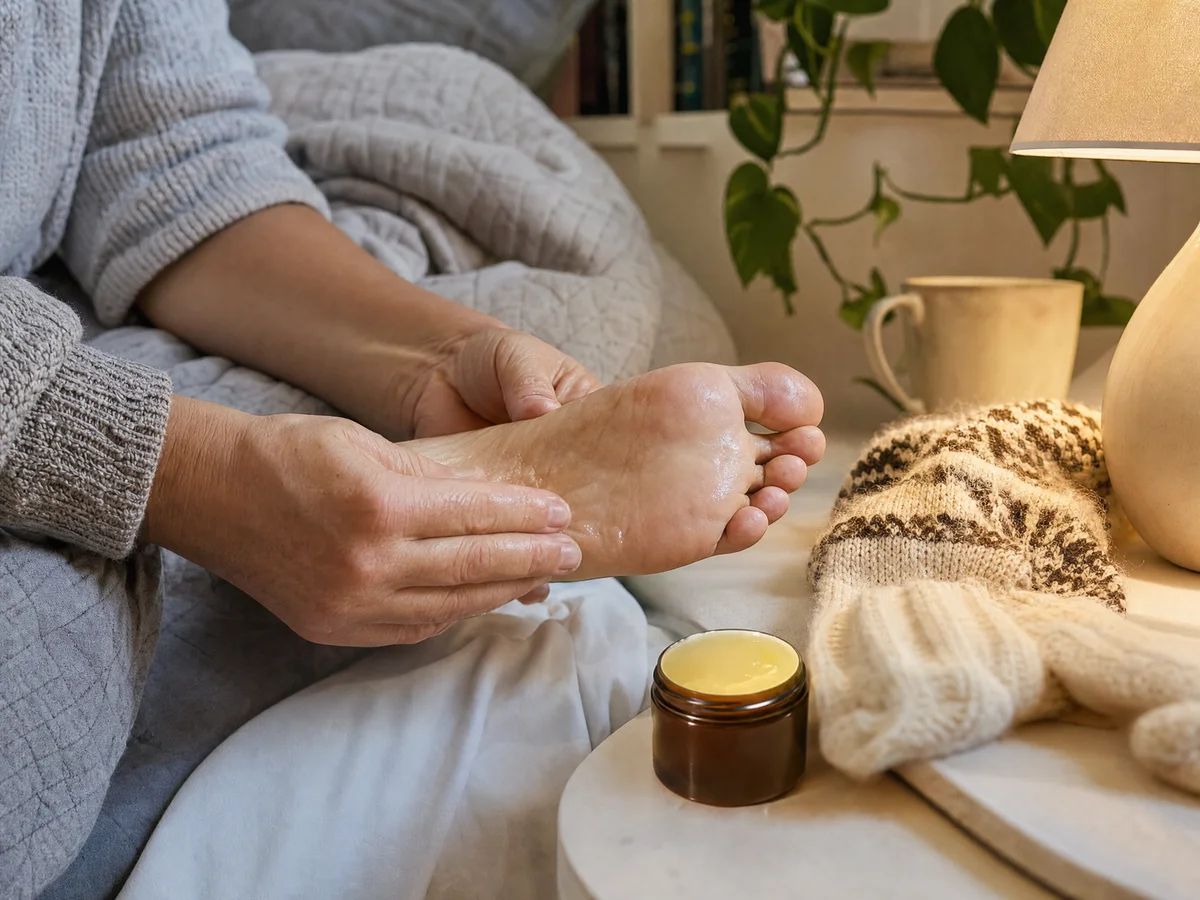
When a cold leaves the skin around your nose and lips raw, the gentlest thing is also the simplest. Warm a drop of oil between your palms first, so it spreads thin, then pat it on rather than rub. You will notice a virgin oil, which is firm in a cool room, softens the moment it meets warm fingers, while a fractionated oil is already liquid and disappears faster. Keep it away from eyes, and keep a little on the nightstand so it is within reach.
When to ask a professional
The NHS says most colds clear up in one to two weeks, and it lists reasons to see a GP: a very high temperature, shortness of breath or chest pain, worry about a child's symptoms, no improvement after 10 days, a cough that lasts more than 3 weeks, or cold symptoms alongside a long-term condition or weakened immune system. It also mentions vapour rubs as an over-the-counter option for chesty coughs in babies and small children, which is a good prompt to ask a pharmacist which product suits which age (NHS, Common cold). Anyone struggling to breathe needs a clinician right away.
The short version
- For a cough or cold, ask a pharmacist about a labeled product and read the age line on the box before using it on a child.
- Keep the NHS signs above in mind.
- Use coconut oil for what it does well: keeping chapped skin around a cold-weary nose and lips soft.
The cool, camphory aroma that makes a vapor rub memorable comes from ingredients we do not sell. If you are curious how a carrier oil differs from the things people blend into it, virgin versus refined coconut oil is a good place to see what a carrier brings to the party.
Fractionated Coconut Oil
Fractionated Coconut Oil from our own shop, in sizes from 0.5 oz to bulk.
From $9.99
Shop Now →Sources & Further Reading
- NLM DailyMed, 2026. Children's Vicks VapoRub label. dailymed.nlm.nih.gov
- Paul IM et al., 2010. Vapor rub, petrolatum, and no treatment for children with nocturnal cough and cold symptoms. Pediatrics 126(6). PMC3600823
- NHS. Common cold. nhs.uk/conditions/common-cold