Tea Tree Oil or Coconut Oil: What Each One Does
Tea tree oil and coconut oil keep turning up in the same sentence about blemishes, and it is easy to see why: one is a famous essential oil, the other is the friendly pantry staple. The interesting part is that they are not rivals at all. Tea tree is the ingredient researchers have put to the test, and a plain carrier oil is what lets you handle it comfortably. Here is how the two fit together, and what the studies really looked at.

Fractionated Coconut Oil
Our own Fractionated Coconut Oil, in sizes from 0.5 oz to bulk.
From $9.99
Shop Now →Two different jobs
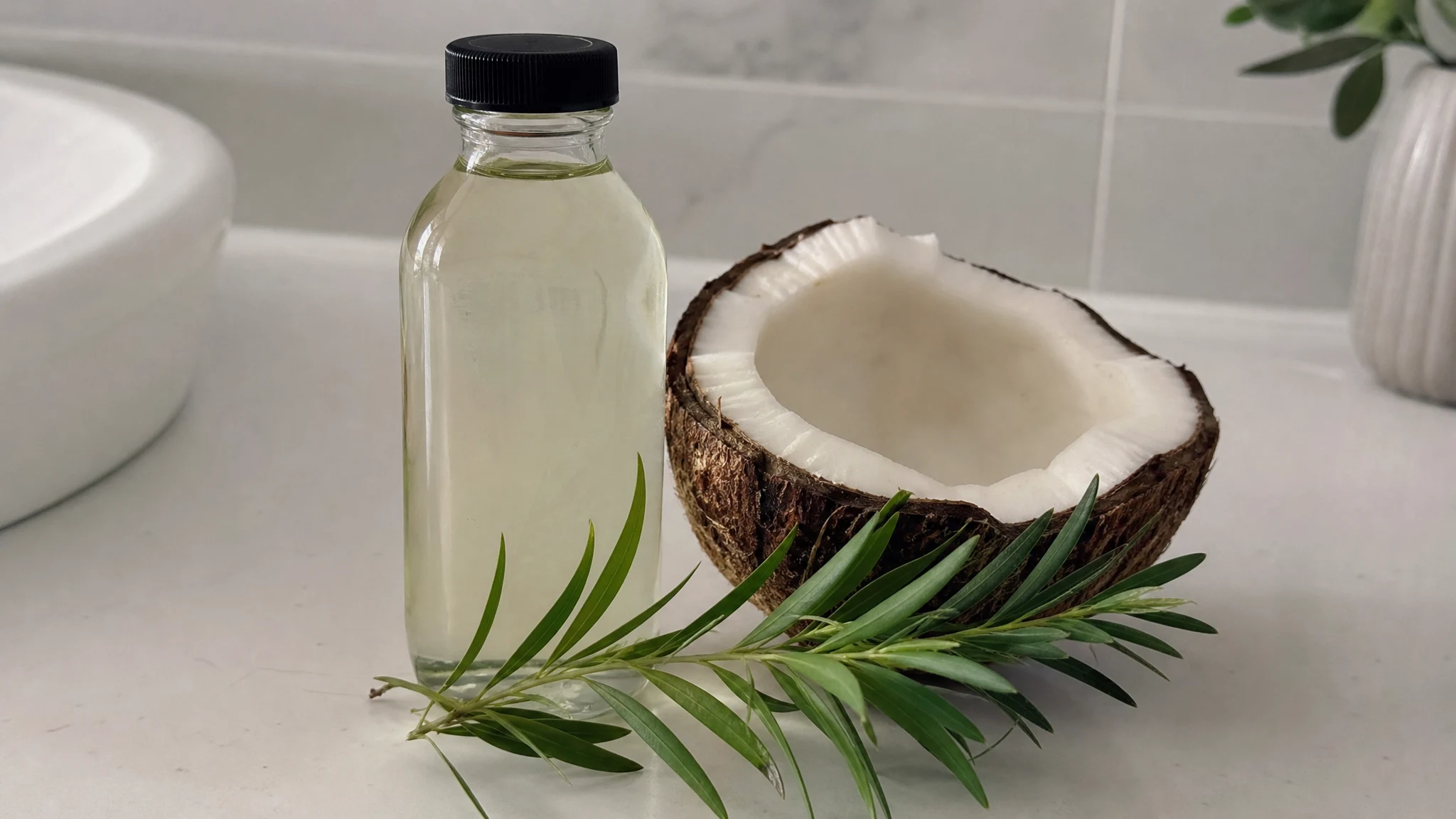
An essential oil is concentrated, so it is almost always used diluted. A carrier oil is the gentle, spreadable base that does the diluting. Coconut oil is a classic carrier, and tea tree is one of the oils we list among the good partners for our fractionated coconut oil, which is light, liquid and fast-absorbing. That is the whole relationship in a sentence: tea tree brings the aroma and the research interest, and the carrier brings the glide.
If you like the idea of blending, our dilution guide turns percentages into drops, and our tea tree and coconut oil guide looks at the pairing more broadly.
What the tea tree trials looked at
Tea tree has more human research behind it than most natural ingredients, which is part of its appeal. In a single-blind trial of 124 people with mild to moderate acne, a 5% tea tree oil gel and a 5% benzoyl peroxide lotion both reduced inflamed and non-inflamed lesions. The tea tree gel worked more slowly and caused fewer side effects (Bassett et al., 1990). A more recent review also describes a 45-day trial of a 5% gel against a placebo gel in 60 people, where total lesion counts fell 43.64% with tea tree against 12.03% with placebo. Its authors add that the studies differ so much from one another that firm conclusions about effectiveness and safety are not yet possible (Nascimento et al., 2023).
The detail worth carrying away is the strength. Those trials used roughly 3 to 6% tea tree oil in a finished gel or cream, not oil poured straight from the bottle and not a homemade mix. It is a promising ingredient with an honest, modest evidence base, which is a perfectly respectable thing to be.
Where coconut oil's reputation comes from
The study people quote for coconut oil and acne actually tested lauric acid, one of coconut oil's fats, in the lab against the bacterium associated with acne. It was effective at concentrations more than 15 times lower than benzoyl peroxide, and it reduced colonization and swelling when applied to mouse ears (Nakatsuji et al., 2009). It was a lab and mouse study of one fatty acid, not a human trial of coconut oil.
That matters for the oils we sell. Whole coconut oil is about 49% lauric acid (Lin, Zhong and Santiago, 2018), while the pharmacopoeia standard for medium-chain triglycerides allows 3% lauric acid at most and describes mostly caprylic and capric acids (USP 35, 2012). That is a general range rather than a statement about our batch paperwork, but it is a good reason to read a lauric acid result as being about lauric-rich coconut oil. Our fractionated oil is made to keep only the medium-chain triglycerides, and we publish no fatty acid percentages for it.
A review of botanical skin oils also associates coconut oil with breakouts on skin that is not very dry (Moore, Wagner and Komarnytsky, 2020), so if blemish-prone skin is your reason for reading, a skin professional is the person to ask about any oil. Our comedogenic ratings post explains why the numbers you see online are so contested.
What the acne guidelines put first
The American Academy of Dermatology's 2024 acne guideline makes 18 evidence-based recommendations, and its strong ones cover benzoyl peroxide, topical retinoids, topical antibiotics and oral doxycycline, with isotretinoin for severe or scarring acne (Reynolds et al., 2024). Neither tea tree oil nor coconut oil is among the recommendations in the abstract. We sell a cosmetic carrier oil, not an acne product, so for acne that is painful, persistent or leaving marks, a dermatologist is the right call.
Handling tea tree well
If tea tree is part of your routine, a few habits keep it pleasant.
- Fresh matters. The 2023 review reports that oxidized tea tree oil is linked to allergic reactions, and it advises against concentrated oil above 10%, especially on damaged skin. Keep the bottle closed, cool and dark.
- It is for the outside only. Poison Control says tea tree oil is poisonous if swallowed; for a swallowing exposure call 1-800-222-1222 (poison.org).
- Smell the blend before it goes anywhere near your face. Tea tree is sharp and a little camphor-like, and a small amount goes a long way.
- Patch test first. We suggest a small area and a 24-hour wait with our fractionated oil, and if you have a coconut or tree nut allergy, please check with a professional before use.
Choosing your carrier
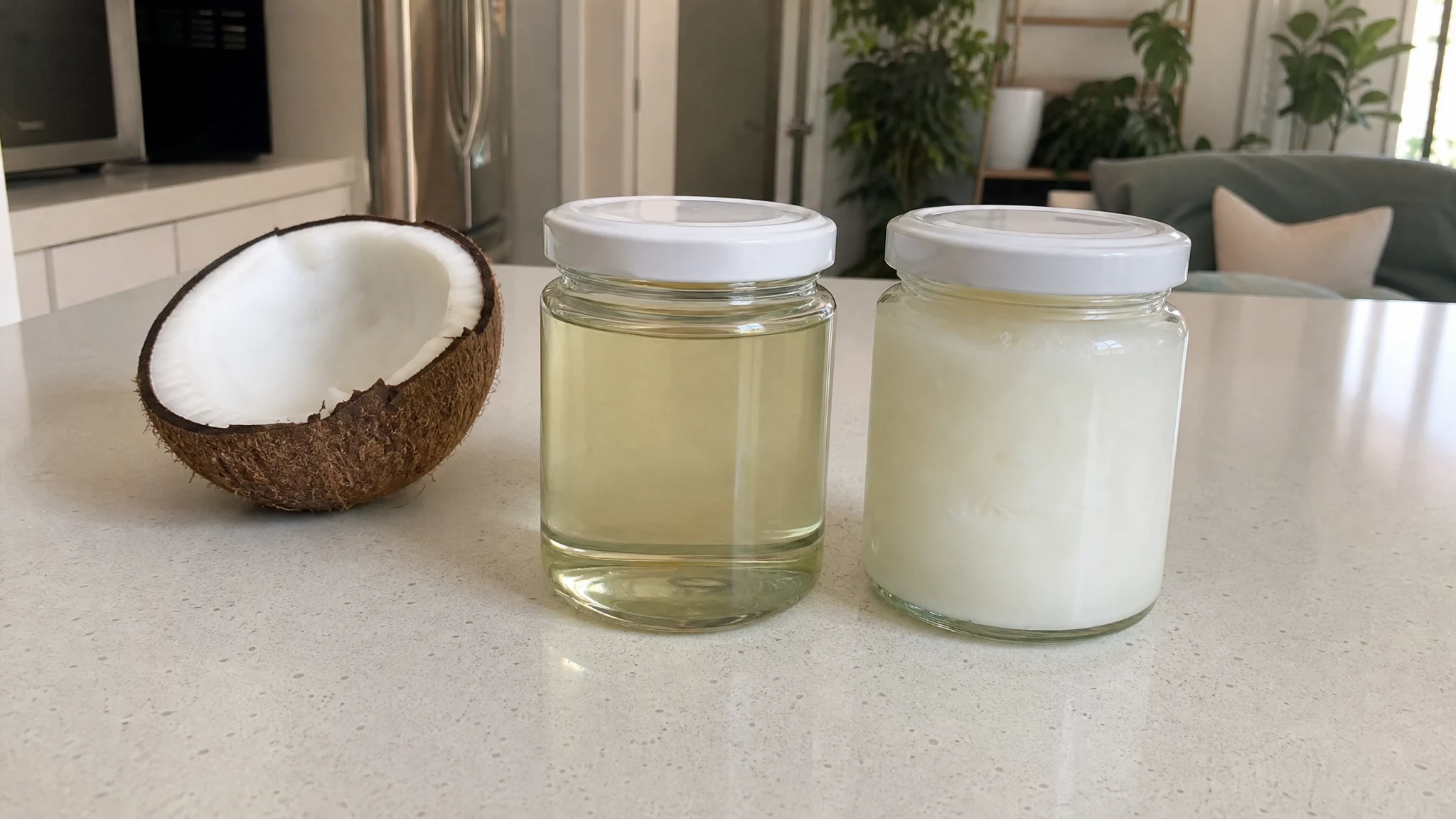
If you want a light, nearly scent-free base that stays liquid in a roller bottle, our fractionated coconut oil is exactly what we make it for. If you enjoy the warm coconut aroma and a base that firms up in a cool room, our virgin unrefined coconut oil is the other choice. Both are for external cosmetic use only, and both are happiest in a blend where the tea tree stays at a modest, diluted strength.
For a wider look at how coconut oil has been studied on skin, our skin overview is a good next stop.
Fractionated Coconut Oil
Fractionated Coconut Oil from our own shop, in sizes from 0.5 oz to bulk.
From $9.99
Shop Now →Sources & Further Reading
- Reynolds RV et al., 2024. Guidelines of care for the management of acne vulgaris. J Am Acad Dermatol. pubmed.ncbi.nlm.nih.gov/38300170
- Bassett IB, Pannowitz DL, Barnetson RS, 1990. A comparative study of tea-tree oil versus benzoylperoxide in the treatment of acne. Med J Aust 153(8):455-8. pubmed.ncbi.nlm.nih.gov/2145499
- Nascimento T, Gomes D, Simoes R, Miguel MG, 2023. Tea tree oil: properties and the therapeutic approach to acne, a review. Antioxidants 12(6):1264. pmc.ncbi.nlm.nih.gov/articles/PMC10295805
- Nakatsuji T et al., 2009. Antimicrobial property of lauric acid against Propionibacterium acnes. J Invest Dermatol 129(10):2480-8. pubmed.ncbi.nlm.nih.gov/19387482
- Lin TK, Zhong L, Santiago JL, 2018. Anti-inflammatory and skin barrier repair effects of topical application of some plant oils. Int J Mol Sci 19(1):70. pmc.ncbi.nlm.nih.gov/articles/PMC5796020
- USP 35, 2012. Medium-Chain Triglycerides monograph. drugfuture.com/Pharmacopoeia/USP35
- Moore EM, Wagner C, Komarnytsky S, 2020. The enigma of bioactivity and toxicity of botanical oils for skin care. Front Pharmacol. pmc.ncbi.nlm.nih.gov/articles/PMC7272663
- Poison Control (poison.org). Tea tree oil. poison.org/articles/tea-tree-oil