Coconut Oil Lotion Bars: A Recipe That Travels Well
A lotion bar is moisturizer you can slip into a pocket: a firm little block of wax, butter and oil that melts at the touch of warm hands and leaves skin feeling soft and smooth. Coconut oil usually gets the credit, but the wax is the quiet engineer of the whole thing, deciding whether the bar stays a tidy block in your bag or becomes a puddle by the time you reach your hotel. Here is how to design one around whichever of our coconut oils you love.
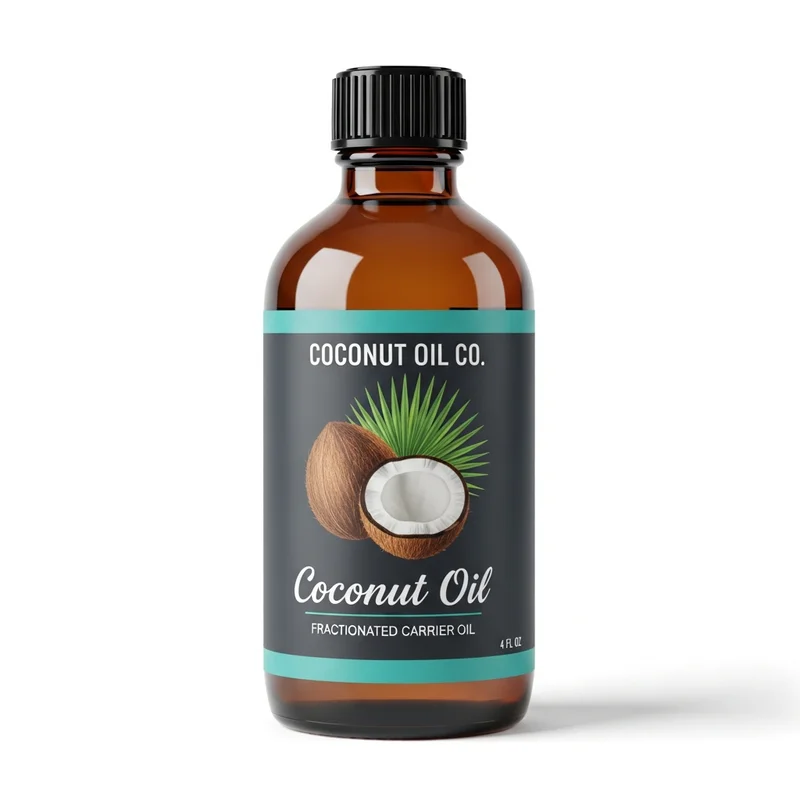
Fractionated Coconut Oil
Our own Fractionated Coconut Oil, in sizes from 0.5 oz to bulk.
From $9.99
Shop Now →Two oils, two personalities
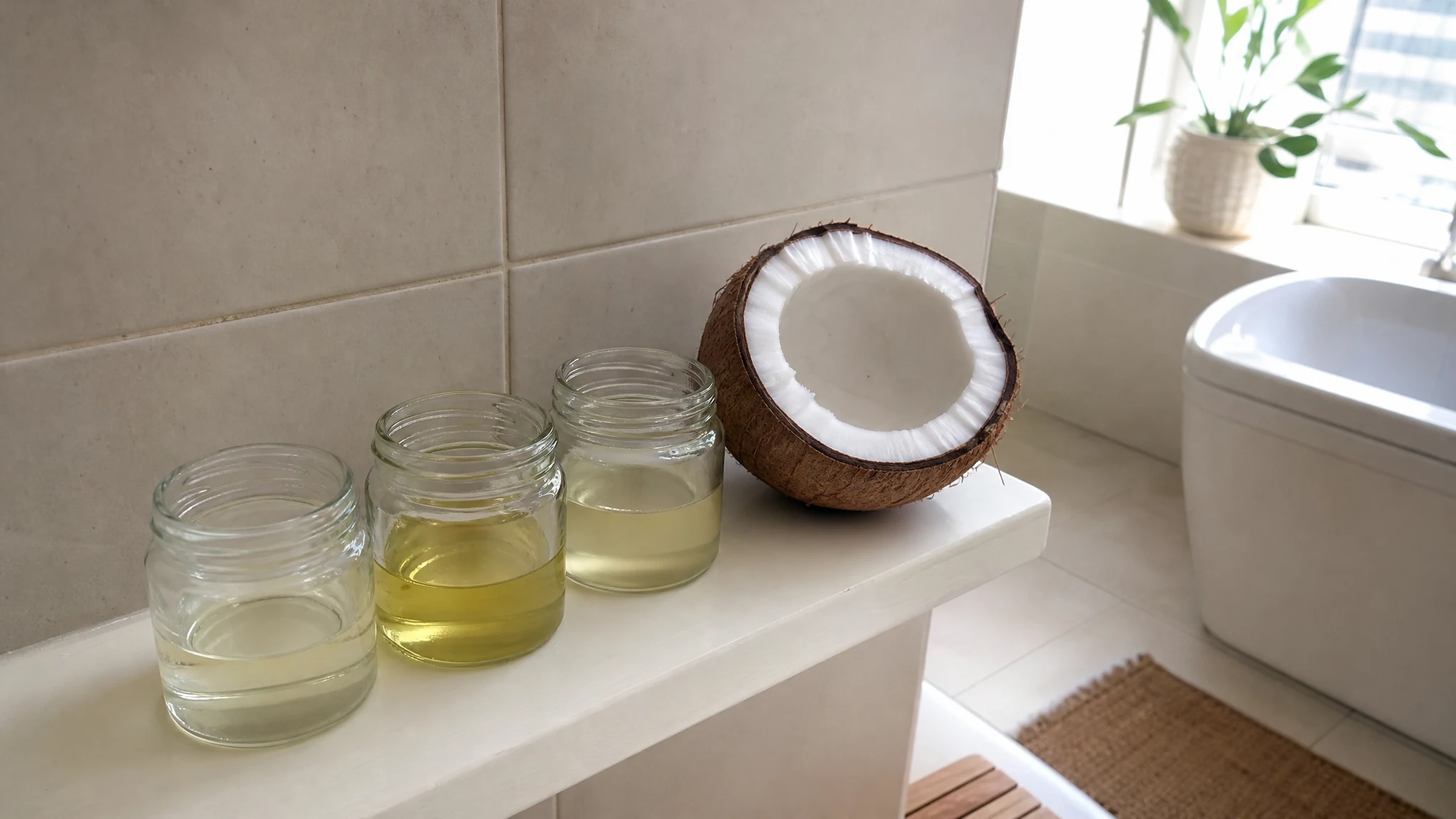
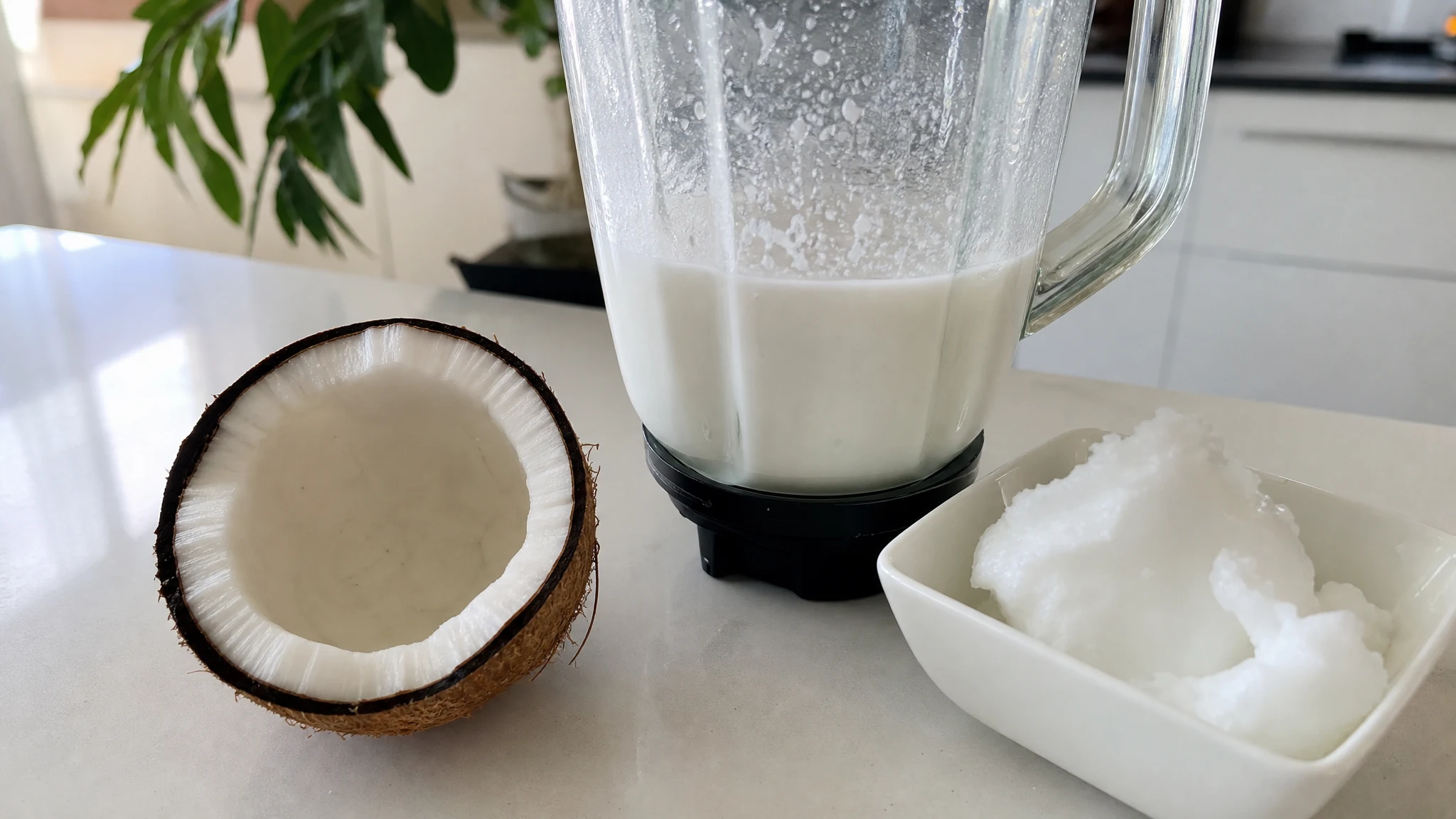
Our two coconut oils make two different bars. Our virgin unrefined oil is firm in a cool room, melts in warm hands (we put the change at about 76 degrees Fahrenheit) and smells wonderfully of coconut. Because it is already a soft solid, it adds body to a bar and brings that classic tropical scent. Our fractionated oil stays liquid at any temperature and we describe it as virtually odorless, so it brings a light, silky glide and no scent of its own, with wax and butter doing all the work of holding it in shape. Both are sold for external cosmetic use.
From those two descriptions a simple rule follows: a fractionated bar needs more wax than a virgin one to reach the same firmness. Choose virgin for aroma and a naturally sturdier bar, fractionated for a clean, unscented one.
The recipe, by weight
Waxes are best measured on a kitchen scale instead of with spoons. As a starting point, Hobby Farms (Peacher, 2019) suggests one part beeswax to three to five parts oil for salves, with a handy check: set a small spoonful of the hot mixture aside to cool, then add oil if it is too firm or wax if it is too soft. A bar wants to be firmer than a tin of salve, so these two 60 g batches begin at the firm end:
- Virgin unrefined: 15 g beeswax, 15 g shea butter, 30 g virgin coconut oil. The wax is 25 percent of the batch.
- Fractionated: 20 g beeswax, 15 g shea butter, 25 g fractionated oil. The wax is about 33 percent, to make up for the liquid oil.
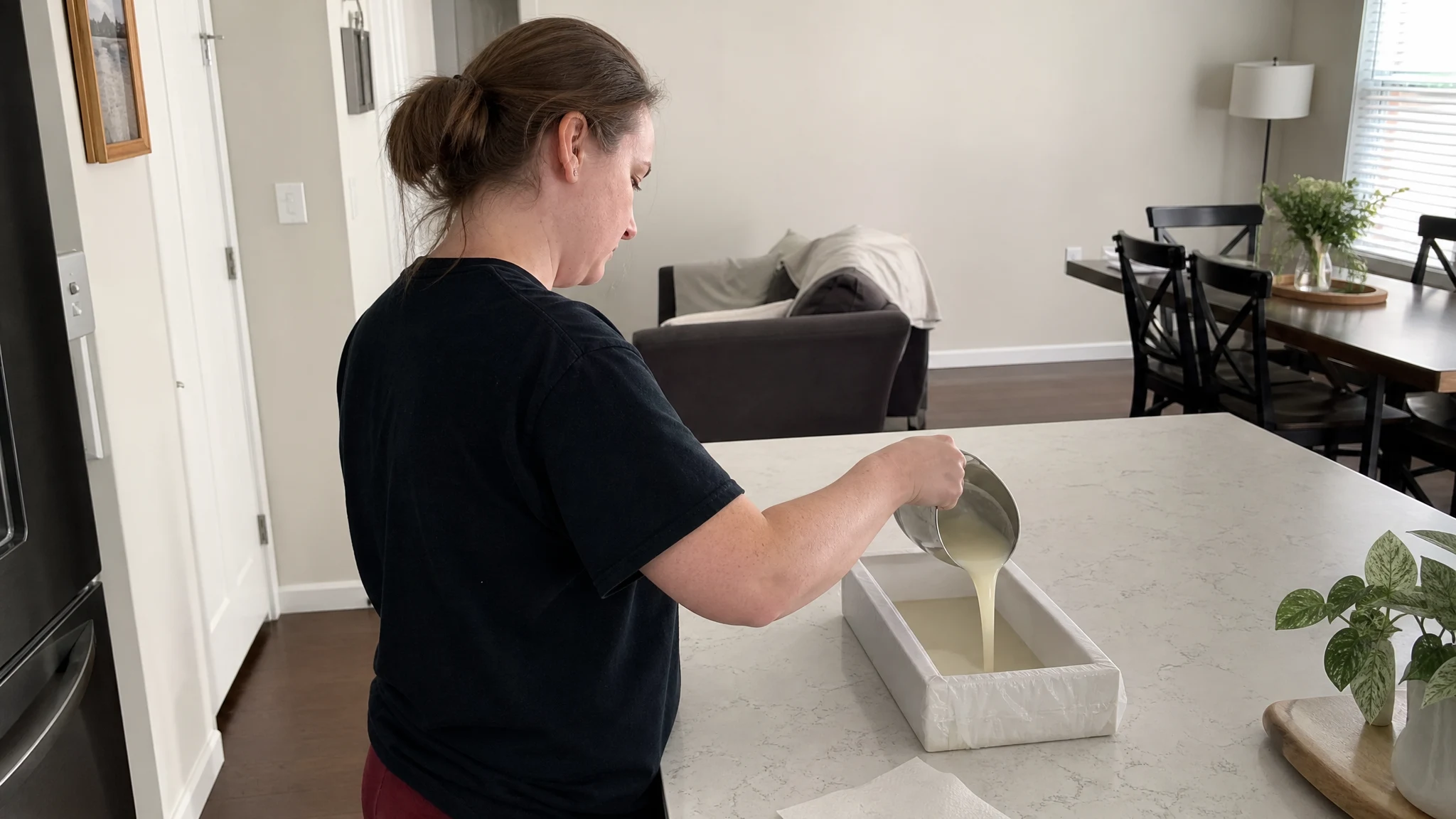
For reference, 25 g of fractionated oil at the density measured on our one published Certificate of Analysis (0.948 g/ml, a single batch) is about 26 ml, a little over five teaspoons. Melt the wax and butter together, stir in the oil off the heat, pour into a mold and let it set completely before wrapping. Run the cooled-spoon check first and adjust. We sell the oils rather than beeswax or shea butter, so those come from a craft supplier. Our coconut oil and shea butter comparison helps you think through the butter.
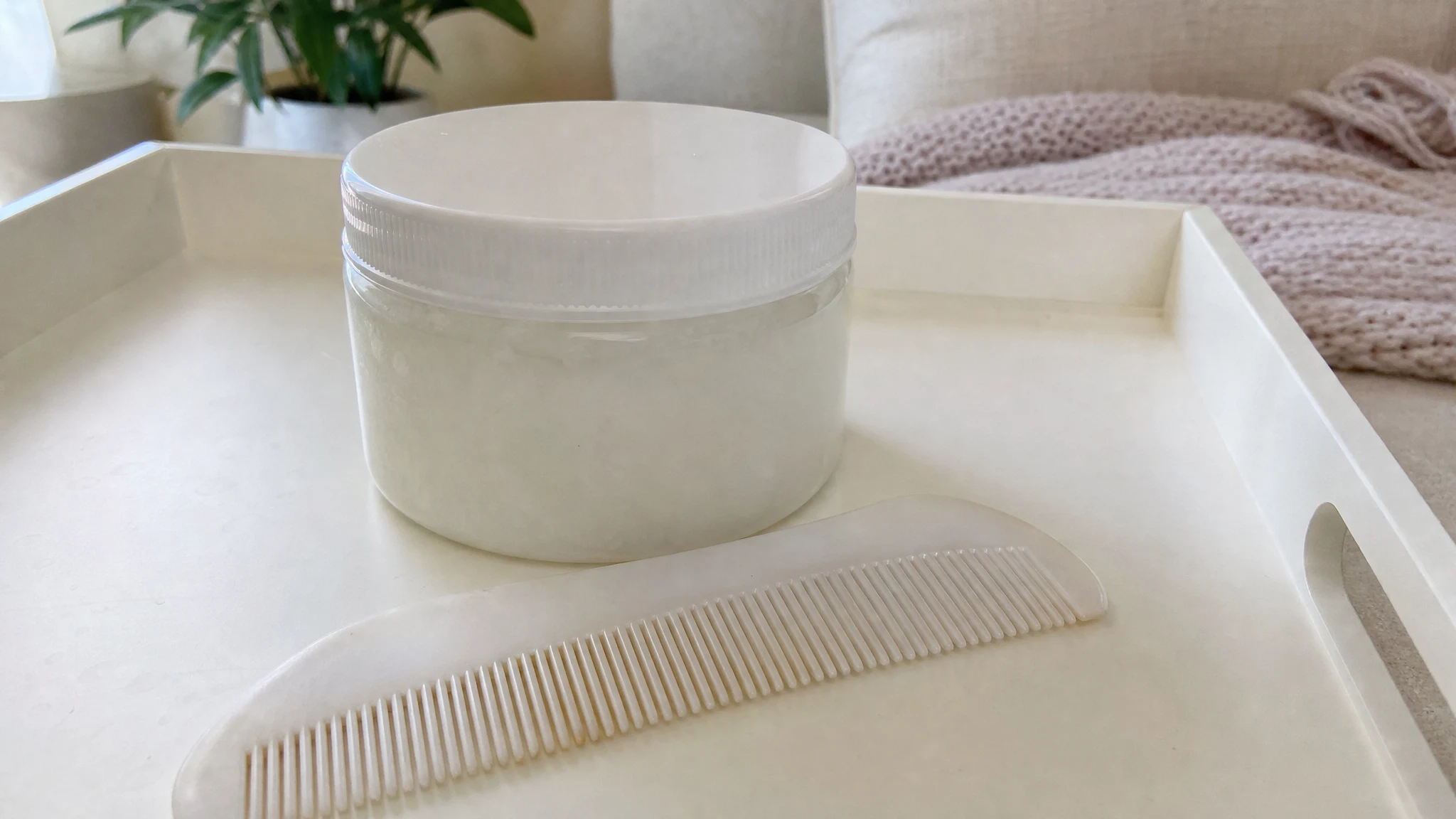
Beeswax is the heat-resistance ingredient, since it is the stiffest part of the mix. Even so, any bar will soften in a hot car, so a lidded tin is a better travel home than a loose wrapper.
Pouring and unmolding
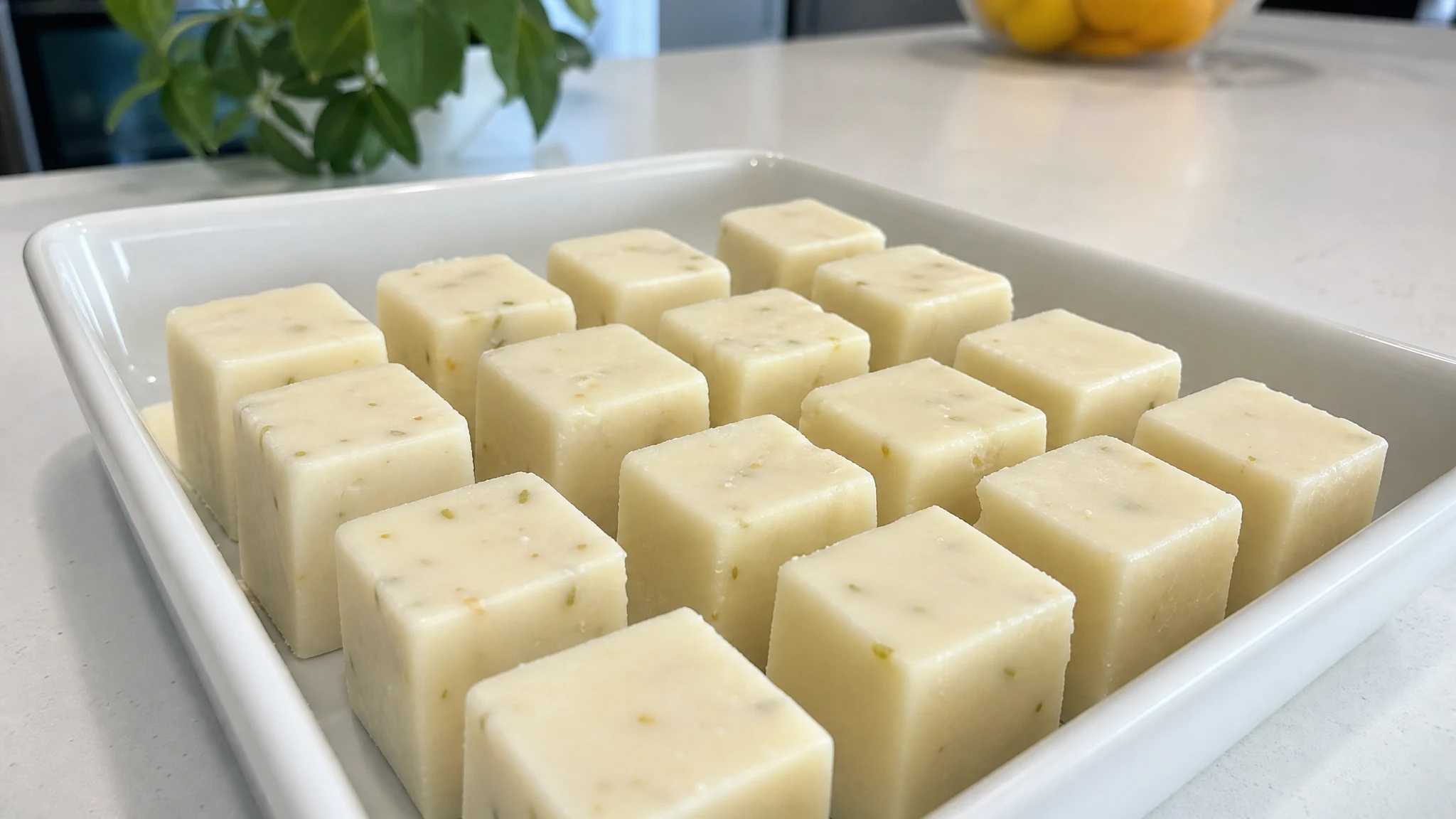
Silicone molds make this part easy. Pour slowly into the cavities, tap the mold gently on the counter to bring any bubbles up, and then leave it somewhere cool and undisturbed. Resist the urge to hurry it into the fridge. When the bar is fully set, it should pop out cleanly with a smooth, slightly satiny surface. A tin of the same mixture is also a perfectly good way to go if you do not own a mold; it just stays in the tin and you rub your thumb over the top.
Does a solid bar fly carry-on?
The popular promise is that a solid bar sidesteps the liquids rule. The TSA's liquids rule page limits carry-on containers to 3.4 ounces (100 ml) and lists liquids, aerosols, gels, creams and pastes. Solids are not mentioned, and a wax-and-oil bar is not named either way. Our reading is that a bar firm enough to keep its shape is the opposite of a cream or paste, and that an unwrapped bar is easier to explain than a soft balm in a tin. If you want zero uncertainty, pack it in checked luggage, where the limit does not apply. Our travel packing notes have more.
Scent, or none
If you would like fragrance, the Tisserand Institute lists 1 to 3 percent for body products and 0.5 to 1.2 percent for facial ones. On a 60 g bar, 1 percent is 0.6 g of essential oil. We do not sell essential oils, and a travel bar is a lovely place to leave scent out altogether. The American Academy of Dermatology's dry skin tips recommend products labeled fragrance-free, and note that "unscented" products can still contain chemicals that mask odors. A bar that spends a flight next to your face is easy to live with when it smells only of what is in it.
Packing and care
Keep the bar dry; it contains no water, so wet hands and damp counters are the things to steer clear of. If you wrap it in cloth, remember what the NHS says about emollients: clothing and bedding that have been in contact with them can easily catch fire, so keep oily cloth away from flames, and see our notes on getting coconut oil out of fabric.
We advise a patch test on a small area first, keeping oil away from your eyes, and checking with a professional before use if you have a coconut or tree nut allergy. For eczema, psoriasis or broken skin, a dermatologist is the person to ask what to use.
A smaller cousin of the same wax logic is our lip balm recipe, and virgin versus refined coconut oil helps you weigh the oils. Our virgin unrefined and fractionated pages list every size.
Make one small test bar, keep it somewhere cool and see how it behaves. Adjusting the wax next time is simply part of the craft.
Fractionated Coconut Oil
Fractionated Coconut Oil from our own shop, in sizes from 0.5 oz to bulk.
From $9.99
Shop Now →Sources & Further Reading
- TSA, undated. Liquids, aerosols, gels, creams and pastes rule. tsa.gov/liquids-rule
- Peacher R, Hobby Farms, 2019. Use Beeswax to Make Salves and Balms. hobbyfarms.com/?p=63105
- Tisserand Institute, undated. Essential oil dilution. tisserandinstitute.org
- American Academy of Dermatology, updated 2026. Dermatologists' top tips for relieving dry skin. aad.org
- NHS, reviewed 2023. Emollients. nhs.uk/emollients